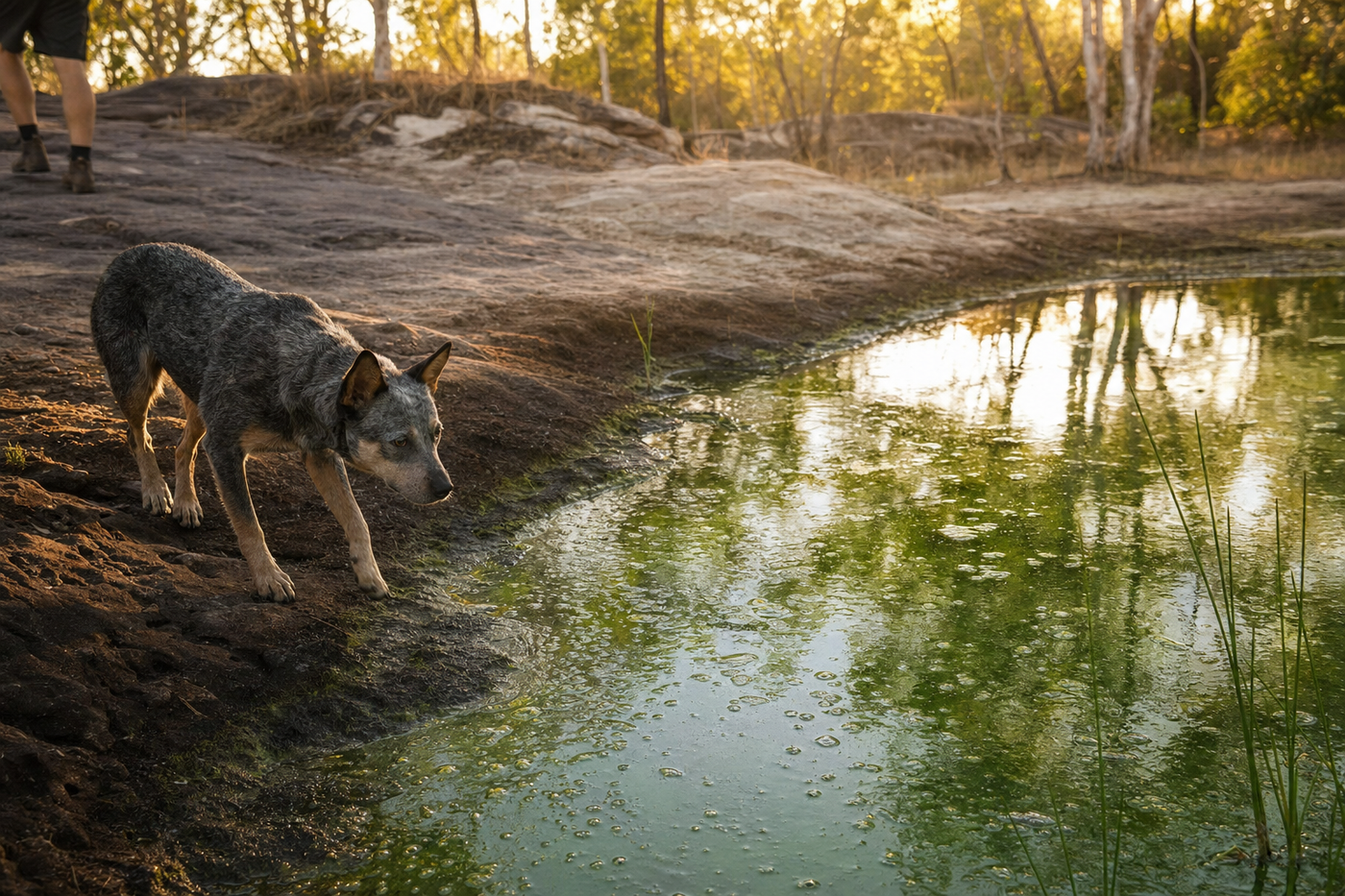
BLUE-GREEN ALGAE EMERGENCY: If your dog swims in or drinks from water that may contain blue-green algae and shows vomiting, weakness, or seizures, this is a critical emergency. Get to an emergency vet immediately. There is no antidote and time is critical.
What blue-green algae is and why it is so dangerous
Blue-green algae, more accurately called cyanobacteria, is a type of bacteria that grows in fresh water and produces toxins that are lethal to dogs. It is one of the fastest acting toxins a dog can encounter in the Australian environment. A dog that swims in heavily affected water or drinks from an algae-contaminated source can die within hours. There is no antidote for blue-green algae poisoning. Treatment is supportive care only. Survival depends almost entirely on how quickly the dog reaches veterinary care and how much toxin was ingested. Blue-green algae blooms occur in lakes, dams, rivers, and reservoirs across Australia, particularly during warm weather when water is still and nutrient levels are high. The blooms are most common from late spring through autumn but can occur year round in warm climates.
Why it is so hard to detect
The name blue-green algae is misleading. Blooms can appear blue-green, green, brown, red, or almost invisible depending on the species and concentration. A bloom that is not visually obvious is no less dangerous. The water surface may show a scum or a paint-like sheen. In some cases the water looks normal but is still contaminated. Wind patterns move blooms around a body of water, meaning a safe-looking swimming spot can be adjacent to a heavily contaminated area. This unpredictability is what makes blue-green algae so dangerous. The only safe approach near potentially affected waterways is to not let your dog in the water unless you have confirmed it is safe through official alerts.
What we recommend
Some links below are affiliate links. Pawtrips may earn a commission at no extra cost to you.
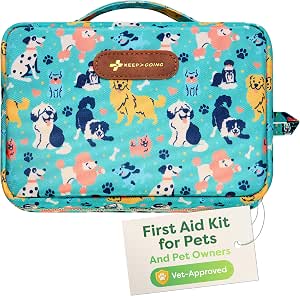
Dog First Aid Kit for Travel Emergencies
It's important to prepare for unforeseeable situations while travelling.

Reduce Shedding with FURminator Conditioner
A well-groomed coat means less mess in your travel space.

Mini GPS Tracker for Cats - Real-Time Location
Tracking your cat eases the stress of travelling together.

Track Your Dog's Location in Real-Time
It helps you keep your pet safe and in check during travels.
Where it is most commonly found in Australia
Blue-green algae alerts have been recorded across Australia in waterways including Lake Burley Griffin in Canberra, the Murray-Darling river system, numerous dams and reservoirs throughout Queensland, NSW, Victoria, and South Australia, and many farm dams in agricultural areas. State government environmental agencies monitor major waterways and issue public alerts when toxic blooms are detected. These alerts are accessible through the relevant state environmental protection authority websites. Check these alerts before any planned visit to lakes, dams, or slow-moving rivers. Local councils also issue alerts for specific waterways in their area. If you are travelling through regional Australia and planning to stop at a lake or dam, a quick search for current alerts for that specific waterway takes minutes and could save your dog's life.
Warning signs of poisoning
Symptoms of blue-green algae poisoning appear rapidly, within 15 minutes to several hours of exposure depending on the toxin type and amount ingested. Signs include vomiting, diarrhoea, weakness, difficulty breathing, seizures, loss of consciousness, and rapid death in severe cases. Liver toxin types cause liver failure with symptoms appearing over several hours. Nerve toxin types cause rapid neurological symptoms and can cause death within minutes. If your dog has been in water and shows any of these symptoms, get to a vet immediately. Tell them your dog was in water that may have had algae. There is no time to wait and see.
Prevention
The only reliable prevention is keeping your dog out of water that has not been confirmed safe. Do not rely on visual inspection. Do not assume a clear-looking lake is safe. Check state government and local council algae alert websites before any visit to standing water or slow-moving rivers. When in doubt, keep your dog on a leash away from the water's edge. If your dog does enter potentially contaminated water, rinse them with clean water immediately and do not let them lick their coat. Seek veterinary advice even if they show no symptoms, as some toxins have delayed effects.
Blue-green algae is one of the most underestimated risks for travelling dogs in Australia. The alerts exist for a reason. Check them every time. Write to us at hello@pawtrips.com.au if you have a water safety tip worth sharing.
hello@pawtrips.com.auPlus early access to new guides and partner deals.
No spam. Ever. Just the good stuff for you and your pet.