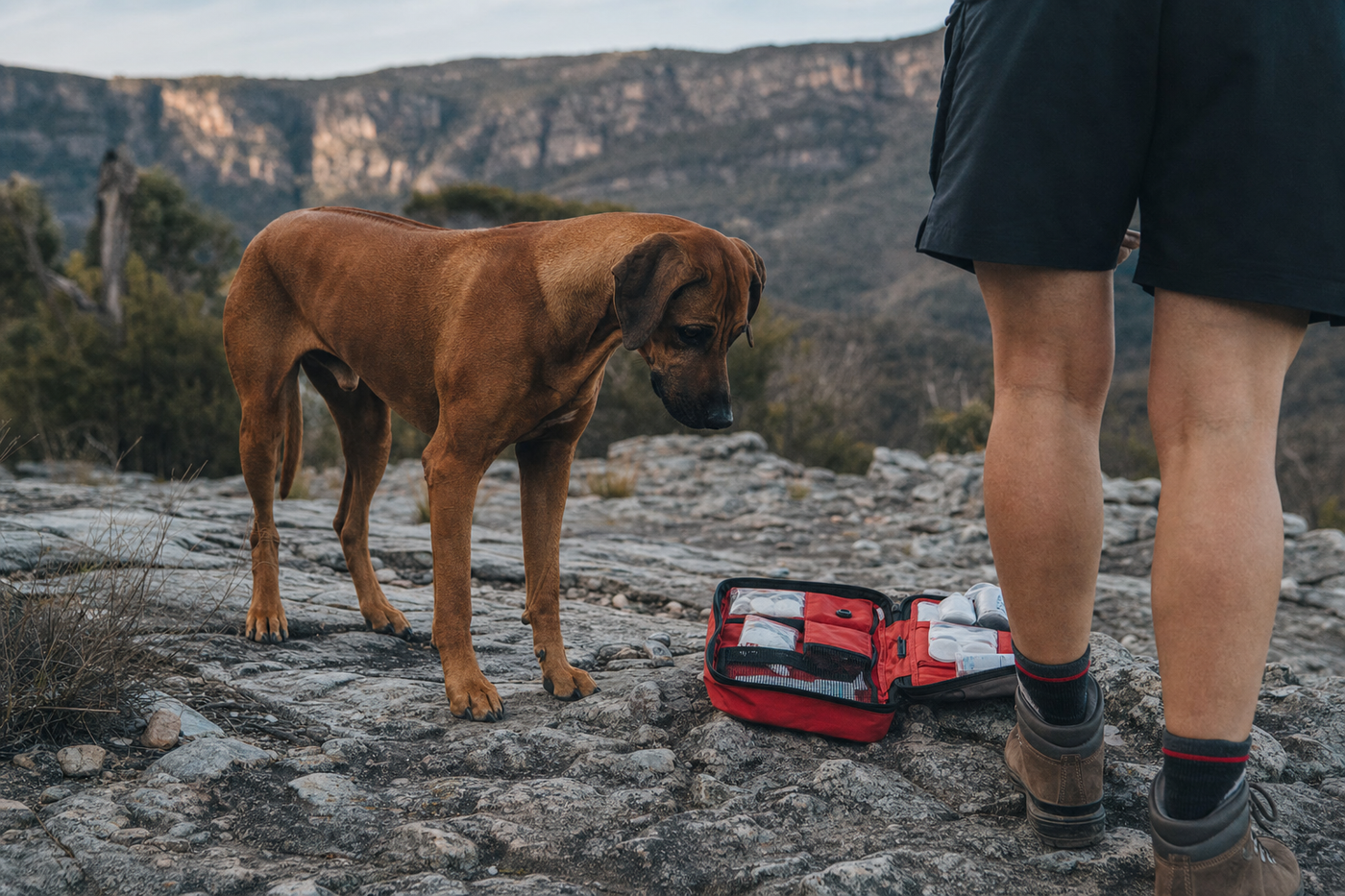
Why the standard first aid kit advice does not cut it in Australia
Most generic dog first aid kit guides were written for urban or mild-climate conditions. They list bandages and antiseptic and call it done. That is fine for a scraped paw on a suburban footpath. Australia is different. The specific risks dogs face here, paralysis ticks, snake bites, heatstroke, blue-green algae, cane toad exposure, and remote distances from veterinary care, require a kit built around those realities. This guide covers what you actually need for Australian conditions. Not everything. The right things.
The non-negotiables for Australian travel
Tick removal tool. A proper purpose-designed tick hook, not standard tweezers. This is the single most important item for any east coast travel. Removing ticks correctly means removing them intact without injecting additional toxin. Standard tweezers do this wrong. Digital thermometer. A dog's normal temperature is between 38 and 39 degrees Celsius. Knowing your dog's temperature in a potential heatstroke or illness situation tells you and the vet critical information. Rectal thermometers give the most accurate reading. Saline solution. For irrigating eyes after dust, sand, or potential chemical exposure, and for cleaning wounds. A small bottle takes up almost no space. Self-adhesive bandage such as VetWrap or CoFlex. For wound dressing, paw protection, and immobilisation after injury. This does not stick to fur and applies easily. Gauze pads and sterile wound dressings. For covering wounds before reaching veterinary care. Antiseptic wipes or solution. For cleaning wounds in the field. Blunt-ended scissors. For cutting bandage, cutting away fur around a wound, and general first aid use. Disposable gloves. For your own protection when treating wounds or cleaning up after illness.
What we recommend
Some links below are affiliate links. Pawtrips may earn a commission at no extra cost to you.
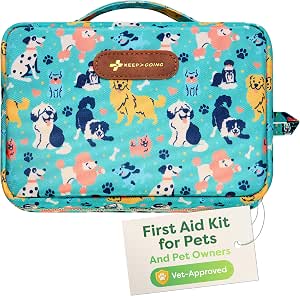
Dog First Aid Kit for Travel Emergencies
It's important to prepare for unforeseeable situations while travelling.

Reduce Shedding with FURminator Conditioner
A well-groomed coat means less mess in your travel space.

Mini GPS Tracker for Cats - Real-Time Location
Tracking your cat eases the stress of travelling together.

Track Your Dog's Location in Real-Time
It helps you keep your pet safe and in check during travels.
Australia-specific additions
Pressure bandages. If you are travelling through snake country, a broad pressure bandage is part of first aid for snake bite. The pressure immobilisation technique slows the movement of venom through the lymphatic system and is recommended by Australian emergency guidelines for some snake species. Discuss the correct application with your vet before travelling. Antihistamine at your vet-recommended dose. For bee sting reactions, contact allergies, and mild allergic responses. Confirm the right product and dose for your dog's weight before departure. Wet cloth or small towel. For wiping cane toad toxin from a dog's mouth before rinsing, and for cooling a dog in a heat emergency. Small torch or headlamp. For examining injuries at night in the bush or at a campsite. Styptic powder or pencil. For stopping bleeding from nail breaks, small cuts, and minor wounds quickly. A soft muzzle. An injured dog in pain may bite even a familiar owner. A muzzle allows you to examine and treat a dog safely. Include one even if you have never needed it.
The paperwork section
Your dog's vaccination records. Emergency vets always ask. Keep a photo on your phone at minimum. Your regular vet's contact details. The contact details of an emergency vet at each planned overnight stop. Research these before you leave. In remote Australia, the nearest emergency vet may be hours away. Knowing the address and phone number before you need it is the difference between a calm response and a panicked one. Your pet insurance policy details and emergency claims number if you have insurance. If you do not have pet insurance, consider it before any long Australian road trip. The cost of snake bite treatment, tick paralysis treatment, or a heatstroke hospitalisation can exceed the annual premium many times over.
Ready-made vs DIY kits
Several quality ready-made dog travel first aid kits are available in Australia. The Navigator Gear pet first aid kit developed by Dr Tania from Vet in a Van is specifically designed for Australian conditions and includes a quick reference guide with QR codes linking to instructional videos. If you prefer to build your own, the list above covers the essentials. The advantage of a custom kit is that you know exactly what is in it and where everything is. Regardless of which approach you take, check expiry dates on medications and saline solutions before each trip and replace anything that has expired or been used.
A good first aid kit does not replace emergency veterinary care. It buys you time to get there. Build it for the real risks of Australian travel and know how to use it before you need to. Write to us at hello@pawtrips.com.au with additions worth including.
hello@pawtrips.com.auPlus early access to new guides and partner deals.
No spam. Ever. Just the good stuff for you and your pet.