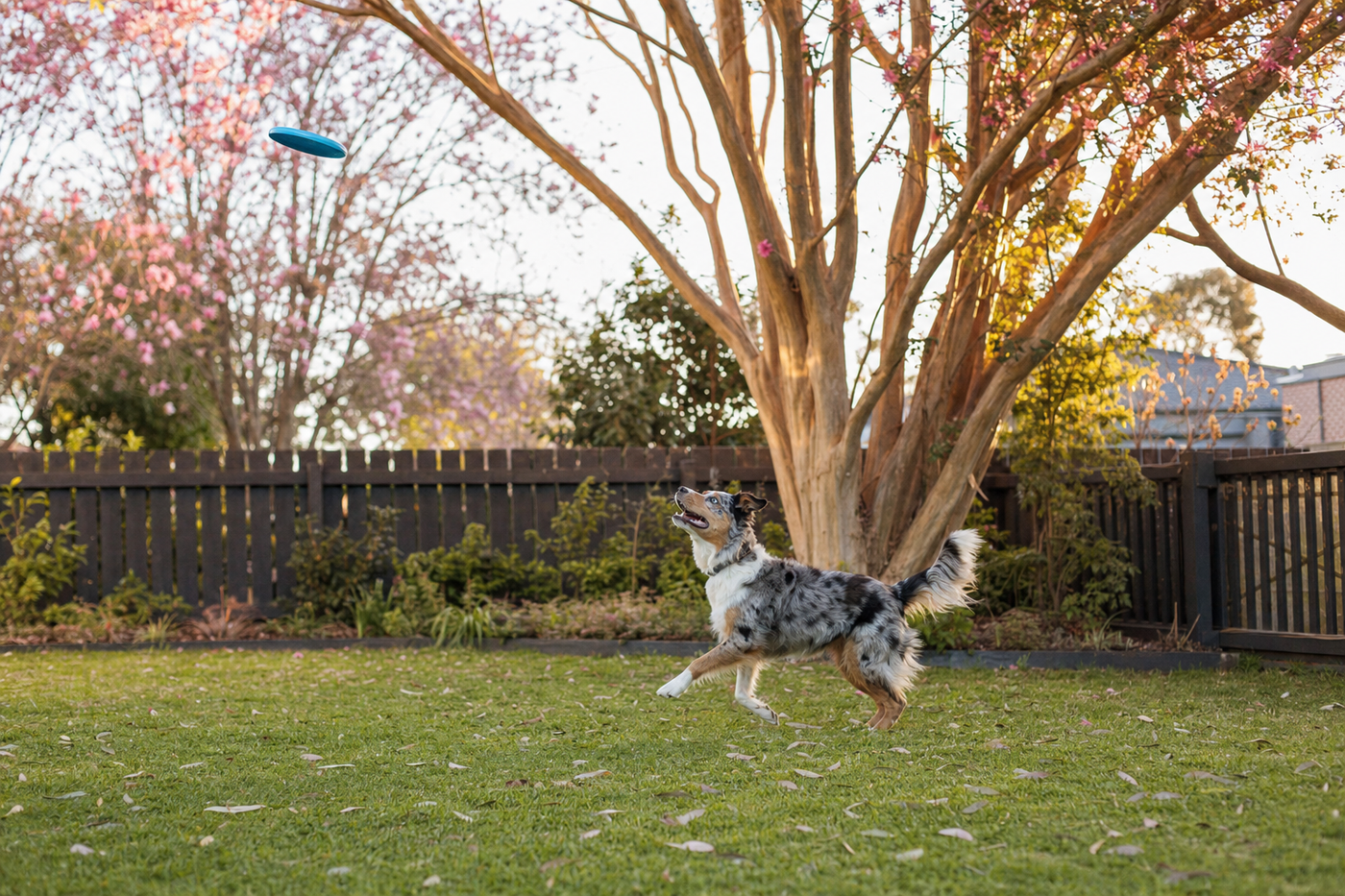
Always ask property owners about local wildlife including snakes before arriving, particularly in Queensland, Northern Territory, and rural NSW regions where snake encounters are possible.
Test your dog's ability to escape by observing them in the yard: stressed or anxious dogs may find escape routes that other dogs wouldn't attempt, so watch carefully during the first outdoor sessions.
Why a fenced yard changes everything for travelling dogs
When I first travelled with my kelpie cross, Biscuit, I thought any dog-friendly place would work. What I didn't realise was how stressed she became in unfamiliar accommodation without outdoor access. She couldn't settle inside, paced constantly, and barked at every noise. That's when I started seeking rentals with proper fenced yards, and it transformed our trips entirely.
A fenced yard gives your dog independence and exercise without you constantly supervising or taking leads out to unknown streets. Your dog can toilet privately, which means fewer accidents inside the house and less stress for everyone. In summer, your dog can move between sun and shade as needed. The mental relief you get is just as important as what your dog gains: you can have a morning coffee without worrying whether your dog is trying to escape through a window.
What size fence actually works for your dog
The standard advice is 1.2 metres for small dogs and 1.8 metres for larger breeds, but I've learned that's not the full story. My friend's two-metre fence didn't stop her determined greyhound from jumping it, while her neighbour's 1.4-metre fence easily contained a 30-kilogram cross. The key is knowing your individual dog's jumping and climbing ability, plus their prey drive.
Before booking, ask the property owner about exact fence measurements and materials. A timber fence at 1.5 metres works differently than a wire fence, which can sag over time. Check whether the fence runs the full property perimeter or if there are gaps around gates or between sections. Request photos of the fence from ground level so you can see if there are obvious escape routes. If your dog is a digger, ask specifically about the condition of the fence base. Properties with concrete footings around the fence line are safer than those where the fence simply meets grass.
Spotting hidden escape routes before you arrive
I once booked a beautiful house in the Adelaide Hills that listed a large fenced yard. When we arrived, I walked the perimeter and found a gap between the gate and its post that a determined dog could squeeze through. We caught Biscuit trying it within minutes. Now I always request video calls with property owners or ask them to walk the fence line via photos sent to my phone before booking.
Look for common problem areas: gates that don't close completely, gaps under or between fence panels, vegetation that dogs can use as climbing assistance, and adjoining properties where dogs could slip through shared boundaries. Ask about repairs that are currently needed. Owners often list fences as secure even when they know about a loose section that hasn't been fixed yet. Check whether the property has a deck or raised platform that gives access to fence tops. Request recent photos specifically focused on problem areas. If something looks concerning in photos, ask for clarification rather than hoping it's less serious in person.
Gear we would pack
Some links below are affiliate links. Pawtrips may earn a commission at no extra cost to you.
Pet-friendly stays on Booking.com
Search and filter thousands of dog-friendly properties across Australia specifically designed to accept pets, with detailed descriptions of outdoor spaces and fenced yard availability.
Pet-friendly holiday houses on Stayz
Browse dedicated pet-friendly holiday rental homes throughout Australia with filters for fenced yards and outdoor spaces, allowing you to read detailed descriptions and see multiple photos before booking.
Essential questions to ask before booking
I learned to create a checklist after booking a supposed dog-friendly place only to discover the owner didn't allow dogs in the backyard after 6 PM because of neighbour complaints. Now I ask everything in writing, clearly and upfront, so there's no confusion when we arrive. Request information about any restrictions on when your dog can be outside, whether dogs can be left unsupervised in the yard, and whether barking is a concern with nearby properties.
Ask whether the property requires your dog to be inside by certain times or for certain periods. Find out if there are any breed or size restrictions beyond what's advertised. Ask about the condition of the grass, whether it's recently treated with pesticides, and whether there are any plants that might be toxic to dogs. Request information about wildlife on the property: snakes, spiders, or aggressive magpies during breeding season. Confirm what happens if your dog damages the fence or yard during your stay. Get the owner's emergency contact details and ask whether they'd accept an extra bond for outdoor use. Email or message through the booking platform so you have everything documented.
Making the yard genuinely safe and secure
Arriving at a property is just the first step. Before you let your dog into that yard, do a thorough walk-through while your dog is still on lead. Walk the entire fence line slowly, looking for gaps, loose sections, or areas where escape might be possible. Biscuit once found a gap between fence panels that the property owner had genuinely not noticed. Check gate latches work smoothly and locks actually secure. Test whether the latch opens easily from outside: if you can open it with minimal effort, so can your dog if spooked.
Remove any toxic plants, check for sharp objects or broken fence edges at dog height, and confirm water bowls can be refilled easily. Walk the perimeter again on day two or three: sometimes you notice things in daylight that you missed when settling in. Keep your dog on lead for the first outdoor trip, even in a secure yard. Let them gradually get comfortable with the space rather than releasing them immediately. Watch their behaviour: do they head straight for a particular spot in the fence? That's where they've identified an escape opportunity. If anything concerns you, contact the owner immediately rather than risk an escape.
Nature's Miracle Urine Destroyer Plus for Dogs
Enzymatic cleaner specifically designed to break down dog urine and eliminate odours from grass, decking, and other outdoor surfaces. Essential for responsible yard management when travelling with dogs and dealing with accidents or marking in unfamiliar properties.
Handling accidents and yard damage responsibly
Most pet-friendly properties expect some wear when dogs stay, but there's a difference between normal use and damage caused by anxiety or boredom. I've had to pay for repairs after Biscuit damaged fence panels while stressed about unfamiliar noise. Now I bring supplies to manage incidents properly and document everything. If your dog has an accident on the grass or deck, clean it immediately using appropriate enzymatic products so urine doesn't soak into soil or damage timber.
Bring absorbent cloths, enzymatic cleaners, and waste bags. If your dog digs or damages fence sections, be honest with the property owner about what happened and offer to pay for repairs. Take photos of any existing damage when you arrive and again when you leave: this protects both you and the owner. Trim any vegetation your dog has damaged rather than leaving it broken. If the fence was already loose or problematic when you arrived, make notes with date and time so you're not blamed for problems that existed beforehand. Most owners appreciate honesty more than they appreciate a guest who tries to hide damage.
Ozone Odor Eliminator Air Purifier
Portable air purifier that eliminates odours and airborne particles from indoor spaces where your dog has stayed, useful for addressing any lingering smells or addressing air quality concerns in enclosed areas.
The difference between fenced yards and other outdoor setups
Not all outdoor spaces are created equal. Some dog-friendly properties offer patios or decks without fencing, which require your dog to stay on lead at all times. Others have partially fenced areas, like a fenced courtyard but open sides. I've seen properties advertised as having fenced yards when they actually have just a small enclosed section near the house, not enough for a dog to get real exercise.
When booking, clarify exactly what's fenced and what's accessible. A fully fenced acre is completely different from a fenced courtyard attached to a house. Some properties have pet-friendly yards but not exclusively: you might be sharing a space with outdoor furniture, garden beds, or equipment that takes up most of the usable area. Others have invisible fencing, which I personally avoid with travelling dogs since your dog doesn't understand that type of boundary during their first experience there. Ensure the yard actually functions as a safe outdoor space for your dog to move, play, and toilet, not just technically being fenced.
Regional considerations across Australia
Dog needs vary wildly depending on where you're travelling in Australia. In tropical North Queensland, shade becomes critical because concrete and metal fencing gets dangerously hot. Snake risks are real in some regions, so ask whether the property has had snake activity and what precautions are in place. I learned this the hard way when Biscuit came close to a brown snake in a Blue Mountains property that hadn't mentioned local wildlife risks.
In cooler southern regions, ensure the fence doesn't trap cold winds or create ice hazards in winter. Coastal properties near cliffs need particularly secure fencing since strong winds are common. In drought-affected regions, grass might not be maintained during dry seasons, so ask whether yards are irrigated. Urban properties near busy roads need higher, more secure fences than rural properties. Desert regions require different consideration for heat management and visibility of hazards. Always ask the owner about region-specific risks: snakes, spiders, magpies, flooding potential, or extreme weather. They'll know what's actually relevant to their specific location.
Plus early access to new guides and partner deals.
No spam. Ever. Just the good stuff for you and your pet.