Heatstroke kills pets rapidly in Australian conditions. A pet's temperature above 40 degrees Celsius requires immediate cooling and veterinary care. Never leave your pet in direct sun or in vehicles, even briefly.
Some Australian toads, snakes, and plants are highly toxic to dogs and cats. If your pet eats anything unfamiliar, contact a vet immediately before attempting any home treatment.
Why you need a pet first aid kit when travelling
I learned the hard way that you cannot rely on finding a vet clinic when your dog needs help on the road. My kelpie mix cut her paw pad on sharp shells near Coffin Bay in South Australia, and the nearest vet was 45 kilometres away. A basic first aid kit would have let me clean and bandage the wound immediately instead of driving in panic.
Travelling with pets means heading into areas where veterinary services are thin on the ground. You might be camping near Uluru or driving through the Fleurieu Peninsula with no clinic for hundreds of kilometres. Your pet can develop minor injuries, pick up ticks, or show signs of dehydration long before you reach professional help.
A well-stocked first aid kit gives you confidence to explore further. You can handle small cuts, remove parasites, and monitor your pet's health without rushing to the nearest town. Most emergencies start small, and treating them early prevents serious complications that could ruin your trip or harm your animal.
Wound care supplies for cuts and scrapes
Pack sterile gauze pads, adhesive tape, and self-adhesive bandages in various sizes. Your pet will encounter sharp stones, broken branches, and rough ground, so you need supplies to cover different wound types. I keep at least a dozen gauze pads because they are lightweight and take up minimal space in your travel bag.
Include antiseptic wash or saline solution to clean wounds before dressing them. Many pet owners skip this step and wonder why infections develop. You should rinse any cut or scrape with antiseptic wash to remove dirt and debris, then pat dry with clean gauze before applying a dressing.
Add a tube of antibiotic ointment designed for pets. Never use human antibiotic cream because your dog or cat will lick it off and ingest harmful ingredients. A pet-safe ointment like Savlon or a veterinary antibiotic cream prevents infection while allowing your pet to lick the wound without danger.
Elastic bandages help secure dressings and provide compression for minor sprains. Your pet might sprain a leg jumping in and out of the car, so compression supports recovery. Make sure the bandage is snug but not so tight that it cuts off circulation to your pet's paw.
What we recommend
Some links below are affiliate links. Pawtrips may earn a commission at no extra cost to you.
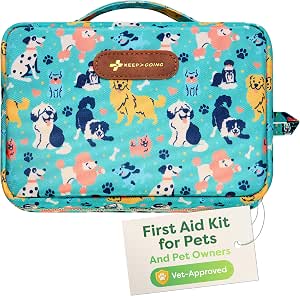
Dog First Aid Kit for Travel Emergencies
It's important to prepare for unforeseeable situations while travelling.

Reduce Shedding with FURminator Conditioner
A well-groomed coat means less mess in your travel space.

Mini GPS Tracker for Cats - Real-Time Location
Tracking your cat eases the stress of travelling together.

Track Your Dog's Location in Real-Time
It helps you keep your pet safe and in check during travels.
Tick removal tools and parasite treatments
Ticks are a serious concern when travelling through rural Australia, particularly from September to April. I remove at least three or four ticks from my dog during a week-long trip to coastal areas. A tick removal tool designed for pets is essential because pulling ticks out by hand leaves the head embedded in the skin and causes infection.
A proper tick removal tool has a small notch that slides under the tick's body without crushing it. You twist gently and pull straight out, leaving no parts behind. Tweezers work in a pinch, but a dedicated tool costs only a few dollars and works far better.
Pack flea and tick prevention medication prescribed by your vet before you leave home. Tablets like NexGard or Simparica work better than spot-on treatments when travelling because they cannot wash off in water. Your pet will jump in creeks and beach water, so oral prevention is more reliable.
Keep a tick disposal container or sealed bag to store removed ticks safely. Never crush a tick with your fingers because the bacteria inside can spread disease. Store ticks in a sealed container and dispose of them in a bin when you reach a town with waste services.
Temperature monitoring and signs of heat stress
A digital pet thermometer tells you if your dog has a fever or is overheating. Normal pet body temperature sits between 38 and 39 degrees Celsius. You insert the thermometer into your pet's bottom for about one minute to get an accurate reading.
Heat stress is the biggest killer of travelling pets in Australia. Your dog cannot tell you when it is overheating, so you must watch for panting, drooling, or glazed eyes. If your pet's temperature hits 40 degrees Celsius, you need to cool them down with water and find shade immediately.
Never leave your pet in a parked car, even with windows cracked open. A car parked in Australian sun reaches 50 degrees Celsius within 20 minutes. I have seen dogs collapse from heat stress after being left in vehicles for just 30 minutes during stops in small towns.
Monitor your pet's hydration by checking their gums. Healthy gums feel moist and pink. Dry, pale, or sticky gums mean your pet is dehydrated and needs water immediately. Keep your pet's water bowl accessible throughout the day, especially during drives longer than three hours.
Medications and prescription supplies to carry
Get a copy of your pet's medical history and prescriptions from your vet before travelling. Ask your vet to prepare a letter listing your pet's name, microchip number, medications, and any allergies. This letter helps any vet you encounter understand your pet's health quickly.
Store medications in their original containers with labels clearly showing the pet's name and dosage. Some vets will not dispense medication without seeing the prescription label. When you cross state lines, different vets might have different rules about medication refills.
Carry double the medication you expect to need for your trip. Flights get delayed, road trips take longer than planned, and you might decide to extend your stay. Running out of heart medication or anxiety tablets on a trip can create serious problems.
Include any medications your pet takes for anxiety or motion sickness. Travelling stresses pets, and an anxious dog is harder to manage in new environments. Ask your vet about calming supplements or prescription anxiety medication that might help your pet enjoy the trip more.
Emergency supplies and when to use them
Pack a muzzle that fits your pet properly, even if your dog is friendly. A hurt pet might snap or bite during treatment, and a muzzle prevents injuries to both your pet and yourself. Practice putting the muzzle on your pet at home so they accept it calmly.
Include tweezers for removing splinters, grass seeds, and small objects from your pet's paws. My dog picked up a grass seed in her paw between her toes near Barossa Valley, and I spent an hour trying to find it. Tweezers would have saved me time and frustration.
Bring a small bottle of hydrogen peroxide to induce vomiting if your pet eats something toxic. Contact a vet immediately before using this, as some poisons should not be vomited. Many rural areas have snakes, toxic plants, and dangerous food scraps your pet might consume.
Pack a pet sunscreen designed for animals and a cooling bandana or coat. Australian sun reflects off sand and water, burning your pet's nose, ears, and belly. A cooling coat soaked in water keeps your pet comfortable during hot weather stops. Use sunscreen on your pet's nose and ear tips before long days outside.
Organising your kit and keeping it accessible
Store your first aid supplies in a small plastic container or zip-lock bags organised by category. Label each bag with large, clear writing so you can find what you need quickly during an emergency. A waterproof container keeps supplies dry if your car leaks or if you wade through water.
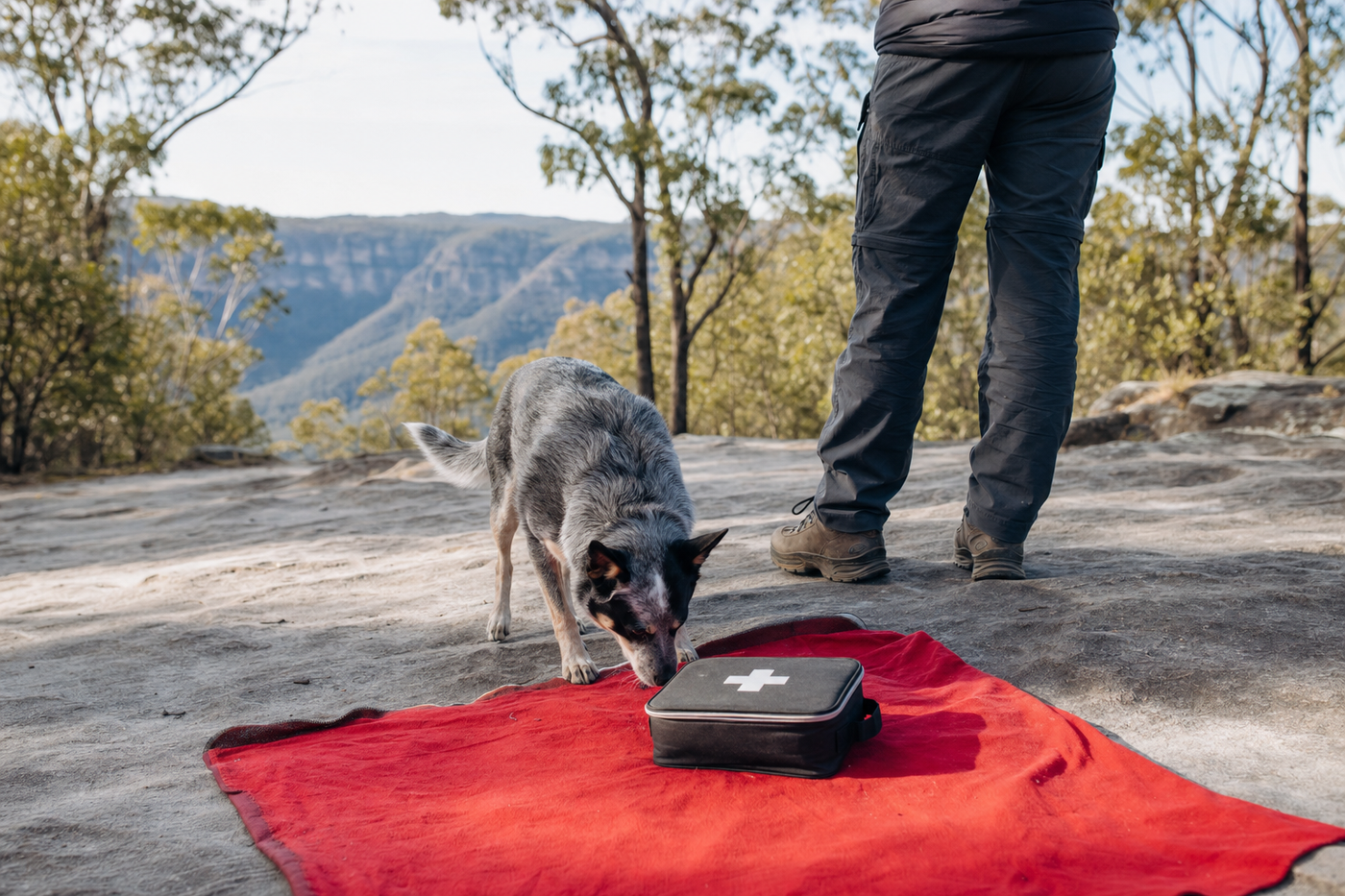
Keep your first aid kit in the car where you can reach it without searching through luggage. Mount it in a door pocket or under a seat where it stays visible and accessible. You might need to treat a wound or remove a tick in minutes, not hours.
Create a small card listing your emergency contacts and your pet's medical information. Include your regular vet's number, the closest emergency vet clinic to your home, and any animal hospitals in major towns you plan to visit. Many emergency vets charge premium rates after hours, so knowing where they are located saves time and money.
Check your kit before each major trip and replenish supplies after using them. Bandages expire, ointments dry out, and medications lose strength over time. A first aid kit that has been in your car for two years might have supplies that no longer work properly.
When to seek professional veterinary help
Some injuries require professional treatment no matter what supplies you carry. Bite wounds from other animals always need antibiotics and professional cleaning. Deep cuts that gape open or bleed heavily need stitches or staples that only a vet can apply.
If your pet vomits or has diarrhoea lasting more than six hours, call a vet. Dehydration develops quickly in travelling pets, and fluids from a vet prevent serious complications. Young puppies and senior dogs deteriorate faster, so do not wait to see if symptoms improve.
Any sign of poisoning requires immediate professional care. If your pet eats a snake, a toad, or food you cannot identify, drive to the nearest vet without delay. Some Australian wildlife and plants are deadly, and vets have antidotes that home care cannot replicate.
Hobbling, limping, or refusal to put weight on a leg suggests a fracture or serious sprain. Do not let your pet run or jump until a vet rules out breaks. Fractures worsen quickly without professional support, and you might cause permanent damage by allowing your pet to move freely.
Plus early access to new guides and partner deals.
No spam. Ever. Just the good stuff for you and your pet.