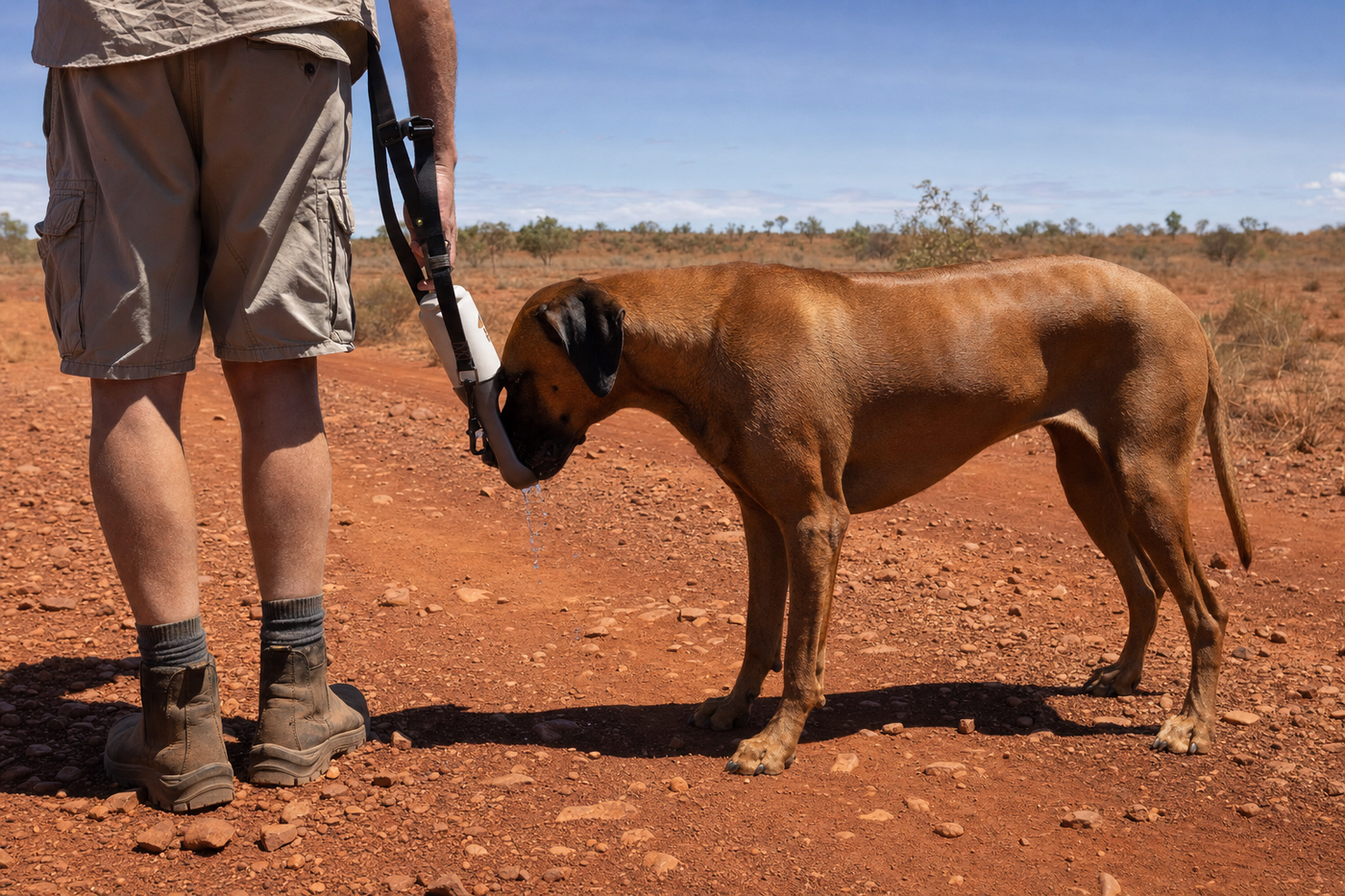
A car's interior reaches lethal temperatures in under twenty minutes on warm Australian days. Never leave your dog in a parked vehicle unattended, even briefly.
Heatstroke causes permanent organ damage even if your dog appears to recover. It is a life-threatening emergency requiring immediate veterinary care, not a condition you can treat at home.
Why Heat is the Biggest Threat on Australian Roads
I learned the hard way that Australian heat kills dogs fast. Last summer, I left my Border Collie in a parked car outside a cafe in Dubbo for what I thought was fifteen minutes. The interior temperature had already hit 48 degrees Celsius. He was panting heavily and his gums were pale when I got back.
Cars become ovens in Australia because metal and glass trap heat with nowhere to go. Even on a day that feels mild at 28 degrees, your car's interior can reach 50 degrees in just twenty minutes. Cracking windows does almost nothing. Dogs cannot regulate temperature the way humans do, so they rely entirely on panting and sweating through their paws.
Heatstroke in dogs happens suddenly. By the time you notice symptoms like drooling, weakness, or collapse, organ damage is already starting. The danger is so real that many Australian vets treat heatstroke cases almost daily during summer months. Prevention is the only reliable solution.
Hydration: More Than Just Offering Water
Most people think hydration means leaving a water bowl in the car. That approach fails because your dog gets thirsty at different times during a long drive, and water sitting in a hot car grows unsafe to drink. I now carry a collapsible bowl and offer water every thirty to forty-five minutes, whether my dog asks for it or not.
Your dog loses fluids through panting, especially in moving air from the car's ventilation. Long drives also stress dogs emotionally, which increases their water needs. A dog travelling from Melbourne to Adelaide loses more fluid than one sitting at home on the same day.
Watch for signs of dehydration: dry nose, sticky gums, or skin that doesn't bounce back when you gently pinch it. Offer water at every fuel stop. Don't rely on your dog to drink when thirsty because stress and overstimulation can suppress their thirst response. Bring more water than you think you'll need, because service stations don't always stock enough for both you and your pet.
What we recommend
Some links below are affiliate links. Pawtrips may earn a commission at no extra cost to you.

Mini GPS Tracker for Cats - Real-Time Location
Tracking your cat eases the stress of travelling together.

Hemp Oil for Dogs: Skin, Coat & Anxiety Relief
Hemp oil can ease your pet's anxiety during travels.

Dog Car Booster Seat for Safe Travel
This car seat offers small dogs a safe and comfortable way to travel.

Dog Dental Kit for Travel - Fresh Breath, Happy Pooch
This kit helps maintain your dog's dental health, ensuring fresh breath while travelling.
Stopping Every Two Hours Saves Lives
Long stops every two hours are non-negotiable on any road trip with a dog. My first mistake was trying to reach Canberra from Sydney in one six-hour push. By hour four, my Kelpie was stressed, dehydrated, and showing early signs of heatstroke. Now I plan routes that include proper breaks at towns like Goulburn or Yass.
Each stop should last at least fifteen to twenty minutes. Let your dog have a toilet break, drink fresh water, stretch their legs, and calm down. Use a secure lead or harness every single time you stop, even in quiet rest areas. Dogs panic in unfamiliar places and bolt toward roads or into bushland.
Break stops also give your car a chance to cool if you've been running air conditioning constantly. Your vehicle works harder on long drives and benefits from a rest. Dogs often fall asleep again after a proper break, which gives you another peaceful driving stretch. Plan your route around towns with green spaces so your dog has a decent place to move around.
Vehicle Setup Matters More Than You Think
How you secure your dog in the car directly affects both safety and comfort. I used to let my dog roam around the back seat, which sounds friendly until emergency braking throws a 30-kilogram dog forward into the front seat. Now every trip uses either a crash-tested harness clipped to the seat belt or a barrier between the cargo area and passenger cabin.
Securing your dog reduces distractions while you drive, which prevents accidents. It also protects your dog from injury during sudden stops. A loose dog in a car crash suffers injuries a harness would have prevented. Some dogs also get anxious when confined but calmer once they realise they cannot change position constantly.
Ventilation matters enormously. Position your dog away from direct airflow and make sure fresh air reaches them. Avoid the front seat in summer because sun through the windscreen creates an oven effect. Tinted windows or a sunshade over parked cars help, but nothing replaces actually stopping and getting out of the vehicle when temperatures climb.
Building an Emergency Kit for Remote Areas
Many Australian road trips pass through areas where the nearest vet is more than an hour away. I learnt this when my dog got a tick embedded in his ear while travelling near Merimbula. The nearest vet was in town, but I waited an hour and a half for the appointment, and the tick had already caused inflammation.
Carry a proper pet first aid kit that includes tweezers for tick removal, antiseptic wipes, bandages, and pain relief suitable for dogs. Know which human medications you can use in emergencies and at what doses. Keep your vet's number saved and research emergency clinics along your route. Towns like Broken Hill, Lismore, and Port Augusta have 24-hour emergency vet services, but smaller towns do not.
More importantly, travel with a phone charged enough to call for help. A dog suffering heatstroke needs immediate shade, water, and veterinary care. A dog hit by a car needs emergency surgery. Travel insurance for pets costs under fifty dollars and covers unexpected vet bills. That investment has saved me hundreds of dollars on two separate trips.
Recognising Heatstroke Before It's Too Late
Heatstroke symptoms develop fast and can look confusing if you don't know what to watch for. Early signs include excessive panting that doesn't slow down even when your dog rests, drooling more than usual, and redness in the gums or tongue. Your dog might seem restless or confused, pacing without reason or staring blankly. Some dogs vomit or have diarrhoea.
If your dog collapses, loses consciousness, or has difficulty breathing, heatstroke has reached a critical stage. Get to a vet immediately. Do not wait. While you drive, wrap your dog in cool (not cold) water-soaked towels and offer water to drink if conscious. Some people use ice packs on the groin area where major blood vessels run close to the skin.
The key is prevention because heatstroke causes organ damage that continues even after your dog cools down. A dog who survives heatstroke sometimes faces kidney or heart problems for the rest of their life. This is not something you can treat at home or observe for a while. If you suspect heatstroke, get professional help.
Preparing Your Dog Before Departure Day
Dogs who travel regularly handle long drives better than those thrown into car journeys cold. I spent two months taking my rescue Staffy on progressively longer drives before our first big trip across New South Wales. By the time we drove six hours to the coast, she was calm and tired rather than anxious.
Start with fifteen-minute drives around your local area. Gradually extend to thirty minutes, then an hour. Use the same harness or car seat for every trip so your dog associates it with safety rather than fear. Bring familiar toys or blankets that smell like home. Many dogs get carsick initially, but the sensation usually passes after a few trips.
Exercise your dog before you leave. A dog who has played for an hour is tired and more likely to sleep during the drive. Exercise also burns nervous energy that might otherwise show as anxiety or destructive behaviour. Feed your dog at least two hours before you depart to reduce the chance of car sickness or digestive stress.
Know When Not to Travel With Your Dog
Some situations mean leaving your dog at home is the safer choice. Dogs with heart conditions, respiratory problems, or advanced age often struggle with long car journeys. Pregnant dogs and nursing mothers should not travel. Dogs recovering from surgery need rest, not six-hour drives to the coast.
Extremely hot days call for delayed travel. If the weather forecast shows temperatures above 35 degrees, consider waiting a day or two. The risk simply is not worth saving eight hours. I have delayed two road trips and never regretted it. Your dog's life is more important than your schedule.
Some dogs are simply not temperament-suited to road travel. If your dog panics in the car despite training and preparation, consider hiring a pet sitter or boarding facility. No holiday is worth your dog's wellbeing. Professional carers exist precisely for these situations.
Plus early access to new guides and partner deals.
No spam. Ever. Just the good stuff for you and your pet.