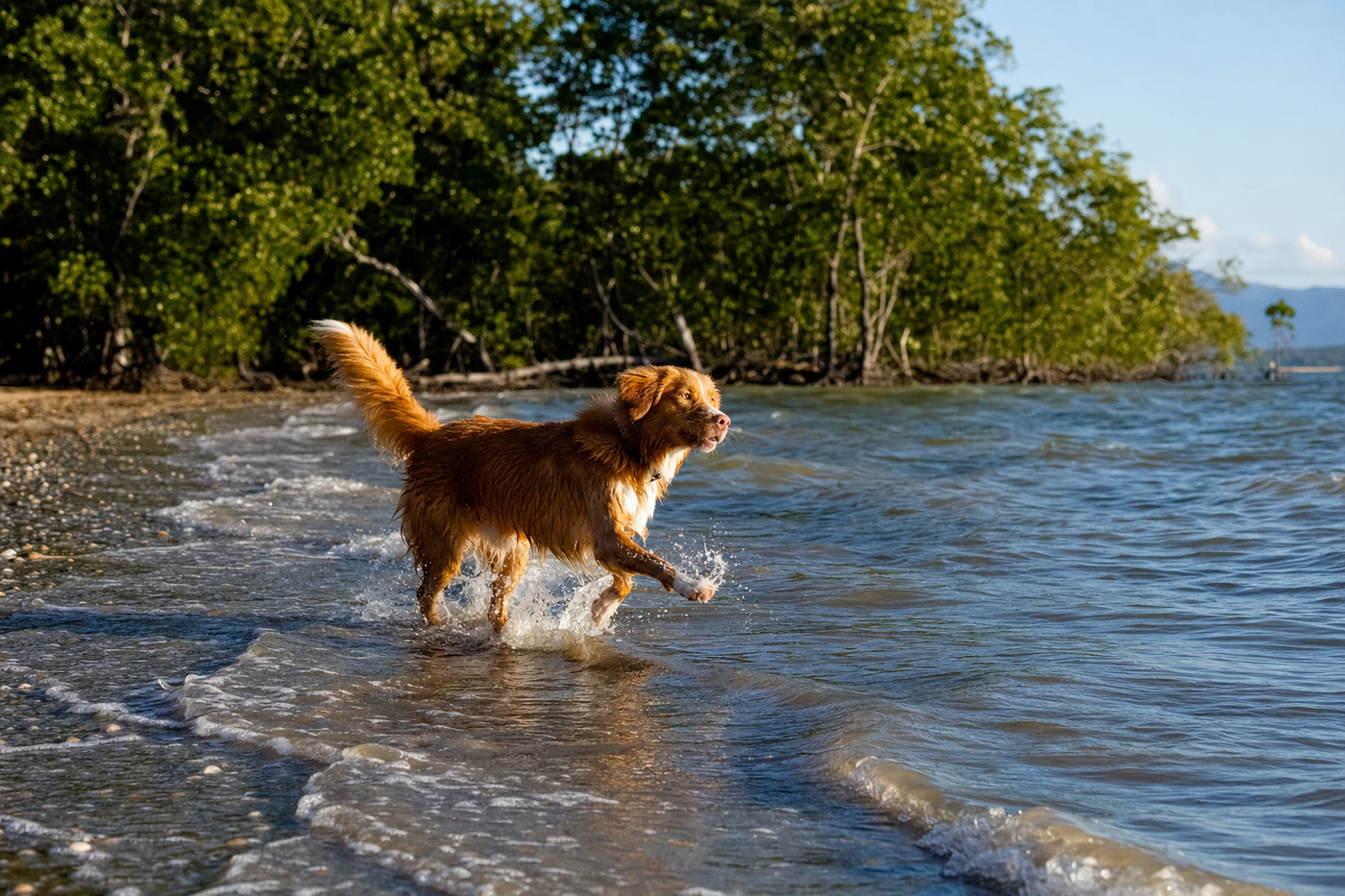
Not all dogs are natural swimmers
The image of a dog gleefully leaping into water and swimming strongly is accurate for some breeds. It is not accurate for all of them. Breeds with heavy chests, short legs, or flat faces can struggle significantly in water. Bulldogs, French Bulldogs, Pugs, Dachshunds, and Basset Hounds are all poor natural swimmers. Their body proportions make staying afloat effortful and tiring. A dog that manages a short swim can become exhausted and go under with very little warning. Older dogs, dogs with arthritis, and dogs with heart or respiratory conditions also have reduced swimming capacity compared to their younger selves. A dog that swam confidently at three may be genuinely at risk in the same conditions at ten. Never assume your dog can handle a swimming situation without assessing it honestly. Start in shallow, calm water and build from there. A dog life jacket is a sensible investment for any dog that is not a confident swimmer.
Ocean beaches: rips and currents
Rip currents are fast-moving channels of water flowing away from the beach. They are present on most Australian surf beaches and they are dangerous for dogs as well as people. A dog caught in a rip can be pulled offshore rapidly, even a strong swimmer. Keep your dog in the shallow break zone rather than deeper water. Avoid the sections of beach where the water looks darker or where waves are not breaking, these are often rip channels. Most dog-friendly beaches in Australia are not patrolled beach sections. This means no lifeguards. Your risk assessment and your supervision are the only safety net. Waves can knock smaller dogs over and create panicked responses. A dog that has not experienced surf before should be introduced to it gradually in gentle conditions. Not in large surf on a busy beach day.
What we recommend
Some links below are affiliate links. Pawtrips may earn a commission at no extra cost to you.

Safe Swim Life Jacket for Dogs
Essential for keeping your dog afloat during swim adventures.

Stop Bleeding Fast with Kwik Stop for Pets
Having Kwik Stop ensures quick first aid during travels.
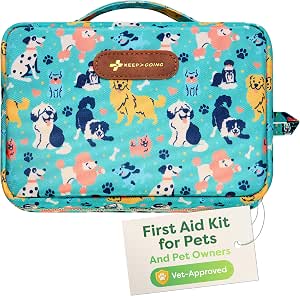
Dog First Aid Kit for Travel Emergencies
It's important to prepare for unforeseeable situations while travelling.

Reduce Shedding with FURminator Conditioner
A well-groomed coat means less mess in your travel space.
Marine stingers
Box jellyfish and Irukandji are present in northern Australian waters from November through May. Both species are dangerous and box jellyfish stings can be lethal. The sting mechanism affects dogs as it does people. Do not allow your dog to swim in unprotected northern waters during stinger season. This applies to beaches from approximately Bundaberg in Queensland northward through the NT and tropical WA. Stinger nets at patrolled beaches reduce risk but dogs are typically not permitted in the immediate areas with stinger net protection. Stick to dog-specific beach areas and check whether stinger warnings are in place before any beach visit in the north.
Freshwater safety
Freshwater swimming locations in Australia carry different risks from the ocean. Blue-green algae is the most serious freshwater threat, covered in detail in the blue-green algae guide on Pawtrips. In tropical Queensland and the Northern Territory, freshwater bodies can also harbour saltwater crocodiles which move between tidal and freshwater systems. Do not assume a freshwater location is crocodile-free without confirmed signage. Leptospirosis, a bacterial infection spread through the urine of infected animals into waterways, is present in some Australian freshwater environments particularly after flooding. While less common in Australia than overseas, it is a genuine risk in some areas. Discuss vaccination with your vet if you plan extensive freshwater swimming in tropical Queensland. River crossings and fast-moving water are hazardous for dogs, particularly smaller breeds. Assess the current honestly before allowing your dog into any fast-moving water.
After the swim
Rinse your dog with fresh water after every salt water swim. Salt residue causes skin irritation and if licked can cause vomiting from ingesting too much salt. Dry the ears thoroughly. Dogs that swim frequently without adequate ear drying develop ear infections from retained moisture. This is particularly common in dogs with floppy ears. A gentle dry with a towel and allowing airflow is sufficient for most dogs. Watch for signs of fatigue after extended swimming. A dog that lies down heavily, pants excessively after rest, or seems uncoordinated after a swim may be more tired than they appear. Rest, fresh water, and shade are the immediate response.
Water is one of the great joys of travelling Australia with a dog. It is also one of the genuine hazards. A little knowledge and a bit of preparation keeps it firmly in the joy category. Write to us at hello@pawtrips.com.au with water safety tips worth sharing.
hello@pawtrips.com.auPlus early access to new guides and partner deals.
No spam. Ever. Just the good stuff for you and your pet.