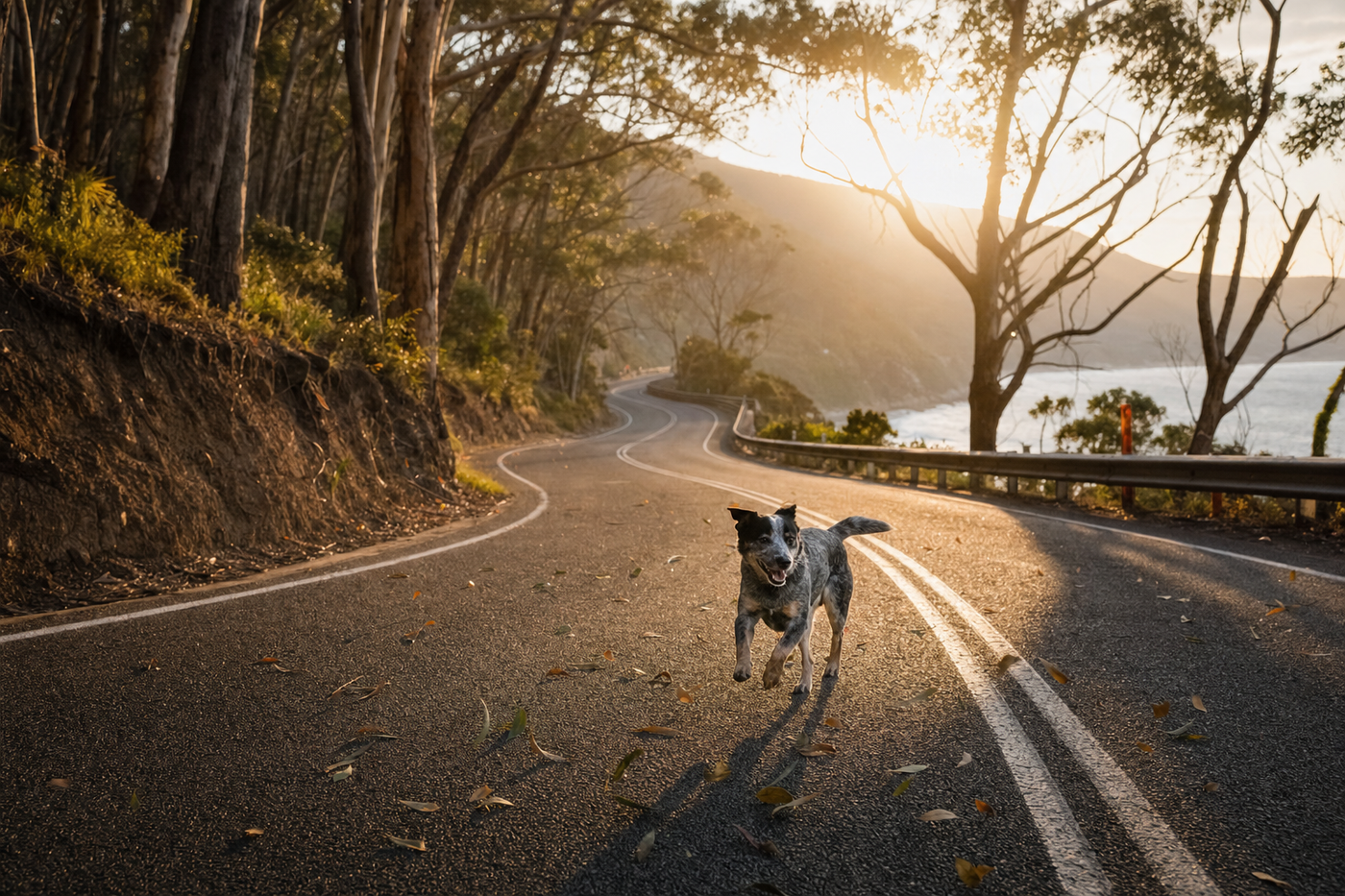
Never leave your dog unattended in a vehicle. Interior temperatures can reach lethal levels within minutes, even with windows partially open.
Check road conditions for your chosen route, as some outback roads become impassable after rain and emergency services may be unavailable for hours.
The Great Ocean Road to Adelaide: 900 Kilometres of Coastal Bliss
The drive from Melbourne to Adelaide along the Great Ocean Road stays under 11 hours if you split it sensibly. Your dog will love the regular stops at small beach towns where you can both stretch your legs. Halls Gap in the Grampians offers dog-friendly walking trails and several motels that welcome pets. The town of Coleraine sits roughly halfway and has a lovely park where dogs can run safely.
Budget for three days to make this trip worthwhile. You'll pass through some of Australia's most stunning landscapes without rushing your dog. Many caravan parks between Warrnambool and Port Campbell allow dogs, and several charge under 25 dollars per night for pet-friendly cabins. Your dog gets genuine rest time, and you avoid the stress of cramped overnight drives.
Sydney to Byron Bay: The East Coast Escape
This 900-kilometre journey from Sydney takes you through New South Wales coastal towns that genuinely cater to travelling dogs. Coffs Harbour sits roughly halfway and has excellent pet-friendly beaches where your dog can swim if they enjoy water. The Pacific Highway can get busy, so leave early and aim to cover about 450 kilometres on day one to reach Nambucca Heads.
Byron Bay itself has become increasingly dog-friendly over recent years. Several beach areas allow dogs during certain hours, and local cafes have outdoor seating where your dog can sit beside you. The journey suits dogs that enjoy variety because you'll pass through rainforest areas, coastal strips, and small country towns. Split this into two days and your dog arrives fresh rather than exhausted from sitting in a car.
Gear we would pack
Some links below are affiliate links. Pawtrips may earn a commission at no extra cost to you.

Quiet 62L Pet Dryer Box with Smart Control
This ensures your pet stays comfortable and dry during your travels.

Mini GPS Tracker for Cats - Real-Time Location
Tracking your cat eases the stress of travelling together.

Hemp Oil for Dogs: Skin, Coat & Anxiety Relief
Hemp oil can ease your pet's anxiety during travels.

Dog Car Booster Seat for Safe Travel
This car seat offers small dogs a safe and comfortable way to travel.
Melbourne to Tasmania: The Ferry Adventure
The Spirit of Tasmania ferry from Melbourne to Hobart takes roughly 11 hours, but your dog travels in your vehicle so they experience minimal stress. Many dogs find the ship experience oddly calming compared to sitting in a stationary car. Once in Hobart, the drive to Cradle Mountain takes about four hours through some of Tasmania's most spectacular scenery.
Tasmania genuinely offers some of Australia's most dog-friendly hiking trails. The trail to Dove Lake near Cradle Mountain allows dogs on leads and rewards you both with stunning alpine views. Several lodges around Launceston and Deloraine welcome dogs and provide secure outdoor areas. The cooler Tasmanian climate makes travelling with dogs significantly easier than in warmer states, particularly during summer months.
Alice Springs to Uluru: The Red Centre Adventure
This 450-kilometre drive takes roughly five hours, but the landscape changes so dramatically that it feels like crossing worlds. Your dog experiences genuine desert scenery, red earth, and incredibly clear night skies. Several roadhouses between Alice Springs and Erldunda offer basic facilities and water stations, though many don't have shade for dogs in the carpark.
Uluru itself has strict dog restrictions in the national park, so plan your dog's activities beforehand. The drive to Kings Canyon provides excellent alternative scenery where dogs can join walks on designated trails. Accommodation in the resort town outside Uluru varies in pet-friendliness, so ring ahead. The main challenge here is temperature management: your dog cannot stay in a car in the red centre during daylight, so plan indoor cooling facilities at every stop.
Brisbane to Cairns: Tropical Dog Territory
The 1700-kilometre drive up the Queensland coast takes three days if you travel sensibly with your dog. Mackay sits roughly halfway and has a lovely dog-friendly park near the riverside where dogs can cool off. The Bruce Highway can feel monotonous for both you and your dog, so take the slower detour through Mission Beach and the Atherton Tablelands instead.
Cairns itself has grown more dog-friendly, with several beaches allowing dogs during off-season months. The drive through the tablelands offers cooler temperatures and more interesting scenery than the coastal highway. Accommodation options increase significantly if you're flexible about where you stop. Your dog will appreciate the variety of landscapes, from tropical rainforest to agricultural areas to coastal towns. Book accommodation ahead because this route has become increasingly popular with travelling pet owners.
Essential Dog Comfort Gear for Long Drives
Your dog's comfort during long drives determines whether future road trips are enjoyable or stressful. A properly secured harness or barrier prevents your dog from moving around while braking, which protects both your dog and you from injury. Many dogs sleep better when they can't see out the window constantly, so a car seat cover that darkens the rear area helps them rest.
Collapsible water bowls save space compared to regular bowls, and they fit easily into your travel bag. Pack a portable shade structure because many roadside rest areas have zero natural shade. Your dog's regular bedding or blankets provide familiar scents that reduce anxiety during travel. Invest in a quality car harness that fits your specific dog's size, as one-size-fits-all options often shift during braking.
Finding Genuinely Dog-Friendly Accommodation
Not all pet-friendly accommodation actually suits dogs, so ring ahead rather than relying on online descriptions. Ask specifically whether your dog can stay in the room with you or gets locked in a separate laundry area. Many caravan parks allow dogs but don't provide shade or water bowls, so clarify these details. Some motels charge a one-time pet fee of five dollars, while others charge ten to fifteen dollars per night, so factor this into your budget.
Pawtrips lists accommodation options that experienced travellers have already vetted with their own dogs. Regional towns often have more genuinely dog-friendly options than city suburbs. Small family-run motels in places like Nambucca Heads or Halls Gap typically welcome dogs more warmly than large hotel chains. Ask about secure outdoor areas where your dog can toilet without you worrying about escape routes.
Managing Temperature and Health on the Road
Australian road trips can expose your dog to temperature extremes they're not used to. Never leave your dog in a parked car, even with windows down, as temperatures inside vehicles climb rapidly. Dogs traveling long distances can develop dehydration, so offer water every 90 minutes and watch for excessive panting or lethargy. Check your dog's paw pads regularly because bitumen gets hot enough to burn sensitive skin.
Pack your dog's regular medications in a separate bag you keep with you rather than in the boot. Motion sickness affects some dogs, so talk to your vet about medication options before long drives. Bring copies of your dog's vaccination records in case you need emergency veterinary care while travelling. Keep a list of emergency vet clinics in each town you'll pass through, particularly for longer remote routes.
Plus early access to new guides and partner deals.
No spam. Ever. Just the good stuff for you and your pet.