Check your dog's microchip details are current with the registry before travelling interstate, as this is legally required and helps reunite lost dogs with owners.
Never leave your dog in a car during warm weather, even for short periods. Interior temperatures rise rapidly and can cause heatstroke within minutes, especially during Australian summers.
Why dog-friendly Stayz beats traditional hotels
When my Border Collie Oscar and I spent a week at a hotel in Melbourne, staff kept knocking on the door and he barked at every sound. We switched to a Stayz in the Dandenong Ranges with a backyard and everything changed. Your dog can move around freely, there are no noise complaints from neighbours, and you control the temperature without worrying about upsetting others.
Traditional hotels also limit where your dog can go inside the building. A self-contained rental means your dog accesses the kitchen, lounge, and outdoor areas just like home. You save money by cooking your own meals instead of eating out every night. Most importantly, your dog feels less anxious in a space that resembles their normal environment.
What to look for in a dog-friendly Stayz
Start by reading the pet policy word for word. Some places say they accept dogs but charge extra per night or have size limits. I found a beautiful cottage on the Sunshine Coast that looked perfect until I read the fine print: no dogs over 15 kilograms and a 50 dollar pet fee per night. Always check the cancellation policy too, especially if your dog has health issues that might force you to postpone your trip.
Look for properties with fully fenced yards or secure outdoor areas. This is non-negotiable if you have an anxious dog or one that bolts at open gates. Read recent reviews from other dog owners specifically. They'll mention whether the neighbourhood is quiet or busy, if the yard has gaps your escape artist might find, and what the local dog parks are actually like. If a property has no dog-focused reviews, message the host directly and ask about their experience with pets.
Best dog-friendly regions across Australia
The Blue Mountains near Sydney offer brilliant short walks and dog-friendly cottages scattered through Leura and Katoomba. Many properties sit on larger blocks with bush access, perfect for a dog that needs space. Aireys Inlet in Victoria has a famous dog beach where your dog can swim year-round. The town itself feels quiet and safe for walking, with most locals accepting of well-behaved dogs.
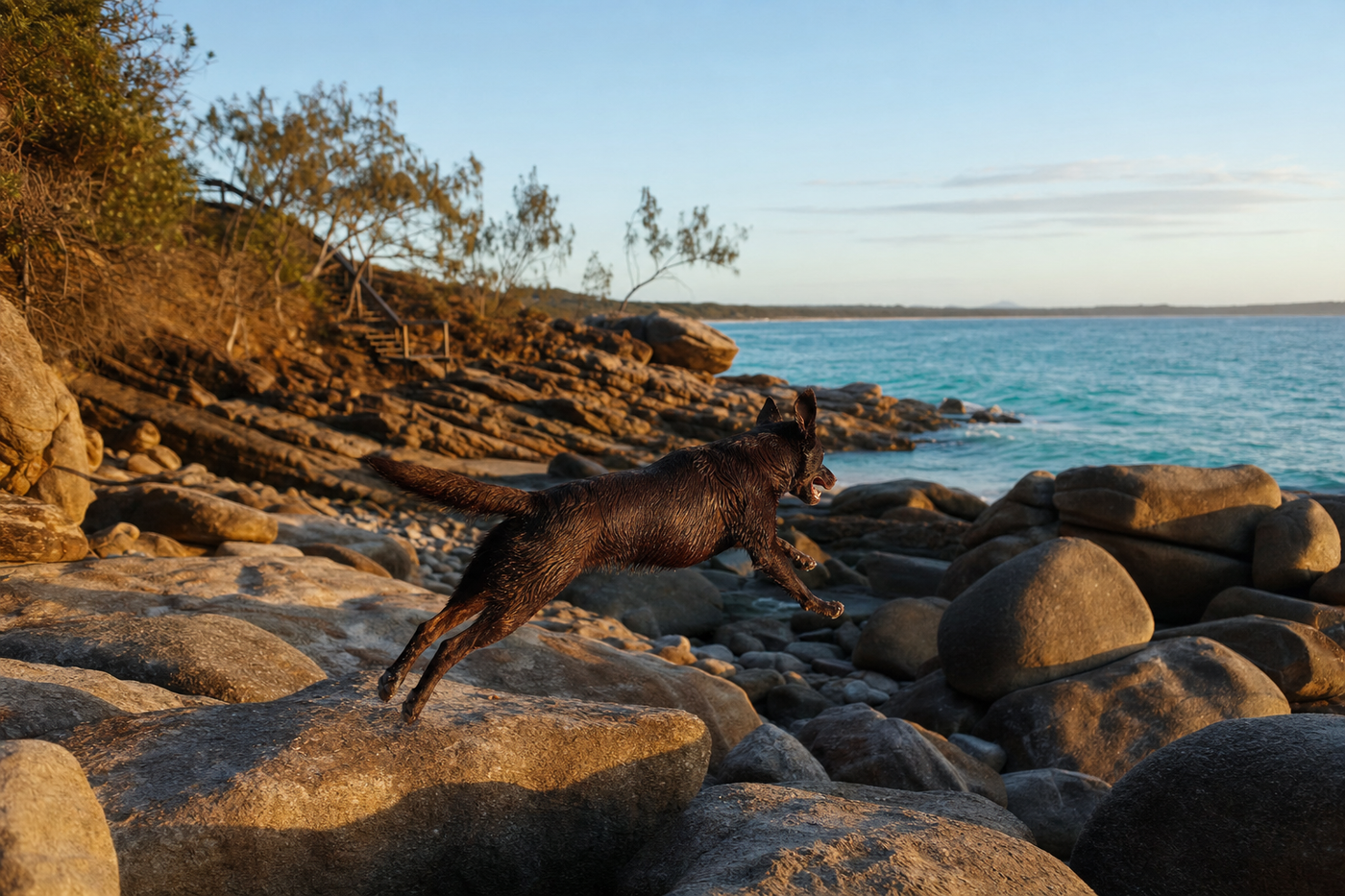
Queensland's Noosa area has dog-friendly accommodation within walking distance of patrolled beaches. Noosa allows dogs on certain beach sections before 9am and after 5pm, so your early mornings and late afternoons are sorted. Down south, Tassie's Coles Bay near Freycinet offers stunning coastal walks and quiet holiday rentals. For something different, the Barossa Valley in South Australia has wineries and rural properties where your dog can roam safely. Each region has its own character, and your dog's personality should guide your choice.
Gear we would pack
Some links below are affiliate links. Pawtrips may earn a commission at no extra cost to you.
Pet-friendly holiday houses on Stayz
Stayz is Australia's largest peer-to-peer holiday rental platform with thousands of dog-friendly properties listed across every state. Filter by pet policy, outdoor space, and location to find the perfect rental for your dog's personality and your travel dates.
Preparing your dog for a holiday rental
Start conditioning your dog to the rental environment before your trip. If your dog shows anxiety in cars, take short drives around your neighbourhood starting six weeks before travel. Practise getting in and out of your vehicle, sitting calmly, and settling during stops. Oscar used to whine and pace in the car for three hours, but short weekly practice runs cut that down to occasional fidgeting.
Visit your vet about two weeks before departure. Ask about anxiety medication if your dog struggles with new places or car travel. Get a current health certificate, especially if you're crossing state borders or flying. Bring vaccination records in case you need emergency vet care while travelling. Make sure your dog is microchipped and the details are current. Leave a clear photo of your dog and your contact details with someone at home, just in case.
PAW by Blackmores Complete Calm Multivitamins for Dogs
Travel anxiety is real for dogs, and these multivitamins with calming ingredients help settle your dog during car journeys and in new rental spaces. Start giving them to your dog a week before your trip so they work effectively by the time you arrive.
Managing your dog's routine during the stay
Dogs thrive on routine, and holidays can disrupt their sleep, feeding, and toilet schedules. Bring your dog's own bed or blanket from home so they have a familiar spot to sleep. The smell of their own space helps them settle faster in a new rental. Feed your dog at the same times you do at home, even if you're eating later than usual. Pack enough of your dog's regular food for the entire trip plus a few days extra in case you can't find their brand locally.
Find the local vet clinic before you arrive and make a note of their hours and emergency contact number. Walk your dog regularly around the property and nearby streets so they learn where they're safe to toilet. Some dogs get constipated or skip meals when stressed, so keep an eye on these signs. If your dog seems anxious, stick to quiet times at nearby parks and beaches rather than busy weekend crowds. A tired dog is a happy dog, so plan activities that match your dog's age and energy level.
Blackdog Chicken Breast 1KG
Keeping your dog's regular food is important, but these freeze-dried chicken pieces are lightweight to pack and give you a protein-rich backup treat if you run out of regular food. Dogs love them and they're less likely to cause digestive issues than new brands.
House rules and neighbour courtesy
Your rental agreement likely includes rules about noise, damage, and how many pets you can bring. Read these carefully and follow them precisely. If your dog barks when left alone, don't leave them outside unsupervised for hours. This upsets neighbours and could get you evicted. Ask your host where it's acceptable to let your dog toilet and clean up thoroughly every single time.
Meet your neighbours when you arrive and let them know you have a dog. A quick introduction and a genuine apology if your dog causes any noise goes a long way. If your dog is reactive to other dogs, keep them inside during peak outdoor hours when neighbours might be in their gardens. Never assume a fenced yard is soundproof. Check the time and volume before playing with squeaky toys or using training whistles. Respecting boundaries now means more properties will welcome dogs in the future.
Chewise Bully Stick Holder for Dogs
When your dog needs to stay quiet in the rental or you want independent play time, a bully stick in a holder keeps them occupied for hours without the mess. Pack a few bully sticks to keep your dog calm during downtime at the property.
Budget tips for dog-friendly holidays
Pet fees add up quickly. A 30 dollar per night pet charge across a week-long stay becomes 210 dollars. Compare this against the total cost and decide if a slightly more remote property might offer better value. Some hosts charge a one-time pet fee instead of per night, which is worth seeking out. Book during shoulder seasons like May or September when fewer families travel and prices drop.
Cook most of your meals instead of eating out. This saves money and lets your dog eat their regular food rather than human scraps that might upset their stomach. Bring dog treats and toys from home instead of buying new ones. Look for free or low-cost activities like local beaches, council dog parks, and nature reserves. Many Australian towns have free dog parks where your dog can socialise and burn energy. Call the local council before you arrive to ask about dog beach times and any temporary closures.
PAW by Blackmores Osteocare Joint Protect for Dogs
If your dog is older or you'll be doing lots of walking during your holiday, joint support supplements prevent soreness and stiffness. Start these a few weeks before your trip so your dog can enjoy longer walks without discomfort.
Red flags when booking a dog-friendly property
Run away from listings that have vague pet policies or don't mention dogs at all. If the host seems defensive when you ask about pets, that's a warning. Properties with photos showing no outdoor space or visible escape routes need close inspection. Read reviews carefully for complaints about barking dogs or damaged properties, which suggests poor pet management.
Be suspicious of unusually cheap nightly rates in touristy areas. Something is probably wrong, whether it's noise, poor maintenance, or overly strict rules that make it hard to actually live there. Avoid properties in narrow residential streets where your dog would be walking past other people's front doors all day. Check the nearest vet is actually reachable by car within 15 minutes. A beautiful holiday rental means nothing if your dog gets sick and you're stranded an hour from medical help.
Plus early access to new guides and partner deals.
No spam. Ever. Just the good stuff for you and your pet.