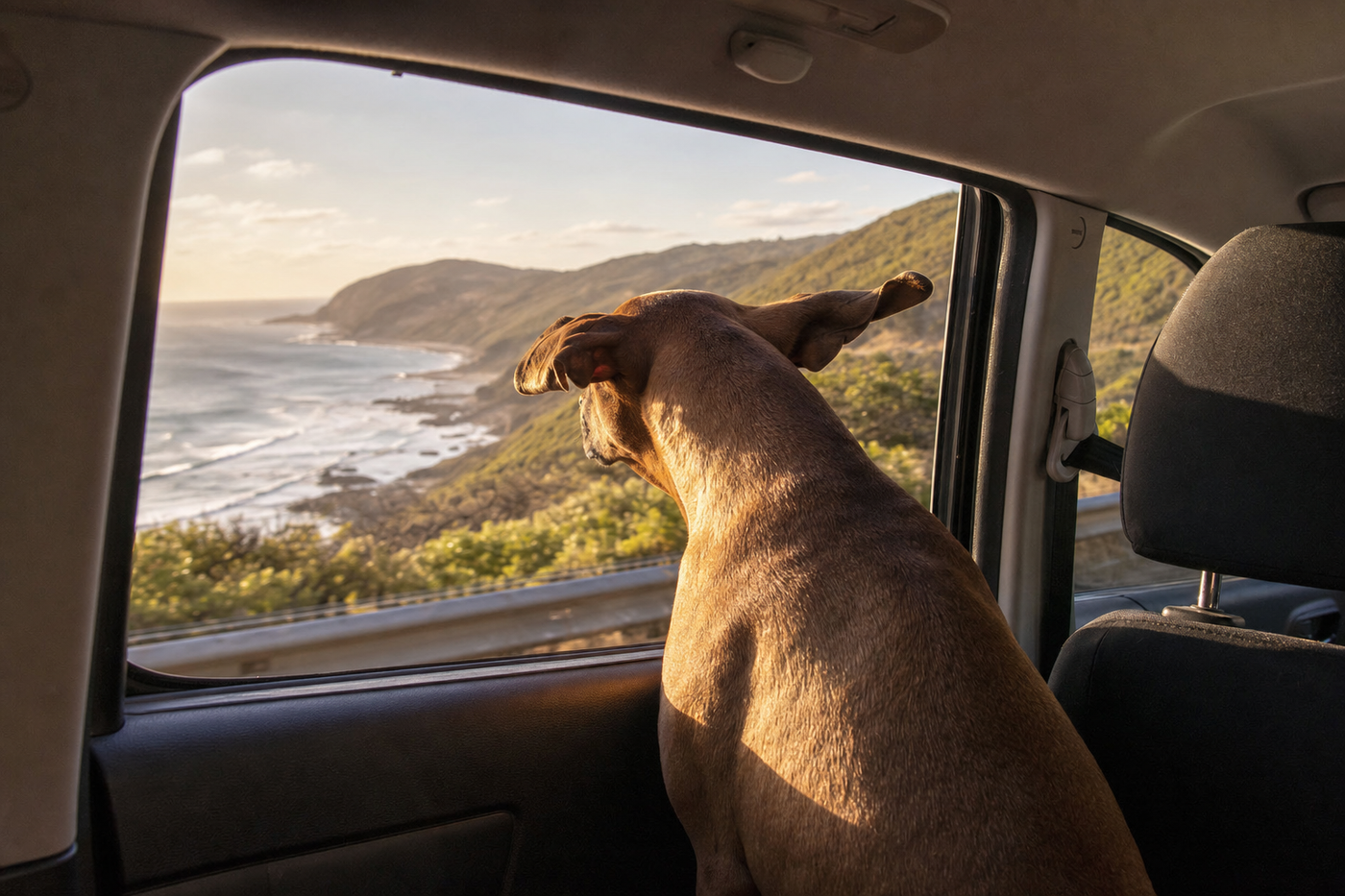
Heatstroke in dogs can develop within 15 to 30 minutes in a hot car. Never leave your dog unattended, and watch for panting, drooling, or lethargy as warning signs.
Dogs can escape from rest stops without warning. Always use a lead and collar, even in enclosed areas, and ensure your dog wears a microchip and collar ID at all times during travel.
Why Car Setup Matters for Your Dog
A loose dog in a car becomes a missile during sudden braking. I learned this the hard way when my kelpie mix slid across the back seat and yelped in pain after I hit the brakes on the Hume Highway near Goulburn. A properly secured dog stays safer, and you can concentrate on the road instead of worrying about what your dog is doing behind you.
Dogs also experience motion sickness, anxiety, and stress when they feel unstable or confined in unfamiliar spaces. Your setup needs to balance security with comfort so your dog relaxes rather than panics. A calm dog is easier to manage at rest stops and makes the whole trip more enjoyable for everyone in the car.
Choosing Between Barriers and Harnesses
A car barrier creates a physical partition between the cargo area and the passenger cabin. This works brilliantly if you have an SUV or wagon and your dog is medium to large. The barrier keeps your dog contained without restricting movement, and they can lie down or stand as needed. Brands like Ruff & Tumble make adjustable barriers that fit most Australian vehicle models.
Harnesses clip your dog directly to a seat belt or anchor point. These work for smaller dogs and people with sedans where space is tight. The downside is that harnesses restrict movement more than barriers do, and some dogs find them uncomfortable on long drives. I prefer harnesses for short city trips and barriers for anything over two hours. Test whichever option you choose on a short local drive first to see how your dog reacts.
Temperature Control and Ventilation
Australia's heat kills dogs faster than most owners realise. A car interior reaches 50 degrees Celsius within minutes on a 30 degree day, even with windows cracked. Never ever leave your dog alone in a parked car, even for five minutes at a servo. If you must leave your dog, have a travel companion stay with the engine running and air conditioning on.
During driving, point air vents toward your dog's area or crack windows slightly if you have a barrier. On long outback drives between towns like Alice Springs and Uluru, carry extra water and plan rest stops in shaded areas. Keep the car cool from the start, not just when your dog shows signs of stress. A overheated dog becomes lethargic and can develop heatstroke within an hour.
Creating a Comfortable Resting Space
Pack a familiar bed or blanket that smells like home. Dogs find comfort in familiar scents, and this reduces stress during long drives through unfamiliar country. Position the bed to be accessible and cushioned from hard surfaces. Avoid plastic crates in summer since they trap heat and restrict airflow.
If you're driving a hatchback or wagon, the back cargo area works better than passenger seats. Your dog has more room to shift position without feeling crammed. Lay down protective mat or towel underneath the bed in case of accidents. Add a removable cover or washable blanket on top so you can clean up quickly if motion sickness happens. I always pack two sets of bedding so one can be washed while the other is in use.
Gear we would pack
Some links below are affiliate links. Pawtrips may earn a commission at no extra cost to you.
Dog Travel Bed
A portable travel bed gives your dog a familiar, cushioned space in the car and at accommodation. This reduces stress and helps them sleep during long drives, making the journey calmer for everyone.
Water, Food, and Bathroom Breaks
Stop every two to three hours on long drives so your dog can toilet, drink, and stretch. A dog that goes eight hours without a break becomes uncomfortable and stressed. Carry a collapsible water bowl and a bottle of drinking water separate from car washing water. Offer water before food since eating and then driving can upset their stomach.
Pack lightweight, non-perishable meals like kibble or freeze-dried options. Avoid heavy wet food on driving days since it's bulky and can spoil if the car gets warm. Stop in shaded areas with some grass so your dog can toilet away from the road. I always bring paper towels and waste bags because accidents happen, especially with senior dogs or anxious travellers.
Collapsible Travel Water Bowl
A lightweight collapsible bowl takes up minimal space but gives your dog fresh water at every rest stop. This prevents dehydration on long drives across Australia's hot regions and is essential for trips between remote towns.
Safety Gear and Emergency Supplies
Keep a pet first aid kit in your car at all times. Stock it with bandages, antiseptic wipes, tweezers for splinters, antihistamine for allergic reactions, and any medications your dog takes regularly. Include a thermometer since checking your dog's temperature tells you if heatstroke is starting. Add a recent photo of your dog in case they escape and you need to show people what they look like.
Carry your dog's microchip number and vet contact details written down and photographed on your phone. A GPS tracker like a Bluetooth device gives you real-time location if your dog bolts from a rest stop. Pack a spare collar and lead, a muzzle if your dog bites when scared, and a blanket for shock if they're injured. Store everything in a dedicated bag so you're not scrambling during an emergency.
Pet First Aid Kit
A dedicated pet first aid kit keeps bandages, antiseptic, and medications organised and accessible during emergencies. This is non-negotiable when driving through regional areas far from veterinary clinics.
Managing Anxiety and Motion Sickness
Some dogs get anxious or carsick despite perfect conditions. Start with short trips around your suburb to build their tolerance. Gradually increase drive length over weeks so they learn the car isn't scary. Never feed your dog immediately before a drive, and avoid giving treats that upset their stomach.
If anxiety persists, talk to your vet about calming supplements or medications before a long trip. A anxiety wrap or calming collar can help some dogs feel secure without medication. Play soft music or leave the radio on low volume to mask road noise. Close the back windows or use sun shades so your dog doesn't get distracted by passing traffic. I've found that a familiar toy like a Kong stuffed with frozen peanut butter keeps anxious dogs occupied during drives.
Dog Separation Anxiety Collar, Four Pack
These collars help reduce anxiety in dogs during car travel without medication. The four pack gives you backups and options for different trip durations and severity of anxiety.
PitPat Dog GPS Tracker
This GPS tracker with no ongoing subscription costs gives you peace of mind if your dog escapes at a rest stop. Real-time location tracking works across Australia's remote areas and covers thousands of kilometres.
Essential Packing List for Car Travel
Beyond the car setup itself, pack these items before every trip: water and portable bowl, food and treats, waste bags and paper towels, lead and collar, bed or blanket, medications, first aid kit, recent photo of your dog, microchip number written down, and a spare set of bowls. Include a towel for drying muddy paws after rest stops and a portable grooming brush if your dog sheds heavily.
Add entertainment for long stretches like chew toys or puzzle toys that take time to solve. Bring a lightweight travel crate if you plan to stay overnight somewhere unfamiliar, since dogs feel safer in enclosed spaces. Keep a torch or headlamp for night-time toilet stops and a spare car key in case you lock keys inside. Check tyre pressure and oil before long drives since a breakdown with a dog in the car adds stress. I keep a notebook in the glove box where I write down the address of every vet clinic we pass, just in case.
Plus early access to new guides and partner deals.
No spam. Ever. Just the good stuff for you and your pet.