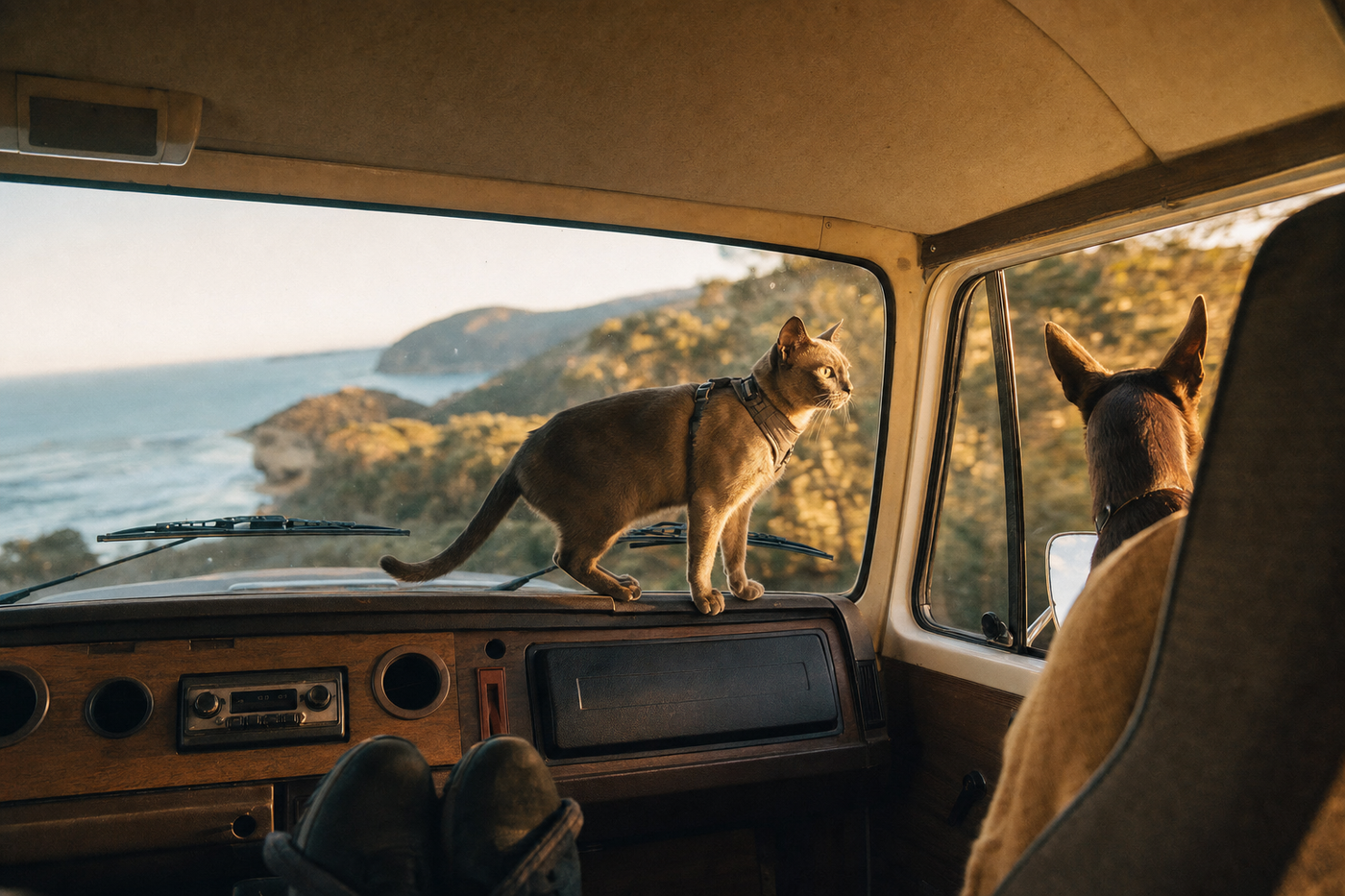
Never leave your cat in a parked vehicle unattended. Interior temperatures become life-threatening within one hour, regardless of outside temperature or window position.
Keep your cat indoors at all destinations, including pet-friendly accommodation. Stressed cats are flight risks and can bolt in unfamiliar areas. Losing your cat far from home is traumatic and often irreversible.
Why cats struggle with road trips more than dogs
I spent six hours driving from Melbourne to Adelaide with my cat Jasper in the back seat, and I learned quickly that cats hate car travel in ways dogs often don't. Cats are territorial animals, and being trapped in a moving vehicle removes all control over their environment. Dogs can adapt to new situations more easily because they're pack animals by nature, but cats are solo hunters who prefer knowing exactly where they are at all times.
The car itself becomes a source of stress. The vibrations, engine noise, and constant motion trigger anxiety in most cats. Unlike dogs who might enjoy the stimulation of new sights through windows, cats often see windows as threats. They crouch low, hide, and sometimes refuse to eat or drink for hours. Understanding this fundamental difference helps you prepare differently than you would for a dog road trip.
Choosing the right carrier for your cat
The carrier you choose makes or breaks a cat road trip. Soft-sided carriers that collapse are tempting because they save space, but cats actually prefer hard-sided carriers during travel. They want solid walls that make the space feel like a den, not a cloth prison. A good cat carrier should be large enough for your cat to stand, turn around, and lie down comfortably, but small enough that they feel secure inside.
Place the carrier on the back seat or secured in the boot where your cat can't watch the road moving past. The floor of the vehicle isn't ideal because your cat will see and feel every bump and turn. Drape a blanket over the carrier to create a cave-like environment that reduces visual stimulation. Make sure air can still flow through, and never place the carrier in direct sunlight. On a 500-kilometre drive from Brisbane to the Gold Coast, I kept Jasper's carrier in the shade of the back seat with the windows cracked open for fresh air.
Pre-trip conditioning: Getting your cat used to the car
Most cats have no positive associations with cars because they only ride in them to visit the vet. Start conditioning your cat at least two weeks before your road trip. Leave the car door open in your driveway for several days so your cat can explore it without the engine running. Let them sit inside for five minutes at a time, gradually building comfort.
Once they're calm sitting in the stationary car, start the engine without driving anywhere. Let them get used to the sound and vibration. Then take short trips around your local area: a 10-minute drive to the park and back. After a week of short drives, your cat will understand the car isn't solely associated with vet visits. This approach takes time, but it dramatically reduces stress during your actual road trip. I wish I'd done this with Jasper before our 12-hour drive to Adelaide. His first experience in the car was the full journey, and he was miserable.
Gear we would pack
Some links below are affiliate links. Pawtrips may earn a commission at no extra cost to you.
Cat Travel Carrier
A sturdy, ventilated cat carrier is non-negotiable for road trips. This keeps your cat secure and confined during travel, reducing escape risks at rest stops and creating a safe den-like space during the journey.
Managing bathroom breaks and litter boxes
Your cat needs access to a litter box, and this is where road trips become complicated. You can't leave a traditional litter box loose in your car. Instead, bring a collapsible travel litter box and set it up at every stop. Pack unscented litter in a sealed container to minimise odour and mess.
Plan to stop every two hours to offer water, food, and a toilet break. Choose rest stops with shade and some privacy. I found that many roadside parks along the Hume Highway have quieter areas away from truck stops where cats feel safer. Set up the collapsible litter box behind your car or in a secluded spot, and never force your cat to use it if they're anxious. Some cats will hold on for hours rather than toilet in an unfamiliar place, so be patient. Bring old newspaper or disposable bags to manage any accidents, because they will happen. Enzymatic cleaner is essential for removing cat urine smell from your vehicle.
Feliway Cat Calming Spray
Spraying the carrier and your car with Feliway mimics natural cat pheromones and significantly reduces travel anxiety. Many cats relax noticeably when exposed to Feliway, making the journey less traumatic for everyone.
Feeding and hydration strategies
A stressed cat often refuses to eat during travel, so don't panic if your cat skips meals for a few hours. However, dehydration is serious and can happen quickly in a moving vehicle. Offer water at every stop, and consider bringing a collapsible bowl that's easy to set up and clean.
Feed your cat light meals before you start driving rather than bringing heavy food into the car. A scared cat with a full stomach is more likely to vomit. Freeze-dried pet food or treats work well because they're lightweight, don't spoil without refrigeration, and most cats find them appealing even when stressed. Bring enough water for the entire journey because not all rest stops have reliable tap water access. On our drive to Adelaide, I brought a five-litre container of water from home and a collapsible bowl. Jasper drank more from that than he would have from a bowl filled at a random servo.
Tractive Mini GPS Cat Tracker with Collar
If your cat escapes at a rest stop or during an emergency, a GPS tracker lets you locate them in real time. This is especially valuable when travelling far from home where you don't know the local area.
Choosing pet-friendly accommodation along your route
If you're doing a long road trip, you'll need to overnight somewhere, and not all accommodation welcomes cats. Call ahead and confirm that your destination accepts pets. Some motels charge extra, usually between 15 and 30 dollars per night for a cat. Caravan parks are often more flexible than hotels, and many have dedicated pet-friendly cabins.
When you arrive at your accommodation, set up your cat's space immediately. Put the litter box, water bowl, and familiar items in one corner of the room. Keep your cat indoors at all times, even if the room has a patio. The stress of travel makes cats vulnerable to bolting, and losing your cat in an unfamiliar town hundreds of kilometres from home is preventable by being cautious. Many Australian motels along major highways like the Princes Highway and Pacific Highway now advertise their pet policies on their websites, so check before booking. Some even provide litter box facilities for guests with cats.
Safety and emergency planning
Never leave your cat unattended in the car, even for five minutes. Interior temperatures in a parked vehicle can become fatal in less than an hour, even on mild days. If you need to stop for fuel, food, or bathroom breaks, your cat stays in the car only if you're running the air conditioning and keeping the engine running.
Keep your cat's microchip information with you, and consider fitting a GPS collar for the duration of the trip. Have a recent photo of your cat on your phone in case they escape. Bring a copy of your cat's vaccination certificate, microchip details, and any medications they need. Pack a basic first aid kit including styptic powder, antiseptic wipes, and any prescription medications. Know the locations of emergency vets along your route. The Animal Referral Hospital in Melbourne or the Emergency Vet Clinic in Sydney can handle urgent situations if you're on the east coast.
Pet Grooming Wipes for Cats
These wipes are perfect for cleaning your cat's paws and face during long stops when you can't bathe them. They help remove stress-related odours and keep your cat feeling fresher during extended car journeys.
When to turn back or fly instead
Honestly, some cats simply aren't suited for road trips. If your cat is elderly, has anxiety issues, or has health conditions affected by stress, driving might cause more harm than good. A 12-hour journey is demanding for any animal, and a terrified cat suffers immensely. There's no shame in leaving your cat at a boarding facility instead.
For trips longer than 15 hours, consider whether flying makes more sense. Some airlines allow cats in cabin, and while the stress of flying exists too, a three-hour flight is shorter than a two-day drive. Evaluate your cat's personality, age, and health before committing to a road trip. Your cat's wellbeing matters more than the desire to have them with you. After our Adelaide trip, I realised Jasper hates car travel, so I now book him into a cat-friendly boarding facility and fly instead. We're both happier.
Plus early access to new guides and partner deals.
No spam. Ever. Just the good stuff for you and your pet.