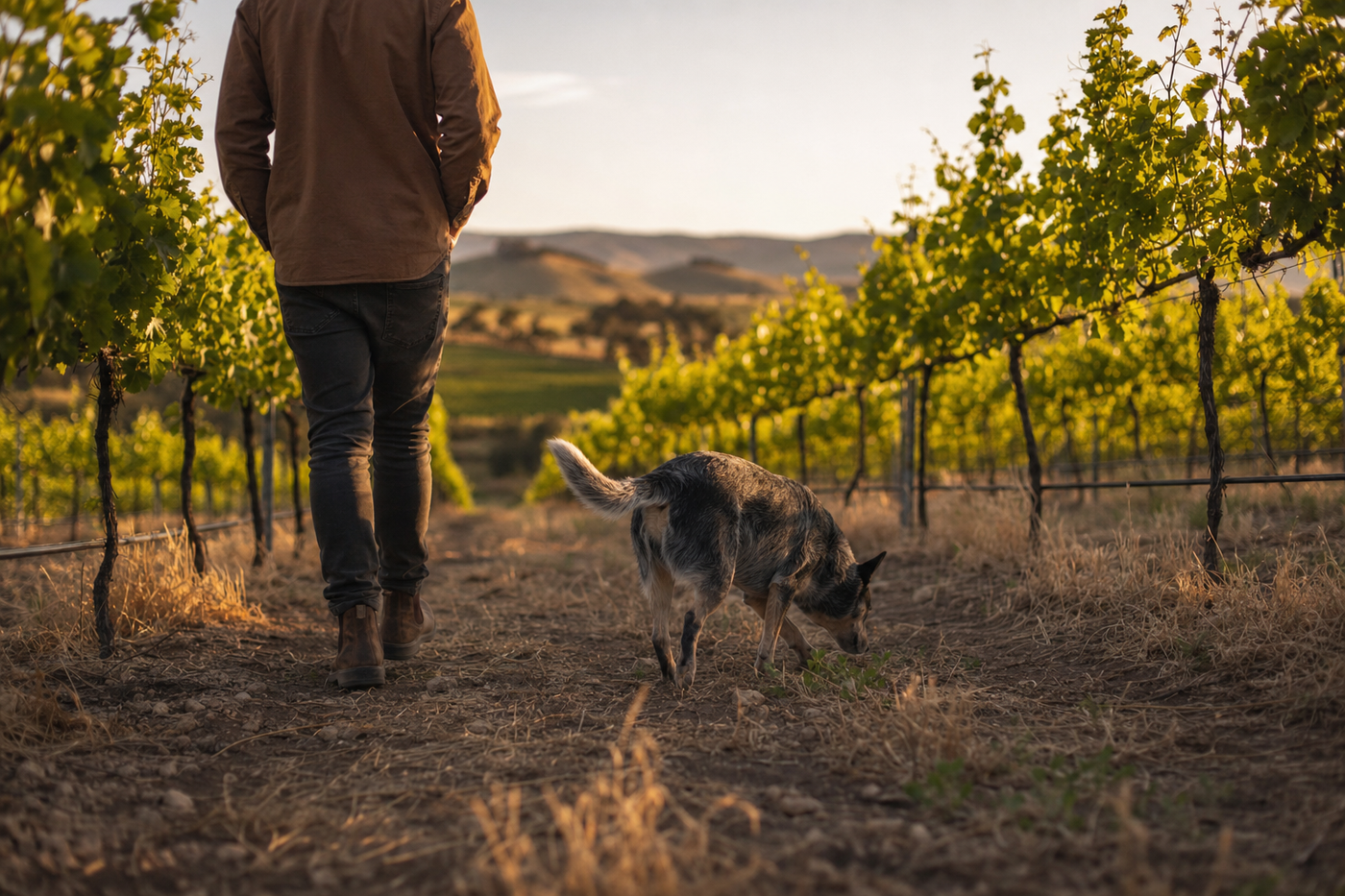
The Barossa Valley reaches temperatures of 35 to 38 degrees Celsius in summer. Never leave your dog unattended in a vehicle during warm months, as interior temperatures exceed 50 degrees within minutes and can cause fatal heat stroke.
Open gates, sparse fencing, and livestock scattered throughout vineyard areas mean lost dogs can wander onto private property or into dangerous situations. Keep your dog on lead at all times and ensure they have current ID tags and microchip registration before travelling.
Why the Barossa Valley Works for Travelling with Dogs
The Barossa Valley sits about 60 kilometres northeast of Adelaide and offers something most wine regions don't: genuine tolerance for dogs. I took my cattle dog Brisket there last autumn and quickly realised the place was built for outdoor time with pets. The region sprawls across rolling hills rather than cramped streets, so you're not dragging your dog through crowded tourist zones.
The Barossa isn't just about wine either. You'll find farmgate shops, bush walks, and quiet pubs where dogs can sit beside you. Unlike some Australian destinations that tolerate dogs grudgingly, the Barossa locals seem to actually expect them. Many vineyard owners have their own working dogs on site, so a well-behaved visiting dog fits right into the landscape.
Dog-Friendly Cellar Doors and Wineries
Most Barossa cellar doors allow dogs on the grounds, though policies vary on whether they can enter the tasting room itself. Seppeltsfield Road hosts dozens of wineries within a few kilometres, and I found that smaller producers were more flexible than the big names. Torbreck Winery explicitly welcomes dogs in their garden areas, and staff will usually provide water bowls without you asking. Château Tanunda sits on 35 acres and lets dogs roam the vineyard grounds while you taste.
Yaldara Wines is another solid option if you're bringing your dog. The outdoor terrace overlooks the valley, and dogs can rest under the tables while you sip. A few places ask you to keep your dog on lead at all times, particularly near their ponds or through working vineyard sections. Always phone ahead if you're planning to spend more than 30 minutes at a cellar door. Some charge a small tasting fee of 5 to 15 dollars, which rarely applies to dogs but worth confirming.
Gear we would pack
Some links below are affiliate links. Pawtrips may earn a commission at no extra cost to you.

Quiet 62L Pet Dryer Box with Smart Control
This ensures your pet stays comfortable and dry during your travels.

Dog Ear Muffs for Noise Protection
These ear muffs help keep your pet calm in noisy environments during travel.

Adjustable Dog Grooming Arm for Pet Owners
Keeps your pet secure during grooming.

Gentle Chew Toy for Teething Puppies
A calming chew toy is great for easing travel stress in puppies.
Dog-Friendly Pubs and Outdoor Eating
The Barossa Hotel in Tanunda sits right in the town centre and has a sprawling beer garden where dogs are absolutely welcome. Brisket and I spent two hours there on a Saturday afternoon with barely a second glance from other patrons. The pub serves solid food, keeps water bowls near the outdoor seating, and staff actually seem pleased when dogs show up. The Prince of Wales Hotel in Angaston works similarly, with an outdoor courtyard and good pub meals.
For something less formal, the farmers market in Tanunda runs most weekends and welcomes dogs on lead. You can grab produce, coffee, and chat with local growers while your dog watches the activity. Maggie Beer's Farm Shop near Nuriootpa allows dogs in the outdoor seating area and sells small snacks you can share (though check what's safe for dogs first). Most places don't charge extra for having a dog present, and many actively appreciate the company.
Best Dog-Friendly Accommodation Options
Rural cottage rentals beat hotels in the Barossa when travelling with dogs. These properties usually sit on larger blocks, giving your dog space to move around safely. I stayed at a small vineyard cottage near Williamstown with a fully fenced yard, which meant Brisket could settle in without constant supervision. Most local holiday rental companies now have a dedicated filter for pet-friendly properties, making it easier to sort through options.
Angelus Retreat near Tanunda specifically markets itself as dog-friendly and has cottages with secure outdoor areas. The owners provide dog beds, food bowls, and clear information about nearby walking routes. Expect to pay a pet fee of 20 to 40 dollars per night, though some places include it in the nightly rate. Avoid booking standard hotel rooms unless they're in newer motels with outdoor ground-floor access. Barossa Valley Estate Cottages manages several properties with varying policies, so read descriptions carefully before booking.
Walking Routes and Dog-Friendly Parks
The Barossa has fewer dedicated dog parks than you'd find near Adelaide, but the landscape itself is dog-friendly. The Barossa Valley Way walking trail stretches 38 kilometres and you can do shorter sections with your dog on lead. The Seppeltsfield Estate has internal walking paths through their vineyards, though you'll need to check with staff about access. Most local council parks allow dogs on lead during daylight hours, and enforcement is relaxed compared to urban areas.
For off-lead exercise, head to the open spaces around Cockatoo Creek near Rowland Flat. There's a small cleared area where locals regularly bring dogs, and the creek provides water for cooling off. Bethany has a quiet reserve with minimal foot traffic, perfect if your dog gets nervous around crowds. Always carry water even for short walks because the Barossa gets genuinely hot in summer, and shade is limited in many vineyard areas. A portable water bowl takes up almost no space in your car and saves you from searching for taps.
What to Pack and How to Prepare
Bring twice as much water as you think you'll need. The Barossa landscape looks beautiful but offers few natural water sources in summer, and you'll spend most of your time in car parks or wine gardens without obvious taps. A portable water bowl takes up the space of a coffee cup and means you're never stuck. Sunscreen for your dog's nose and ears is essential if your dog has light-coloured fur or thin coat coverage.
Pack a dog bed for your accommodation because many rentals don't provide them. The cooler months from April through September are genuinely better for travelling with dogs, both for comfort and to avoid heat stress. Leave your dog in the car only when absolutely necessary, even with windows down. The Barossa gets to 35 degrees Celsius in summer, and the inside of a car hits 50 degrees within minutes. Most wineries are fine with you leaving your dog at your accommodation for a few hours if you're doing a longer tasting day.
Managing the Heat and Logistics
Plan your winery visits for early morning or late afternoon during warmer months. Most cellar doors open by 10am, and visiting before noon keeps your dog cooler while you're walking around. The afternoon shift from 3pm onwards is quieter and usually cooler. Many dog owners make the mistake of trying to hit five or six wineries in one day, which exhausts both the dog and the owner. Pick two or three places and build in rest time at your accommodation.
The Barossa is only 60 kilometres from Adelaide, so you could base yourself in the city and do day trips if your dog struggles with travel. However, staying locally means less driving and more flexibility. Keep your dog's routine as stable as possible while travelling. Feed them at similar times, maintain walk schedules, and give them quiet time in the afternoon when temperatures peak. Most local vets are used to visiting dogs, and the Barossa Valley Veterinary Hospital in Tanunda can handle any urgent issues.
Practical Tips for Your Visit
Book accommodation at least two weeks ahead during April, May, September, and October when the weather is best. Many places have just one or two pet-friendly rooms, so they fill quickly. Get your dog microchipped before you travel and carry a recent photo. The Barossa has open countryside with scattered livestock, and a lost dog wandering into a paddock creates real problems for farmers.
Download offline maps before you arrive because mobile reception drops in some vineyard areas. The Barossa Visitor Centre in Tanunda has staff who know the region and can point you toward the most dog-friendly spots based on your dog's temperament. If your dog is anxious around crowds, avoid the Barossa Vintage Festival in April and Barossa Shiraz Festival in October. These events draw thousands of people and make the whole region busier and more stressful. A quiet Tuesday in May or early September gives you a far better experience with your dog.
Plus early access to new guides and partner deals.
No spam. Ever. Just the good stuff for you and your pet.