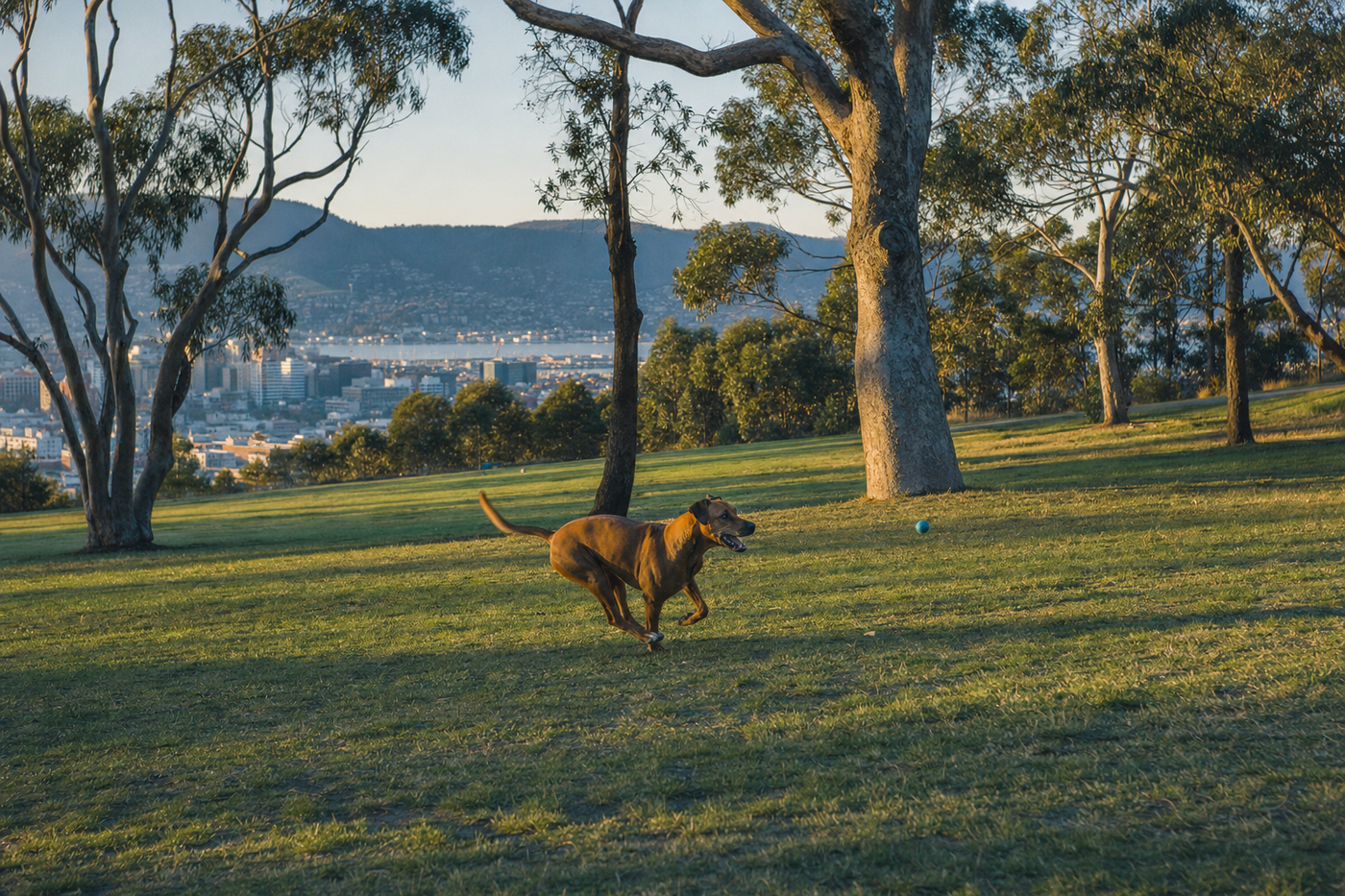
Watch for heat stress in dogs during summer visits. Signs include excessive panting, drooling, and lethargy. Leave immediately if your dog shows these symptoms.
Tick and paralysis tick risk remains year-round in Tasmania. Check your dog thoroughly after park visits and ensure they are on current preventative treatment prescribed by a vet.
Why Hobart is Great for Off-Leash Dog Adventures
Hobart has some fantastic parks where dogs can run without a leash, and the city sits in a region that genuinely cares about pet owners. The capital of Tasmania offers a mix of urban parks and waterfront spaces, many with designated off-leash areas. My dog Charlie spent six months with me exploring these spots, and I learned which ones actually work for different dog personalities.
The weather in Hobart suits dogs better than hotter mainland cities. Most of the year stays cool enough for safe exercise, though summer months require early morning or late afternoon visits. The dog community here is friendly, and you will meet other travellers with their pups at these parks.
Hobart's parks are well-maintained by council staff, and many have recently upgraded their facilities. You won't find every park has a dedicated off-leash area, so knowing which ones do saves you time and frustration. I made the mistake of driving to parks that only allowed leashed walking, which wasted a whole morning with a restless spaniel.
Queen's Domain: Hobart's Largest Dog-Friendly Space
Queen's Domain sits in the heart of Hobart and covers about 16 hectares of parkland. The domain has several off-leash areas clearly marked with signage, making it easy to figure out where your dog can run free. Walking paths wind through trees and open grass, so your dog gets variety in one location.
The main off-leash area is near the park entrance along Macquarie Street. You will find open grassland suitable for dogs of all sizes and energy levels. On weekends, the park fills up with families and other dog owners, so arrive by 8am if you prefer quieter sessions.
Parking is plentiful around the domain, with several car parks within a five-minute walk of the off-leash zones. The Royal Tasmanian Botanical Gardens sit on the domain's south side, but these require leashes, so stick to the main parkland. I recommend checking the Hobart City Council website before visiting because occasionally they close sections for maintenance.
Princes Park: Waterfront Walking with Off-Leash Options
Princes Park runs along the Derwent River near the city centre and offers beautiful views while your dog exercises. The park has designated off-leash areas on the eastern side near the water, though you must keep your dog away from the actual shoreline in certain sections. The walking path is sealed, making it easy for dogs with sensitive paws.
This park works well for dogs that enjoy water as some sections have safe beach access. I took my Labrador here and watched her swim while other dogs played on the grass nearby. The park gets busy during lunch hours, so early morning or late afternoon visits feel more relaxed.
You will find limited shade in parts of Princes Park, so bring water for your dog especially on hot days. The park connects to other walking paths along the river, so you can extend your walk if your dog has energy to burn. Parking is available at the Brooke Street end of the park, about three blocks from the main off-leash area.
Gear we would pack
Some links below are affiliate links. Pawtrips may earn a commission at no extra cost to you.
Dog treat pouch
Recall training makes park visits safer and more enjoyable. A treat pouch keeps rewards easily accessible so you can reward immediate returns when your dog leaves play.
St Johns Park: Small But Popular with Local Dogs
St Johns Park sits in the suburb of New Town and serves as a neighbourhood favourite for off-leash dog exercise. The park is smaller than Queen's Domain, covering about 3 hectares, but it offers a tight-knit community feel. Most of the parkland allows off-leash exercise during designated hours, typically before 9am and after 4pm on weekdays.
The park has trees providing natural shade, which helps on warmer days. Your dog will encounter other dogs regularly here, so it works best for social pups that enjoy playing with other animals. The grass surface is soft on paws, and the space feels intimate rather than sprawling.
Parking is street-based around St Johns Park, so you might need to walk a short distance to reach the entrance. The park sits about 2 kilometres from Hobart's CBD, making it accessible for visitors staying in the city. I found this park perfect for shy or anxious dogs because the smaller space feels less overwhelming than bigger parks.
PAW by Blackmores Osteocare Joint Protect for Dogs
Regular park visits involve running and jumping that puts stress on joints. This supplement supports long-term joint health for dogs active in off-leash spaces.
Cornelian Bay Dog Park: Dedicated Off-Leash Facility
Cornelian Bay has a dedicated dog park facility with fencing, water stations, and equipment designed specifically for canine exercise. This purpose-built space removes guesswork about where your dog can run because the entire fenced area permits off-leash activity. The park sits about 5 kilometres north of Hobart's city centre in a quiet residential area.
The facility includes seating for owners, shade structures, and waste bin stations throughout. Your dog gets access to agility-style equipment for mental stimulation alongside open running space. The park separates small and large dogs into different zones, which works well for managing different energy levels and avoiding accidents.
Access to Cornelian Bay Dog Park requires registration with Hobart City Council, though the process is straightforward and often free for visitors. The park rarely gets overcrowded because many travellers don't know about it. I preferred this park when travelling with Charlie because the fencing meant I could relax without constant vigilance.
Dog poop bags biodegradable
Every park visit requires waste management. Biodegradable bags break down naturally and are lighter to carry than plastic alternatives when parks lack convenient bins.
Understanding Hobart's Off-Leash Rules and Restrictions
Hobart's parks follow specific rules about when and where dogs can roam off-leash. Most council parks allow off-leash exercise during designated times, usually early morning before 9am and late afternoon after 4pm. During the middle of the day, leashes become mandatory in many areas to manage peak visitor numbers.
Seasons affect these rules slightly, with summer months sometimes having different restrictions due to heat concerns. You must always pick up after your dog using a poop bag, and parks with no bins nearby require you to carry waste out. Dogs must have current vaccinations, and council rangers do check proof if asked.
I learned the hard way that checking the specific park's signage matters because rules vary slightly between locations. Some parks prohibit dogs entirely in certain sections, especially near play equipment for children. The Hobart City Council website lists current restrictions, and phoning ahead takes five minutes but prevents wasted trips.
Practical Tips for Visiting Hobart's Dog Parks
Pack water for your dog because most parks lack drinking stations suitable for animals. Bring biodegradable poop bags since bins fill quickly during busy times and you may need to carry waste. A long lead gives your dog more freedom to explore while maintaining safety if they have poor recall.
Wear comfortable shoes because you will spend time walking while your dog exercises. Summer visits work best before 10am or after 4pm to avoid the heat that builds throughout the day. A first aid kit with antiseptic and bandages helps with minor cuts or injuries that sometimes happen during park play.
Leash training remains important even in off-leash areas because emergency situations sometimes require quick control. Recall training makes visiting parks safer and more enjoyable for everyone. I always carried high-value treats to reward my dog when they returned promptly, which built better habits over time.
Blackdog Chicken Breast 1KG
Training treats for recall in parks should be irresistible to your dog. These freeze-dried chicken pieces make premium training rewards that build strong recall habits.
Seasonal Considerations for Dog Park Visits
Hobart's winters stay mild compared to mainland Australia, making winter park visits pleasant year-round. Summer temperatures can exceed 25 degrees Celsius, which makes midday visits risky for dogs prone to overheating. Spring and autumn offer ideal conditions with moderate temperatures and lower humidity.
Rainy days in Hobart are common, and muddy parks can make post-visit cleanup challenging. Dogs dry off quickly in the cool air, but wet fur can make car journeys uncomfortable for both pet and owner. Winter months bring fewer tourists and quieter parks, which suits dogs that prefer calmer environments.
Fleas and ticks remain active year-round in Tasmania, so maintaining preventative treatment stays important despite cooler weather. Grass growth peaks in spring and early summer, creating natural water collection points that can carry parasites. I kept my dog on parasite prevention regardless of season to avoid issues during and after travelling.
Plus early access to new guides and partner deals.
No spam. Ever. Just the good stuff for you and your pet.