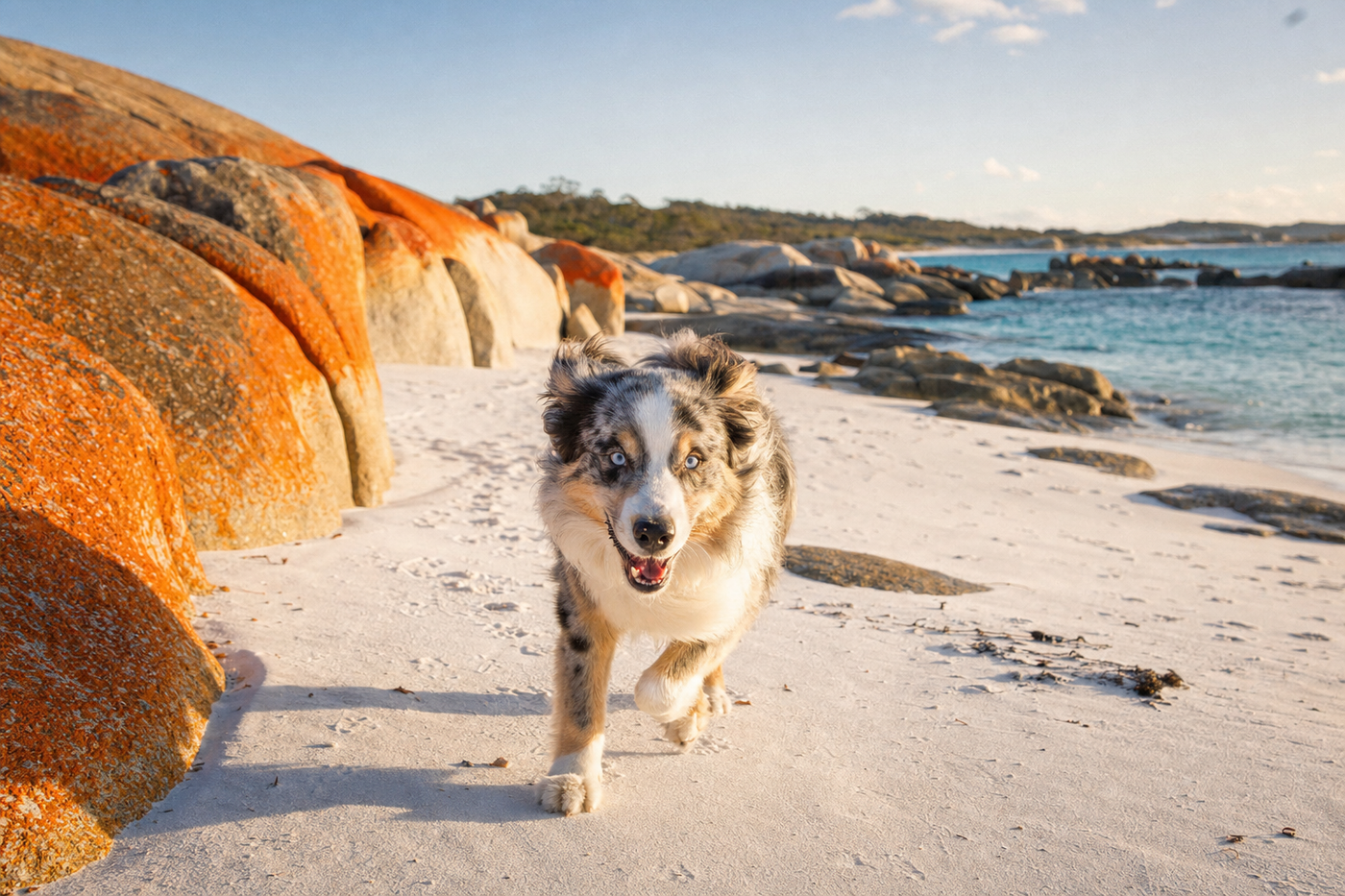
Ocean currents and rips form regularly around rocky outcrops, particularly near Binalong Point. Keep dogs close to shore and exit immediately if either of you feels pulled sideways by current.
Little penguins come ashore at dusk between September and April. If your dog has high prey drive, keep them on-lead during evening hours or avoid the beach at dusk to prevent harassment or injury to protected wildlife.
Why Bay of Fires Works for Dogs
Bay of Fires sits about 90 minutes north of Hobart on the east coast of Tasmania, and it's one of the few places in the state where your dog gets genuine freedom on the beach. The bay stretches for roughly 8 kilometres of golden sand and red granite rocks, with water that stays calm most of the year. Dogs are welcome on the sand and in the water year-round, no seasonal restrictions or designated dog zones to navigate.
The landscape itself keeps things interesting for dogs. Rocky outcrops create natural pools, and the sandy stretches are wide enough that even on busy days you're not packed shoulder to shoulder with other beachgoers. Your dog can swim, chase, dig, and just be a dog without worrying about rangers or fines. I've travelled with my kelpie mix along Australia's east coast, and Bay of Fires ranks in the top three for genuine dog freedom combined with stunning scenery.
Getting There and Finding Your Spot
From Launceston, take the Tasman Highway south for about 45 minutes, then follow signs to Binalong Bay. The main carpark at Binalong Bay fills up by 10am during summer holidays, so if you're travelling with a dog during December or January, get there before breakfast. The drive from the carpark to the beach takes less than five minutes on foot.
If the main carpark is full, head to the quieter sections near Eddystone Point, about 3 kilometres further north. The walk is longer but you'll find better parking and fewer crowds. The road to Eddystone Point is unsealed but fine for regular cars. Several smaller pull-offs exist along the coast where locals park, though you'll need to ask accommodation providers where these are located. Bring a good map or download offline maps on your phone because mobile service drops out once you leave the highway.
Gear we would pack
Some links below are affiliate links. Pawtrips may earn a commission at no extra cost to you.

Quiet 62L Pet Dryer Box with Smart Control
This ensures your pet stays comfortable and dry during your travels.

Dog Ear Muffs for Noise Protection
These ear muffs help keep your pet calm in noisy environments during travel.

Adjustable Dog Grooming Arm for Pet Owners
Keeps your pet secure during grooming.

Gentle Chew Toy for Teething Puppies
A calming chew toy is great for easing travel stress in puppies.
Beach Conditions and Water Safety
The water at Bay of Fires looks deceptively calm, but ocean swells and currents are real. Even on flat days, rips form near the rocky outcrops, particularly around Binalong Point on the southern end of the bay. My dog got caught in a current once near the red rocks and needed a firm recall to get back to shore. Since then, I keep her within 20 metres of the shoreline.
Water temperature ranges from 12 degrees Celsius in winter to 18 degrees in summer, so even athletic dogs tire quickly. Watch for signs of exhaustion like slowed swimming or heavy panting, and pull your dog out before they're completely spent. The sand is mostly fine and won't irritate paws, but the granite rocks are sharp and can cut soft pad tissue if your dog jumps onto them at speed. Rinse your dog with fresh water after swimming to remove salt that can dry out their coat and skin.
Accommodation That Actually Welcomes Dogs
Pet-friendly lodging around Bay of Fires is sparse. The town of St Helens, 15 kilometres south, has more options than Binalong Bay itself. Several holiday houses allow dogs, but most charge extra pet fees and have size restrictions. I stayed at one place that advertised as dog-friendly but then charged 50 dollars per night per dog on top of the base rate. Read reviews from other travellers with dogs before booking, not just the property description.
Budget about 150 to 200 dollars per night for a basic two-bedroom house that allows dogs in peak season. Off-season rates drop to 100 to 150 dollars. Camping isn't an option because the local caravan park doesn't allow dogs. Your best bet is renting through platforms that let you filter for pet-friendly properties, then messaging the owner directly to confirm their actual dog policy and any restrictions on size, breed, or number of animals.
What to Pack and Bring
Bring more fresh water than you think you'll need. There's a tap at the Binalong Bay carpark, but facilities along the beach itself are non-existent. I travel with a 10-litre collapsible water container and fill it from the carpark before heading down. Your dog will drink more than usual after swimming in salt water, and dehydration sets in fast on hot days.
Pack a towel or two, even though dogs shake themselves dry. The granite rocks are cold, and a wet dog cooling down on cold stone can stiffen up. Bring dog treats for positive reinforcement if your dog is recall-training, because the temptation to chase other dogs or wildlife is strong in this environment. Sun protection matters too. Check your dog's belly and ear tips for sunburn after long beach days, especially if they have light-coloured fur. A lightweight dog raincoat works for unexpected showers, which happen even in summer on Tasmania's coast.
Wildlife and Other Dogs
Bay of Fires hosts a population of little penguins that come ashore at dusk, plus fur seals around the rocky points. Your dog's prey drive will spike around these animals. Keep your recall solid or use a long lead in areas where penguins are likely. Rangers won't fine you if your dog chases a penguin, but the penguin might get hurt, and you'll feel terrible.
Other dogs appear regularly, especially on weekends. Some are socialised and friendly; others aren't. I've learned to watch body language and move my dog away if I sense tension. Keep your dog under control with a lead if you're not 100 percent confident in their social skills. The beach is open and there's plenty of space to create distance between dogs without conflict. Teaching a basic "leave it" command before your trip saves stress when your dog spots another animal.
Best Times to Visit
May through August offers the best dog experience at Bay of Fires. Water temps are colder, so dogs tire faster and stay calmer. Summer crowds thin out, and parking becomes straightforward. The bonus is that autumn and winter bring fewer tourists overall, so beaches feel genuinely peaceful. December and January are busy with school holidays, and every carpark fills by mid-morning.
Winter can bring rough seas and rain, but if your dog tolerates cold and wet, those months are fantastic. I've had the entire beach nearly to myself in July with my dog, which beats fighting crowds any day. Avoid Easter holidays and autumn school breaks if you want a quieter experience. Spring (September to November) sits in the middle, warm enough for comfortable swimming but not as packed as summer.
Day Trip or Overnight Stay
Bay of Fires works well as either a day trip or a multi-day stay depending on how much time you have. From Launceston, it's a 90-minute drive each way, so a day trip means roughly five to six hours on the beach and in the water. That's enough time for your dog to have a solid swim and explore, then head home for a late lunch.
If you're staying overnight, two nights minimum lets you relax without rushing. Spend one afternoon at the main beach, take a quieter morning walk the next day, and maybe explore St Helens for meals and supplies. Your dog will be tired after the first day, which means a calmer second day. Build in a rest day if you're combining Bay of Fires with other Tasmanian destinations on a longer trip. Dogs need recovery time between travel days, and forcing multiple beach visits in consecutive days can lead to sore paws or exhaustion.
Plus early access to new guides and partner deals.
No spam. Ever. Just the good stuff for you and your pet.