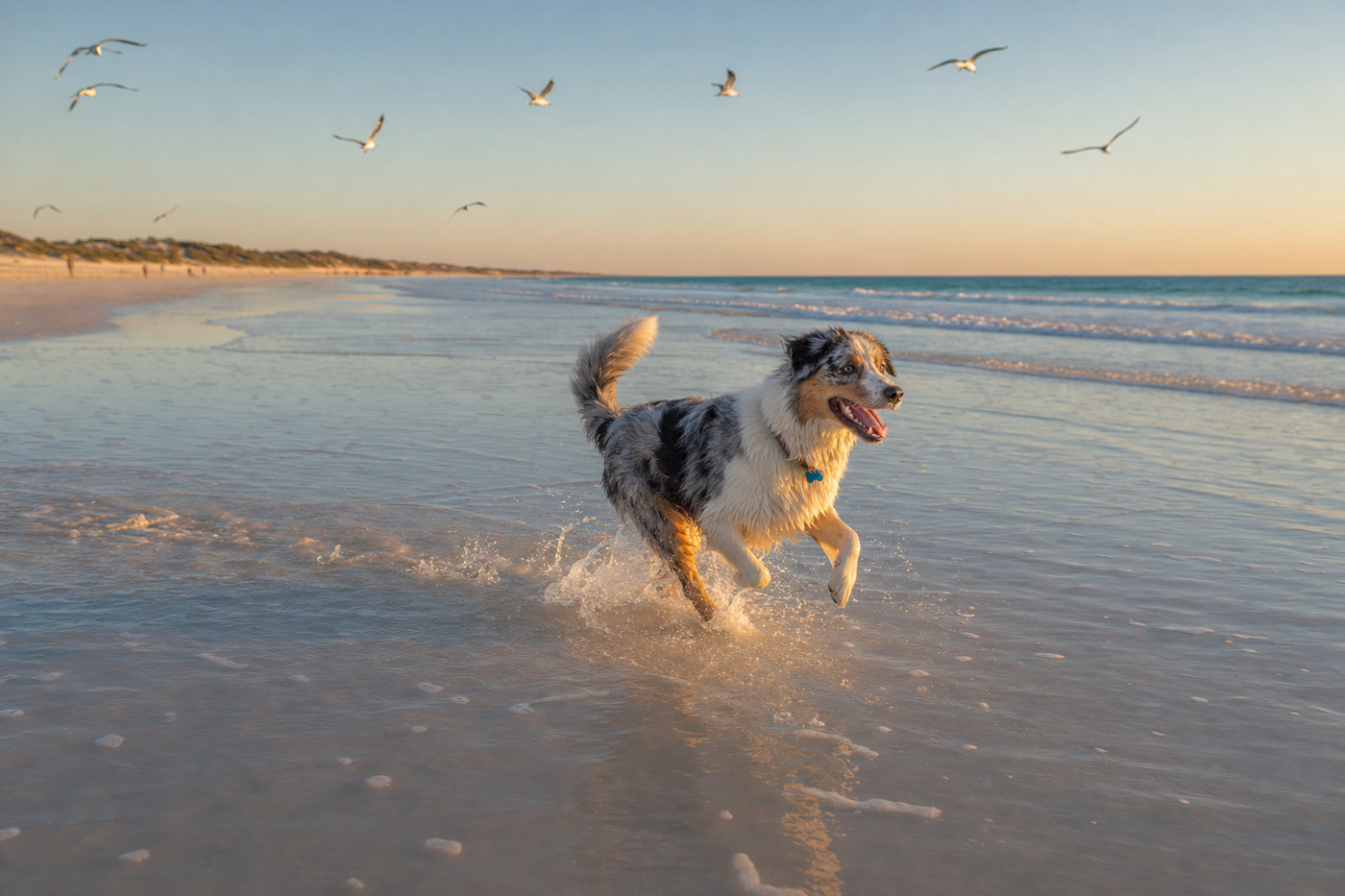
Rips and strong currents are dangerous for dogs just as they are for humans. If you're unsure about water conditions, ask the local lifeguards before letting your dog swim.
Salt water ingestion can cause vomiting and diarrhoea in dogs. Always bring fresh water and encourage your dog to drink regularly rather than drinking from the ocean.
Why Beach Rules Matter for Your Dog
I learned the hard way that assuming all Australian beaches welcome dogs off-leash was a costly mistake. My border collie Midge and I showed up to Collaroy in Sydney on a summer morning, and within minutes a council ranger was asking to see her off-leash permit. I didn't know one existed, and the fine was steep. Since that day, I've discovered that each state and even each local council manages dog beach access differently. Some beaches allow dogs off-leash year-round, others only during specific months, and some require permits or charge fees. The rules exist partly to protect nesting seabirds and partly to manage conflicts with other beachgoers. Understanding where your dog can legally run free means more time enjoying the beach and less time worrying about fines or rescuing your dog from a ranger.
New South Wales: Seasonal Rules and Permit Requirements
New South Wales has some of the strictest dog beach rules in Australia, and they vary by location and season. Collaroy Beach, Narrabeen Beach, and Clovelly Beach allow dogs off-leash during specific months, typically April to October, and you'll need a permit from your local council. Between November and March, most Sydney beaches require dogs to stay on lead because of nesting shorebirds. I've found that many councils in NSW charge between 15 and 30 dollars for an annual off-leash permit. Brighton-Le-Sands and Botany Bay offer some off-leash access, but the windows are narrow. Before you pack your dog into the car for a NSW beach trip, ring your local council directly. The permit system might sound annoying, but it actually makes things clearer. You know exactly where you stand legally, and rangers are usually polite about checking permits rather than issuing surprise fines.
Gear we would pack
Some links below are affiliate links. Pawtrips may earn a commission at no extra cost to you.

Durable Fetch Balls for Playful Pets
Durable balls are fantastic for active pets who join you on adventures.

Durable Fetch Balls for Active Dogs
These balls are durable and perfect for keeping your dog entertained while travelling.

Quiet 62L Pet Dryer Box with Smart Control
This ensures your pet stays comfortable and dry during your travels.

Dog Ear Muffs for Noise Protection
These ear muffs help keep your pet calm in noisy environments during travel.
Victoria: Year-Round Off-Leash Zones on the Coast
Victoria is generally more relaxed about dog beach access than NSW, with several beaches offering year-round off-leash zones. Sorrento Back Beach, Portsea Back Beach, and Williamstown Beach all welcome dogs off-leash in designated areas. The key is finding the exact section of beach where dogs are allowed to run free, because even dog-friendly beaches often have restricted zones. I took Midge to Sorrento Back Beach in October, and the off-leash area was clearly marked with signs at both ends. The beach was quieter than I expected, and locals with dogs were genuinely nice about sharing space. Bells Beach near Torquay is another favourite, though you need to ask locals which sections are actually enforced as off-leash zones. Many Victorian councils have moved away from requiring permits, making beach trips simpler. The trade-off is that you need to be more diligent about checking current rules, as councils update their policies annually.
Queensland: Beachside Rules in the Sunshine State
Queensland beaches offer some fantastic off-leash opportunities, but the rules depend heavily on which council area you're visiting. Broadbeach in the Gold Coast, Coolangatta Beach, and Tallebudgera Beach all have designated dog-friendly sections where dogs can run off-leash during certain hours or seasons. North Stradbroke Island has become a favourite spot for dog owners because several beaches there allow dogs off-leash year-round outside of turtle nesting season. I drove out to Stradbroke with Midge one winter and was surprised by how quiet the beaches were compared to the mainland Gold Coast. The local cafe owners knew all the dogs by name, which added to the charm. Many Queensland beaches have no permit requirement, but some councils ask you to register your dog at a local ranger station before letting it off-leash. Always check the specific beach's sign because Queensland beach policies can change seasonally, particularly around September to March when sea turtles nest.
Western Australia: Quieter Beaches with Fewer Restrictions
Western Australia tends to have fewer restrictions on dog beach access compared to the eastern states, partly because many beaches are quieter and less crowded. City Beach in Perth allows dogs off-leash in designated zones, and South Beach in Fremantle is dog-friendly during early morning hours. I took Midge to Sorrento Beach near Perth on an early autumn morning, and we had the entire stretch almost to ourselves. The sand was cooler in the morning light, and Midge could chase seagulls without worrying about disturbing other swimmers. Many WA councils don't require permits, though they do ask dog owners to clean up waste and keep their dogs under control near other beachgoers. The challenge with WA is that the state is so vast, and some regional beaches have no formal rules at all. This can mean freedom for your dog, but it also means you should always ask a local or check the nearest visitor centre before letting your dog off-leash.
South Australia and Tasmania: Smaller Populations, Easier Access
South Australia and Tasmania have relatively straightforward dog beach rules, probably because their beach populations are smaller overall. Henley Beach in Adelaide allows dogs off-leash in designated areas, and nearby Glenelg Beach has a dog-friendly section during winter months. Tasmania's Cremorne Beach near Hobart is a hidden gem for dog owners, with year-round off-leash access in certain zones. I spent a week in Tasmania with Midge, and the locals seemed genuinely relaxed about dogs on beaches. Most beaches in both states don't require permits, which simplified planning immensely. The downside is that information can be scattered or outdated, so your best bet is to ask at a local cafe or newsagency when you arrive. Both states have fewer beach patrols overall, so the focus is more on common sense and respecting other beach users rather than strict enforcement.
Practical Tips for Staying Within the Rules
The best way to avoid fines and stress is to do your homework before you leave home. Start by visiting your council's website or ringing them directly to ask about off-leash zones in your area or your destination. Take a photo of the rules or download them to your phone so you have proof if a ranger questions you. Most councils are understanding if you've made a genuine effort to follow the rules, and they'll often give you a warning rather than a fine. When you arrive at a new beach, spend five minutes reading the signs before letting your dog off-leash. I've been caught out twice by signs I missed on my first visit, and both times the ranger was patient when I acknowledged the mistake. Keep your dog's recall sharp before you hit the beach. A dog who won't come back to you is a liability at any beach, rules or no rules. Finally, respect seasonal closures. These exist because nesting birds or turtles depend on quiet beaches during specific months.
Beach Safety Beyond the Rules
Following the rules is only half the battle. You also need to keep your dog safe from heat, salt water, and strong swimmers nearby. Hot sand can burn your dog's paws in minutes during summer, so feel the sand with your hand first or bring booties. Salt water can upset your dog's stomach if they drink too much, so bring fresh water and encourage them to drink regularly. Not all dogs are strong swimmers, so watch your dog's comfort level in the water. Midge loves water but gets tired quickly, so I watch her closely and call her back to shore before she's exhausted. Rips and strong currents are dangerous for dogs just as they are for humans. If you're not sure about the conditions, ask the local lifeguards. Bring a microfibre towel to dry your dog off quickly after swimming, as wet dogs cool down fast and can get uncomfortable in the wind.
Plus early access to new guides and partner deals.
No spam. Ever. Just the good stuff for you and your pet.