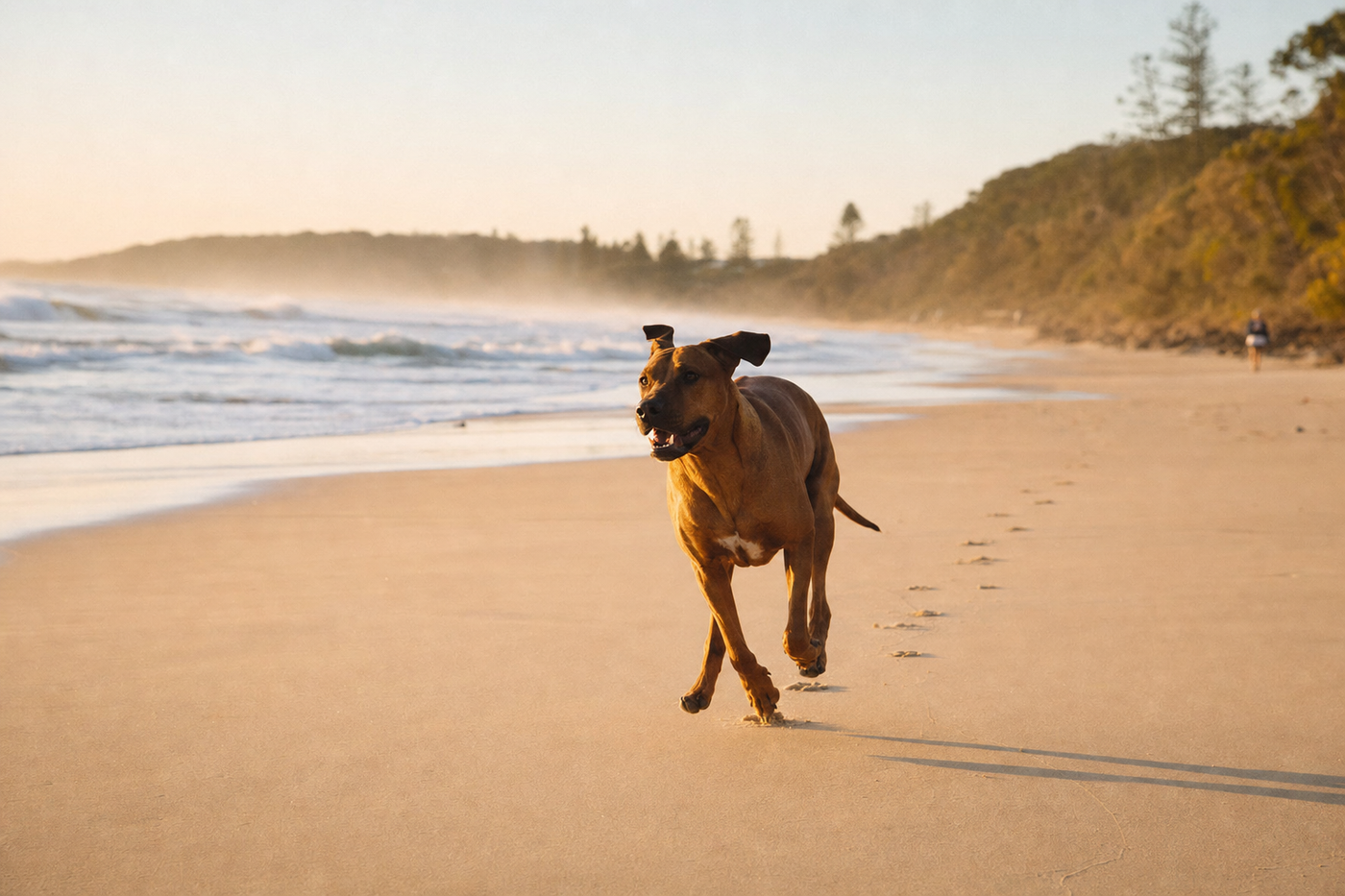
Never leave a dog unattended in the water. Ocean conditions change rapidly, and currents or rips can separate dogs from shore quickly even in shallow areas.
Watch for blue bottles and jellyfish year-round, as they cause severe reactions in dogs that snap or bite them. Check beach safety reports before swimming and keep your dog out of water if warnings are posted.
Which Queensland Beaches Actually Allow Dogs
Not every beach in Queensland welcomes dogs, and the rules change depending on the time of year. Most councils restrict dogs during peak swimming season from November to March, but allow them outside these months. The Gold Coast has some of the most dog-friendly options, including Tallebudgera Beach and Currumbin Beach, which both permit dogs year-round in designated areas. On the Sunshine Coast, Coolum Beach and Marcus Beach are popular choices where dogs can run freely depending on the season.
Brisbane's suburbs offer closer options too. New Farm Park in South Brisbane has a dog beach area near the river where locals bring their pups regularly. Further south, Bribie Island has stretches where dogs roam without leads during off-season months. I learned the hard way that calling ahead saves disappointment. Council websites list current restrictions, and managers at the local beaches can tell you exactly which sections allow dogs and when. Some beaches change rules monthly, so what was allowed last month might not be this week.
Tallebudgera Beach: Gold Coast's Most Reliable Option
Tallebudgera Beach sits between Burleigh and Currumbin on the Gold Coast and has earned a solid reputation for being genuinely welcoming to dogs. Dogs are permitted year-round in the designated off-leash area, which runs along a quieter section away from the main swimming zone. The beach sits about 70 kilometres south of Brisbane and makes an easy day trip or weekend stop if you're touring the Gold Coast.
The car park fills up quickly on weekends, so arriving before 9 AM keeps things relaxed for your dog. The beach has rock pools at the southern end that some dogs enjoy exploring, though watch for sharp edges. Tallebudgera has a rock wall running parallel to the sand, which provides some shade around midday. Bring a beach umbrella anyway because the sun reflects hard off the sand. A freshwater shower sits near the car park, so you can rinse salt and sand off your dog before the drive home. The nearby shops sell water and snacks, though they're pricey, so pack your own supplies.
Currumbin Beach and Coolum: Seasonal Access and What to Know
Currumbin Beach, just south of Tallebudgera, allows dogs during autumn and winter months from April through September. This timing works well if you're planning a cooler-weather trip and want to avoid the summer crowds. The beach stretches wide and flat, making it comfortable for older dogs who struggle with steep sand. Coolum Beach on the Sunshine Coast, about 100 kilometres north of Brisbane, opens to dogs during similar off-season months and attracts fewer crowds than the Gold Coast options.
Both beaches have rock formations at each end that provide shelter from wind and sun. I've found that the southern end of Currumbin stays quieter and offers better shade from the coastal vegetation. Coolum gets busier on weekends because it's a popular spot for swimmers and surfers, but the dog area stays separate. Parking at Coolum costs around 3 dollars per hour, and the beach has amenities including toilet blocks and food vendors. Neither beach has dedicated dog washing stations, so plan to rinse your dog with bottled water you bring along. The rock pools at both beaches attract shells and sea urchins, so watch your dog's paws carefully.
Bribie Island: Quieter Beaches for Dogs Who Need Space
Bribie Island sits off the coast north of Brisbane and offers some of the quietest beach experiences for dogs in Queensland. The island has several beaches where dogs roam without leads during off-season months, particularly along the western bay side where the water is calmer. The drive from Brisbane takes about an hour, and you cross onto the island via a bridge that connects to the mainland. Dogs are restricted during summer, but from April to October, Bribie becomes a peaceful escape for dogs who get overwhelmed by busy beaches.
The western beaches have mudflats at low tide that some dogs love exploring, though check tide times before heading out. Soft sand dominates most of the island's beaches, which is easier on paws than rocky areas but gets hot quickly in direct sun. There's minimal commercial development, so bring everything you need: water, food, sunscreen, and shade. The northern end near the lighthouse has parking and public amenities, but the facilities are basic. I visited during a quiet weekday and had entire stretches of beach to ourselves, which was perfect for my anxious dog. Bring a tide table because the beaches change dramatically between low and high tide.
Safety Essentials: Protecting Your Dog From Sun, Heat, and Hazards
Queensland's beaches combine intense sun with salt water, a combination that stresses dogs quickly. The UV index regularly reaches extreme levels, especially between November and March, so aim for early morning or late afternoon beach visits. Your dog's paw pads burn easily on hot sand, and many dogs I've seen limp badly after midday beach trips. Test the sand with your hand before letting your dog run. If it's too hot for your hand to stay on for 10 seconds, it's too hot for your dog's paws.
Saltwater causes dehydration and stomach upset, so bring plenty of fresh drinking water and stop your dog from drinking sea water. A collapsible water bowl takes up minimal pack space. Watch for blue bottles and jellyfish, which appear year-round but concentrate during certain months. Your dog doesn't recognise these dangers and might snap at them in the water. Check the beach safety reports before swimming and avoid water if warnings are posted. Broken shells and rocks hide in the sand and cut paw pads, so inspect your dog's feet after beach visits. Some dogs develop ear infections from saltwater trapped in their ear canals, so rinse ears with fresh water when you get home.
Gear we would pack
Some links below are affiliate links. Pawtrips may earn a commission at no extra cost to you.
SlowTon Dog Life Jacket
Queensland's ocean conditions change quickly, and not all dogs are confident swimmers. A proper life jacket gives your dog buoyancy support and makes spotting them easier in the water, which is essential for safety at unfamiliar beaches.
Packing Smart: What Actually Works at Queensland Beaches
After multiple beach trips, I've learned that most conventional beach gear fails with dogs. Umbrellas blow over in coastal wind, so invest in a beach tent that stakes into the sand securely. Your dog needs continuous access to shade because they can't sweat like humans do. A pop-up tent costs between 30 and 60 dollars and becomes your best beach investment.
Pack double the water you think you'll need because dogs pant constantly in heat and drink more than usual. A collapsible water bowl and a two-litre bottle fits easily in a beach bag. Bring old towels rather than nice ones because saltwater leaves them stiff and crusty. A microfibre towel dries dogs faster and takes less space than regular towels. Include a first aid kit with tweezers for removing shell fragments, antiseptic cream, and bandages. A dog life jacket makes sense even for experienced swimmers because ocean currents and rips catch dogs off-guard. I bring a dry bag with a change of clothes for my dog because wet sand sticks everywhere and takes hours to dry.
Chuckit! Fetch Ball Medley for Dogs, Medium, 3 Pack
Dogs need mental stimulation and exercise at the beach, and fetch games keep them engaged safely. These durable balls float in the shallows and are visible on sand, making beach play much easier than improvising with sticks or rocks.
Vita Pet Jerhigh Milky Sticks Dog Treats 400g
High-value treats keep your dog focused during distracting beach environments and reward good behaviour around other beach users. These packaged treats travel well without spoiling in heat and don't require refrigeration during day trips.
Getting There: Distances, Driving Times, and Where to Stay
Planning a beach trip with a dog involves finding accommodation that accepts pets and calculating realistic driving times. Tallebudgera and Currumbin sit on the Gold Coast, about 70 to 80 kilometres from Brisbane's city centre. The drive takes 60 to 90 minutes depending on traffic. Coolum Beach is 100 kilometres north, roughly 90 minutes from Brisbane. Bribie Island takes about 60 minutes from Brisbane's northern suburbs. These distances matter because dogs get uncomfortable on long drives, especially in hot weather.
Break up long trips with stops every 90 minutes so your dog can stretch and drink water. Never leave a dog alone in a parked car, even with windows down. Pet-friendly accommodation options exist along the coast, from holiday parks that welcome dogs to private rental homes. Booking sites like Stayz and Airbnb let you filter for dog-friendly properties. Many Gold Coast hotels now accept dogs for a daily fee around 15 to 25 dollars. Quieter towns like Coolum have fewer pet-friendly options, so book early during school holidays. If you're just doing day trips, leave early in the morning to avoid peak heat and afternoon traffic returning to Brisbane.
Pet-friendly holiday houses on Stayz
Queensland beach towns have excellent pet-friendly rental options on Stayz, from beachfront houses to family-friendly holiday parks. Booking a dedicated pet property ensures your dog has space to relax and you avoid hotel restrictions on dogs during your beach holiday.
Best Times to Visit: Seasons, Tides, and Weather Patterns
Queensland beaches suit dogs better during autumn and winter when temperatures stay below 25 degrees Celsius. April through September offers the most reliable weather and the fewest crowds. Summer months bring extreme heat, and most beaches restrict dogs anyway. If you must visit during summer, go very early: aim for 6 AM beach arrival and plan to leave by 10 AM before the sun becomes dangerous.
Tides dramatically affect beach experience. Low tide reveals wide, firm sand that's easier for dogs to walk on and often cooler than dry sand. High tide shrinks beaches and concentrates seaweed and debris. Check tide tables for your destination and plan visits around low tide windows. Weekdays are significantly quieter than weekends, so if you have flexibility, visit Tuesday through Thursday. School holidays bring crowds, especially to accessible beaches like Tallebudgera. I've discovered that visiting beaches during light rain eliminates crowds while the air temperature stays manageable. Most dogs enjoy cooler weather more than hot sunny days anyway.
Plus early access to new guides and partner deals.
No spam. Ever. Just the good stuff for you and your pet.