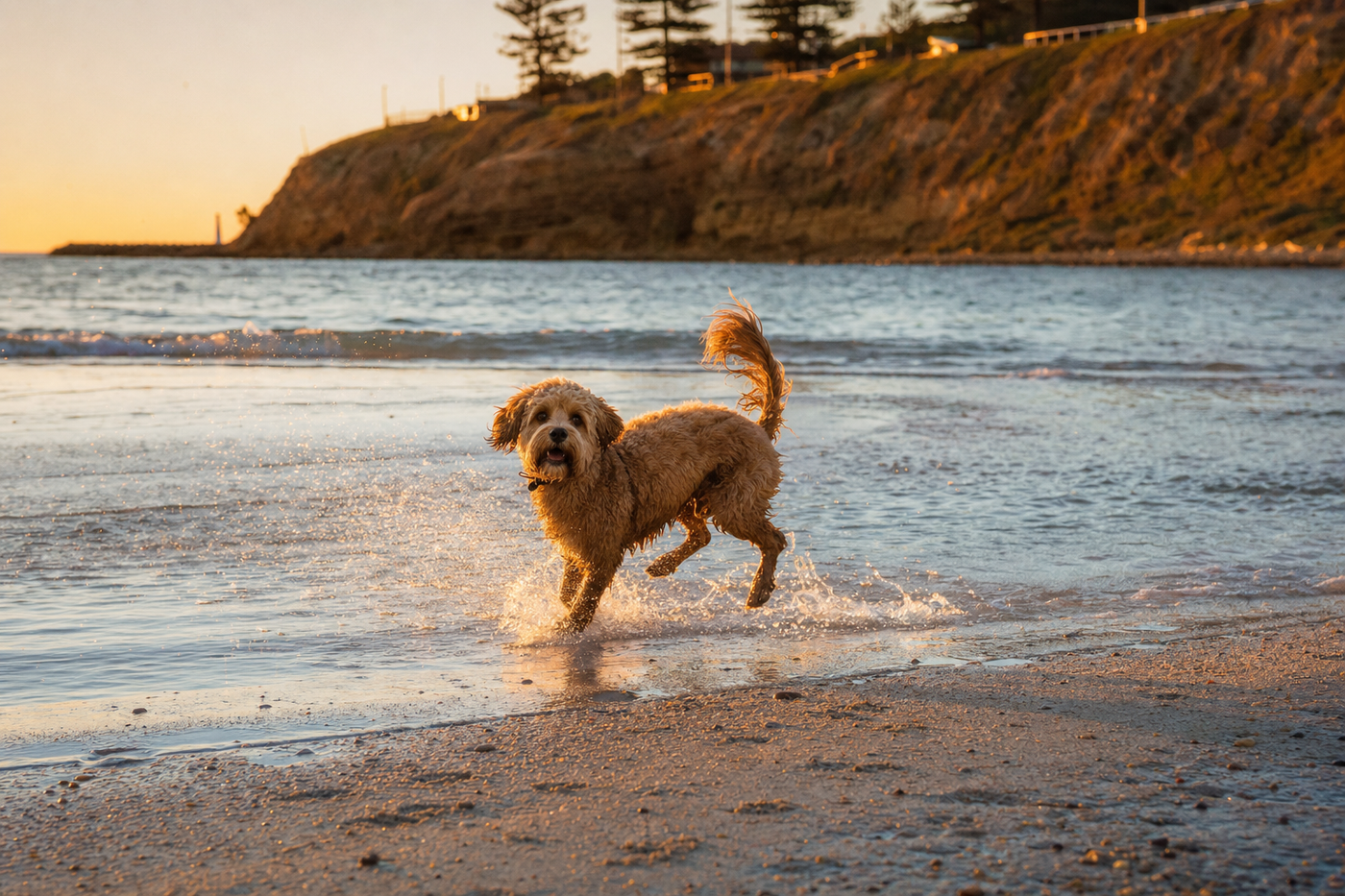
Sharp shells and submerged rocks cause deep cuts that easily get infected in salt water. Always inspect your dog's paws after the beach and consider booties.
Saltwater toxicity affects dogs who drink seawater excessively. Bring adequate fresh water and prevent continuous drinking of ocean water.
Why South Australia is Great for Beach Dogs
South Australia has some of the friendliest dog beach policies in the country, which makes travelling with your furry mate pretty straightforward. Most beaches allow dogs during the cooler months when fewer tourists are around, so you get quieter stretches of sand where your dog can actually run. The water here tends to be calmer than on the southern coast, which means safer swimming for dogs who aren't confident swimmers.
I learned this the hard way when I drove my Labrador down to Adelaide expecting to hit the beach year round. We arrived in January to find signs everywhere saying dogs weren't allowed until April. South Australia's winter season, from April through September, is when the beaches truly come alive for dog owners. The cooler weather also means your dog won't overheat, which is a real concern on Australian beaches during summer months.
Gear we would pack
Some links below are affiliate links. Pawtrips may earn a commission at no extra cost to you.
Pet-friendly stays on Booking.com
Find dog-friendly hotels and apartments throughout South Australia so you can stay comfortable near the beaches. Many properties offer fenced yards where your dog can relax after a day in the water.
Glenelg Beach: The Closest Option to Adelaide
Glenelg sits just 30 minutes south of Adelaide's CBD and has a dedicated dog beach area that opens from April to September. The dog zone stretches along the northern end near the Glenelg Jetty, and you'll find proper shade structures and freshwater rinse stations. This is probably the most convenient spot if you're based in the city and want a quick swim without driving hours.
The beach itself shelves gradually, so even smaller dogs can wade in without getting swept away by sudden drops. I've taken my Australian Shepherd here dozens of times and she loves the shallow water. During peak weekends, it gets busy with other dog owners, which some dogs find chaotic and others enjoy for socialising. Parking is paid (around AU$3 per hour) but there are plenty of spaces, and the facilities are well maintained. You'll need to pack your own water since the rinse stations are for post-swim cleaning, not for drinking.
Seacliff Beach: Quieter Than Glenelg
Just 5 kilometres south of Glenelg, Seacliff offers a more peaceful alternative if Glenelg feels overcrowded. The dog-friendly section runs from April through September and attracts fewer crowds, partly because there's less signage advertising it. This means more space for your dog to run without constantly navigating around other swimmers and dogs.
The beach itself has a rockier bottom compared to Glenelg's sand, so bring dog booties if your dog's paws are sensitive. I watched a Kelpie owner cursing under her breath when her dog got cut on sharp shells, so this is a genuine concern. The carpark is free and only five minutes walk from the beach, which makes it less stressful than paid alternatives. Facilities are basic but clean, with bins and basic shelter available. The water here stays slightly cooler due to the rockier shelf, which some dogs prefer during autumn.
SlowTon Dog Life Jacket
A properly fitting life jacket gives you peace of mind when your dog swims in ocean conditions with currents and deeper water. This is particularly useful at beaches like Port Noarlunga where water conditions change rapidly.
Henley Beach: Good for Training and Fetch
Henley Beach sits 20 kilometres west of Adelaide and welcomes dogs from April to September along its northern section. This beach is particularly good if your dog needs exercise and practice with recall because the flat, open space gives you visibility for half a kilometre in each direction. You can actually see your dog running off and call them back without losing sight of them.
The sand here is softer than Seacliff and Glenelg, which is gentler on paws but means water stays longer as puddles. Bring a towel that actually absorbs moisture because one of those microfibre quick-dry types is worthwhile here. The carpark fills up by 9am on weekends, so arriving before 8:30am is sensible. Facilities include picnic tables and public toilets, though nothing fancy. A corgi I met here had the time of his life fetch-training with his owner across the wide beach.
Port Noarlunga Reef Beach: For Experienced Swimmers
Port Noarlunga sits about 35 kilometres south of Adelaide and has a different character entirely. The reef creates interesting rock pools and underwater features, but also means stronger currents in places. This beach suits dogs who are already strong swimmers and owners who understand water safety, rather than a place to introduce a nervous dog to the ocean.
Dogs are welcome April to September, and there's a proper carpark right next to the beach with reasonable rates. The scenic walk along the pier is beautiful, though dogs need to stay off it. I've seen numerous dog owners combine a beach swim with the walking track inland, which breaks up the day nicely. The water temperature here is slightly colder than western beaches because of the reef influence. This is where I learned that my terrier mix, despite being a natural swimmer, got tired quickly in deeper water, so always know your own dog's limits.
Chuckit! Ultra Ball 2 Pack, Medium
Floating fetch balls are perfect for beach training because they're easy to spot in the water and encourage your dog to practice recall in an exciting environment. South Australian beaches are ideal spaces for this kind of training work.
Moana Beach: Lesser Known but Worth the Drive
Moana Beach sits 50 kilometres south of Adelaide and remains quieter than the beaches closer to the city. Dogs are permitted from April to September, and the access is straightforward, though the drive takes roughly an hour from central Adelaide. This is perfect if you want a quieter experience but don't feel like doing a full day trip to somewhere regional.
The beach has good parking, minimal crowds, and a more rugged feel than the urban beaches. I brought my rescue Border Collie here and she was noticeably calmer without dozens of other dogs around. The sand is coarser and darker here, which gets hotter under paws on warmer autumn days, so early morning visits work better. Facilities are basic with bins and toilets but no shade structures, so bring an umbrella or brolly. The water here tends to be slightly warmer because it's more sheltered, which is nice for dogs that hate cold water.
Rules You Actually Need to Follow
South Australian beaches have specific rules that change by season and location, so checking before you go saves disappointment. The main rule is that dogs are only allowed April through September on most metropolitan beaches. Some regional beaches have different dates, so ring ahead or check the local council website before planning your trip. Dogs must be under control at all times, which means either on-lead or reliable off-lead recall, and you'll get fined if your dog approaches other people without permission.
You're responsible for cleaning up after your dog, which means carrying bags and disposing of them properly. Most councils provide bins, but carrying extras is smart. Some beaches require dogs to stay in designated areas rather than roaming the full stretch, so pay attention to signage when you arrive. I got a warning once at a beach because I didn't realise the dog zone was only the northern 500 metres, not the whole beach. The rules exist mainly because peak summer season brings families with young children, and councils try to keep everyone safe. Dog owners who follow the rules get access; those who don't risk losing beach access for everyone.
Pet-friendly holiday houses on Stayz
Book entire houses where you and your dog can stay together during longer beach trips around South Australia. Having your own space means better rest between beach days and more flexibility for your dog's routine.
What to Pack for a Day at an SA Beach
Beyond the usual beach supplies, dogs need a few extra items for safe coastal days. Bring plenty of fresh water in a collapsible bowl because salt water dehydrates dogs quickly and they often won't drink seawater despite being tempted. Pack at least 1 litre per hour at the beach, more if it's an early autumn day that still feels warm. A good quality dog towel cuts down on the amount of water your dog shakes around the car, and microfibre towels dry faster than cotton ones.
Sunscreen for dogs is genuinely necessary if your dog has light coloured fur or thin coat. I didn't use it once with my light-coloured Labrador and she got sunburned across her back and shoulders, which was painful to watch. Dog booties protect paws from sharp shells and hot sand, though some dogs hate them initially. Pack a first aid kit with tweezers, antiseptic, and bandages for shell cuts. A collar with ID tags is essential since beaches are exciting places where dogs bolt. I also bring a long lead for training recall work, as well as some toys to keep my dog entertained during downtime.
Muttello Choc Dog Biscuit 140g
Reward your dog after a good beach session with healthy treats that aren't full of salt or sand. Having special beach day treats creates positive associations with the outing.
Plus early access to new guides and partner deals.
No spam. Ever. Just the good stuff for you and your pet.