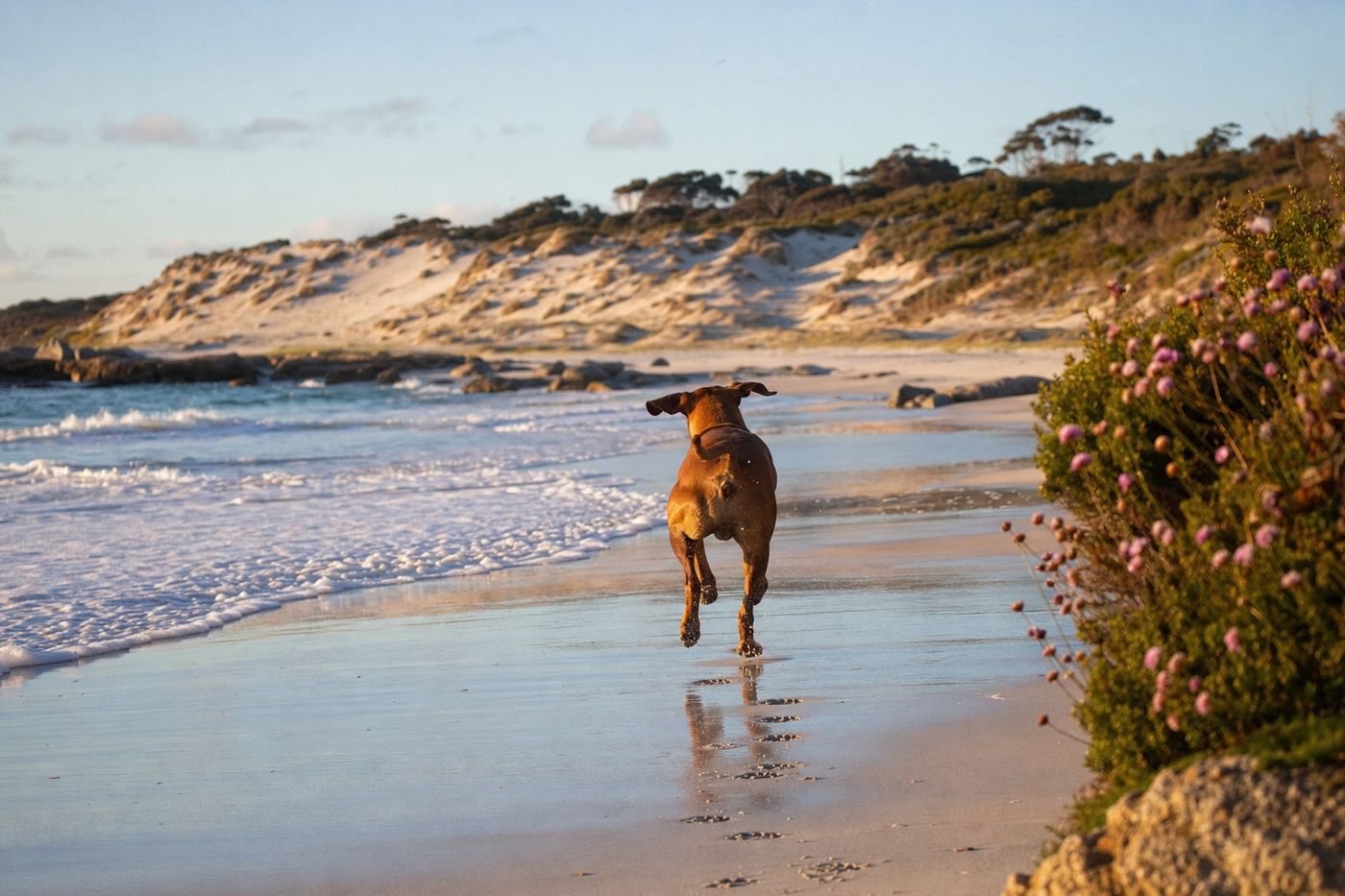
Tasmanian beaches have strong currents and undertow, particularly on exposed southern and western coasts. Never let your dog swim unsupervised, and call a lifeguard immediately if your dog gets caught in a rip current.
Salt water ingestion causes dehydration and intestinal upset in dogs. Prevent drinking seawater by keeping fresh water readily available and redirecting your dog away from waves.
Why Tasmania is brilliant for dogs at the beach
Tasmania offers something most Australian states don't: long stretches of coastline where dogs can actually run and play without constant hassle from crowds. I've travelled the east coast with my kelpie mix, and the difference between a packed Sydney beach and a quiet Tasmanian cove is night and day. Your dog gets genuine freedom to splash, chase, and burn energy instead of being glued to your side. The beaches feel less corporate than mainland destinations, with fewer rules about dogs needing to stay on leads the moment their paws touch sand.
The other huge advantage is water temperature. Tasmanian beaches stay cooler year-round, which means your dog won't overheat as quickly. Even in summer, the water feels refreshing rather than like a warm bath. I learned this the hard way after taking my dog to warmer northern beaches where he lasted maybe 20 minutes before lying flat on the sand, exhausted. In Tasmania, you get proper swimming days where dogs can actually enjoy themselves.
Tasmania also has fewer sharks and dangerous marine life compared to northern states. While you should still be sensible, the beaches feel safer for dogs who love to chase waves and wade out.
Friendly Beaches near Hobart
Cremorne Beach sits just 5 kilometres from Hobart's city centre and welcomes dogs year-round on leads. The beach faces north, so it catches morning sun and tends to stay cleaner than more exposed spots. I've found it busiest on weekends, but midweek mornings give you plenty of space. The nearby car park is decent, and there's a little playground if you're travelling with kids as well as your dog.
Bruny Island beaches, about 45 minutes south from Hobart, offer something special. Neck Beach on the eastern side is genuinely peaceful, with soft sand and shallow water that suits nervous swimmers. The ferry across from Kettering is dog-friendly, though you'll need to book ahead during peak times. I took my anxious spaniel there last May, and she paddled in the shallows for an hour without stress. Just remember Bruny Island has limited facilities, so bring everything you need.
Shelly Beach near Howrah, about 10 kilometres north of Hobart, allows dogs off-lead before 9am and after 5pm during the main season. The beach has a gentle slope, making it easy for older dogs to wade. The car park backs right onto the beach, which matters when you've got a wet dog and a long drive home.
Gear we would pack
Some links below are affiliate links. Pawtrips may earn a commission at no extra cost to you.
Pet-friendly stays on Booking.com
Finding dog-friendly accommodation near Hobart and Bruny Island beaches is easier with Booking.com's pet-friendly filter. Filter by location, dates, and pet policies to find places that welcome your dog without hidden charges or surprise restrictions.
East Coast options from Launceston
If you're based in Launceston or travelling that way, Penguin Bay near Bicheno is worth the drive. The 1.5-hour journey gets you to a beach that genuinely feels remote, with crisp water and usually only a handful of other people. Dogs are welcome on leads, and the rocky edges give the beach character. Just watch for sharp shells and bring booties if your dog has sensitive pads.
Scamander Beach, about an hour from Launceston, sprawls across several kilometres of sand. The northern end accepts dogs during off-season months, typically April to October. Summer gets busier and stricter, so check before you go. I took my dogs there in June, and we had the place nearly to ourselves. The water was cold but refreshing, and the wide beach meant plenty of room for dogs to roam without hitting other beachgoers.
Bay of Fires, further north near St Helens, features stunning orange rocks and equally stunning dog restrictions during peak times. Outside December to February, dogs can enjoy the eastern beaches. Wineglass Bay is nearby if you fancy a walk, though that's more for humans while your dog waits in the car. The whole area feels less touristy than mainland hotspots, which I genuinely appreciate when travelling with pets.
SlowTon Dog Life Jacket
Tasmanian beaches have strong currents and cold water. A dog life jacket provides flotation and visibility, giving you peace of mind while your dog explores the water safely.
West Coast and Southern beaches
West Point Beach near Strahan is one of Tasmania's most dramatic coastal spots. The beach curves beneath dark cliffs, and on calmer days, it feels almost otherworldly. Dogs are allowed here, though you'll need to check current restrictions as they change seasonally. The drive from Hobart takes about five hours, so plan accordingly. I'd recommend staying overnight to make the most of it, which means booking dog-friendly accommodation ahead.
Gordon Beach, south of Hobart near Margate, opens to dogs off-lead during winter months. The beach is quieter than Cremorne and has a nice mix of sand and rocks. My golden retriever loved searching between rocks for crabs and shells. The car park is small, so arrive early if you're visiting on a sunny day.
Little Waterloo Beach sits below the town of Waterloo, about 25 minutes south of Hobart. This hidden gem rarely gets crowded, and dogs are welcome year-round on leads. The beach is narrow but compact, making it easy to supervise your dog. Local cafes nearby mean you can grab coffee while your dog dries off.
Understanding Tasmania's dog beach rules and seasons
Tasmania splits its year into busy and quiet seasons, and dogs face different rules during each. From November through March, many popular beaches ban dogs entirely during peak hours, usually 9am to 5pm. This summer restriction exists to protect swimmers and minimize conflict. Outside these months, rules relax significantly. Some beaches allow off-lead dogs before 9am and after 5pm, even during summer. Others keep dogs on-lead year-round but welcome them daily.
Your best move is phoning the local council or checking the Tasmanian Parks and Wildlife website before you go. Rules change, and what applied last year might differ this season. I once drove two hours to a beach only to find dogs banned that particular day due to a special event. Now I make one quick call beforehand, which takes five minutes and saves frustration.
Off-lead times matter hugely for giving your dog proper beach freedom. If you've got a dog who needs to run and burn energy, hitting a beach during its off-lead window is entirely different from a controlled walk on lead. Many Tasmanian beaches offer these windows, which is why they work so well for active dogs. Just respect the times and get off when they end.
Chuckit! Ultra Ball 2 Pack, Medium
Dogs love retrieving balls on the beach, and Chuckit balls are designed for sand and water. The launcher helps you throw further without straining your arm, perfect for burning energy on Tasmanian beaches.
Practical tips for beach days with your dog
Bring more fresh water than you think you'll need. Dogs get thirsty from running on sand, and salt water makes them nauseous. I bring two litres for my two medium-sized dogs, even on short visits. A collapsible bowl takes almost no space and makes drinking easier than letting them lap from your hands.
Check your dog's paws after beach time. Sharp shells, hot sand, and salt water irritate paw pads quickly. I wash my dogs' feet with fresh water as soon as we get back to the car. If your dog has sensitive paws, consider dog booties for rocky or shell-laden beaches. A quick rinse also prevents salt water from drying out their skin overnight.
Timing your visit matters for comfort and safety. Early morning means cooler sand, fewer people, and often off-lead access. Late afternoon brings better light for photos but gets busier as families arrive after work. Midday is generally worst for both crowds and heat. Winter visits require different thinking, as beaches get cold and windy. Bring a dog towel or jumper if you're travelling in the colder months.
Bring your dog's normal lead and collar, not just a fancy retractable lead. Retractable leads create distance and control issues on busy beaches. A standard lead keeps your dog close when needed, which matters around swimmers or other dogs. I've seen too many dogs get into scraps because their owners relied on weak retractable leads in crowds.
Vita Pet Jerhigh Milky Sticks Dog Treats 400g
Bring high-value treats to reward your dog for good behaviour during beach visits. These milky sticks are long-lasting and perfect for positive reinforcement when your dog responds well to leads or recalls.
Accommodation options near dog-friendly beaches
Tasmania has solid dog-friendly accommodation options near most major beaches. Holiday houses on platforms like Stayz often welcome dogs with few restrictions. I booked a house near Bruny Island that let both my dogs stay for no extra fee, which saved money compared to hotels with pet surcharges. These houses usually have secure yards and space for dogs to decompress after beach days.
Hotels in major towns like Hobart, Launceston, and George Town accept dogs at varying rates. Some charge AU$20 per dog per night, while others include dogs free. Pet-friendly accommodation tends to cluster in tourist areas rather than small towns, so book early during peak seasons. I've had good experiences with mid-range motor inns that don't fuss about dogs as long as they're not left alone for hours.
Camping is an excellent option for dog owners travelling Tasmania. Many caravan parks welcome dogs off-lead in certain areas, and your dog gets to be outside rather than confined to a room. Facilities vary widely, so check reviews and call ahead. Some coastal parks even let dogs explore nearby beach sections. This style suits active dogs who need stimulation beyond just accommodation.
Pet-friendly holiday houses on Stayz
Book dog-friendly holiday houses near Tasmania's beaches through Stayz. Most properties offer secure yards, space for your dog to relax, and flexible pet policies that beat hotel surcharges.
What to pack for Tasmanian beach trips with dogs
Essentials include fresh water, a collapsible bowl, towels, and paw-wash supplies. Tasmanian weather changes fast, so bring a jumper or raincoat for your dog even on seemingly clear days. Wind can kick up suddenly, and coastal weather is unpredictable. A waterproof bag keeps treats, toys, and your phone dry. I use a small backpack designed for dogs, which keeps my hands free for leads and prevents dropping treats in sand.
Bring waste bags and a little shovel. Tasmanian beaches are beautiful partly because people maintain them. Your dog's waste matters just as much as anyone's, and leaving it creates actual problems for wildlife and other beachgoers. I carry bags in a hip pouch so they're always accessible, not buried in my backpack.
A dog-friendly ball or toy helps your dog enjoy the beach without relying entirely on swimming. Not all dogs love water, and having toys gives them stimulation either way. Pack items that won't get lost easily in sand. I avoid small balls that disappear between grains and stick with chuckit balls, which are easier to locate and throw further.
Sunscreen for dogs with light-coloured fur matters more than most people realise. Pale ears, noses, and bellies burn just like human skin. Dog-specific sunscreen exists and costs around AU$15 to AU$20 per bottle. It prevents painful burns and long-term skin damage, which matters over years of beach visits.
Plus early access to new guides and partner deals.
No spam. Ever. Just the good stuff for you and your pet.