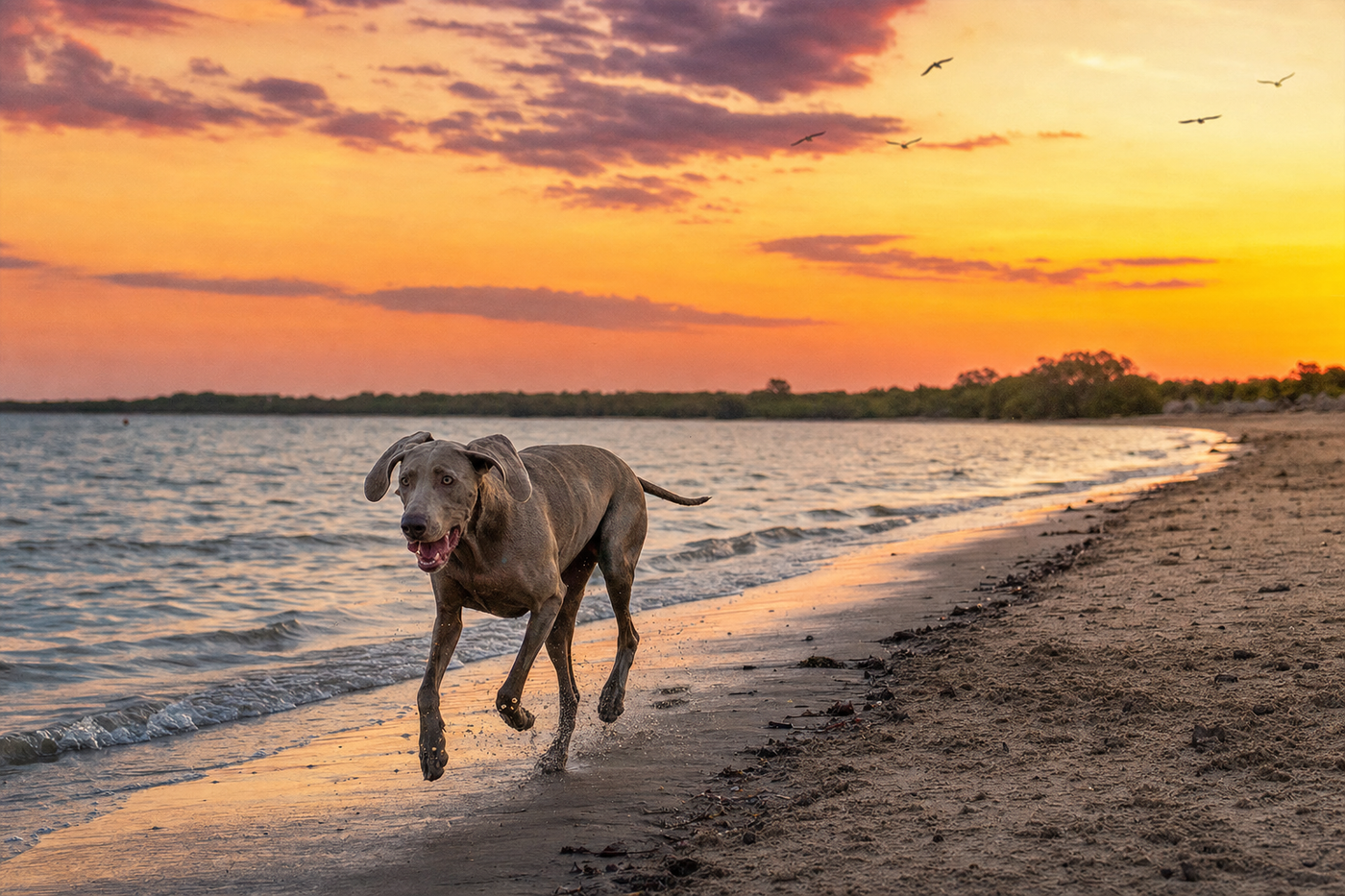
Saltwater crocodiles are present in Northern Territory waters. Keep your dog close to shore and away from creek mouths or mangrove areas.
Box jellyfish and stinger season (November to May) pose serious health risks to dogs. Check local authorities before ocean swimming during these months.
Why the Northern Territory is worth visiting with your dog
The Northern Territory offers wide open spaces and fewer crowds than southern beaches, which makes it excellent for dogs that need room to move. I took my Kelpie, Rosie, to Darwin and Katherine last year and realised how much she loved the freedom of the NT landscape. The beaches there feel less built up than places like the Gold Coast, so you get stretches of sand where your dog can actually explore without dodging beach umbrellas every five metres.
The Northern Territory beaches are also less commercialised, meaning dog owners are generally welcomed rather than treated as a hassle. Local councils in places like Darwin and Katherine have become more dog-friendly over the past few years. However, the NT climate and wildlife do require more planning than a casual beach trip further south. The heat is intense, the water can be dangerous, and stinger season brings real risks.
Mindil Beach Darwin: the most dog-friendly option
Mindil Beach in Darwin is probably your best starting point for a dog beach day. The beach has a dedicated dog area near the northern end, roughly 200 metres from the main carpark, where dogs can run off-lead during certain hours. The dog section stays quieter than the rest of the beach, and your dog can actually socialise with other dogs without tensions running high.
The sand is firm and wide at Mindil, which makes it easier for older dogs or puppies to walk without sinking. I watched Rosie trotting along and felt grateful not to be dragging her through soft sand in 35-degree heat. The beach has shade structures near the carpark, though they fill up by 9am during school holidays. Bring your own umbrella or find a spot near the trees along the back. Water quality is generally good, but always check local alerts for jellyfish before letting your dog swim.
Nightcliff Beach and East Point Reserve for calmer swims
Nightcliff Beach sits about 12 kilometres north of Darwin's CBD and attracts fewer tourists than Mindil, which means a quieter experience for your dog. The beach has rockpools and shallow areas where anxious swimmers can build confidence without getting swept out. My mate's elderly Labrador, Frank, spent a whole afternoon paddling in the shallows at Nightcliff and seemed genuinely content.
East Point Reserve is nearby and offers a different experience: a large park area with walking trails, picnic zones, and a small beach section. Dogs must stay leashed here, but the reserve gives you space to explore beyond just the sand. The walking paths wind through native bushland, and you might spot wallabies if you go early morning. Both spots have carparks with some shade, though facilities are basic compared to Mindil. Bring water and snacks because the nearest cafe or shop is a fair distance away.
Gear we would pack
Some links below are affiliate links. Pawtrips may earn a commission at no extra cost to you.
SlowTon Dog Life Jacket
A well-fitted life jacket gives nervous swimmers confidence and keeps your dog safer around NT waters. The buoyancy helps tired dogs stay afloat during longer beach sessions.
Katherine and Bitter Springs: freshwater alternatives
If you're driving inland to Katherine, about 300 kilometres south of Darwin, you've got freshwater swimming options that are safer than the ocean beaches. Bitter Springs is a crystal-clear natural pool about 10 kilometres east of Katherine town, and dogs can swim here without worrying about saltwater crocodiles or jellyfish. Rosie loved the cool freshwater after days in the hot NT sun, and the water stayed fresh all year round.
Katherine Hot Springs Pool is another option, though access for dogs is more restricted due to council regulations. You'll need to phone ahead to check current rules. The drive to Katherine from Darwin takes about four hours, so it suits a longer trip where you're staying multiple nights. The freshwater option is genuinely brilliant during stinger season from November to May when ocean swimming becomes risky. Bring a float or shallow basin if your dog isn't confident in deeper water.
Stinger season and what it means for your dog
Stinger season runs from November through May across the Northern Territory, and during this period, ocean swimming for dogs becomes genuinely risky. Box jellyfish and irukandji jellyfish are present, and while dogs are less likely to be stung than humans, a sting can cause serious problems. Saltwater crocodiles also become more active during these months, and they do view small dogs as food.
Your best option during stinger season is to skip the ocean beaches entirely and stick to freshwater pools or organised dog parks. If you absolutely must visit an ocean beach, check with local authorities about stinger nets or protected swimming areas. Some Darwin beaches do maintain stinger protection, but they're limited and often in areas where dogs aren't welcome. Plan your NT beach trip for the dry season, roughly June to October, when stinger risk drops significantly and the weather is more bearable for your dog.
Cooling bandana for dogs
NT heat demands active cooling solutions. A cooling bandana helps regulate your dog's body temperature during beach trips and travel between locations.
Heat management and what to pack for NT beaches
The Northern Territory heat is genuinely different from what most Australian dog owners expect. Temperatures hit 35 degrees regularly from September onwards, and sand temperatures can reach 60 degrees, which burns paws within minutes. I learned this the hard way when Rosie started limping after just 15 minutes on the sand at midday. Now I always go early morning, usually by 7am, and we're packed up by 10am.
Bring more water than you think you'll need. Most NT beaches have no water taps, so you need to carry enough for your dog to drink regularly throughout the day. A portable bowl takes up almost no space and makes a difference. Bring a light-coloured towel or cooling mat so your dog has a place to rest in shade. Some people use cooling bandanas or vests, which can help. Leave your dog in the car only if you can keep the engine running for air conditioning, and honestly, it's safer to take breaks at your accommodation instead. Wet your dog down regularly, even if they're not swimming, to help them cool off.
Pet-friendly holiday houses on Stayz
Find dog-friendly accommodation throughout the Northern Territory. Holiday houses offer space for your dog to relax between beach trips and avoid leaving them in cars during extreme heat.
Local council rules and leash requirements across the NT
Council regulations vary significantly across the Northern Territory, and what's allowed in Darwin might not be allowed in Katherine or Nightcliff. Darwin City Council allows off-lead dogs in designated areas during certain hours, typically early morning before 9am and late afternoon after 4pm. However, rules change, so always phone ahead or check the council website before your visit.
Some beaches require dogs to be leashed at all times, while others have no dogs allowed at certain times of year. Katherine Regional Council has stricter rules than Darwin, and some beach sections are completely off-limits to dogs. Most councils provide this information on their websites or tourist information signs at beach carparks. I always assume leash rules apply unless I've confirmed otherwise with local council. Getting a fine for an off-lead dog ruins a beach trip quickly, and it's not worth the risk to your dog's safety either.
Dog beach towel microfibre
Microfibre towels dry your dog quickly after ocean swimming and help remove salt water that can irritate skin. Lightweight and compact for beach travel.
Dog safety beyond the water: wildlife and hazards
Saltwater crocodiles are present in Northern Territory waters, and while attacks on dogs are rare, they do happen. Keep your dog close when near the water's edge, and never let them wander alone. I watched a small terrier chase a monitor lizard at Mindil last year, and the owner nearly had a heart attack. Wildlife in the NT includes snakes, spiders, and various animals that might bite or sting, so watch where your dog puts their paws and nose.
Sea urchins, sharp rocks, and coral can cut paws, so rinse your dog thoroughly after swimming and check between their toes. The sand itself can get extremely hot and burn paw pads if temperatures exceed 35 degrees. If your dog isn't used to salt water, they might get an upset stomach from drinking it, so bring fresh water and discourage drinking from the ocean. Keep an eye out for other beach hazards like broken glass, fishing hooks, and discarded rubbish that dogs sometimes try to eat.
Chuckit! Ultra Ball 2 Pack, Medium
Durable fetch balls keep your dog entertained during beach downtime and give them exercise when water play isn't available. These hold up well in salt water.
Plus early access to new guides and partner deals.
No spam. Ever. Just the good stuff for you and your pet.