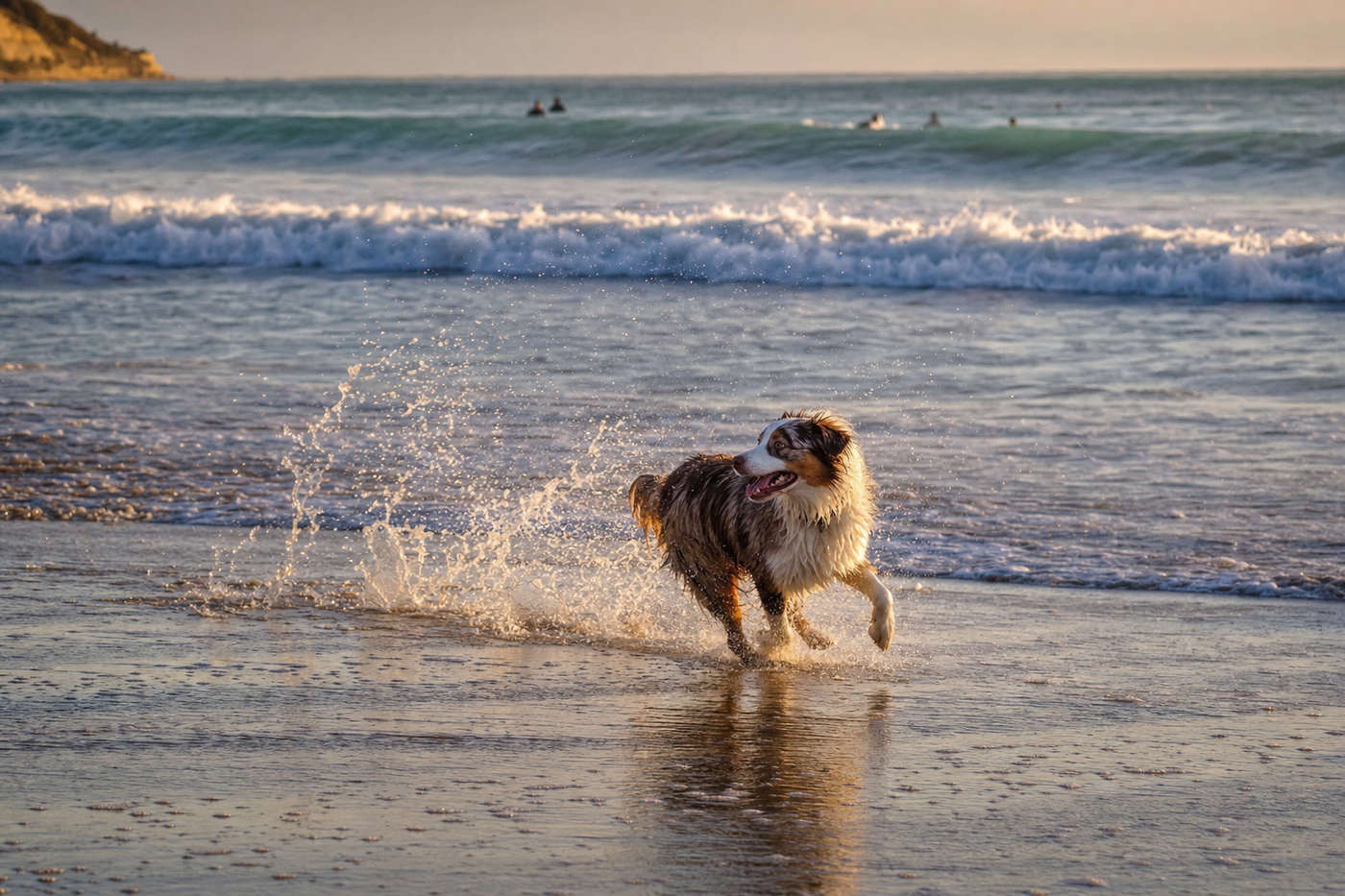
Ocean rips and currents can pull dogs underwater quickly. Never assume your dog's pool swimming skills transfer to ocean safety. Watch your dog constantly in the water.
Hot sand burns paw pads in seconds during summer months. Test the sand with your hand before letting your dog loose. If you can't hold your palm on it for 10 seconds, it's too hot for paws.
Beaches Where Dogs Run Free Year-Round
Victoria has more dog-friendly beaches than you might expect, but the rules vary wildly depending on where you go. Some beaches allow dogs off-lead all year, others only during certain months, and some ban dogs entirely during peak summer season. I learned this the hard way when I drove two hours to Sorrento thinking my Kelpie could swim freely, only to find out dogs were restricted during the school holidays.
The beaches that let dogs run year-round are your safest bets for spontaneous trips. Woolamai Beach near Phillip Island allows dogs off-lead throughout the year, which makes it perfect if you have a dog that needs serious exercise. Inverloch Beach also welcomes dogs all year, and the long stretch of sand gives even energetic dogs plenty of room to burn off energy. Altona Beach near Melbourne is another reliable option if you live in the city and want something close by.
These year-round beaches tend to be quieter than the flashy tourist spots, which means your dog gets more space and you stress less about other people's reactions. The trade-off is that facilities might be more basic, and you might find fewer nearby cafes or restaurants. But if you're going specifically to exercise your dog, that's usually not a problem.
Seasonal Dog Beaches: Summer and Beyond
Summer brings the strictest rules. Most Victorian beaches ban dogs from November through March, especially between 9am and 6pm on weekdays and 9am to 7pm on weekends. This is when tourists and families pack the beaches, and council wants to keep things peaceful for everyone. Warrnambool's Picnic Beach is one exception. It has a designated dog area that stays open during summer, though you'll want to get there early before it fills up.
Autumn and winter are when you get the most freedom. From April onwards, many beaches that restrict dogs in summer open up their off-lead areas. Anglesea's Anglesea Front Beach becomes dog-friendly in autumn, giving you access to a wide, patrolled beach without the summer chaos. Bell Beach near Winchelsea allows dogs off-lead from May to August, and the cooler water temperature means your dog is less likely to overheat.
Spring brings mixed rules. September and October see restrictions starting to kick back in as councils prepare for school holidays and summer crowds. Always check the local council website before you drive out, because rules genuinely do change between Easter and December. I've shown up to beaches ready for an off-lead run only to find restrictions had started the week before.
Melbourne's Closest Dog-Friendly Options
If you live in Melbourne and want a beach without a two-hour drive, Altona Beach is your best friend. It's 15 minutes from the city, allows dogs off-lead in the afternoon (4pm to 8am), and has decent parking right near the sand. The beach isn't as dramatic as some Victorian beaches, but it gets the job done when you need to tire your dog out before work or after school.
St Kilda Beach technically allows dogs, but only on-lead and only in designated areas. It's not ideal if your dog needs to run, but it works if you want to give your dog some sand time and a paddle without distance. Fair warning: it gets absolutely packed on weekends, and the smell from the pier area can be rough on a dog's sensitive nose.
Wilson Beach near Geelong, about 45 minutes from the city, offers more actual beach experience. Dogs are allowed off-lead during winter months from May to August. The beach is longer than Altona, the sand is firmer, and you get proper ocean conditions rather than the bay. If you're willing to drive just under an hour, this is a genuinely better beach for most dogs.
Gear we would pack
Some links below are affiliate links. Pawtrips may earn a commission at no extra cost to you.
SlowTon Dog Life Jacket
A fitted life jacket gives nervous swimmers or older dogs extra confidence in the water and improves visibility if conditions change. Most Victorian beaches have currents, and a quality jacket is cheap insurance for your dog's safety.
The Mornington Peninsula Dog Beaches
The Mornington Peninsula has several dog-friendly beaches, each with different rules and different vibes. Sorrento Beach allows dogs off-lead from May through August, and it's the kind of beach that actually looks like a holiday destination. The water is clearer than Melbourne Bay beaches, the sand is better quality, and there's usually a good breeze to keep things cool.
Blairgowrie Beach, just 10 minutes from Sorrento, allows dogs year-round but only on-lead during summer. The off-lead winter season from May to August means you get a proper beach experience when the weather is still fine. The beach here is quieter than Sorrento, which some dogs prefer, and the rock pools at either end give you something interesting to explore.
Tye Beach and Point Nepean are also options, though Point Nepean has stricter rules and parking is further from the beach itself. The Mornington Peninsula is worth a full day trip because you can string together three or four beaches if the first one doesn't suit your dog's energy level. Bring water and snacks because the cafes, while excellent, aren't always dog-friendly in their outdoor seating areas.
Geelong and the Great Ocean Road Region
Geelong's dog beaches punch above their weight. Torquay Front Beach allows dogs off-lead from May to September, and it's the kind of place where you see dogs playing together without drama. The beach stretches for kilometres, so even if it's busy, you can walk far enough away to find your own space. Parking is straightforward, and there's a grassy area behind the beach where you can let your dog dry off before getting back in the car.
Esplanade Beach in Geelong allows dogs on-lead only, which limits its usefulness, but it's right next to restaurants and shops if you want to make a day of it. Bells Beach, famous for surfing, allows dogs off-lead from May to August. The water here is proper cold, which some dogs love and others find shocking, so test the waters before you make a habit of the trip.
Farther along the coast, Anglesea offers multiple beaches. Point Roadknight Beach allows dogs off-lead during winter months and has some of the cleanest water on this stretch of coast. Warrnambool's Logans Beach and Lady Bay are also worth the extra drive if you're making a weekend of it. This region rewards you for planning ahead because the beaches genuinely do get quieter and nicer outside peak summer.
What to Pack and Bring Every Single Time
Fresh water is non-negotiable. Your dog will drink salt water if you let them, which causes dehydration and stomach upset. I carry at least two litres in a collapsible bowl, and I offer water every 20 to 30 minutes during warm weather. Sand gets into everything, including between your dog's toes and in their ears, so bring a microfibre towel specifically designed for drying dogs. Regular towels take forever and leave your car wet.
Sunscreen for dogs isn't common enough, but dogs with light-coloured noses or thin fur can get sunburned. A protective balm designed for dog noses makes a real difference if your dog loves the water. A light dog jacket or dog-friendly rash guard helps with protection if your dog has sensitive skin.
Bring more treats than you think you need. Beach time burns energy fast, and a tired dog is a good car passenger. Bring toys that float if your dog likes water play. Regular tennis balls get waterlogged and heavy. Chuckit balls are designed for water and dry much faster. A long lead, even if your beach allows off-lead dogs, gives you control if another dog appears unexpectedly or if your dog gets too confident near water.
Chuckit! Ultra Ball 2 Pack, Medium
Regular tennis balls get waterlogged and stay wet for hours, making your car smell terrible. Chuckit balls float, dry fast, and won't fall apart in salt water, making them perfect for Victorian beaches.
Cooling Bandana for Dogs
Hot sand and summer sun tire dogs out faster and risk heat stress. A cooling bandana keeps your dog's core temperature down during beach play in November through March.
Water Safety and Real Hazards
Rips and currents affect dogs exactly as much as they affect people. A strong swimmer on dry land can get into real trouble in the ocean. If you're not sure about the conditions, either keep your dog on-lead in the shallows or skip the water entirely. Watch your dog's behaviour. If they seem uncertain or are being pushed around by waves, get them out. Dogs' instincts aren't always reliable near the ocean.
Hot sand is a genuine hazard in summer. Sand can reach 60 degrees Celsius in January and February, and your dog's paw pads are soft. Run your hand across the sand before you let your dog loose. If it's too hot for your palm to rest on for ten seconds, it's too hot for paws. Early morning or late afternoon swimming is safer in summer because the sand hasn't been baking all day.
Rocks and shells can cut paws. Some beaches have beds of sharp shells or hidden rocks that aren't obvious when you're watching your dog play. Inspect your dog's paws after each beach trip, especially between the toes where cuts hide and get infected. Saltwater doesn't clean wounds the way people sometimes think. Rinse your dog with fresh water and check for any injuries before you leave the beach.
Dog Beach Towel
Microfibre dog towels dry faster than regular beach towels and prevent wet dog smell from soaking into your car seats. They're compact enough to fit in a beach bag and actually work.
Planning Your Beach Trip and Checking Rules
Each council manages their beach rules differently, and rules change. Before you go, check the specific council website for the beach you want to visit. Geelong City Council, Surf Coast Shire, Mornington Peninsula Shire, and the City of Greater Dandenong all have their own rules, and they're not always intuitive. Some beaches are managed by different councils on different stretches, which makes it confusing if you're planning a long walk.
Arrive early, especially on weekends. Popular dog beaches can reach capacity quickly during off-lead hours. If you show up at 10am on a Saturday during May, you might find the beach already full of dogs and owners. Early arrival also means cooler sand, fewer crowds, and a better chance of finding parking close to the beach entrance. Your dog will be happier with more space, and you'll stress less.
Call ahead if you're unsure. Most local councils have friendly staff who can tell you exactly what's allowed on the day you're planning to go. A five-minute phone call saves you driving two hours only to find out the beach is restricted that week. Bring a mobile phone and keep numbers for nearby vets in case something goes wrong. Not all beaches have reliable phone reception, so download the information before you leave home.
Pet-Friendly Holiday Houses on Stayz
Booking a pet-friendly holiday house near a dog beach gives you flexibility to visit multiple beaches across a few days without driving back to Melbourne each night.
Plus early access to new guides and partner deals.
No spam. Ever. Just the good stuff for you and your pet.