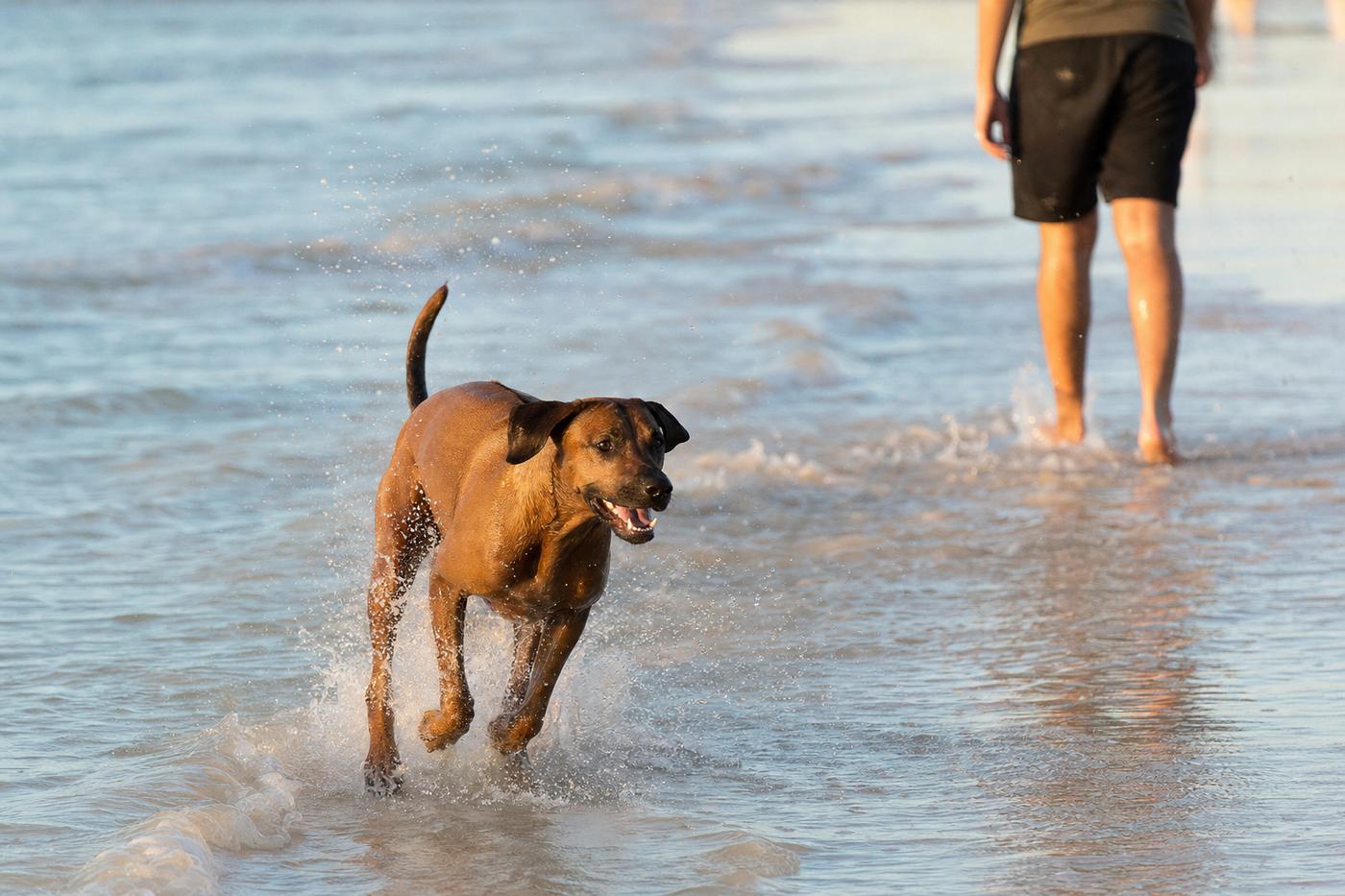
Rip currents can occur without warning at ocean beaches. Recognise them as narrow channels of fast-moving water moving away from shore. If your dog gets caught, don't panic or chase them into the current. Call for help and contact lifeguards immediately.
Heat exhaustion happens fast at Australian beaches. Dogs cannot cool themselves through sweating and rely on panting. If your dog pants excessively, drools, seems disoriented, or refuses to move, get them to shade immediately and pour cool (not cold) water over them. Seek a vet if symptoms persist.
Why Western Australia's Beaches Are Special for Dogs
Western Australia has some of the most relaxed beach cultures in Australia, and many locals travel with their dogs regularly. The coastline stretches over 20,000 kilometres, so there's real variety in what you'll find: sheltered coves, long stretches of sand, and calm bays that suit different dog temperaments.
I've travelled the WA coast with a Labrador and a anxious Cavalier, and I learned quickly that beach choice matters. A calm bay in Perth works differently than an exposed beach near Margaret River. Your dog's age, confidence in water, and reaction to other dogs all shape where you should go.
The other thing that struck me was how many dog owners you'll meet at the right beaches. Fellow travellers share warnings about strong currents, point out shady spots, and give genuine advice about what works. It's a community that actually looks after visiting dogs.
Best Dog-Friendly Beaches Within Perth
Cottesloe Beach has a designated dog beach area at the quieter northern end, past the surf lifesaving club. Dogs are allowed before 9 am and after 4 pm from September through April. The water is usually calm, the sand is fine, and there's a dog shower near the car park to rinse your dog afterward. I've been there when it was nearly empty at 7 am with my dog swimming happily while I had coffee.
Leighton Beach, just south of Cottesloe, allows dogs year-round before 9 am. It's less crowded than Cottesloe and has good access from the car park. The waves can be stronger here, so watch your dog if they're not a confident swimmer.
City Beach Dog Beach is the most straightforward option. Dogs are allowed off-lead in a dedicated area, 150 metres from the main swimming beach. There's a dog waste station, fresh water taps, and shade structures. My Labrador loved the space to run, and other dog owners there were friendly and watchful.
Gear we would pack
Some links below are affiliate links. Pawtrips may earn a commission at no extra cost to you.
Pet-friendly stays on Booking.com
When you're planning a day trip or weekend away to any of Perth's dog beaches, you need accommodation that welcomes your dog without stress. Booking.com lets you filter pet-friendly hotels, apartments, and houses across WA so you can find places that actually want your dog there.
Quiet Beaches South of Perth
Lake Marmion, near Kwinana about 45 kilometres south of Perth, is actually a calm freshwater lake, not a beach. Dogs love it because the water is warm, shallow, and safe from rip currents. There's a dedicated dog beach area with parking nearby. Your dog can swim without the salt water concerns, which is ideal if they have skin sensitivities.
Turkey Nest Lake near Lesmurdie is another freshwater option, roughly 30 kilometres east. It's quieter than Lake Marmion and surrounded by walking tracks. The swimming area for dogs is smaller, but the whole spot feels peaceful and less touristy.
Bertram Beach near Rockingham, about 50 kilometres south, has an off-lead dog area. The bay is sheltered, water is warmer than ocean beaches, and there's decent parking. I took my anxious Cavalier there and she relaxed because it was so quiet. The downside is it fills up during school holidays and weekends.
SlowTon Dog Life Jacket
A well-fitted life jacket removes stress from beach visits, especially at unfamiliar locations with unknown currents. The SlowTon jacket is designed for Australian conditions and comes in multiple sizes. It provides flotation support and a handle so you can assist your dog if needed.
Popular Beaches North of Perth
Two Rocks Beach, about 60 kilometres north, has a dedicated dog beach area with off-lead access. The beach is wide, sand is clean, and the rock formations give shelter from wind. Water can be cool, but many dogs don't care. The car park is right at the beach, which matters when you're managing a wet dog on a hot day.
Mullaloo Beach allows dogs off-lead in a designated section south of the main beach. It's closer to Perth than Two Rocks, about 25 kilometres, and gets busy on weekends but quiet on weekday mornings. There's a dog park near the beach if your dog prefers land-based play.
Whitfords Beach, also called Whitfords Beach Dog Beach, sits between Mullaloo and Two Rocks. Dogs can run off-lead in the designated area. The beach is quieter than Mullaloo and has decent facilities. I've taken both my dogs here and they've had good swims without feeling crowded.
Beach Towns Worth Visiting with Your Dog
Margaret River, about 280 kilometres south of Perth, is a beautiful coastal town with beaches that allow dogs. Prevelly Beach and Gnarawary Beach both permit dogs in certain areas. The region is famous for wineries, many of which have pet-friendly outdoor areas. You can spend mornings at the beach, afternoons wine-tasting at dog-friendly venues, then dinner at restaurants with outdoor seating.
Denmark, further south near the Southern Ocean, has quieter beaches and a more relaxed feel. Parry's Beach allows dogs, and the town itself is small and walkable. Your dog can explore the main street, and several cafes let dogs sit outside. The beaches have rougher water, so they suit confident swimmers.
Busselton, about 220 kilometres south, has calm bay beaches and the famous Busselton Jetty. Dogs can walk the jetty early in the morning before crowds arrive. The town has dog-friendly parks and beaches with gentle slopes, ideal for older dogs or puppies learning to swim.
Pet-friendly holiday houses on Stayz
If you're planning a longer beach trip to Margaret River, Denmark, or Busselton, Stayz specialises in holiday rentals where dogs are genuinely welcome. You get full kitchen facilities, often yards for your dog, and the ability to rinse sand and salt straight away at your accommodation.
Essential Gear and Safety Precautions
A dog life jacket isn't just for nervous swimmers. Even strong swimmers benefit from a well-fitting jacket at unfamiliar beaches with currents. I resisted using one until my Labrador got tired halfway out and struggled back. A jacket gives you peace of mind and gives your dog buoyancy support.
Fresh water is critical. Never rely on beach facilities to have enough. Bring two litres minimum in a bowl or collapsible container. Salt water dehydrates dogs faster than you realise, and they'll drink more because they're active and warm. My vet told me dehydration at the beach causes more problems than anything else.
A microfibre towel designed for dogs dries them faster than regular towels and takes up less space in your car. Pack sunscreen made for dogs if your dog has light-coloured or thin fur. Check the forecast for rip current warnings and beach hazard alerts. Some days, even dog-friendly beaches aren't safe. Don't be stubborn about getting in the water if conditions look rough.
Chuckit! Fetch Ball Medley for Dogs, Medium, 3 Pack
These durable fetch balls float and are designed for beach play. Three balls means you always have a replacement while one dries, and they're sized right for medium dogs. The bright colours are easy to spot on sand, which matters when your dog gets excited and runs off.
Seasonal Considerations and Timing
Winter from June to August is actually excellent for beach trips because temperatures are mild, fewer tourists crowd the beaches, and your dog won't overheat. Many northern beaches have fewer dog restrictions in winter. The water is cold, so watch your dog's tolerance, but most dogs tolerate it better than extreme heat.
Summer from December to February means early morning visits are non-negotiable. Even at 7 am, sand can burn unpadded paws within minutes. I learned this the hard way when my Cavalier yelped after walking just twenty metres on exposed sand at 8:30 am. Go before sunrise or wait until late afternoon after 5 pm when shadows cover the beach.
Spring and autumn are perfect. Water is warm enough, temperatures are comfortable, and beaches are moderately busy. Most dog restrictions align with school holidays, so check local council websites before planning trips during these transition seasons.
Muttello Choc Dog Biscuit 140g
Beach visits are perfect times to reinforce recall training, especially in new environments with distractions. These treats are small enough for training sessions and dogs find them genuinely rewarding. Pack them in a container and use them to reward your dog when they come back from water or sand exploration.
What to Do After Your Beach Visit
Rinse your dog immediately after leaving the beach. Salt water left on their coat causes itching, matting, and skin irritation within hours. Use the beach showers if available, or pack a small portable shower or bucket. Fresh water is all you need, though some dog owners use diluted apple cider vinegar to help neutralise salt.
Dry your dog thoroughly, especially ears and between paw pads. Damp areas trapped in fur create hotspots and infections. Microfibre towels help, but you may need a second pass with a regular towel. Check for any cuts, wounds, or items stuck in paws before getting in the car.
Watch your dog for signs of salt water ingestion. Drinking too much sea water causes vomiting and diarrhoea. If your dog seems unwell in the hours after the beach, contact a vet. Keep a towel in your car so your dog doesn't transfer sand and salt water onto car seats and upholstery.
Plus early access to new guides and partner deals.
No spam. Ever. Just the good stuff for you and your pet.