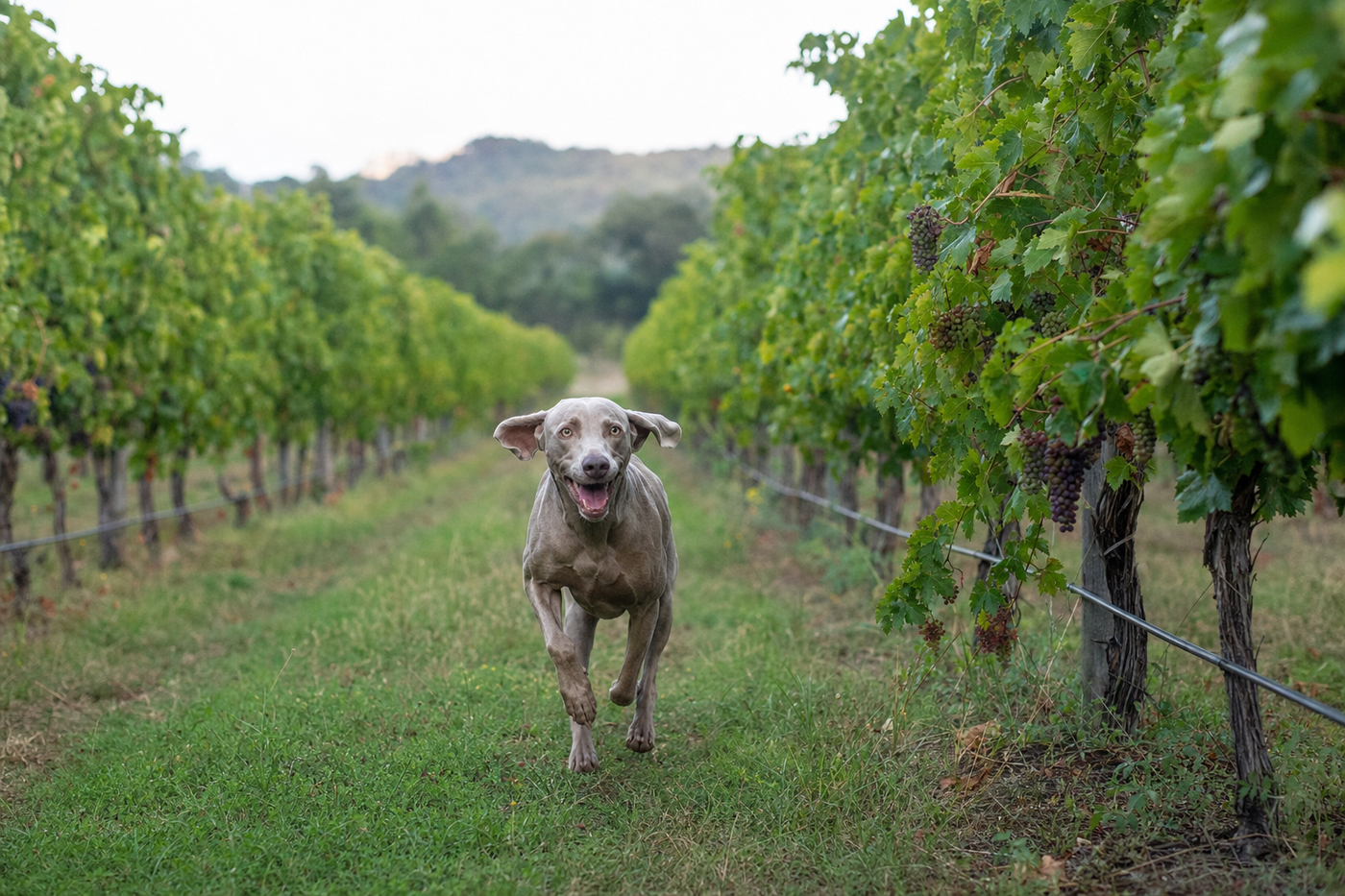
Canberra's cool climate at elevation can shift quickly. Bring a jacket for your dog if travelling in autumn or winter, as mornings and evenings get genuinely cold.
Vineyard areas contain equipment, pesticides, and hazards not always visible. Never allow your dog to wander unsupervised or roam free near vines or machinery.
Why Canberra's Wineries Suit Dogs
Canberra's cool climate wine region sits around 600 metres above sea level, which means temperatures stay gentler than coastal areas. When you're travelling with a dog in summer heat, this elevation makes a real difference. Your dog won't overheat as quickly, and the cooler evenings feel pleasant for an evening walk between vineyard visits.
The region produces excellent cool climate varieties like Riesling and Pinot Noir, which draw wine lovers from across Australia. The wineries themselves tend to spread across larger properties with open grounds, unlike cramped city venues. This space means your dog gets room to move, sniff new surroundings, and settle on grass while you sit at a tasting table.
The Main Dog-Friendly Wineries in Canberra
Brindabella Hills sits about 15 kilometres south of central Canberra and welcomes dogs on their lawn areas. I've seen dogs resting under the grapevines while owners taste Shiraz and Riesling at the outdoor tables. The staff are used to dogs and don't fuss about having bowls of water nearby.
Clonakilla lies further out near Murrumbateman, about 30 kilometres from Canberra's centre. Their grounds sprawl across native bushland, and dogs on leads enjoy wandering the property during visits. The cellar door staff remember regulars and their dogs, which makes the whole experience feel more like visiting friends.
Piggyback Hill Estate near Hall welcomes leashed dogs in their tasting garden. The property overlooks sweeping views, and you'll find shaded spots perfect for settling a dog while you sample their cool climate reds. The team there understands that dog owners want to stay longer and enjoy the experience rather than rush through.
Planning Your Route Through the Region
The Canberra region stretches across scattered locations, so planning matters if you're visiting multiple wineries with a dog. Many travellers make the mistake of bouncing between venues without considering distance or rest time. Your dog needs breaks, and you'll want to stop for a proper lunch rather than rushing through four wineries in five hours.
Consider visiting two wineries max in a day trip. Drive from central Canberra to Hall first, tackle one winery, then head towards Murrumbateman for your second stop. This gives you time to enjoy each place without stressing your dog or yourself. If you're staying overnight, you can spread visits across two days and actually relax. Download a map of the wine region from the Canberra Wine Region website and mark your stops before you drive.
What to Pack When Travelling with Your Dog
Bring a portable water bowl that collapses flat, because you'll refill it constantly on warm days. A cooling mat tucked in your car boot takes up little space and gives your dog a proper resting spot during tastings. I learned the hard way that sitting on bare ground in the sun exhausts dogs faster than you'd expect.
Packtreats your dog loves so they settle quietly while you're tasting. A dog that's occupied stays content and doesn't become demanding or disruptive around other guests. Bring poop bags even though wineries are rural. Leave the property as you found it, and other dog owners will keep getting welcomed back. A light lead or a long line gives your dog freedom while keeping them safe around vineyard equipment and other visitors.
Gear we would pack
Some links below are affiliate links. Pawtrips may earn a commission at no extra cost to you.
Portable Dog Water Bowl
A collapsible bowl fits easily in your car and ensures your dog stays hydrated throughout your winery visits across Canberra's cool climate region. Refilling frequently prevents overheating and keeps your dog comfortable during long afternoons outdoors.
Dog Cooling Mat
Even in Canberra's cooler climate, dogs need proper resting spots during wine tastings. A cooling mat gives your dog relief during the warmest parts of the day and makes settling down at cellar doors more comfortable.
Weather and Seasonal Timing
Canberra's cool climate region gets properly cold in winter, with frost common from June through August. If you're visiting during these months, your dog will need a coat, and muddy vineyard paths become slippery. Spring, from September to November, offers perfect conditions. Temperatures sit in the low 20s Celsius, and your dog won't overheat even during a full afternoon of vineyard exploring.
Autumn, from March to May, delivers brilliant colours and comfortable temperatures without the winter freeze. Summer visits work if you travel early in the morning and finish by mid-afternoon, but expect hot afternoons. Plan your winery timing around cooler parts of the day, and always choose venues with shaded outdoor areas. Book cellar door appointments in advance during busy seasons like long weekends, as some venues limit numbers.
Seresto Flea & Tick Collar
Wineries attract insects, and the cool climate doesn't eliminate pest risks. A flea and tick collar protects your dog throughout your travels without needing daily application or subscription services.
Dog-Friendly Accommodation Near the Wineries
Staying overnight means your dog isn't exhausted from a long drive home after wine tasting, and you can actually enjoy yourself without watching the clock. Several properties around the wine region accept dogs, though you need to book carefully and confirm their specific dog policy. Some places allow dogs indoors, while others limit them to outdoor areas or grassed yards.
Accommodation in Hall or Murrumbateman puts you close to multiple wineries without the drive from central Canberra. Properties here often have large blocks where dogs can stretch out safely. Check reviews on booking platforms specifically mentioning dogs, as these give real insight into how welcome pets actually are. Phone ahead rather than relying on online descriptions alone, because policies change and staff appreciate the heads up that a dog will be arriving.
Pet-Friendly Winery Stays
Book dog-friendly accommodation directly near Canberra's wine region so you can spend multiple days exploring without exhausting your dog with long drives. Overnight stays let you truly relax and enjoy the region.
Dining at Cellar Doors with Your Dog
Most cellar doors in Canberra's wine region have outdoor seating, which means you can bring your dog. Many venues serve food from cheese boards to proper meals, so you won't need to leave for lunch. Check the menu in advance, as options vary from simple platters to restaurant-quality dishes. Your dog can sit beside you on the grass or under a table while you eat and sip wine.
The key is choosing a winery with proper shaded outdoor space and food options you actually want. Rushing to a picnic table in full sun isn't fun for anyone. Bring your own treats or a small meal for your dog so they have something to occupy them while you're eating. This prevents them getting interested in your food or becoming restless. Most cellar door staff don't mind well-behaved dogs resting quietly nearby during service.
K9 Natural Grain Free Freeze Dried Dog Food
Pack lightweight freeze-dried food for your dog during your winery trip. It requires only water and provides complete nutrition without the bulk of regular kibble, making it ideal for overnight stays or multi-day adventures.
Practical Safety and Etiquette Tips
Keep your dog on lead at all times unless the winery specifically says otherwise. Grapevines, vineyard equipment, and wine tasting areas aren't spaces where dogs should roam freely. Other guests might not be comfortable with loose dogs, and vineyard owners need to know their space stays controlled. A good lead gives your dog freedom while keeping them safe and respectful of the property.
Clean up after your dog immediately, every single time. Wineries rely on their reputation, and dog owners who leave messes make venues less welcoming for future dogs. Tell staff your dog is there when you arrive so they're not surprised. Ask where's best for water breaks and which areas your dog can access. Respect these boundaries, even if they're more restrictive than you'd like. Your cooperation now keeps doors open for other travelling dog owners later.
Plus early access to new guides and partner deals.
No spam. Ever. Just the good stuff for you and your pet.