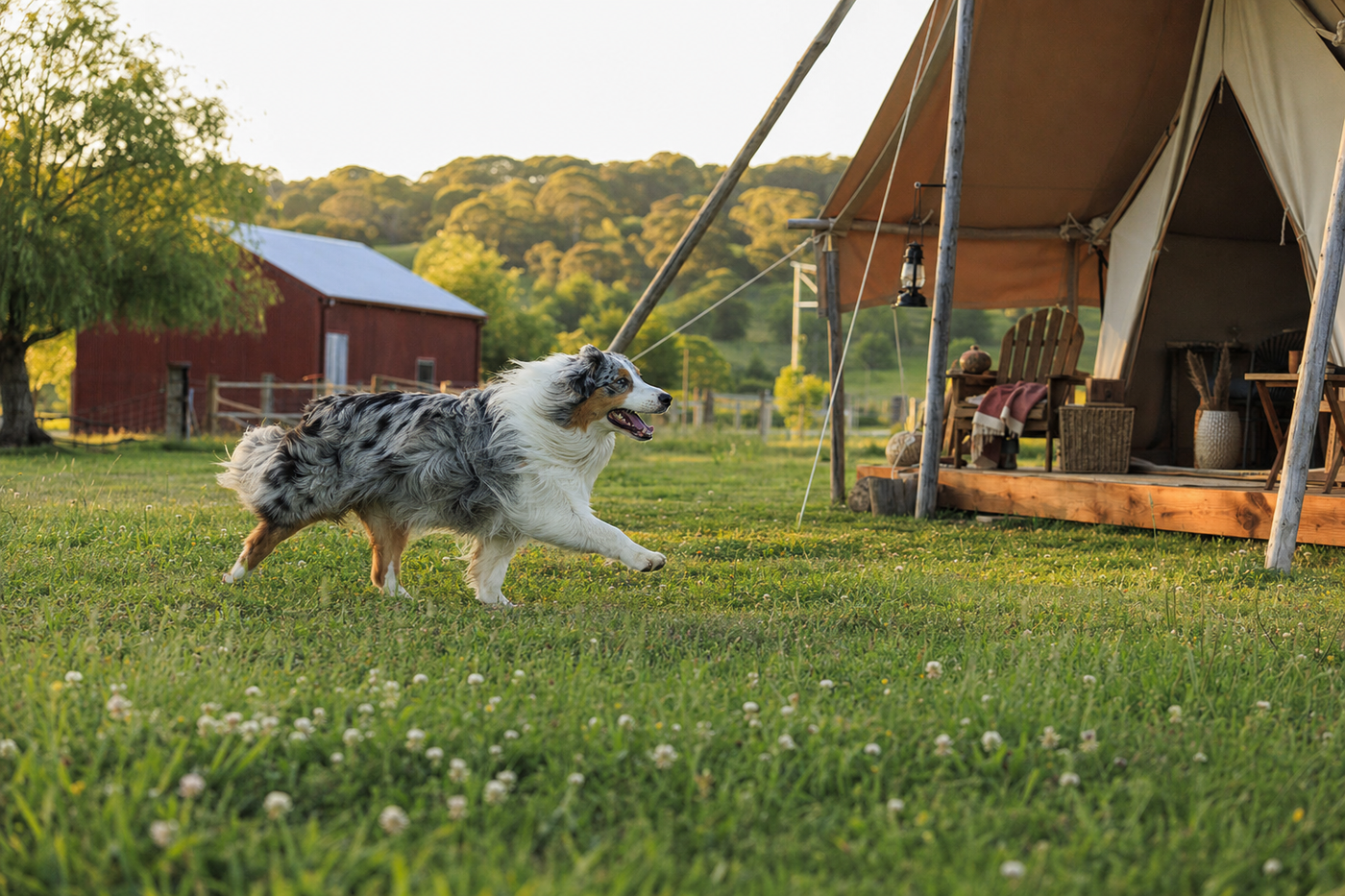
Brown snakes and red-bellied black snakes are active in NSW farmland October through April. Keep your dog on-lead or in sight during warm months, and learn to recognise snake warning signs.
Farm dams can contain blue-green algae, chemicals, or parasites that poison dogs. Never let your dog swim in untreated water without the host's explicit approval that the dam is safe.
Why Farm Stays Beat Regular Hotels for Dog Owners
I spent three years taking my Blue Heeler across NSW before realising that caravan parks and hotels were stressing her out. Farm stays changed everything. Your dog gets space to actually run, sniff new scents, and burn energy without bothering neighbours or getting anxious in confined rooms.
Farm properties usually sit on 5 to 50 acres, giving your dog freedom to explore while you're cooking dinner or sitting on the veranda. Unlike hotels where dogs end up lonely in rooms all day, farm stays let your dog stay by your side outdoors. The quiet environment also matters: there's no hallway traffic, no slamming doors, and no other guests' dogs to stress about.
Most farm stays are run by people who actually own dogs themselves. They understand your dog's needs because they live with their own. You'll get honest advice about walking trails, where snakes are active during certain seasons, and which paddocks are safe to explore.
Top Dog-Friendly Farm Stays Around the New England Region
Armidale in the New England sits about 500 kilometres north-west of Sydney and hosts several excellent farm stays. One favourite among dog owners is a working cattle property outside Armidale where hosts allow dogs to roam a fully fenced 20-acre area. The property has a large dam that your dog can swim in, plus shaded rest areas under old oak trees.
Another option sits near Uralla, roughly 15 kilometres south of Armidale, on a heritage fruit farm. This place lets dogs off-lead in designated paddocks while you pick apples or just relax. The owners have three dogs of their own, so they provide water stations, shaded spots, and even welcome you bringing your dog's bed inside the glamping tent.
The New England region appeals to dogs because the rolling hills mean endless walking without extreme heat in summer. Autumn through spring offers perfect temperatures, and you'll rarely see crowds. These farms book out quickly during school holidays in April and September, so plan ahead if you're targeting those periods.
Hidden Gems in the Southern Highlands Near Bowral
The Southern Highlands, about 90 kilometres south-west of Sydney, offers stunning scenery and several dog-friendly farm stays within easy driving distance. A lavender farm near Moss Vale allows dogs to walk between the rows during off-season months, and the cool climate suits dogs that overheat easily. Owners provide doggy water bowls at the glamping site, and the property sits far enough from the main road that your dog won't stress about traffic noise.
Near Bowral, a small organic farm stay welcomes dogs in purpose-built cabins with secure gardens. The owners keep goats and chickens, so they ask that your dog knows basic recall before arrival. The highlight is a private walking trail through native bushland on the property where your dog can explore safely away from roads.
This region suits weekend trips from Sydney, so consider these spots if you want to escape the city without driving five hours. The cooler weather means you can walk your dog during the day without worrying about heat stress. Winter mornings can get cold, so bring extra blankets and consider properties with heated glamping accommodation.
Gear we would pack
Some links below are affiliate links. Pawtrips may earn a commission at no extra cost to you.
Pet-friendly stays on Booking.com
Search hundreds of dog-friendly farm stays and glamping properties across NSW directly on Booking.com. Filter by pet policy and read reviews from other travellers who've stayed with their dogs. Many properties show exact pet fees and cancellation policies upfront.
What to Expect at a Typical NSW Farm Stay
Most dog-friendly farm stays in NSW offer glamping rather than rough camping. You'll sleep in a canvas tent, shepherd's hut, or tiny cabin with electricity and usually running water. Bedding comes provided, and the setup usually includes a small heater or air conditioner depending on season. Your dog typically sleeps in the same space as you, though some properties provide dog beds or crates if you prefer.
Breakfast varies by property. Some include a cooked meal in the accommodation fee, while others provide fresh produce from their farm to cook yourself. Dinner is usually your responsibility unless you've booked a package deal. Most farms sit 20 to 40 minutes from the nearest town, so plan your shopping before arrival or ask the host about nearby grocery options.
Outdoor facilities include fire pits for evening fires, gardens to relax in, and often a small pool or dam for cooling off. Some properties offer activities like farm tours, fruit picking, or animal encounters. Your dog benefits from slower days where you're not rushing between tourist attractions, which actually makes for a calmer, happier trip overall.
Managing Your Dog's Behaviour on a Working Farm
Farm stays aren't dog parks, and your dog needs to understand basic boundaries. Farms usually have livestock, and even the friendliest Border Collie can chase sheep or chickens if given the chance. Before letting your dog off-lead, ask the host exactly which areas are safe. Some properties have fenced paddocks where your dog can run freely, while others need your dog on-lead near animals.
Your dog's recall becomes critical on open farmland. I learned this the hard way when my dog spotted wallabies in a distant paddock and took off. Now I always spend the first evening practising recall on the property with high-value treats. If your dog doesn't reliably come back, use a long lead even in open spaces. Most hosts appreciate this responsibility more than dealing with a dog that won't come when called.
Bring toys and engage your dog's brain, not just their body. A tired dog is good, but a mentally stimulated dog is better. Puzzle toys, sniff games, and training sessions keep your dog settled during downtime. This also prevents your dog from getting bored and wandering off exploring on their own.
PAW by Blackmores Complete Calm Multivitamins for Dogs
Long drives and new environments stress many dogs. These multivitamins include magnesium and L-theanine to help your dog stay calm during travel and adjust to the farm stay environment. Give them a few days before your trip for best results.
Best Times to Visit and Booking Tips
Spring between September and November offers the best weather for farm stays across NSW. Wildflowers bloom, temperatures stay mild, and farms are in full activity. Autumn from March to May provides similar conditions with fewer school holidays crowds. These shoulder seasons mean better availability and less stress for your dog compared to peak summer heat.
Winter works if your dog handles cold weather well. June through August sees fewer tourists and more peaceful properties, but some farm stays reduce hours or close temporarily. Always confirm the property operates during your intended dates. Summer between December and February brings heat that stresses many dogs, and most farm stays book out solid because families travel during school holidays.
Book three to four months ahead during peak seasons. Most properties require a non-refundable deposit, usually 25 to 50 percent of the total cost. Always read the pet policy carefully. Some farms charge extra per pet, others include dogs free, and some have maximum weight limits or breed restrictions. Confirm cancellation policies before booking, especially if your dog has health issues that might force last-minute changes.
Blackdog Chicken Breast 1KG
High-protein chicken treats are perfect for recall practice in open paddocks and reward-based training on farm properties. Dogs love chicken, and these treats keep for several days once opened, making them ideal for week-long farm stays.
Essential Packing List for Farm Stays with Your Dog
Pack double the water you normally bring. Farm properties often sit far from shops, and your dog needs constant access to fresh water, especially when running around unfamiliar property. Bring collapsible bowls that take minimal space, plus one sturdy bowl that won't tip in excitement. Include a water bottle and portable bowl for walks away from the glamping site.
Bring your dog's regular food in sealed containers. Changing food while travelling upsets many dogs' stomachs, and farm shops rarely stock the specific brand your dog eats. Pack treats for training, recall practice, and reward-based behaviour. Include a long lead, ideally 10 metres, for safe exploration of open areas. Bring your dog's bed or blanket so they have a familiar resting spot in the glamping tent.
Pack a pet first aid kit including tweezers for grass seeds, antiseptic cream, bandages, and any medications your dog takes. Include insect repellent suitable for dogs, as farm properties attract more insects than cities. Bring recent photos of your dog in case they go missing, plus microchip details and vaccination records. Include a collar, lead, and ID tag, and confirm these details match your local council records before you travel.
Nexgard Spectra Chewables for Dogs 15.1-30 kg
Farm properties attract more ticks and parasites than urban areas. Nexgard Spectra covers ticks, fleas, worms, and mites in one monthly chewable. Start treatment before travelling to NSW farmland to protect your dog throughout the stay.
Safety Considerations Specific to NSW Farmland
NSW farmland hosts snakes, particularly brown snakes and red-bellied black snakes. These are most active October through April when temperatures warm. Keep your dog on-lead or in sight at all times during warm months. Avoid long grass and rocky areas where snakes hide. Learn to recognise snake warning signs like hissing or striking postures, and back away slowly without cornering the snake.
Farm dams pose drowning risks, especially for dogs that overheat and dive in repeatedly. Never assume a dam is safe to swim in without asking the host. Some properties treat their water with chemicals, others host blue-green algae that poisons dogs. If your dog loves water, ask about safe alternatives like fenced pools or swimming holes that the host has approved.
Ticks are common in NSW bushland and can carry serious diseases. Check your dog's coat daily, especially behind ears, between toes, and under the tail. Bring tick removal tools and know how to remove ticks properly. Consider asking your vet about prescription tick prevention before travelling. Paddocks near cattle sometimes contain parasites that affect dogs, so keeping your dog's worming up to date matters more on farms than in cities.
Plus early access to new guides and partner deals.
No spam. Ever. Just the good stuff for you and your pet.