Paralysis ticks are common in South Australian wine regions from August to April and can cause serious paralysis in dogs within 24 to 48 hours of attachment. Check your dog's skin thoroughly every evening during your stay.
South Australian snakes are present in wine country, particularly from September onwards. Keep your dog on lead in long grass and scrubby areas, and avoid walking between dusk and dawn when snakes are most active.
Why South Australian wine country is brilliant for dogs
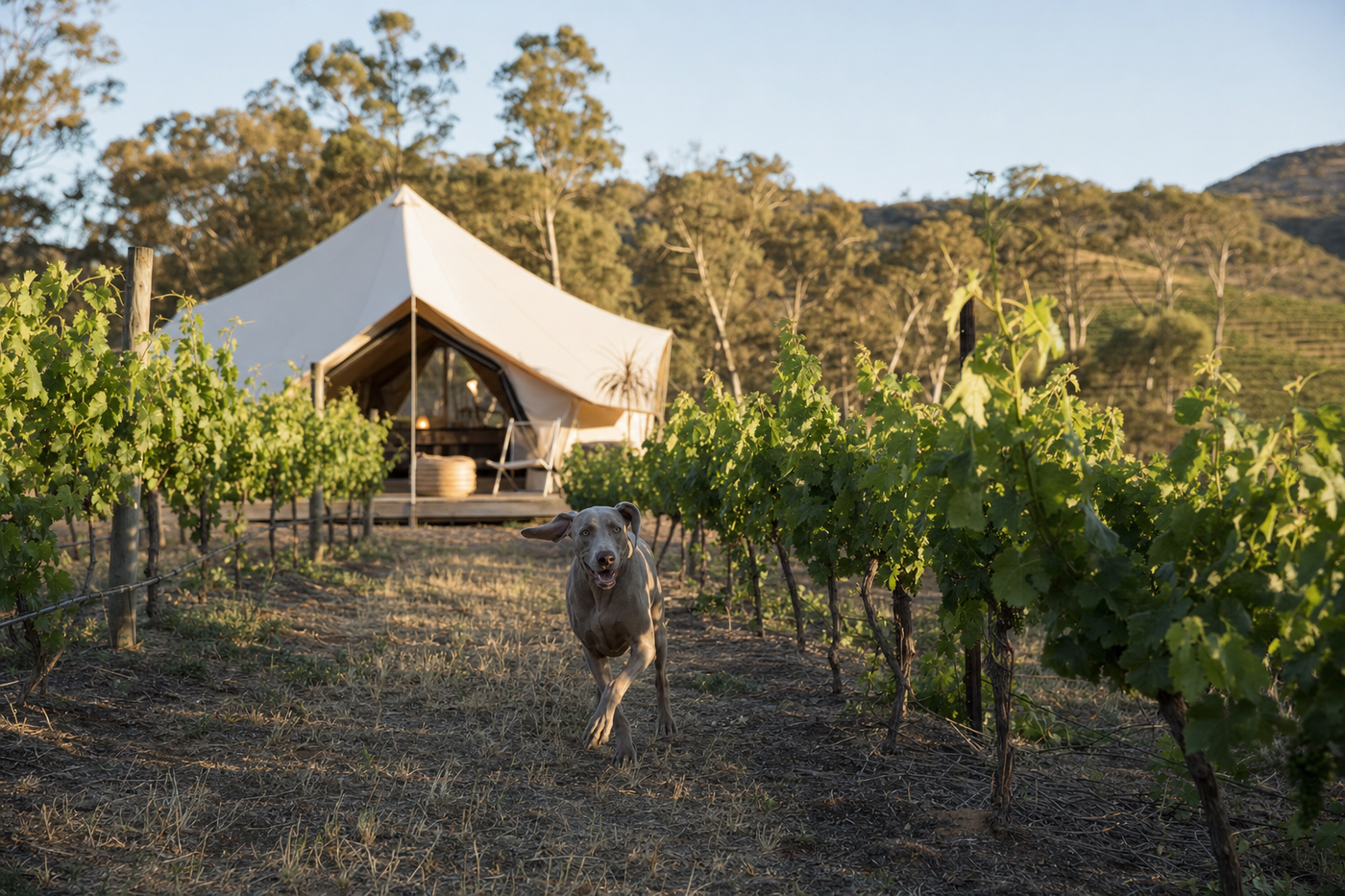
South Australia's Barossa Valley, McLaren Vale, and Adelaide Hills offer some of the most dog-friendly countryside in the country. The vineyard landscapes are open and rolling, which means your dog gets space to move around without feeling confined to a small backyard. Many glamping properties sit on larger blocks where your dog can stretch their legs properly, unlike cramped hotel rooms in the city.
The region's cooler autumn and winter months make it ideal for travelling with dogs. I drove my kelpie cross to the Barossa in June and she was far more comfortable than she would have been in summer when the heat hits 35 degrees Celsius. The wine regions themselves are quieter than city centres, so your dog won't be overwhelmed by noise or crowds.
Glamping adds genuine luxury to your trip without the stiffness of traditional hotels. You get outdoor space, fresh air, and usually a more relaxed atmosphere around pets. Many glamping hosts are pet owners themselves, which makes a real difference in how welcome your dog feels.
Top glamping areas for dogs in Barossa and McLaren Vale
The Barossa Valley stretches about 25 kilometres from Tanunda in the south to Nuriootpa in the north. Properties around Tanunda tend to be closer to restaurants and cellar doors, making them useful if you want to leave your dog at the glamping site for a few hours. Nuriootpa is quieter and more rural, with properties that often have larger grounds and fewer neighbours.
McLaren Vale sits about 40 kilometres south of Adelaide and has a slightly different feel. It's more compact than the Barossa, so you're never far from the coast at Willunga Beach, which is fantastic if your dog enjoys swimming. Several glamping properties here sit on small vineyards, giving your dog authentic wine country scenery without being too remote.
Adelaide Hills, further east, is cooler and greener than both regions. Places like Heysen and Stirling offer gorgeous mountain views and are popular with dogs who prefer temperate weather. The drive from Adelaide is shorter here, around 45 minutes to an hour, which suits dogs who get car sick.
What to pack for glamping with your dog
Bring twice as much water as you think you'll need. South Australian summer heat is deceptive, and even autumn days can get hot by midday. I learned this the hard way when my dog refused to move in the afternoon sun because the ground was too hot. Pack a portable bowl that clips to your day pack or car door.
Your dog will need their own bed or blanket for the glamping tent or cabin. Many glamping sites have raised beds or wooden platforms that get cold overnight, and your dog won't sleep well on hard surfaces. Bring their regular food and water bowls as well, since glamping sites rarely provide dog-specific equipment.
Pack a first aid kit with tweezers specifically for tick removal. South Australia has paralysis ticks, particularly in autumn and early winter. Include any medications your dog takes regularly, plus copies of their vaccination records and microchip details. Finally, bring entertainment items like puzzle toys or long-lasting chews, because your dog will have downtime between walks and winery visits.
Gear we would pack
Some links below are affiliate links. Pawtrips may earn a commission at no extra cost to you.
PAW by Blackmores Complete Calm Multivitamins for Dogs
Travelling and new environments can stress dogs. These multivitamins with natural calming ingredients help your dog relax during car journeys and in unfamiliar glamping settings. Start giving them a few days before your trip for best results.
Blackdog Chicken Breast 1KG
High-protein chicken breast treats are perfect for rewarding your dog during glamping trips and keeping them entertained in downtime. They're easy to pack and store in glamping accommodation, plus they're far healthier than shop-bought dog snacks.
Managing vineyard visits when you're travelling with a dog
Not every cellar door welcomes dogs inside, though many have excellent outdoor seating areas where your dog can sit under shade cloth with you. Ring ahead before visiting. Some places like Penfolds Barossa Valley Visitor Centre and several smaller family-run vineyards actively encourage dogs on their verandahs. Others might ask your dog to stay in the car or at your accommodation.
Arrange a pet sitter or dog walker for half days when you want to do a longer tasting or lunch. Most glamping sites can recommend local dog walkers or sitters, and many are experienced with dogs unfamiliar with the area. This costs between 30 and 50 dollars per hour, which is reasonable if it lets you properly explore the wine region without worrying about your dog overheating in the car.
Consider doing a dog-friendly winery tour instead of self-driving between cellar doors. Some small tour operators in the Barossa and McLaren Vale specifically cater to people travelling with dogs and plan visits to pet-friendly venues. Your dog stays with the tour group while you taste, and everyone gets a more relaxed experience.
Finding pet-friendly glamping accommodation
Search for glamping properties specifically on pet-friendly booking sites rather than general travel platforms. Many glamping sites in the Barossa and McLaren Vale don't show up in standard hotel searches but are listed on dedicated pet accommodation databases. Look for properties that mention outdoor space, fenced areas, or enclosed grounds, since these details matter more for dogs than they do for other pets.
Read the pet policy carefully before booking. Some places charge extra for dogs, typically between 15 and 30 dollars per night. Others include dogs free of charge. Check whether your dog can sleep in the bedroom or must stay in a separate area, as this affects how comfortable your dog will be overnight. Ask about off-lead areas, whether the property is fully fenced, and what happens if other guests have dogs staying at the same time.
Contact the host directly if anything is unclear. Genuine glamping owners are happy to answer questions about their property's suitability for your dog. Ask about the neighbourhood, whether there are cattle or other livestock nearby, and what the nearest emergency vet clinic is. Most hosts will provide this information willingly and might even recommend walking routes suitable for your dog.
Pet-friendly stays on Booking.com
Booking.com's pet filter lets you search specifically for dog-friendly glamping in the Barossa, McLaren Vale, and Adelaide Hills regions. You can see properties with outdoor space, read dog-specific reviews, and compare pet policies before booking.
Daily routines and exercise for your dog in wine country
Set a routine similar to home, even though you're travelling. Walk your dog early in the morning before it gets hot, around 6 or 7 AM if you're there in warmer months. This gives your dog exercise while temperatures are manageable and usually before winery staff start their day. An early walk also leaves the afternoon free for you to explore without worrying about your dog's energy levels.
Use lunch breaks to give your dog another walk and water break. Many glamping sites have nice grounds where your dog can have a gentle potter around while you rest. This midday break prevents your dog from becoming restless or destructive in the evening when you're settling in.
Evening walks can be social. Several glamping properties have walking trails on their grounds or nearby. Your dog gets exercise, fresh air, and often a chance to interact with other guests' dogs in a controlled setting. Avoid walking in vineyards without permission, as grapevines are sometimes treated with pesticides or fungicides that aren't safe for dogs.
PAW by Blackmores Osteocare Joint Protect for Dogs
Daily walking on unfamiliar terrain and increased exercise during glamping trips can put strain on your dog's joints. These joint supplements support mobility and comfort, particularly useful for older dogs or those not accustomed to longer walks.
Safety concerns specific to South Australian wine country
Paralysis ticks are common in South Australia from August through to April. Check your dog's skin thoroughly every evening when you return to your glamping site. Run your fingers through their coat from head to tail, paying special attention to ears, armpits, and the backs of their legs. If you find a tick, remove it carefully with fine tweezers, ensuring you get the whole mouthpart out. Keep the tick in a container if you need to show it to a vet.
Snakes are also present in South Australian wine regions, particularly in the warmer months. Most snakes will avoid your dog if given the chance, but prevent encounters by keeping your dog on lead in long grass or scrubby areas where you can't see the ground clearly. Wear enclosed shoes when walking, and make noise as you walk to alert snakes to your presence.
Many South Australian properties have dams or water features that look inviting to dogs but might contain algae or parasites. Check with your glamping host before letting your dog swim in any water on the property. Stick to designated swimming areas and fresh running water where possible.
Getting back home: the drive and recovery
Plan your return journey with your dog's comfort in mind. If you're driving back to Adelaide from the Barossa or McLaren Vale, that's 1.5 to 2 hours on the road. Break the journey with a stop halfway, around 45 minutes in, so your dog can toilet and stretch. This prevents car stress and helps your dog settle better at home.
Your dog will be tired from a few days of travel, new smells, and different surroundings. Expect them to sleep heavily on the drive home and for the first day back. This is normal and not a sign something is wrong. Get back into your regular routine with meals, walks, and playtime at consistent times to help your dog readjust.
Watch for any signs of illness in the days after returning home. If your dog develops a fever, vomiting, or seems lethargic beyond normal post-travel tiredness, contact your vet. Some parasites or tick-borne illnesses take a few days to show symptoms. Having noted the property name and location helps your vet if you need to report a potential tick exposure.
Plus early access to new guides and partner deals.
No spam. Ever. Just the good stuff for you and your pet.