Paralysis ticks are present on Kangaroo Island year-round and can kill dogs within 24 to 48 hours if not removed. Check your dog thoroughly each day and consider preventative treatment before travelling.
Strong ocean currents and rocky shores around certain beaches create hazards for dogs. Never leave your dog unattended near water, and avoid swimming in unfamiliar areas without checking local conditions first.
Getting Your Dog to Kangaroo Island
The ferry from Cape Jervis takes your dog across the Backstairs Passage in about 45 minutes. Your dog travels in the car or in designated pet areas on the Sealink ferry. You will need to book pet transport in advance because space is limited, and staff need to know your dog is coming.
The drive from Adelaide to Cape Jervis takes roughly two hours, so your dog gets a decent stretch before boarding. Bring water and a bowl because the ferry terminal has limited facilities for pets. Once you arrive at Penneshaw on the island, the landscape opens up with plenty of exploring ahead.
Beaches Where Your Dog Can Swim
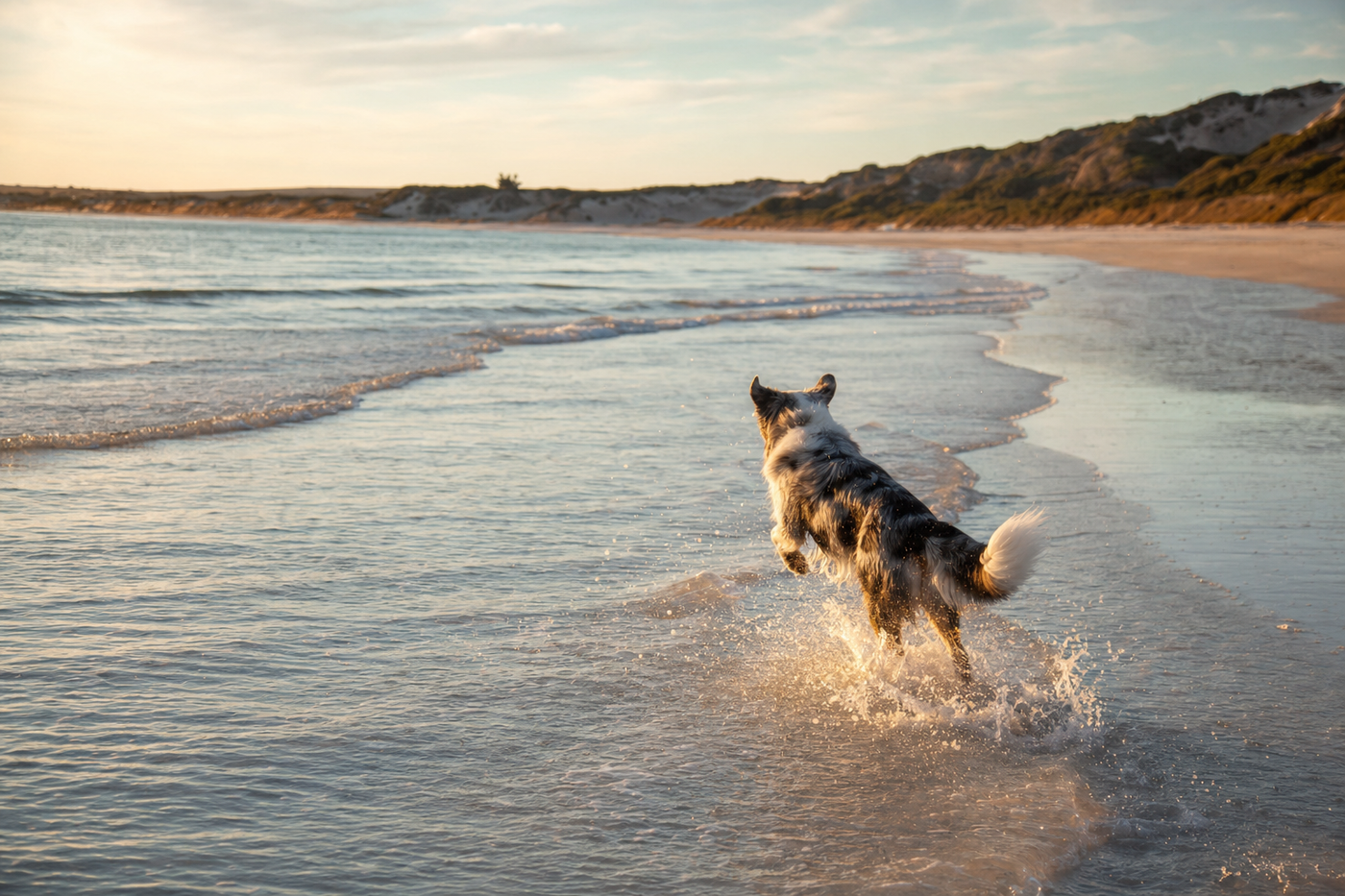
Stokes Bay and Emu Bay allow dogs year-round, though restrictions tighten from November to March. Christmas Cove near Penneshaw welcomes dogs but expects you to keep them under control near other beachgoers. Your dog should wear a collar at all times on public beaches, and you need to clean up after them immediately.
The sand at these beaches suits most dogs well, though the water can be cold and rocky in patches. Snorkelling Bay and Vivonne Bay also permit dogs during off-peak months. Before you head to any beach, check current conditions because winter storms sometimes close access, and summer holidays bring crowds that restrict dog areas to specific sections of the shore.
Gear we would pack
Some links below are affiliate links. Pawtrips may earn a commission at no extra cost to you.

Quiet 62L Pet Dryer Box with Smart Control
This ensures your pet stays comfortable and dry during your travels.

Dog Ear Muffs for Noise Protection
These ear muffs help keep your pet calm in noisy environments during travel.

Adjustable Dog Grooming Arm for Pet Owners
Keeps your pet secure during grooming.

Gentle Chew Toy for Teething Puppies
A calming chew toy is great for easing travel stress in puppies.
National Parks and Protected Areas That Ban Dogs
Flinders Chase National Park, which covers the island's western tip and includes Remarkable Rocks and Cape du Couedic Lighthouse, prohibits dogs on all walking trails. Your dog cannot enter this park even on a leash, so you will need to skip these major attractions if you are travelling solo with a pet. Kelly Hill Caves also bans dogs from the cave tours and surrounding reserve.
Seal Bay Conservation Park does not allow dogs because of the Australian sea lion colony there. These restrictions exist to protect wildlife and prevent disturbance during breeding seasons. The island's ecosystem is fragile, and native animals react badly to unfamiliar dogs. Plan your itinerary around these limitations and focus on the beaches and townships where your dog can accompany you.
Where Dogs Are Welcome in Towns and Shops
Penneshaw and Kingoonya have pet-friendly cafes and outdoor seating areas where your dog can sit beside you while you eat. The Kangaroo Island Brewing Company in Kingoonya has a fenced outdoor area where dogs are welcome. Many accommodation providers also have outdoor spaces, though you should confirm policies when you book.
Small shops and galleries throughout the island vary in their pet policies. Some welcome dogs inside, while others ask you to tie them outside. Local business owners generally favour well-behaved dogs, so a friendly greeting and a well-trained pet improves your chances of being welcomed back. Supermarkets follow strict no-dog rules, so plan your shopping accordingly or ask your accommodation hosts for recommendations.
Walking Trails and Scenic Routes Your Dog Can Explore
Several walking trails across Kangaroo Island suit dogs well, though you need to avoid the national parks. The Hog Bay Walking Trail near the western side stretches for about three kilometres and allows dogs on leash. Rocky River Reserve offers accessible walking paths through bushland where your dog can experience the island's native vegetation.
The Kingoonya to Penneshaw coastal walk takes roughly two hours at a moderate pace and gives your dog plenty of ocean views and beach time. Weather changes quickly on the island, so pack a waterproof jacket for your dog if you are travelling in winter. Ticks are present year-round, so check your dog thoroughly after any walk through bush or long grass. Always carry water because drinking from creeks exposes your dog to parasites and unknown contaminants.
Accommodation Rules and Pet Fees
Most pet-friendly holiday homes on Kangaroo Island charge between 20 and 50 dollars per night as a pet fee. Smaller properties, particularly those near Penneshaw and Kingoonya, often have fenced yards so your dog can exercise safely. Always notify your host that you are bringing a dog before you arrive, even if the listing says pets are welcome.
Some cottage owners ask that you do not leave your dog unattended for long periods. Others provide water bowls and designated pet areas. Reading recent guest reviews gives you insight into how welcoming specific properties truly are. Book accommodation well in advance during school holidays because pet-friendly options fill quickly, and many owners restrict the number of pet bookings they accept per season.
Wildlife Hazards and Health Precautions
Kangaroos roam across much of the island, and your dog's instinct to chase them can lead to dangerous situations. A cornered kangaroo uses its hind legs as weapons and can seriously injure a dog. Keep your dog close and under control whenever you spot kangaroos in open areas or near roads.
Snakes are active from spring through autumn, particularly in long grass and near water. Your dog should stay on marked paths and avoid investigating rustling sounds in bushes. Paralysis ticks attach to dogs during warm months and can cause serious illness within days. Check your dog daily for ticks, focusing on ears, armpits, and between toes. Consider a tick prevention treatment before you travel, and ask your vet about the best option for your dog's age and weight.
Planning Your Itinerary Around Dog Restrictions
A typical three-day visit with a dog works best if you focus on beaches, walking trails, and small towns rather than major attractions. Day one covers the ferry journey and settling into your accommodation around Penneshaw. Day two suits a beach day at Stokes Bay or Emu Bay, followed by a visit to local cafes in Kingoonya.
Day three works well for the Kingoonya to Penneshaw coastal walk or a drive around the quieter eastern side of the island. You could arrange for someone to watch your dog for an afternoon so you can visit Flinders Chase National Park without guilt. Many visitors accept that travelling with a dog means missing some attractions, and the trade-off of having your companion beside you makes the holiday more relaxing. The island's charm lies in its quiet beaches and unhurried pace, which suit dogs and their owners perfectly.
Plus early access to new guides and partner deals.
No spam. Ever. Just the good stuff for you and your pet.