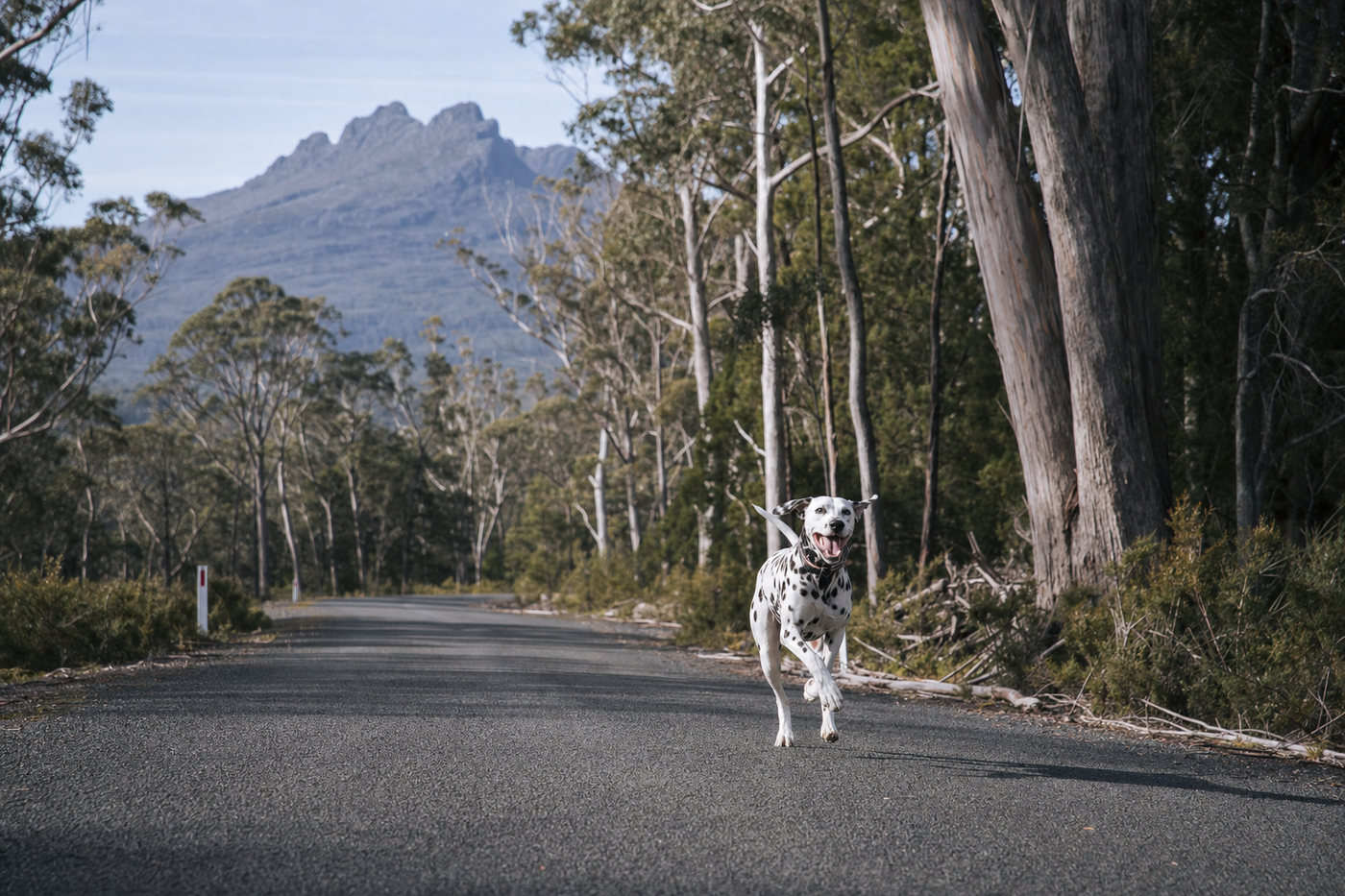
Never leave your dog in a parked car in Tasmania. Mountain weather can change rapidly, and temperature can spike dangerously in minutes even with windows partially open.
Ensure your dog is microchipped and wears an ID collar with your mobile number. Remote areas around Cradle Mountain have minimal mobile coverage in some spots, and a lost dog in wilderness is dangerous.
Why Hobart to Cradle Mountain Works for Dogs
The drive from Hobart to Cradle Mountain takes about two hours without stops, but you would not want to do it that way with a dog. I learned that spreading the journey across a day makes everyone happier. Your dog gets proper breaks, you avoid that stressed arrival where the dog is wound tight, and you actually see Tasmania instead of just driving through it.
The route follows the A7 and B5 highways, mostly flat through the Midlands and then climbing as you approach the Great Western Tiers. Towns like Oatlands and Deloraine sit nicely along the way, giving you natural stopping points. Most of these towns have parks where your dog can stretch properly, not just a quick leg lift on a rest stop.
Cradle Mountain itself sits inside Cradle Mountain Lake St Clair National Park, and dogs are welcome on most walking tracks. The Dove Lake circuit is 5.9 kilometres and dog-friendly, offering you real adventure rather than just accommodation.
Getting Your Dog Ready for the Drive
Before you leave Hobart, spend time getting your dog used to the car if they are not already. My dog vomited for the first three trips until I started taking short drives to nowhere special, just to build tolerance. Start with ten-minute trips to the park, then gradually extend them. Your vet can prescribe motion sickness medication if your dog struggles after practice.
Arrange a vet check one week before you travel. Ask about any concerns specific to your dog's age, size, or breed. Bring vaccination records and microchip details in a folder you can quickly access. Your vet might recommend starting supplements for joints if your dog is older, since long car rides stress their hips and shoulders.
Exercise your dog properly the morning of travel. A good 30 to 40 minute walk tires them out enough to sleep during driving, without wearing them out so much they are sore. Avoid heavy meals two hours before departure.
Gear we would pack
Some links below are affiliate links. Pawtrips may earn a commission at no extra cost to you.
Dog car harness and seat belt
A proper car harness keeps your dog secure and protected during the two-hour drive from Hobart to Cradle Mountain. Unlike loose travel, a harness prevents injury if you brake suddenly and reduces stress by keeping your dog in a confined space during long journeys.
Stopping Points and Pet-Friendly Towns Between Hobart and Cradle
Oatlands sits about 45 minutes north of Hobart and has a nice park where your dog can run safely off-lead if they have reliable recall. The town has a small shopping area where you can grab snacks. Many locals know their way around and can point you to quiet spots. Spend 45 minutes here rather than rushing through.
Deloraine comes next, roughly 90 minutes from Hobart. This town has multiple parks and a relaxed feel that suits dogs. The Deloraine Recreation Ground has open space and water fountains. Several cafes around the main street are dog-friendly outdoor areas where you can sit while your dog rests in the shade. I stopped here for two hours on my first trip, and my dog settled much better for the final leg.
Sheffiled is the last real town before Cradle, sitting about 30 minutes away. It is smaller but has a park and a few food options. By this point your dog will be tired, so a quiet 20-minute break here gives them final relief before settling into your accommodation.
PAW by Blackmores Osteocare Joint Protect for Dogs
Mountain road trips and longer walks stress your dog's joints, especially if they are older. Starting a joint supplement one week before travel helps prepare their hips and shoulders for the drive and Cradle Mountain tracks.
Choosing Pet-Friendly Accommodation Near Cradle Mountain
Not all accommodation near Cradle Mountain welcomes dogs, so book well ahead. Cradle Mountain Wilderness Village, Lemonah Holiday Lodges, and Cradle Mountain Chalets all allow dogs in certain rooms. Call directly and ask about their dog policies before booking through online platforms. Some places charge extra per night for dogs, usually between ten and twenty dollars. Factor this into your budget.
When you ring, ask about fenced areas or whether your dog needs to stay in the room. Ask about nearby walking paths directly from the accommodation. Some places sit closer to walks than others. Lemonah, for example, has direct access to quieter trails away from the main Cradle Mountain crowds.
Arrive early if possible. Accommodation managers appreciate it when you give them time to prepare, and your dog benefits from settling in before dark. Unpack slowly, let your dog explore the room, and take them for a short walk around the property before dinner.
Pet-friendly stays along the route
This resource helps you locate and compare dog-friendly accommodation near Cradle Mountain and along the drive from Hobart. Booking confirmed pet-friendly places weeks ahead ensures you do not spend your holiday searching for places that accept dogs.
Walking Your Dog on Cradle Mountain Tracks
The Dove Lake circuit is the most popular dog walk and covers 5.9 kilometres. Most dogs handle it well over about two hours if they are reasonably fit. The track is well-marked and has sections of boardwalk alongside muddy stretches. Your dog will get muddy, so pack a towel and consider dog booties if your dog struggles with wet paws.
Shorter options include the Pencil Pine Falls walk, which is 2.4 kilometres and scenic. The Wombat Pool track runs 2.2 kilometres and follows water, which many dogs enjoy. These walks suit older dogs or those not used to longer distances. Start with a shorter walk if you are unsure how your dog will manage mountain terrain.
Avoid the main peak walks like Cradle Mountain itself. The altitude, exposed ridges, and steep terrain are not suitable for most dogs. Weather changes fast at elevation, and you do not want your dog exhausted or cold. Stick to the valley circuits where your dog can turn back safely if they tire.
Essential Gear and Supplies for the Trip
Pack a dog car seat cover or crate to protect your car's upholstery and keep your dog secure. A harness that clips to the seat belt is better than nothing, but a proper crate is safest. Your dog will feel secure in a familiar crate during long drives. Include familiar bedding inside so they have comfort even in unfamiliar accommodation.
Bring more water and bowls than you think you need. A collapsible travel bowl takes up minimal space but lets you offer water at every stop. Pack their regular food plus extra in case you end up staying longer. Many dogs get upset stomachs when food changes suddenly. Bring treats they know and love.
Include a first aid kit with bandages, antiseptic, and any medications your dog uses regularly. Pack a torch for evening walks, a long lead for walks near roads, and poo bags that you will actually use. Bring a grooming brush because dogs shed more when travelling. A light jacket helps if your dog gets cold at mountain elevation, even in warmer months.
Collapsible travel water bowl
A lightweight collapsible bowl fits easily in your car bag and lets you offer water at every stop without carrying bulky bowls. Keeping your dog hydrated during the drive and on mountain walks prevents exhaustion and overheating.
Driving Tips to Keep Your Dog Comfortable
Stop every 1.5 to 2 hours, even if your dog seems fine. Their bladder does not care if they look comfortable. Pull into rest areas or parks where they can properly move around. A quick five-minute walk stops blood clots in their legs and helps them settle again. Never leave your dog in a parked car, even with windows down. The temperature can spike dangerously in minutes.
Keep the car cool. Dogs overheat much faster than humans in moving vehicles. Aim for around 18 to 20 degrees Celsius if your air conditioning allows specific temperature control. Open windows enough for ventilation but not so much your dog can jump out. Avoid peak heat hours if possible, leaving early morning or late afternoon.
Put your dog in their secure spot before you start driving. Do not let them wander the cabin or sit on laps. Once they are settled, keep the car calm. Avoid loud music and sudden movements. Speak quietly if at all. A calm driver means a calm dog.
K9 Natural Grain Free Freeze Dried Dog Food Lamb & Salmon 1.8kg
Freeze dried dog food is lightweight, does not require refrigeration, and stays consistent with your dog's regular diet during the trip. This matters because stress plus new foods causes digestive upset, and familiar nutrition helps your dog settle better in unfamiliar accommodation.
Managing Common Road Trip Challenges with Your Dog
Some dogs vomit or have diarrhoea from car anxiety or the stress of new food and water. If this happens, pull over safely and clean up as best you can. Do not stress, as your dog will sense it. After the first or second stop, most dogs settle. If vomiting continues on future trips, ask your vet about medication options.
Other dogs become anxious or bark constantly. Do not give them extra attention when they do this, as it rewards the behaviour. Pull over safely, let them have a toilet break, and resume driving calmly. Some dogs need calming treats or supplements before travelling. Ask your vet about options like L-theanine or a prescribed anti-anxiety medication.
If your dog refuses to eat once you arrive, that is normal. Stress suppresses appetite. Offer their food at normal times but do not stress if they skip a meal. They will eat when they relax. Keep offering water regularly. Do not introduce new foods during the trip, as dietary changes combined with stress cause digestive upset.
Plus early access to new guides and partner deals.
No spam. Ever. Just the good stuff for you and your pet.