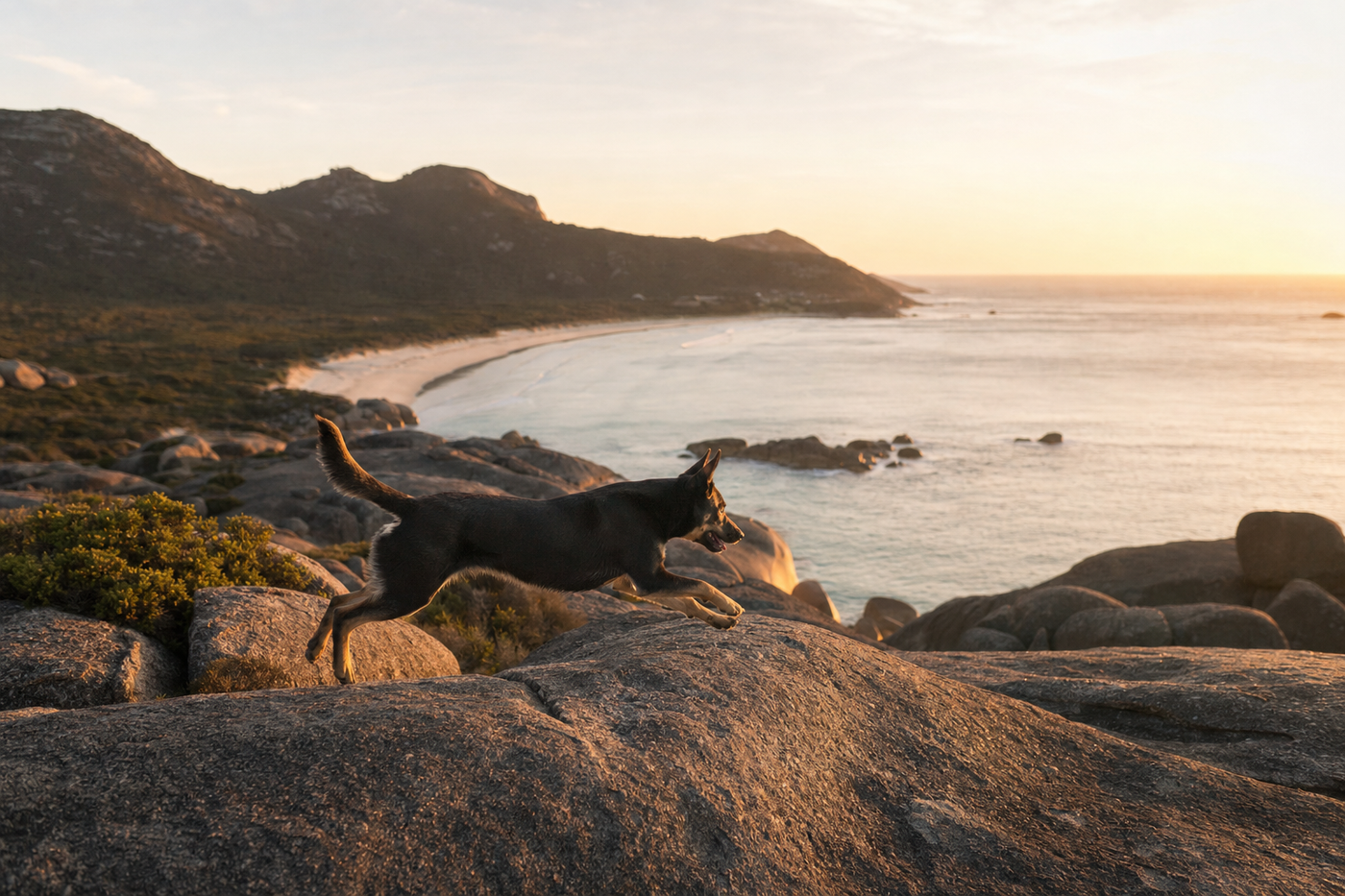
Dogs can overheat rapidly in summer even with shade and water. Turn back if you notice excessive panting, drooling, or lethargy.
The granite rocks are sharp and unforgiving. Small cuts and injuries to paw pads happen quickly without proper footwear precautions and first aid supplies.
Why Wilsons Promontory Works for Dog Owners
Wilsons Promontory sits at the southern tip of Victoria, about 240 kilometres from Melbourne. The park covers 49,000 hectares and offers everything from rocky coves to open beaches and bushland trails. I first took my kelpie mix there expecting restrictions, but I found the park genuinely welcomes dogs as long as you follow the rules.
The park has a character that dogs seem to love. My dog would scramble over granite rocks, splash in rock pools, and investigate coastal scrub with pure excitement. The air smells different down there: salt, eucalyptus, and ocean. Most other visitors you'll meet are also travelling with dogs, so you won't feel like an outlier.
Before you pack and drive down, you need to understand exactly what you and your dog can and cannot do. The rules exist to protect the park's wildlife and keep everyone safe. Breaking them risks fines and ruins it for future dog owners, so it's worth spending ten minutes understanding what applies where.
Leash Laws: What the Park Actually Requires
Dogs must be on lead throughout Wilsons Promontory National Park at all times. This is not negotiable and it applies all year. Even on quiet trails at dawn, your dog needs to be attached to you via a secure lead or harness.
I learned this the hard way when a ranger stopped me on a sparse track near Tidal River. My dog was only five metres away, completely under voice control, but the ranger explained the rule exists because of wombats, wallabies, and ground-nesting birds. One unsupervised moment and a dog can chase or injure native animals.
Use a 1.2 to 1.8 metre lead rather than an extendable one. Extendable leads give too much freedom and create safety issues on narrow cliff paths. A standard lead gives you proper control on uneven terrain. I switched to a fixed lead after watching another dog slip on wet rocks while their owner fumbled with a retractable mechanism.
Gear we would pack
Some links below are affiliate links. Pawtrips may earn a commission at no extra cost to you.

Quiet 62L Pet Dryer Box with Smart Control
This ensures your pet stays comfortable and dry during your travels.

Dog Ear Muffs for Noise Protection
These ear muffs help keep your pet calm in noisy environments during travel.

Adjustable Dog Grooming Arm for Pet Owners
Keeps your pet secure during grooming.

Gentle Chew Toy for Teething Puppies
A calming chew toy is great for easing travel stress in puppies.
Which Beaches Allow Dogs and When
Norman Bay and Glennie Island have sections where dogs are permitted year-round on lead. These beaches are close to the Tidal River visitor facilities, so they're convenient if you're staying nearby. The sand can be hard-packed and easy to walk on, though summer crowds build up quickly.
Squeaky Beach is off-limits for dogs, which disappointed me initially. The park protects this beach for seabirds and seal colonies, both sensitive to dog disturbance. Whisky Bay allows dogs seasonally, typically March to November, but check current conditions with the visitor centre before you go.
Bring plenty of fresh water because saltwater beaches upset many dogs' stomachs. I made the mistake of letting my dog drink from a rock pool near the shoreline. She was fine, but vets say salt water can cause vomiting and diarrhoea. After that trip, I carry a collapsible bowl and refill at Tidal River before heading to any beach.
Walking Tracks Your Dog Can Handle
The Lilly Pilly Gully track near Tidal River is excellent for dogs and runs about 4 kilometres return. The path is well-maintained, relatively flat, and shaded by mountain ash trees. My dog managed this easily even on a warm day because the canopy kept temperatures down.
Tidal River to Windy Ridge is a steeper option at 6 kilometres return. Your dog will need decent fitness for the elevation gain, and you'll need to manage overheating carefully. The views across Glennie Island and the southern coast are spectacular, which rewards the effort.
Avoid the Lighthouse walk and any track heading toward Glennie Island itself. These routes pass through sensitive nesting areas and wildlife habitats. The park clearly marks which trails prohibit dogs, so read the signage at the trailhead. I always take a photo of the trail map with my phone so I can reference it if I'm unsure mid-walk.
Summer Heat and Your Dog's Safety
January and February are peak season at Wilsons Promontory, but they're brutal for dogs. I made the rookie error of taking my dog on the Lilly Pilly track at 2 PM in mid-January. The temperature hit 34 degrees, and even with the shade, she was panting heavily within 20 minutes.
Arrive early: 7 AM or earlier if possible. The difference between a 9 AM start and a 7 AM start is noticeable. Early morning light on the granite rocks is beautiful anyway, and you'll have trails almost to yourself. Pack significantly more water than you think you'll need: aim for 2 litres minimum even on short walks.
Watch for signs of heat stress: excessive panting, drooling, lethargy, or stumbling. If you notice these, stop immediately and find shade. I turned back halfway through a walk when my dog became lethargic, and the visitor centre staff confirmed I made the right call. Dogs can overheat quickly, especially darker-coated breeds, even if they seem keen to keep going.
Camping and Accommodation with Your Dog
Tidal River Campground permits dogs, though you must keep them on lead at all times, including inside your campsite. Dogs cannot be left unattended at campsites, so plan for that constraint. The campground fills during school holidays and summer weekends, so book well ahead if you want to stay overnight.
If you prefer not to camp, nearby towns like Foster and Yanakie have pet-friendly motels and holiday rental houses. These are typically 20 to 40 kilometres from the park entrance, so you'll drive in and out daily. Some holiday houses have securely fenced yards, which gives your dog a safe space to rest between outings.
I've found Stayz and Booking.com useful for finding dog-friendly accommodation with good reviews from other pet owners. Read the reviews carefully: one place might say dogs are welcome but doesn't mention the neighbour's aggressive dog next door. Phone ahead and ask specific questions about your dog's size and temperament.
What to Bring and What to Avoid
Pack a solid dog travel kit before you head south. You'll need a first aid kit because the terrain is unforgiving. Sharp rocks cut paw pads easily, and I once had to clean a small laceration on my dog's leg with gauze and antiseptic wipes from my kit. Include tweezers for removing burrs and a small pair of scissors for matted fur.
Bring a sturdy harness rather than relying solely on a collar. A good harness distributes pressure across your dog's chest and back, reducing strain if they pull on rocky sections. My dog wore a front-clip harness, which gave me better control on steep downhill sections without choking her.
Don't bring toys that might attract native animals or get lost in the park. Leave balls, squeaky toys, and tug ropes at home. You don't need them, and they create safety hazards. Instead, focus your dog's energy on the sensory experience of the park itself: scents, textures, and new environments.
Respecting Wildlife and Other Visitors
Wilsons Promontory is home to wombats, wallabies, echidnas, and numerous bird species. Keeping your dog on lead protects these animals from chasing and injury. I watched a wombat dig a burrow near our campsite one evening. That experience only reinforced why the leash rule matters: these animals are adapted to avoid humans but not to dogs off lead.
Other visitors include families with young children and people who don't like dogs. Keep your dog close and calm. A nervous dog lunging at the end of a lead unsettles people. I noticed a family tense up when we passed them on a track, so I immediately shortened my lead and moved to the side to give them space.
Community responsibility keeps parks dog-friendly for everyone. Parks Australia reviews visitor feedback and incident reports. If multiple visitors complain about dogs, the park tightens restrictions. The best way to help future dog owners is to follow the rules perfectly and be considerate of other visitors.
Plus early access to new guides and partner deals.
No spam. Ever. Just the good stuff for you and your pet.