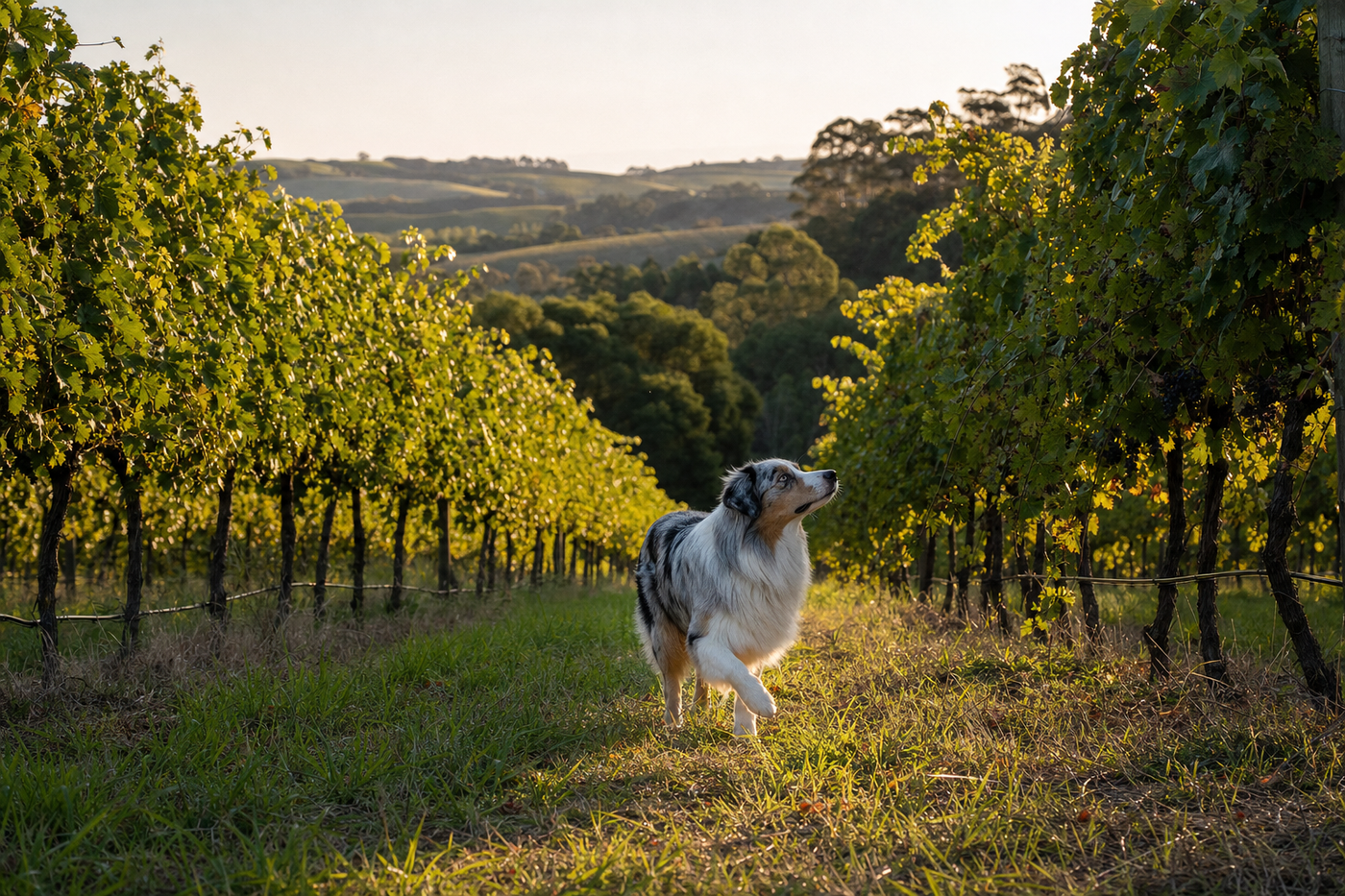
Never leave your dog in a parked car during winery visits. Cars heat up rapidly even on mild days, causing heat stress or heat stroke within minutes.
Grapes and raisins are toxic to dogs. Do not allow your dog to eat any human food at wineries, including cheese plates, grapes, or food dropped on the ground.
Why the Adelaide Hills are perfect for dogs and wine
The Adelaide Hills sit about 30 kilometres east of the city and have become one of Australia's most visited wine regions. Rolling vineyards, cool breezes, and a relaxed vibe make the area genuinely welcoming for dogs. Many wineries in the region have embraced pet-friendly policies over the last few years, recognising that dog owners love a good cellar door experience too.
Most visits happen between March and May, when temperatures sit around 20 to 25 degrees Celsius. Your dog will be far more comfortable than during the hot summer months. The landscape offers plenty of outdoor seating areas where you can park your pup in the shade while you sample a glass of Riesling. Several wineries have also started stocking water bowls specifically for visiting dogs, which shows how seriously they take four-legged guests.
Wineries with genuine outdoor dog-friendly spaces
Shaw + Smith sits near Heysen Road in Tanunda and welcomes dogs in their outdoor courtyard areas. The winery spreads across several levels with shaded spots that work well for dogs on hot days. Staff here know how to treat visiting pups, and many regulars bring their dogs every month. Parking is straightforward, and you can walk from your car to the tasting area in under two minutes.
Geoff Weisser Wines, also in Tanunda, operates a smaller cellar door with a gravel outdoor section perfect for dogs. The team actively encourages families and pets, and your dog can roam around the outdoor space on a lead while you taste wines. Food options are limited but you can bring a picnic, which many dog owners do. The vibe is casual and genuinely dog-friendly, not just tolerant of pets.
Thirteenth Estate near Kersbrook allows well-behaved dogs throughout their property, including near the tasting bar in warmer months. Your dog has access to shade and open space without feeling cramped. The winery is quieter than some of the bigger cellar doors, so dogs who get stressed around crowds tend to do well here.
What to expect at Adelaide Hills cellar doors
Most cellar doors in the Adelaide Hills operate from 11 am to 5 pm daily, though some close on Tuesdays. Tasting fees typically range from fifteen to forty dollars per person, depending on the winery. Your dog won't be charged, though you should always ask about any restrictions before sitting down.
The experience differs from walking into a city wine bar. Cellar doors tend to be quieter and less crowded, which suits dogs better. You'll usually sit at a table or bar area with four to six wine samples. Outdoor seating at most venues means your dog stays by your side in fresh air rather than inside. Staff pour small tastes and explain each wine, making the whole visit last about thirty to forty minutes per winery. Many visitors do two or three wineries in an afternoon rather than spending hours at one location.
Planning a dog-friendly winery day trip
Start early and aim to arrive at your first winery by 11 am or shortly after opening. Most dogs cope better with activity in the morning before the heat builds. Choose two to three wineries maximum in a single day, spacing them ten to fifteen minutes apart by car. Cramming more than three visits exhausts both you and your dog unnecessarily.
Bring a collapsible water bowl and refill it every thirty minutes if the weather is warm. Pack some high-quality dog treats and a light snack for yourself. Many cellar doors offer cheese plates or charcuterie, but these often contain ingredients unsafe for dogs, so don't share. Plan to spend about forty minutes at each location including travel time between venues. By mid-afternoon, most dogs are ready to head home and rest, especially if they've been meeting new people and experiencing new environments.
Gear we would pack
Some links below are affiliate links. Pawtrips may earn a commission at no extra cost to you.
Dog travel bag for day trips
A quality travel bag keeps water bowls, treats, leads, and waste bags organised during your winery visits. You'll spend less time fumbling through the car and more time enjoying your dog and the wines. Most bags fit easily in boot space and attach to your car's seat.
Managing your dog's behaviour during tastings
Keep your dog on a lead at all times, even if the winery staff say it's fine to let them roam. Other visitors may be nervous around dogs, and lead control shows respect for shared spaces. Position your chair so your dog sits beside or slightly behind you, keeping them out of the main walking path. This keeps other guests comfortable and prevents your dog from getting tripped over.
Many dogs find cellar doors stimulating: new smells, other people, possibly other dogs. Before your trip, spend a week practicing loose-lead walking and settling on command at home. When you arrive at the winery, give your dog five minutes to sniff and adjust before sitting down for tasting. If your dog seems anxious or reactive, take a walk around the property first to burn off nervous energy. A calm dog enhances everyone's experience, including your own wine tasting.
PAW by Blackmores Complete Calm Multivitamins for Dogs
New environments and social situations can stress some dogs. These multivitamins support calm behaviour during your winery visits, helping your dog stay relaxed around other guests. Give them a few days before your trip for best results.
Money-saving tips and loyalty programs
Several Adelaide Hills wineries offer loyalty programs or membership schemes that reduce tasting fees. Shaw + Smith and Geoff Weisser both offer ways to join their mailing lists for discounts on future visits. If you plan to visit the region multiple times a year with your dog, these programs save money quickly.
Many wineries offer discounted tastings if you purchase a bottle. A single bottle might cost thirty-five to fifty dollars, and you'll often get tasting fees waived or significantly reduced. Work out whether you genuinely want wine from each location before committing. Some visitors bring a cooler in the car and transport purchases carefully to avoid breakage on the drive home. Visiting during weekday afternoons rather than weekends can sometimes mean quieter spaces and more relaxed staff who have more time to chat with your dog.
Pet-friendly winery stays
Book accommodation directly near Adelaide Hills wineries through specialist pet-friendly platforms. These properties understand dog owners and often have secure yards and dog-specific amenities. You can explore multiple wineries over a weekend without driving back to the city.
Accommodation options for overnight winery trips
If you want to stay overnight rather than drive back to Adelaide, several pet-friendly accommodation options exist within the hills. Tanunda has more facilities and services than smaller villages like Heysen or Keyneton. Most dog-friendly holiday rental properties have secure yards, which gives your dog a safe space to decompress after a day of socialising.
Book accommodation early, especially during the cooler months when dog owners commonly visit. Many places require a cleaning fee for pets, typically twenty to thirty dollars extra. Always disclose your dog's size and temperament when booking, and ask whether there are other dogs staying nearby. Some properties have dedicated dog supplies like bowls and beds already set up. Staying overnight transforms a quick cellar door visit into a proper weekend getaway where your dog isn't rushed from place to place.
Blackdog Chicken Breast 1KG
Pack natural chicken treats for rewards during your winery day trip. Dogs love these, they're a healthier alternative to processed treats, and they keep your pup engaged during long afternoons of tasting. Store in your travel bag's insulated compartment.
Safety and health considerations for your dog
Never leave your dog unattended in a parked car, even on mild days. Temperatures inside vehicles rise quickly, and your dog could overheat in minutes. If you need to use the bathroom or want privacy to check your phone, ask staff if you can briefly leave your dog in a shaded outdoor area at the winery.
Watch for signs of heat stress: excessive panting, drooling, or weakness. If your dog shows any of these, stop immediately and find shade and water. Older dogs, puppies, and breeds with flat faces like Pugs struggle more in warm weather, so adjust your plans accordingly. Never allow your dog to drink wine or eat food intended for humans. Some wines contain grapes, which are toxic to dogs. Stick to water and dog-friendly treats throughout your visit.
Plus early access to new guides and partner deals.
No spam. Ever. Just the good stuff for you and your pet.