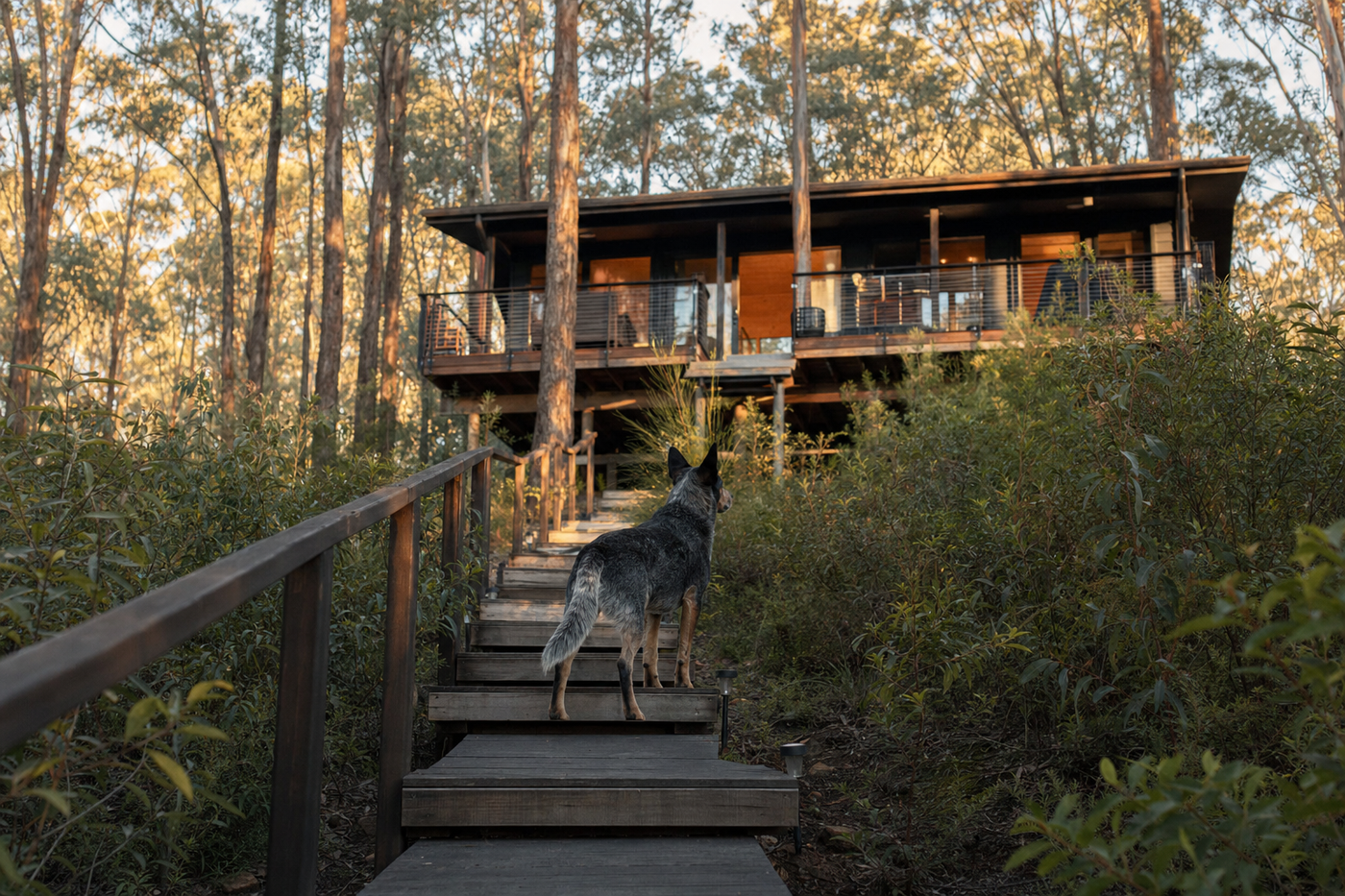
Check that outdoor areas are fully fenced and gates are secure before letting your dog explore unsupervised, especially near roads
Verify the property's pet policy allows your specific dog, as some hosts reject dogs over certain weights or specific breeds despite having pets allowed ticked
Why Airbnb filters matter when travelling with dogs
I spent my first dog trip to the Sunshine Coast messaging fifteen hosts and getting rejected by twelve of them. Then I realised Airbnb had a dedicated filter for pets. That single button saved me hours of back and forth emails and heartbreak when hosts said no at the last minute.
The pets allowed filter cuts through properties where you will never be welcome anyway. You see only listings where the owner has already committed to accepting animals. This doesn't mean every property is perfect for your dog, but it means you're starting from a pool of willing hosts rather than hoping someone will make an exception.
When you filter by pets allowed on Airbnb, the platform shows you properties that have specific pet policies set up. Some places charge flat fees, others charge per night, and some offer free pet stays. Knowing this upfront helps you budget and decide if a place suits your trip. Without the filter, you waste time on listings where pets are actually prohibited.
How to activate the pets filter on Airbnb
On the Airbnb app or website, go to the search box at the top of the page. Enter your destination, your dates, and how many guests you need. Once the search results load, look for the Filters button. It's usually on the left side on desktop or at the bottom on mobile.
Tap or click Filters, then scroll down until you see the Pets section. You'll see a toggle switch that says Pets allowed. Turn it on, and the results will refresh instantly. Now you only see properties where the owner accepts dogs, cats, or other pets.
After you activate the pets filter, you'll notice some listings have a little paw print icon next to the title. This makes it even easier to spot pet-friendly places at a glance. Take note that some hosts allow dogs but not cats, or they have size restrictions. The pet policy details appear in the property description, so read that section before messaging.
Checking property descriptions for your dog's needs
A listing that says pets allowed might be perfect for a chihuahua but terrible for a border collie. You need to read the full pet policy before you get excited. Look for weight limits, breed restrictions, number of dogs allowed, and whether they accept puppies or senior dogs. Some hosts only take small dogs under 10 kilograms, which rules out many working breeds and large companions.
Scroll through the photos and look for outdoor space. Can your dog run around safely, or is there only a tiny balcony. Check if there's a fence or gate that might contain an escape artist. I once booked a place in Cairns that looked fenced in the main photo, but the side gate was completely open to a busy road. The photos saved my dog's life that time.
Read the house rules section carefully. Some hosts mention whether they're okay with dogs sleeping on furniture, how often you need to walk your dog, and whether they have a strict no barking policy. If a host says no barking allowed, that's a red flag if your dog barks during storms or gets anxious. Their expectations about your dog's behaviour might not match your dog's actual personality.
Gear we would pack
Some links below are affiliate links. Pawtrips may earn a commission at no extra cost to you.
Pet-friendly holiday houses on Stayz
While Airbnb is great, Stayz also has thousands of dog-friendly holiday rentals across Australia with detailed pet policies upfront. Many properties are standalone houses with full backyards, ideal for dogs who need space and privacy. Compare options across both platforms to find the best fit for your dog's needs.
Message the host before you book anything
Never assume a listing will work just because it has pets allowed ticked. Send the host a friendly message explaining your dog's age, size, breed, and temperament. Tell them about any behavioural quirks your dog has. If your dog is anxious, barks at strangers, or needs a specific routine, mention it now rather than discovering problems after you arrive.
Ask specific questions about their pet policy. How many dogs can stay at once. Is there a damage deposit or pet fee, and how much is it. Can your dog use the backyard, or do you need to use nearby parks. What's the cancellation policy if your dog causes damage. Ask about their own pets too. Some hosts have cats or other dogs living on the property, which might stress out your companion.
Good hosts appreciate detailed messages because it tells them you're a responsible traveller who respects their property. Bad hosts who don't respond to reasonable questions are hosts you should avoid. I once messaged a Gold Coast host asking if my nervous dog could stay, and they replied with a paragraph about their experience with anxious animals. That told me they'd be patient and understanding when my dog was stressed in the car.
Nature's Miracle Urine Destroyer Plus for Dogs
Accidents happen when dogs are stressed in new environments. This enzymatic cleaner removes urine odour and stains completely, protecting the host's property and preventing damage claims. Pack a bottle for any unexpected accidents during your stay.
Calculate the real cost of pet-friendly stays
Airbnb shows you the nightly rate upfront, but many dog-friendly properties charge extra pet fees on top of the base price. Some hosts charge a flat fee of 30 to 50 dollars for the entire stay, while others charge 10 to 20 dollars per night. Over a week-long trip, that difference adds up to 70 versus 140 dollars. Compare the total cost, not just the advertised nightly rate.
When you click on a listing, look for a line item that says Pet fees or similar. Airbnb lists this before you book, so you always know the total cost. Add this to your accommodation budget. If you're travelling for two weeks with a large dog, some properties might charge 280 dollars in pet fees alone. That's a significant part of your holiday budget in regional areas.
Some hosts offer free pet stays to attract more customers, especially in quieter seasons. If you're flexible with dates, you might find better deals outside school holidays and long weekends. Properties in smaller towns like Tamworth or Bathurst often have lower pet fees than beachside or city locations. Budget accordingly and remember that cheaper accommodation might mean fewer amenities for you and your dog.
Pet-friendly stays on Booking.com
Booking.com offers another large selection of pet-friendly accommodation across Australia with clear filtering options. Many properties offer better value than Airbnb and have different host styles, so comparing across platforms gives you more choices.
What to look for in outdoor spaces and nearby areas
Your dog needs outdoor access, fresh water, and ideally some space to move around. Look at the property photos and see if there's a backyard, courtyard, or patio. A fully fenced yard is ideal because you can let your dog outside without worrying about escape routes. Even a small secure patio is better than nothing on rainy days.
Check the property's location using Google Maps or a similar tool. How far is it from parks, beaches, or walking trails. If you're staying in an apartment in the city, you need nearby green spaces for your dog to exercise. I stayed in a Brisbane flat with no backyard, but there was a dog park 200 metres away, which worked perfectly for my labrador. If the property is on a busy main road with no nearby parks, your dog's holiday experience will be stressful.
Look for mentions of whether it's a quiet street or a busy area. Dogs travelling to new places often feel anxious, and constant traffic noise makes that worse. If the property is near a park with off-lead dog areas, that's a bonus. Read the reviews from other travellers with dogs. They mention whether the location is dog-friendly, whether neighbours complained about barking, and whether they felt comfortable letting their dog outside.
Bow Wow Beef and Roo Dog Treats, 4 Pack
Pack familiar treats from home to reward your dog for good behaviour in the new space and help them feel comfortable. These Australian all-natural treats are lightweight, travel-friendly, and keep your dog happy during the adjustment period.
Red flags that mean you should keep scrolling
Some listings say pets allowed but have policies that make the stay stressful or risky for your dog. If a host mentions strict no barking policies, damaged carpet that they're protective about, or the need to leave your dog alone for long hours, keep looking. Hosts sometimes accept pets but don't actually like them, and that tension makes holidays unpleasant.
If the pet fee is equal to or more than the nightly rate, pause and think about whether it's worth it. A property charging 100 dollars per night with a 100 dollar pet fee adds up quickly. Read reviews from other dog owners carefully. If multiple reviewers mention their dog was uncomfortable, the host complained about noise, or amenities promised weren't available, that's a strong warning sign. Trust the experiences of travellers who came before you.
Be cautious of properties with vague pet policies. If the listing just says pets negotiable or contact host about pets, the owner hasn't decided what they're willing to accept. This often means they're not experienced with pets or don't really want them. Properties with clear, detailed pet policies suggest hosts who've thought through what they're comfortable with and what rules make sense.
After you book, prepare your dog and the property
Once you've booked, message the host again a week before arrival with your expected time of arrival. Let them know if your dog needs any special arrangements like shade in summer, fresh water bowls, or quiet time to settle in. Ask if they have any last-minute requests or concerns. Building this relationship before you arrive reduces stress for everyone.
Prepare your dog for the trip mentally and practically. If your dog is anxious in cars, start taking short drives a few weeks before your holiday. Pack familiar items like their bed, toys, and treats so the new space feels less scary. Bring enough of their regular food because switching diets while travelling can cause digestive upset.
When you arrive at the property, immediately show your dog the outdoor space and where they'll toilet. Let them explore at their own pace. Set up their bed in a quiet corner away from main living areas if possible. Spend the first evening relaxing with your dog so they adjust gradually to the new environment. A calm arrival often means a calm, happy holiday together.
Plus early access to new guides and partner deals.
No spam. Ever. Just the good stuff for you and your pet.