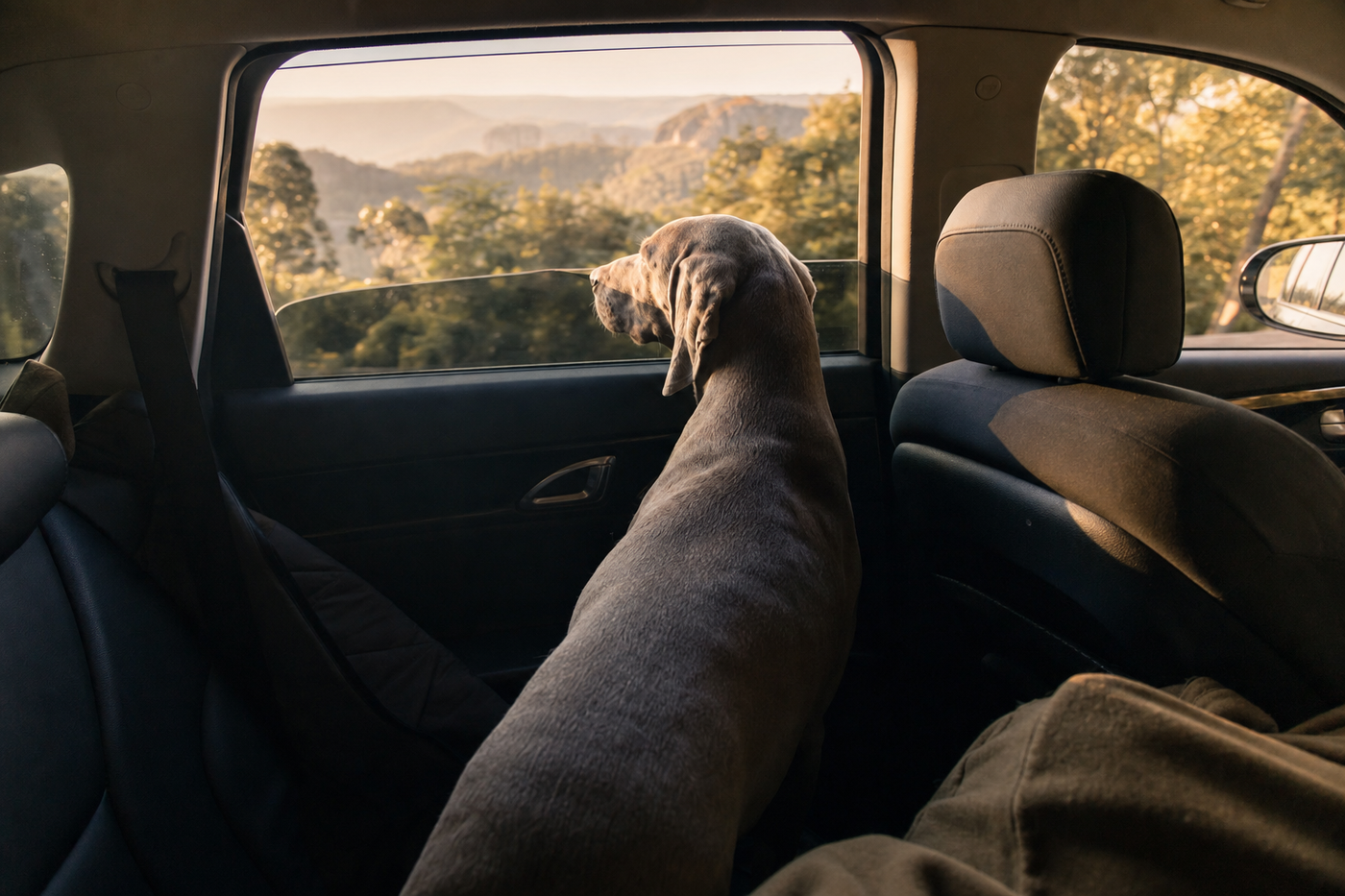
Why dogs get anxious in cars
Understanding the cause changes how you address it. The most common causes of car anxiety in dogs are motion sickness, fear of the unknown environment, a past negative association with car travel such as only ever being driven to the vet, and genuine anxiety disorder. Motion sickness is more common than most owners realise. A dog that seems anxious in the car may actually be feeling nauseous. Signs of motion sickness include yawning, drooling, lethargy, and vomiting. If your dog shows these signs rather than panting, pacing, or whining, motion sickness is the more likely cause and the solutions are different. Fear and anxiety present as panting, shaking, pacing, whining, trying to escape, or refusing to get in the car. This is the response to an environment that does not feel safe. The good news is that both causes are addressable with the right approach. Most dogs can be brought to a place where they travel comfortably. It takes time and consistency, not force.
Building a dog that travels well: the gradual approach
If your dog is anxious in cars, the solution is not a long drive with white-knuckling it through the anxiety. The solution is going backwards. Start with the parked car. Let your dog sit in the stationary car with the door open. Give treats and praise for calm behaviour. Do not move. Do this until your dog is completely relaxed sitting in the car. Progress to the engine running with the car stationary. More treats, more calm associations. Then very short drives of five minutes, rewarding calm behaviour at every stop. Gradually increase the distance over days or weeks. This process takes longer than most people want to spend. It works where forcing a long trip does not. A dog that has been gradually desensitised to car travel is a fundamentally different experience from one that has been pushed through their anxiety repeatedly. If you have an upcoming long trip and limited time, combine gradual desensitisation with the practical tools below. But the gradual approach is the long-term solution.
Gear we would pack
Some links below are affiliate links. Pawtrips may earn a commission at no extra cost to you.

Quiet 62L Pet Dryer Box with Smart Control
This ensures your pet stays comfortable and dry during your travels.
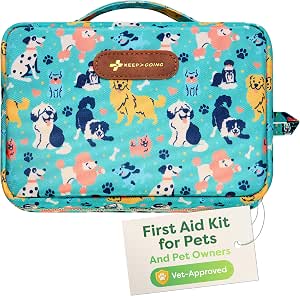
Dog First Aid Kit for Travel Emergencies
It's important to prepare for unforeseeable situations while travelling.

Dog Ear Muffs for Noise Protection
These ear muffs help keep your pet calm in noisy environments during travel.

Reduce Shedding with FURminator Conditioner
A well-groomed coat means less mess in your travel space.
What actually helps on the day
Familiar bedding is the single biggest practical difference for most dogs. Their own blanket or bed in the car, with their scent on it, creates a small familiar environment within the unfamiliar one. This is cheap, immediate, and consistently effective. A long-lasting chew gives anxious dogs something to focus on other than the anxiety. Occupation is more effective than restraint for managing travel anxiety. A bully stick, a stuffed Kong, or a quality chew can settle an anxious dog for a full hour. Adaptil spray, a synthetic pheromone that mimics the calming signals of a mother dog, is worth trying for genuine anxiety. Spray it in the car and on bedding fifteen minutes before departure. It does not work for all dogs but it works for enough that it is worth the try. Blackmores PAW Travel Calm combines ginger with B-vitamins and is designed specifically for Australian dogs with travel anxiety. Give it thirty to sixty minutes before travel. For persistent or severe anxiety, talk to your vet. There are prescription options including short-acting anti-anxiety medications that are appropriate for occasional use on long trips. This is not a failure. Some dogs have genuine anxiety disorders and managing them appropriately is responsible ownership.
Managing motion sickness specifically
Motion sickness is different from anxiety and needs different solutions. Feed your dog a light meal two to three hours before travel, not immediately before. An empty stomach reduces nausea severity without causing hunger-related stress. Facing forward in the car reduces motion sickness. A dog that faces the direction of travel in a secured crate or with a harness that keeps them facing forward will experience less nausea than one facing sideways or backwards. Fresh air helps. A cracked window, not fully open at speed, reduces the stuffy car environment that worsens nausea. For dogs with significant motion sickness, talk to your vet about cerenia, a prescription anti-nausea medication that is highly effective and commonly used for dogs in Australia. It does not sedate and is safe for most dogs.
On the road: making long drives manageable
Break every two hours minimum. Not a quick toilet stop but a proper fifteen to twenty minute rest where your dog can walk, sniff, drink, and reset. Movement and smelling new things is genuinely calming for most dogs. Keep the car at a comfortable temperature. A car that is too warm increases anxiety and nausea in dogs. Air conditioning should be running whenever you have a dog in the car in Australian conditions. Play calm, quiet music. Research supports that specific music types, particularly classical and reggae, reduce heart rate and anxiety indicators in dogs. It sounds fussy. It makes a measurable difference. Your own energy matters. A calm, confident driver with a relaxed energy creates a calmer car environment. Dogs read our emotional state extremely accurately. If you are stressed about the drive your dog will pick it up.
A dog that travels well is one of the great gifts of pet ownership. It takes investment upfront and pays back every trip after. Questions about travelling with your dog? Write to us at hello@pawtrips.com.au.
hello@pawtrips.com.auPlus early access to new guides and partner deals.
No spam. Ever. Just the good stuff for you and your pet.