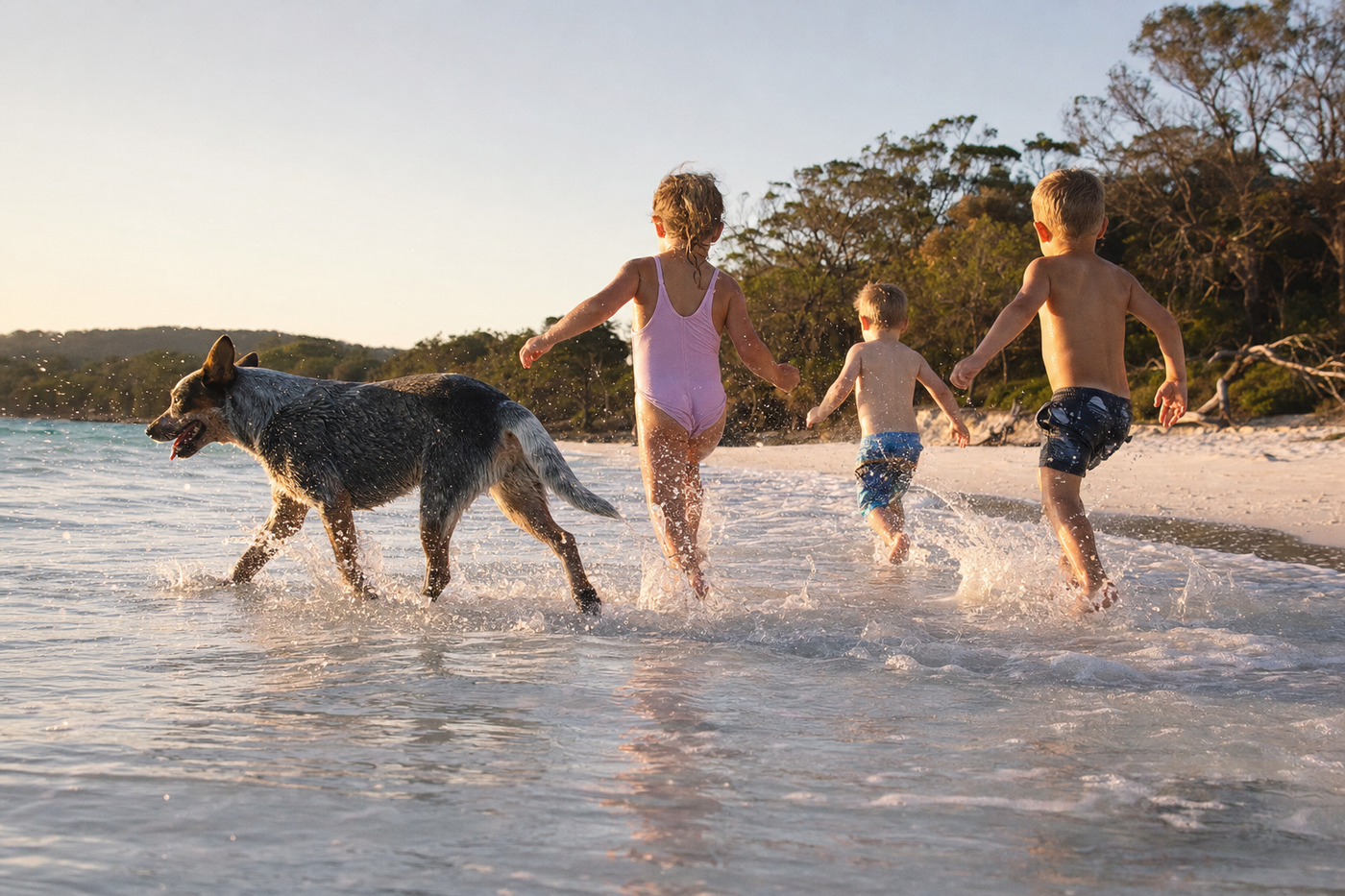
Heatstroke kills pets rapidly in Australian conditions. Never leave your pet in a car and always provide shade and water. Signs include excessive panting, drooling, weakness, or collapse. If you suspect heatstroke, move your pet to shade immediately and contact a vet.
Unfamiliar environments increase the risk of pets escaping or getting lost. Verify fencing is secure, keep ID and microchip information current, and supervise outdoor time closely. Many pets go missing during holidays because owners assume new spaces are safer than they actually are.
Start planning three months before school holidays begin
School holiday weeks book out quickly, and the same goes for pet-friendly places. I learned this the hard way when I booked a beach house in Byron Bay only to realise dogs weren't allowed. Now I search for accommodation on Pawtrips first, which shows me exactly which properties welcome pets. Three months gives you time to compare options across different regions and find places that genuinely suit your family and your pet.
When you book early, you also get better rates and more choice. Holiday parks and cabin providers hold their best pet-friendly spots for early bookers. Call the property directly and ask specific questions: do they have grassed areas, what's the deposit for pet damage, and are there nearby walking tracks. Write their answers down because you'll want to reference them later if issues come up.
Get your dog or cat used to the car before you leave
A long drive is stressful for pets who've never spent hours in a moving vehicle. My border collie got car sick for the first 200 kilometres of our trip to the Hunter Valley because she wasn't used to the motion. Start small: drive your pet around the block for five minutes, then gradually increase to 30 minutes over several weeks. Reward them with treats and praise so they associate the car with something positive.
During these practice drives, keep the car cool and never leave your pet alone in the vehicle. Use a proper dog car barrier or harness so they can't distract you or get injured if you brake hard. Open windows slightly for ventilation but not so much they can jump out. These short trips teach your pet that cars aren't scary places, which makes your actual holiday drive much calmer for everyone.
Gear we would pack
Some links below are affiliate links. Pawtrips may earn a commission at no extra cost to you.
Dog car barrier for families
A sturdy car barrier keeps your dog safely contained during long drives and prevents them from distracting you or getting injured during sudden stops. This is essential for school holiday road trips where you might be driving for hours across Australian distances.
Pack enough food to last the entire trip without running out
Changing your pet's food suddenly causes diarrhoea and vomiting, which ruins holidays and stresses your animal. I made this mistake driving to Cairns when I ran out of my dog's usual kibble and bought whatever the local pet store had. She got sick for three days. Now I calculate how much food my dog needs for the entire trip plus extra days, and I pack it all at home.
Packing their own food also saves money because holiday destinations charge premium prices at pet shops. Bring their regular biscuits, any supplements, and treats they already like. Store food in airtight containers so it stays fresh and takes up less space than original bags. If you're staying somewhere without a freezer and you feed raw, ask the property manager about ice availability before you arrive.
Blackdog Chicken Breast 1KG
Packing high-quality protein like chicken breast keeps your pet's diet consistent while travelling and provides a healthy treat option during your holiday. Fresh, recognisable food prevents digestive upset when your pet is already stressed from travel and new environments.
Keep your pet's routine as normal as possible while travelling
Pets feel safer when their day follows a familiar pattern. My cat gets anxious in new places, but when I stick to her normal feeding times, playtime, and sleep schedule, she settles much faster. Write out your pet's typical day before you leave: what time they eat, when they walk or exercise, when they rest. Try to replicate this in your new location as closely as you can.
This routine helps your pet's body clock stay steady and reduces stress-related behaviour like excessive barking or toilet accidents. Pack their favourite toys and bedding so familiar smells comfort them in unfamiliar spaces. If your pet usually sleeps on a particular blanket or in a certain bed, bring it with you. Consistency matters more than having exciting new experiences every moment of the holiday.
PAW by Blackmores Complete Calm Multivitamins for Dogs
School holiday travel stresses many pets, and these multivitamins support calm behaviour and anxiety management during car journeys and stays in unfamiliar places. Starting these a few weeks before your trip helps your dog adjust to the changes ahead.
Find accommodation with enclosed outdoor space or nearby walking areas
Not all pet-friendly places are equal. A holiday apartment with a small balcony is very different from a beach house with a fenced yard. Before you book, ask the property owner whether the outdoor area is fully fenced and if there are any gaps your pet could escape through. Check the gates and fence height yourself when you arrive, because you can't rely on someone else's description.
Also research what's nearby your accommodation. Is there a park within 10 minutes driving distance? Are there dog beaches or dog-friendly trails? I choose properties within walking distance of outdoor space because my dog needs daily exercise. On a hot day, you might not feel like driving to a park, so having options close by makes a real difference. Read reviews from other travellers who've brought pets, because they mention details like noise from neighbouring pets or problems with the fencing.
Keep your pet cool during hot Australian days
Dogs and cats can suffer heatstroke within minutes in Australian heat, and it's fatal. During school holidays in summer, temperatures regularly hit 35 degrees. Never leave your pet in a car, not even for five minutes with windows down. The temperature inside a car reaches deadly levels in less time than you think. If you're shopping or having coffee, leave your pet at the accommodation or take them with you.
At your holiday destination, provide plenty of shade and fresh water at all times. Freeze water in bowls so it melts slowly and stays cold longer. Many properties have shaded patios or verandas, but check they're actually comfortable when you arrive. Set up a water station inside and outside so your pet can drink whenever they want. During peak heat hours, 11 am to 4 pm, keep your pet indoors in an air-conditioned or well-ventilated space. Never assume they'll find shade themselves when outside.
Oatmeal Shampoo - 250ml
After days of travelling and playing in new environments, your pet's skin might get irritated or dirty. This gentle shampoo keeps their coat clean and healthy without harsh chemicals, and it's easy to pack in a travel bag.
Bring updated identification and microchip information with you
Lost pets far from home are much harder to recover unless they're properly identified. Before your trip, get your pet microchipped if they aren't already, and update the microchip register with your current contact details and the contact details of someone local who can help if you get separated. Bring a printed copy of their microchip number in case you need to call a vet urgently.
Also bring a collar with a tag showing your phone number and the town where you're staying, not your home address. Take several clear photos of your pet before you leave, showing distinctive markings or features. Save these photos on your phone and email them to yourself. If your pet goes missing, you can immediately share these photos on local Facebook groups and pet recovery websites. Many councils run lost pet registers in their area, and you can contact them directly with photos and microchip details.
Family dog travel bag
Keep all your pet's travel essentials together in one dedicated bag so you don't forget food, medications, or emergency supplies. A proper travel bag makes it easy to grab what you need quickly when you arrive at your holiday destination.
Schedule vet checks before and after your holiday
A pre-holiday vet visit catches any health issues before you leave. Your vet can make sure your pet's vaccinations are current, provide written proof for interstate travel if needed, and recommend medications if your pet gets anxious travelling. They can also suggest ways to manage specific issues like car sickness or separation anxiety before it becomes a problem on your trip.
After you return home, book another check-up within a few days to make sure your pet didn't pick up any issues while away. Travel can stress their immune system, making them vulnerable to infections. Your vet can also assess any injuries or unexpected health changes that happened during your trip. Keep all vet records, vaccination certificates, and microchip details together in one folder you can grab quickly if needed.
Plus early access to new guides and partner deals.
No spam. Ever. Just the good stuff for you and your pet.