A dog can develop life-threatening heat stroke within fifteen minutes in a parked car on a hot day. Even brief stops require the engine and air conditioning to remain on with someone supervising your dog.
Heat stroke symptoms can appear suddenly and escalate rapidly. If your dog becomes unresponsive, loses coordination, or has dry gums, treat it as a medical emergency and drive immediately to the nearest vet clinic, calling ahead to alert them of your arrival.
Why summer heat is different for travelling dogs
Dogs travelling in Australian summer face challenges they wouldn't encounter at home. A dog sitting in the back of a car headed from Sydney to the Central Coast loses the ability to regulate its body temperature once you've driven more than thirty kilometres inland. The stress of travel combined with heat exhaustion can creep up fast. Your dog doesn't tell you it's overheating until it's already in trouble: panting heavily, drooling excessively, or becoming unresponsive. I learned this the hard way when my Border Collie, Biscuit, stopped responding during a three hour drive to Coffs Harbour in January. The vet told me that dogs can develop heat stroke in as little as fifteen minutes inside a parked car, even with windows cracked open. Once you understand how quickly things can go wrong, you realise that summer travel with your dog requires a completely different approach than winter trips.
The car journey: temperatures your dog cannot survive
A car parked in the sun reaches 50 degrees Celsius within ten minutes on a thirty degree Australian day. Your dog's normal body temperature sits at around 38.5 degrees Celsius, so the car becomes an oven very quickly. Running the air conditioning helps enormously, but you cannot leave your dog unattended in a car during summer under any circumstances. If you need to stop for a coffee or petrol, one person must remain with the dog and the engine running. I've seen dogs taken to emergency vets at Bundaberg, Lismore, and Port Macquarie because someone thought a twenty minute stop would be fine. It never is fine. The smartest approach involves driving during cooler hours: leave between 5am and 7am, reach your destination by midday, then rest during the hottest part of the day (typically 1pm to 4pm). Start driving again once the sun weakens at around 5pm. This schedule feels odd at first, but your dog will thank you.
Water strategy for long drives and road stops
You need to bring more water than you think you'll need. A medium-sized dog requires roughly 60 millilitres of water per kilogram of body weight daily under normal conditions, but travelling and heat can double that requirement. A 25-kilogram dog might need three litres across a long driving day. I carry a collapsible water bowl and a portable dog water bottle because service stations have water for cars but not always for animals. Offer water every thirty to forty minutes during drives, even if your dog doesn't seem to want it. Some dogs stop drinking when they're stressed, which is exactly when they most need fluids. Stop at shaded rest areas where possible: spots near Kempsey, Urunga, or Nambucca Heads on the Pacific Highway have good tree cover and sometimes water taps. Never force your dog to drink if it's not interested, but keep offering. Electrolyte replacements designed for dogs can help, especially if your dog has vomited or has loose stools from travel stress.
Gear we would pack
Some links below are affiliate links. Pawtrips may earn a commission at no extra cost to you.
Portable dog water bottle
A portable water bottle with attached bowl ensures you always have fresh water available during drives and rest stops, without needing to hunt for bowls at service stations. This keeps your dog consistently hydrated throughout long journeys.
Beach trips: sand, sun and salt water hazards
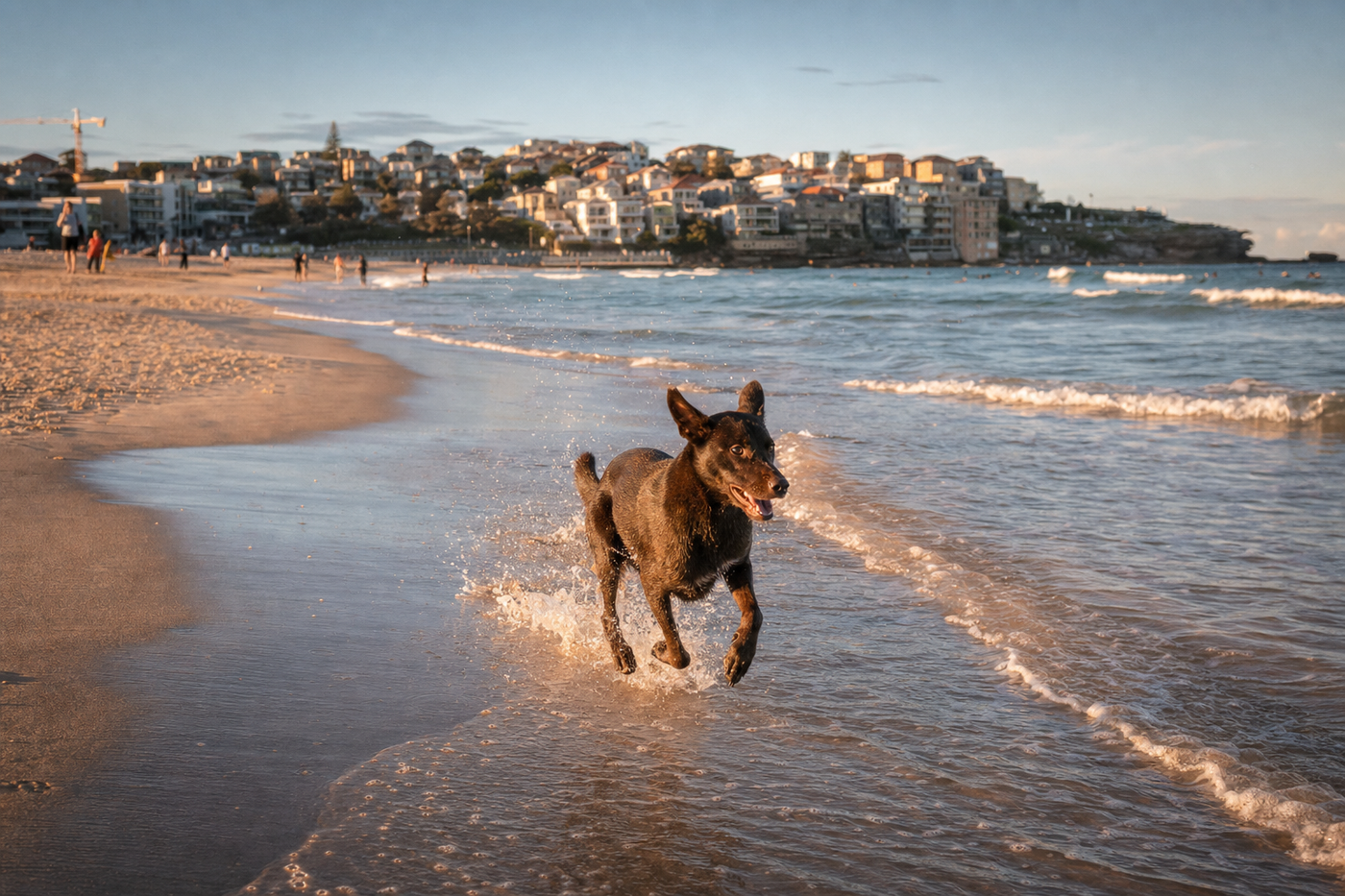
Beaches are magical for dogs, but Australian summer beaches present specific risks. Sand temperature can reach 60 degrees Celsius, which will burn paw pads in under a minute. The beaches at Byron Bay, the Sunshine Coast, and Phillip Island draw thousands of visitors in summer, and your dog's paws weren't designed for that kind of heat. Walk your dog on wet sand near the waterline where it stays cooler, or visit the beach during early morning before 8am or late afternoon after 5pm. Salt water can cause gastroenteritis if your dog swallows too much while swimming, so fresh water rinses and limiting swim time help. A dog cooling mat laid under a beach umbrella gives your dog a place to rest safely between swims. Bring sunscreen designed for dogs and apply it to thin-haired areas like bellies and ear tips: a sunburned dog suffers and peels for weeks. After beach visits, rinse your dog thoroughly with fresh water and check between paw pads for sand and salt buildup.
Dog cooling mat
Cooling mats reflect body heat away and provide comfortable resting spots at beach stops or during rest breaks. They pack flat into your vehicle and work without electricity, making them ideal for summer road trips.
Recognising heat stress before it becomes heat stroke
The difference between heat stress and heat stroke can be the difference between a vet visit and a tragedy. Heat stress shows as excessive panting, drooling, restlessness, and sometimes mild vomiting. Your dog's gums might look paler than usual. Heat stroke is when your dog becomes unresponsive, loses coordination, has dry gums, or collapses. If you see signs of heat stress, stop driving immediately, find shade, and cool your dog down with cool (not cold) water. Let your dog wade in a creek or pool if available. If your dog shows signs of heat stroke, get to a vet immediately: call the emergency vet clinic in the nearest town rather than driving hours to your preferred vet. A vet in Tamworth or Armidale can start treatment immediately while you're en route. Some dogs are more vulnerable: short-nosed breeds like Bulldogs and Pugs struggle more in heat than long-nosed dogs, and older dogs regulate temperature less effectively. Overweight dogs also heat up faster. Know your dog's individual risk factors.
Gear that actually makes a difference
Cooling mats designed specifically for dogs work by reflecting body heat away, and they weigh almost nothing to pack. A decent cooling mat costs around forty to fifty dollars and will pay for itself by keeping your dog comfortable. Cooling bandanas work similarly: soak them in water before the journey and your dog wears them around its neck, with the cool fabric against skin. Both items require minimal maintenance and pack flat in a travel bag. A portable water bottle with an attached bowl clips to your vehicle or daypack, eliminating the need to hunt for water bowls at rest stops. Lightweight aluminium water bowls are better than plastic because they don't retain heat the way plastic does. Some travellers bring shade structures like beach umbrellas or pop-up tents specifically for their dogs. A simple beach umbrella stuck into sand at the beach creates a cool spot where your dog can rest out of direct sunlight. These items sound basic, but they transform your dog's experience from uncomfortable to tolerable.
Dog cooling bandana
Soak these bandanas in water and your dog wears them around its neck to maintain a cool microclimate. They're lightweight, packable, and effective for managing body temperature during car travel and rest stops.
Managing paw pad protection during hot weather travel
Your dog's paw pads are incredibly sensitive to heat and sharp surfaces. During summer, bitumen roads and concrete paths become hazardous, and beaches multiply the problem with hot sand and shells. Test the ground yourself by placing your hand on it for five seconds: if you can't hold your hand there comfortably, your dog's paws will burn. Dog booties designed for summer travel protect pads from heat and rough surfaces, though many dogs dislike wearing them at first. If your dog won't tolerate booties, limit ground contact during peak heat hours and walk on grass, wet sand, or shaded paths instead. After beach walks, clean sand and salt from between paw pads immediately because salt irritates skin and sand can cause infections if left trapped. Check paw pads daily during trips for redness, swelling, or cuts. Some dogs develop cracked pads after multiple days of hot weather travel: a protective paw balm applied daily helps prevent this. Consider bringing dog booties even if you don't think you'll use them, because situations always arise where they become necessary.
Blackdog Chicken Breast 1KG
High-protein chicken meals support your dog's energy and muscle maintenance during stressful travel. Quality protein helps dogs cope better with heat stress and keeps them satisfied on reduced appetites during journeys.
Nutrition and hydration during travel stress
Travel combined with heat stress affects your dog's digestion and appetite. Many dogs eat less when travelling, which is normal, but you still need to offer meals regularly. High-protein foods help your dog maintain muscle and energy during stressful trips. Chicken-based meals or quality commercial dog food work well, but some dogs get loose stools from the combination of travel, stress, and heat. Smaller, more frequent meals sometimes suit travelling dogs better than one large daily meal. Avoid feeding your dog a heavy meal immediately before long drives, as this increases the risk of motion sickness and bloating. Instead, feed after arrival or before a rest period. Hydration matters far more than food during summer travel: a dog can go days with reduced food intake, but dehydration causes serious problems within hours. Offer water consistently, and if your dog seems reluctant to drink, try adding a small amount of low-sodium chicken broth to make it more appealing. Some dogs drink better from their own bowls rather than unfamiliar containers, so bringing a familiar water bowl helps.
PAW by Blackmores Complete Calm Multivitamins for Dogs
These multivitamins with calming ingredients help your dog manage the stress of travel combined with summer heat. Supporting nutrition and stress management keeps your dog resilient during challenging journeys.
Plus early access to new guides and partner deals.
No spam. Ever. Just the good stuff for you and your pet.