Australian heat kills pets in parked cars within twenty minutes even with windows cracked. Never leave anyone unattended in a vehicle on warm days.
Overheated dogs stop cooling through panting and can suffer seizures or organ damage within minutes. Watch for excessive drooling, lethargy, or stumbling and get your dog to shade and water immediately.
Why Separate Packing Systems Save Your Sanity
When I drove from Melbourne to the Great Ocean Road with my border collie and two kids under eight, I learned the hard way that throwing everything into one bag creates chaos. My daughter needed her motion sickness tablets, my son wanted his handheld games, and my dog needed his anxiety medication all separate and accessible. Now I pack three small bags instead of one large one: one for the kids' essentials, one for the dog, and one for shared items like sunscreen and first aid.
Separate systems mean you grab what you need without unpacking half the car. When your five-year-old asks for a snack at Dromana, you reach for the kids' bag. When your dog starts panting heavily, you know exactly where the water bowl and treats are in the pet bag. This approach also helps you remember what you've already packed because each bag has a specific purpose.
I use clear plastic totes that fit under the seats or in the boot, labelled with masking tape. They stack neatly, they're see-through so you spot things quickly, and they cost about fifteen dollars each from Bunnings. Your future self on kilometre three of a six-hour drive will thank you for this simple system.
Managing Multiple Bathroom and Comfort Stops
Kids need toilets every two hours. Dogs need toilet breaks every two to three hours. Cats in carriers need stretch time. These don't always align, which means strategic planning prevents meltdowns and accidents both in the car and on the road.
I've learned to look for rest stops that have shade, grass, and facilities. Along the Princes Highway toward Adelaide, the Tailem Bend rest area has a large grassed area where you can let your dog move around while kids use the facilities. Scout your route in advance using Google Maps to mark stops that work for both species. Some shopping centres like those near Geelong have pet-friendly areas outside where dogs can walk while kids grab food from the café.
Timing matters too. We now travel early morning, stop for a proper break around 11 am, lunch at 1 pm, and arrive before 5 pm. This rhythm works for kids' energy levels, dog temperament, and allows you to stop at places when they're less crowded. Your dog stays calmer, your kids don't get bored and cranky, and everyone gets proper bathroom time without rushing.
Gear we would pack
Some links below are affiliate links. Pawtrips may earn a commission at no extra cost to you.
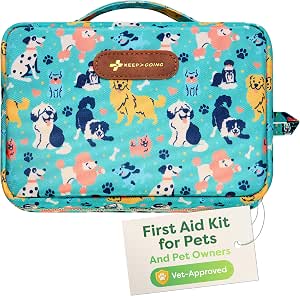
Dog First Aid Kit for Travel Emergencies
It's important to prepare for unforeseeable situations while travelling.

Dog Ear Muffs for Noise Protection
These ear muffs help keep your pet calm in noisy environments during travel.

Reduce Shedding with FURminator Conditioner
A well-groomed coat means less mess in your travel space.

Mini GPS Tracker for Cats - Real-Time Location
Tracking your cat eases the stress of travelling together.
Temperature Control: The Australian Heat Reality
Australian heat kills pets in cars faster than most people realise. I watched a border collie overheat in just eighteen minutes at a petrol station near Echuca, even with windows cracked. The owner thought she'd just be quick. That dog became a hard lesson for everyone watching.
Your car interior reaches forty degrees Celsius on a thirty-degree day. Add humidity, and your dog or cat stops cooling their body through panting. Kids in car seats also overheat dangerously because they can't regulate temperature the way adults can. Never leave anyone in a parked car, even for five minutes, on a warm day.
Instead, use car shade screens on windows, run air conditioning when the car is running, and always travel with multiple water bowls. A collapsible bowl takes no space but gives your dog and kids access to water at every stop. Freeze water bottles overnight and they'll slowly melt, providing cool water for hours. On particularly hot days, travel during early morning or late afternoon when temperatures stay lower. Your kids and your dog will be safer, happier, and less cranky.
Food, Medication, and Emergency Backup Plans
Pack double the medications you think you'll need. My son's asthma medication stayed behind once when I swapped bags, and we nearly missed a family dinner at Dunkeld because I had to drive back. Now I carry his inhalers in three places: his pocket, my day bag, and the glove box. My dog's anxiety tablets come in two containers. This redundancy seems excessive until you actually need it.
Food requires similar backup thinking. Bring dry dog food your dog actually eats, not what you think is convenient. I learned this when I grabbed a premium brand my dog had never tried and he refused to eat for two days while we were staying at a cabin near Beechworth. Pack shelf-stable kid snacks like crackers, dried fruit, and nut bars because petrol stations near Ballarat or Bendigo might not have what your picky eater wants.
Keep a written list of your vet's name and phone number, plus the contact details for emergency vets along your route. Download your dog's vaccination records as a PDF on your phone. Pack a basic first aid kit with tweezers for splinters, antihistamines for both kids and dogs, and bandages. Planning for things going wrong means when they do, you're not panicking while driving.
Car Seat Safety and Pet Containment Systems
Your dog cannot roam free in a car with kids. My retriever once shifted forward during sudden braking and knocked my daughter's head against the window hard enough to bruise her forehead. She was fine, but I wasn't. Now we use a car barrier that keeps my dog in the boot area and away from the kids' seating zone. This protects both the children from an excited or anxious pet and protects the dog from sudden movements.
Kids stay in appropriate car seats or booster seats by law, and this isn't flexible. Your dog needs similar restraint. A harness attached to the seat belt, a carrier, or a boot barrier all work. The barrier is my preference because it gives my dog space while keeping the car cabin child-only. Cats travel better in carriers that clip into place, reducing their stress and keeping them away from pedals or gear sticks.
Check your car's specifications before buying barriers or carriers. A Ford Ranger has different boot dimensions than a Toyota Corolla. Bunnings sells universal barriers, but they vary in height and width. Measure your vehicle's boot area, check reviews from other Australian families, and choose something that actually fits. A barrier that slides around during turns creates more danger than it prevents.
Entertainment and Keeping Everyone Engaged
Bored kids become loud kids. Anxious dogs become destructive dogs. Separate entertainment systems prevent both problems and protect your sanity on the drive. We now use tablets with downloaded movies for the kids, puzzle toys stuffed with treats for the dog, and audiobooks for adults who are driving.
Create a kid entertainment bag with new small toys you've hidden away, colouring books, activity books with stickers, and maybe one new small toy you introduce halfway through the drive. Rotate items every hour so nothing gets boring. Download movies your kids will actually watch. Yes, you might hear Frozen or How to Train Your Dragon for the hundredth time, but quiet kids beat entertained arguments.
For dogs, pack puzzle toys and long-lasting chews. Kong toys stuffed with peanut butter or freeze-dried treats occupy dogs for hours. I freeze wet dog food in a Kong the night before travel, and my dog works on it for the first two hours of the drive. This gives you peace and quiet while the dog stays mentally engaged and happy. Rotate chews every few hours and you've got a calmer car for everyone.
Before You Leave: The Pre-Trip Checklist
Create a printed checklist you use every trip. Mine has three sections: kids, dog, shared items. I check it off in the week before travel, then again the morning of departure. This prevents forgotten medications, missed meal prep, and the horrible realisation at Lancefield that you've left your dog's lead at home.
Your checklist should include: medications for all family members, vaccination records and vet details, appropriate car restraints, water bowls and water bottles, food and treats, leads and collars, comfort items for both kids and dog, first aid supplies, sunscreen, hats, change of clothes for everyone, and any special equipment like anxiety wraps or asthma inhalers. Print it and tape it to your fridge.
Walk through your car the day before and the morning of travel. Check under seats, in pockets, and in boot corners to confirm everything is loaded. A simple walk-through takes five minutes but catches the things you forgot to pack. I once found my dog's regular food was still sitting on the kitchen bench two hours into a drive because I'd packed the fancy travel version instead. That checklist now saves me every single trip.
Choosing Pet-Friendly Accommodation That Actually Suits Families
Not all pet-friendly accommodation works for families with kids and pets. Some places allow dogs but have terrible fencing, others have noise complaints from other guests when kids play outside, and some charge shocking pet fees that add hundreds to your total cost.
Before you book, message the accommodation directly. Ask whether they have separate outdoor space for dogs, whether they're used to family groups with pets, and what their actual pet policy includes. I booked a cabin near Bright that claimed to be pet-friendly but had a gate that didn't latch properly. My dog could have pushed straight through. The host fixed it after I messaged him, but checking first saved potential disaster.
Some families prefer holiday apartments where you have a full kitchen to prepare meals your kids will eat and your dog won't. Others prefer self-contained cabins with fenced yards. Caravan parks across Australia often have large lawns and quieter family-friendly areas. Look for places that offer flexible cancellation policies in case anyone gets sick. Paid non-refundable bookings create stress when your kid catches a stomach bug three days before your trip.
Plus early access to new guides and partner deals.
No spam. Ever. Just the good stuff for you and your pet.