Antifreeze is highly toxic to dogs and lethal in small doses. Check underneath parked cars and around accommodation areas during winter travel in case leaks have occurred.
Hypothermia develops gradually in dogs exposed to cold for extended periods. Know the early signs: shivering, weakness, slow movement, and glazed eyes. Get your dog to warmth and a vet immediately if suspected.
Why Winter Travel with Dogs Takes Planning
I learned the hard way that Australian winter catches most dog owners unprepared. My border collie shivered through a trip to the Blue Mountains because I thought his coat would be enough. Winter in Australia doesn't mean snow for most of us, but it does mean cold nights, wet ground, and wind that dogs feel differently than we do.
Smaller dogs and those with thin coats struggle most. Even medium-sized dogs lose heat quickly in temperatures below 10 degrees Celsius. You can't just grab a lead and go like you would in summer. Your dog needs proper gear, adjusted routines, and sometimes even a shift in where you travel.
Best Winter Dog Destinations Across Australia
The Blue Mountains near Sydney are beautiful in winter but hit lows of around 5 degrees Celsius, especially at higher elevations. Your dog will need a proper coat and booties if walking on icy paths. The Dandenong Ranges outside Melbourne stay mild at around 8 to 12 degrees, making them better for older dogs. Adelaide's winter is almost warm at 15 degrees during the day, so it's ideal for dogs who struggle with cold.
Perth stays pleasant at 17 to 18 degrees, perfect for beach walks with your dog. If you're heading to Tasmania, expect temperatures between 8 and 12 degrees with significant rainfall. Hobart's waterfront walks are gorgeous in winter, but bring waterproof gear. Brisbane barely dips below 15 degrees, making it a sensible choice for small breeds or senior dogs during Australia's coldest months.
Essential Gear for Winter Dog Travel
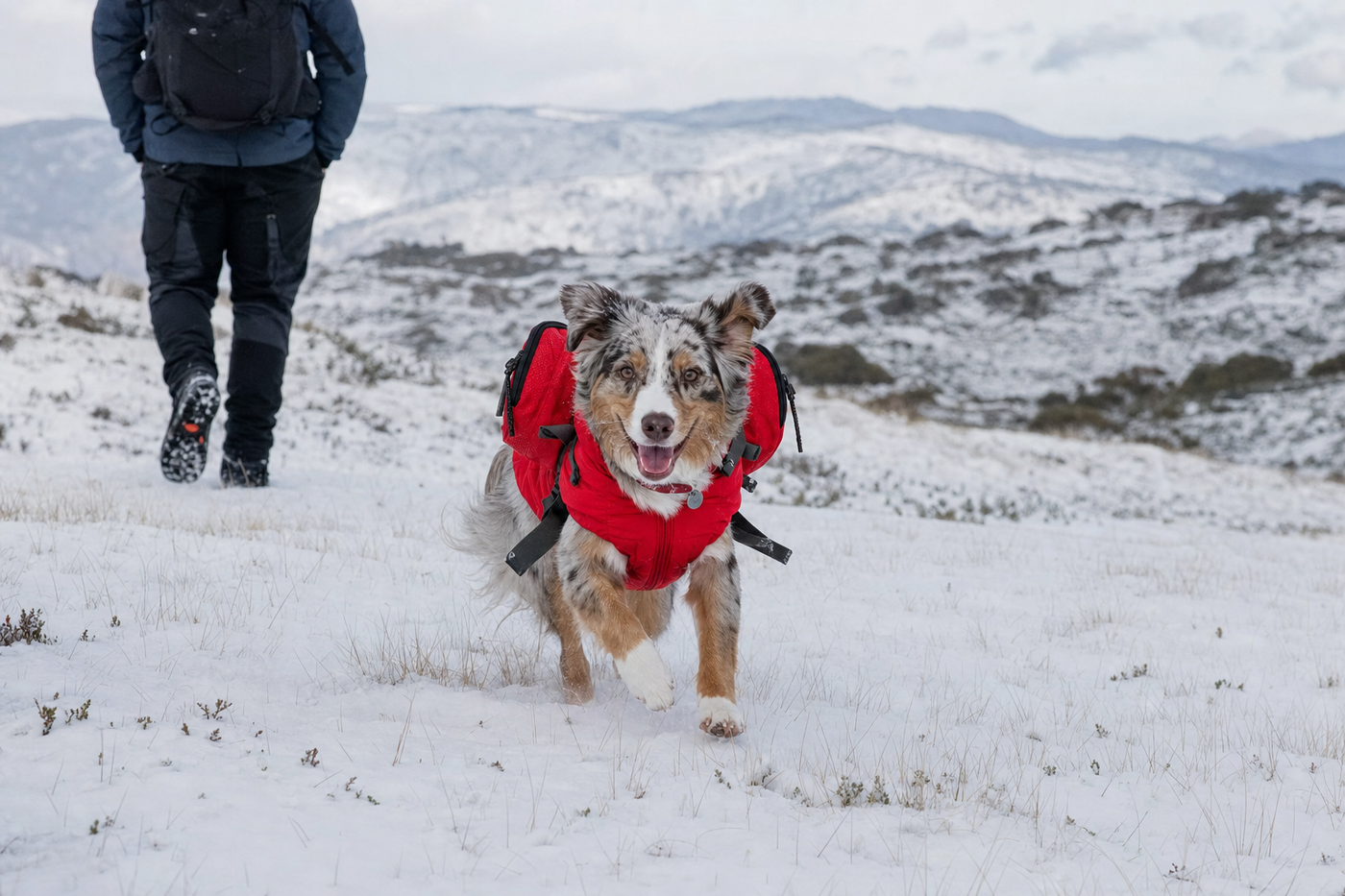
A proper dog coat is non-negotiable. I'm talking about jackets designed for dogs, not cute costumes. Look for water-resistant materials with fleece lining. Your dog's chest and hindquarters lose the most heat, so coats that cover these areas work best. Booties protect paws from cold ground, salt, and ice. Dogs resist them at first, but they adapt within a day or two.
A portable water bowl and insulated water bottle keep your dog hydrated without the water getting too cold. Paw balm prevents cracks and protects against salt used on roads and paths. Bring a drying towel or chamois cloth for wet paws after walks. A warm dog bed in your accommodation matters more than you'd think. Your dog will gravitate toward it and sleep better, which means fewer stress behaviours during your trip.
Gear we would pack
Some links below are affiliate links. Pawtrips may earn a commission at no extra cost to you.
Dog coat and jacket
A water-resistant dog coat with fleece lining is the single most important item for winter travel. Look for designs that cover the chest and hindquarters where dogs lose the most heat. Proper winter coats make the difference between a dog enjoying travel and a dog wanting to stay curled up indoors.
Dog paw balm for cold conditions
Winter salt and ice damage sensitive paw pads quickly. A good paw balm creates a barrier against cold surfaces and salt while preventing cracks. Apply it before walks and wash paws afterwards for complete protection during your winter trip.
Managing Your Dog's Health in Cold Weather
Older dogs and puppies feel the cold harder than adults. Arthritis flares up in cold weather, making senior dogs reluctant to walk. If your dog is over seven years old, chat with your vet before booking a winter trip. They might suggest a joint supplement or recommend shorter walks with more rest days.
Some dogs develop what looks like anxiety in winter. It's often just discomfort from cold. Watch for shivering, reluctance to go outside, or pulling back on walks. These are signs your dog needs warmer gear or different activity. Winter travel isn't about doing everything you'd do in summer. It's about adjusting your routine to what your dog can actually handle.
Accommodation Tips for Cold Nights
Not every dog-friendly accommodation is winter-friendly. Call ahead and ask specific questions. Does the room have heating that stays on consistently? Many budget places cut heating costs at night. Will they allow you to use a heated dog bed? Some places worry about fire hazards, so check their policy.
Underfloor heating is brilliant because it keeps your dog warm without blasting hot air. Rooms with thick carpets stay warmer than those with tiles. If you're staying in a cottage or house rental, check that doors seal properly around the edges. Drafts are the enemy in winter travel. Some dogs struggle with being left alone in unfamiliar cold rooms, so plan shorter restaurant visits and spend more time in your accommodation settling your dog in before you head out.
Self-warming dog bed
A self-warming dog bed uses your dog's own body heat to maintain comfort without electricity. In cold accommodation, these beds become your dog's favourite spot and help them sleep better, reducing stress during winter travel away from home.
Walking Routines and Activity Adjustments
Winter walks need to be shorter and more frequent rather than long and occasional. My dog now does four 20-minute walks instead of two 45-minute walks in winter. Cold air affects dogs' respiratory systems, and exertion in freezing temperatures stresses their hearts. Senior dogs especially need this adjustment.
Warm your dog up before intense activity. A gentle five-minute walk lets muscles warm before you tackle hills or longer distances. Cool-down walks matter too. Coming straight from a vigorous walk into cold air can upset some dogs' stomachs. Bring treats on walks because the mental stimulation of hunting for treats keeps your dog engaged when the weather limits outdoor time. Indoor activities like scent games, puzzle toys, and training practice become more important in winter.
Blackdog Chicken Breast 1KG
Dogs burn extra calories staying warm in winter. High-protein chicken treats keep your dog satisfied during travel while supporting the extra energy they need in cold weather. Use these for training rewards on walks and as motivation during indoor activity time.
Food and Hydration During Winter Trips
Dogs burn more calories in cold weather to maintain body temperature. You might need to increase portion sizes slightly, especially for active dogs. Travel is stressful, and stress can upset digestion. Stick with your dog's regular food and bring enough from home. Trying new food while travelling and dealing with cold weather is asking for digestive problems.
Thirsty dogs drink less in winter because they don't feel as hot. This is dangerous because dehydration happens quietly. Offer water regularly, even if your dog doesn't ask. Warm water encourages drinking better than cold water in winter. Some dogs refuse to drink from strange bowls in unfamiliar places. Bring your dog's regular bowl from home if possible. Pack electrolyte treats or low-sodium broth powder to add to water, making it more appealing during travel.
PitPat Dog GPS Tracker
Winter conditions mean your dog might become disoriented or slip away from unfamiliar accommodation. A GPS tracker with no ongoing subscription gives you peace of mind during winter travel, especially in new destinations where your dog might not respond reliably to recall.
Safety Concerns Specific to Winter Travel
Ice on paths is invisible hazard. Your dog might slip and injure joints before you even realise the ground is icy. Walk slowly on unfamiliar paths and watch your dog's footing carefully. Booties grip ice better than paws alone.
Antifreeze is deadly to dogs. Even small amounts cause serious kidney damage. Check underneath parked cars and around accommodation garages. If your dog ingests antifreeze, get to a vet immediately. Salt on roads and footpaths irritates paws and can poison dogs if ingested in quantity. Wash your dog's paws after every walk during winter. Hypothermia in dogs happens gradually. Shivering, weakness, and reluctance to move are early signs. Get your dog somewhere warm immediately if you notice these symptoms.
Plus early access to new guides and partner deals.
No spam. Ever. Just the good stuff for you and your pet.