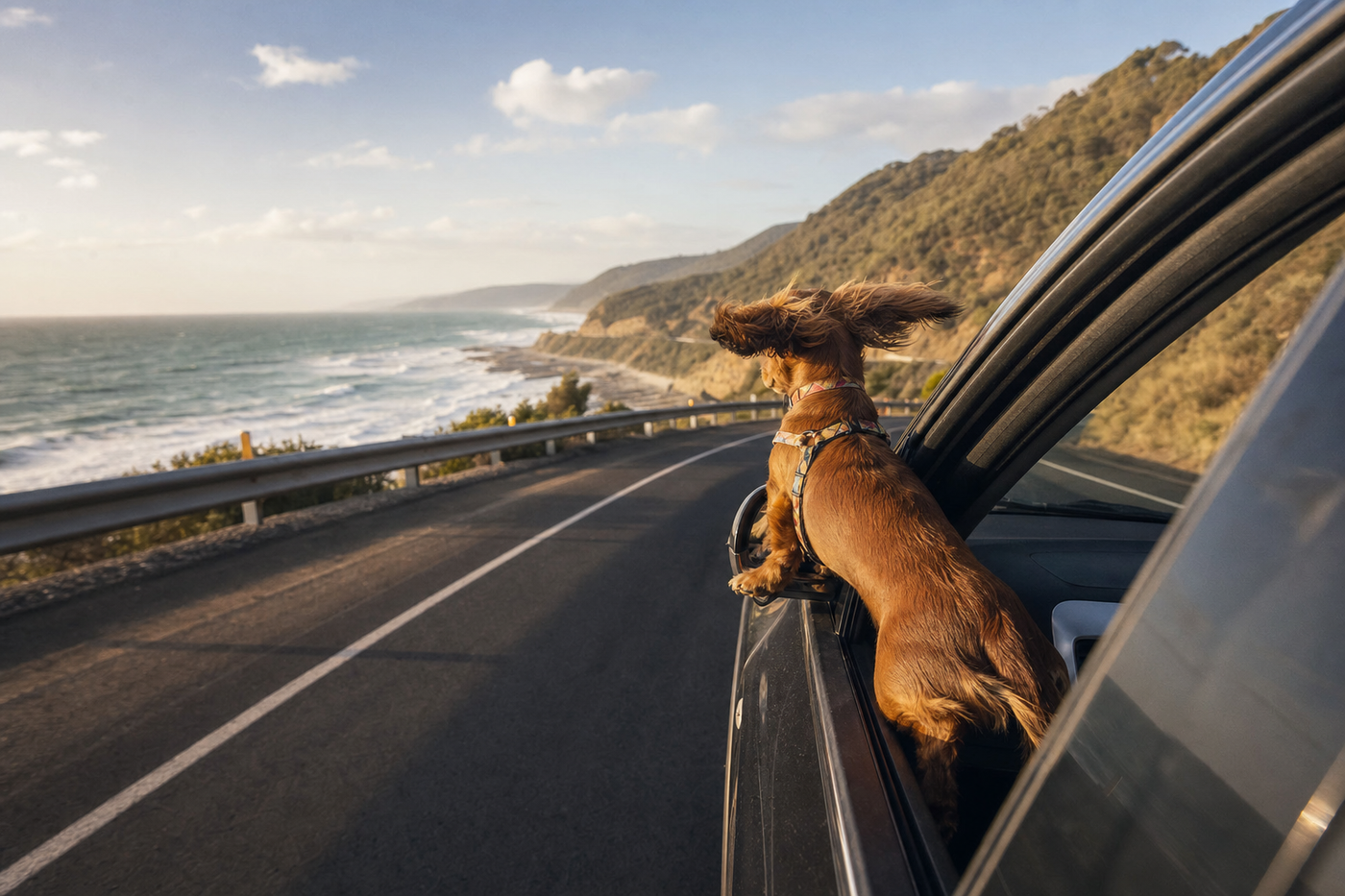
A harness alone cannot prevent heatstroke in a parked vehicle. Never leave your dog unattended in a car, even with a harness, as temperatures can become fatal within minutes in Australian heat.
Always ensure your dog has access to fresh water during car travel, as harnesses can cause your dog to lose access to their water bowl while driving.
Why a proper car harness matters more than you think
I learned this the hard way driving my Blue Heeler from Brisbane to the Gold Coast. My dog was loose in the back seat, and when I braked suddenly, he slammed into the front seat hard enough to yelp. A proper harness prevents your dog from becoming a projectile in sudden stops or accidents.
Australian roads throw curveballs at drivers. We have long stretches of highway, gravel outback tracks, and city traffic all in one journey. Your dog experiences every bump and swerve, and without a harness, they can injure themselves or distract you while you're concentrating on the road. A secured dog is a calm dog, and a calm dog means you can focus on driving safely.
Unrestrained dogs also pose a legal risk. Many Australian councils and states are tightening regulations about pets in vehicles. Some local councils have fines for unsecured animals, so a good harness keeps you on the right side of the law while protecting your travel mate.
Crash-tested harnesses worth the investment
Not all harnesses are equal when it comes to crash protection. I spent hours researching before my next trip, and I discovered that some harnesses have actual crash test ratings. These are the ones worth your money, even if they cost more upfront.
Look for harnesses that meet European safety standards like ECE or similar ratings. These have been tested in simulated crash scenarios, which gives you real data about how they'll perform if something goes wrong. Australian pet stores and online retailers now stock several crash-tested options that weren't available five years ago.
The difference between a budget harness and a crash-tested one often comes down to the quality of the stitching and the strength of the attachment points. When I examined a cheap harness at a pet store in Sydney, I could see the seams were loose. Spend the extra 30 to 50 dollars for something that's actually engineered to protect your dog.
Gear we would pack
Some links below are affiliate links. Pawtrips may earn a commission at no extra cost to you.
Dog Car Harness Safety Rated
Search Amazon Australia for crash-tested and safety-rated dog car harnesses that meet international standards. These harnesses have been specifically engineered and tested to protect your dog during sudden braking or accidents on Australian roads.
Types of harnesses and which suits your car setup
Over-the-seat harnesses clip to your vehicle's headrest and work best if your dog sits in the middle or back seat. These work well for smaller dogs under 15 kilograms. When I drove from Melbourne to Adelaide with a small Cavoodle, this type kept her perfectly secure and gave her room to look out the window.
Back seat tethers attach to your dog's harness and anchor to the seat belt slot or floor hook. These suit medium to large dogs that need more freedom to move around the back seat. A Border Collie I travelled with preferred this setup because she could shift position without strain.
Full-body car harnesses wrap around your dog's chest and torso, then clip to the seat belt buckle. These are the most secure option and work for nearly any dog size. The downside is that they restrict movement more than other types. For dogs prone to anxiety, the tighter fit can sometimes increase stress rather than decrease it.
Dog Seat Belt Tether
Explore seat belt tethers on Amazon Australia for back seat security. These attach to your dog's harness and the car's seat belt slot, giving medium to large dogs more freedom of movement while keeping them safely restrained during travel.
Heat management in Australian vehicles
Australia's climate is harsh on dogs during car travel. Even on a mild day, a parked car becomes an oven in minutes. While a good harness won't solve that problem, it can at least prevent your dog from overheating by restricting airflow unnecessarily.
Choose harnesses with breathable mesh panels rather than solid neoprene. When I drove from Perth to Mandurah last summer, my dog's mesh harness stayed cool to touch, while a friend's solid harness was uncomfortably warm after thirty minutes of driving. Look for harnesses specifically designed with ventilation in mind.
If your dog sits in the back seat with a harness, position them near a window so air can reach them. Keep the car well ventilated, and never leave your dog in a parked car, even with a harness on. The harness won't help if the temperature inside climbs dangerously.
Sizing and fitting your harness correctly
Getting the size right is half the battle. I ordered a harness online once without measuring properly, and it arrived too large to be safe. My Kelpie could almost slip out of it, defeating the entire purpose.
Measure your dog's chest girth by wrapping a soft tape measure around the widest part of their ribcage. Write that number down and compare it to the product specifications. Some brands run tight, others loose, so read reviews from Australian buyers who mention their dog's size. Pet shops in major cities like Brisbane, Sydney, and Melbourne usually have staff who can help you get the right fit in person.
Once you receive your harness, practise fitting it at home before any car journey. Straps should be snug enough that you can't fit a finger underneath, but not so tight that your dog seems uncomfortable. Watch your dog move around the house in the harness first. If they struggle or yelp, adjust the fit or reconsider the style.
PitPat Dog GPS Tracker No Subscription Needed
A GPS tracker pairs perfectly with a secure car harness setup for long Australian road trips. Track your dog's location in real time if they escape the harness at a rest stop, and monitor their activity levels during travel. No ongoing subscription means you keep costs low.
Testing before long trips: the short drive rule
Never take a harness on a 500 kilometre journey without testing it first. I learned this when a dog I travelled with panicked in the harness during a drive from Canberra to Sydney. We had to stop multiple times to calm her down.
Start with a ten or fifteen minute drive around your neighbourhood. Let your dog adjust to the sensation of being harnessed and the movement of the car. Some dogs take to it immediately, while others need several short trips before they relax. Watch their body language and breathing. If your dog pants heavily or whines constantly, they might need a different harness style or extra time to adjust.
Use these test drives to identify any chafing or discomfort. If the harness rubs a spot raw even after just fifteen minutes, that's a sign the fit or design isn't right for your dog. Better to discover this before embarking on a long journey across the outback.
Dog Walking Harness No Pull
A no-pull walking harness is useful when you stop at rest areas during long drives. It prevents your dog from lunging at wildlife or other cars, keeping them under control when you need to let them stretch their legs between driving stretches across the Australian landscape.
Maintenance and replacement of worn harnesses
Car harnesses take a beating on long Australian road trips. The UV sun damages the fabric, sweat and dust build up, and the stitching weakens over time. After my second major road trip, I noticed the straps on my harness were starting to fray slightly where they attach to the clips.
Inspect your harness monthly if you travel regularly. Run your fingers along all seams and check that clips still snap securely. If you see fraying, loose stitching, or worn areas, it's time to replace it. Harnesses typically last between one and three years depending on how often you use them.
Keep spare attachment clips or strap sections if you can find them. Some manufacturers sell replacement parts, which is cheaper than buying an entire new harness. Wash your harness every few months with mild soap and water, then air dry it completely before using it again. A clean harness is less likely to cause skin irritation and lasts longer overall.
Real experiences from Australian road trips
I've travelled with dogs across nearly every Australian state now, and the harnesses that performed best are those that balance security with comfort. A Labrador I travelled with from Hobart to Melbourne needed a back seat tether because she got anxious with too much restriction. That setup worked perfectly for her personality and the eight hour drive.
Conversely, a nervous Miniature Poodle I drove from Adelaide to Victor Harbor did better with an over-the-seat harness because the slight pressure seemed to calm her anxiety. Every dog is different, so the best harness for your pet might not be the best for someone else's.
Connect with other dog travellers through Australian pet forums and local Facebook groups. People in Cairns, Hobart, and Perth often share their honest experiences with specific products. These reviews from real users are gold when you're trying to decide whether to buy something.
Plus early access to new guides and partner deals.
No spam. Ever. Just the good stuff for you and your pet.