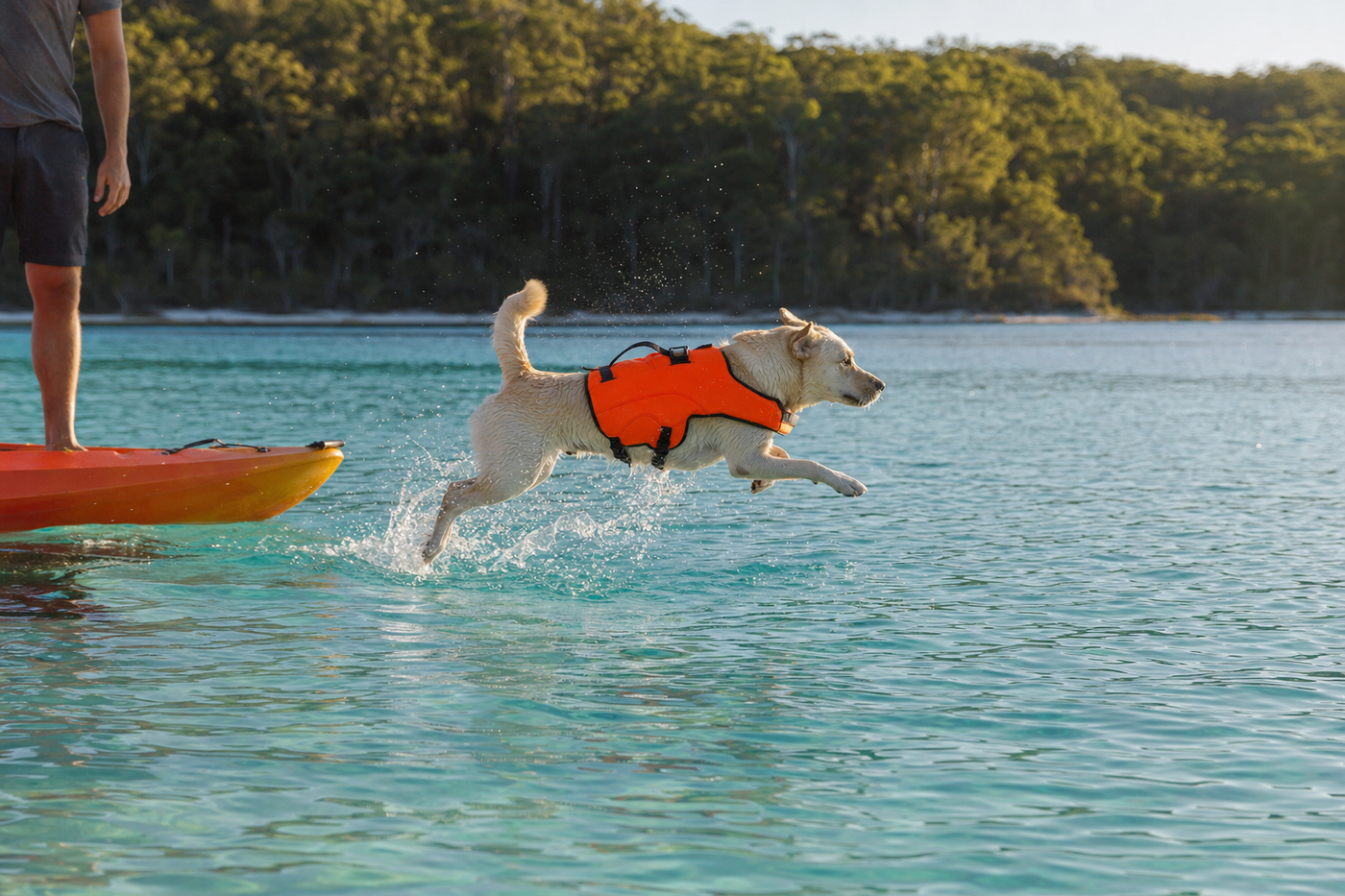
A life jacket is a safety aid, not a substitute for supervision. Never leave your dog unattended in water or rely solely on the jacket to prevent drowning.
Watch for signs of exhaustion including slowed swimming, difficulty keeping head above water, or frantic movements. Exit the water immediately if your dog shows these signs, regardless of how much time you planned to spend swimming.
Why your dog needs a life jacket
Not all dogs are natural swimmers, and even strong swimmers can get into trouble. I learned this the hard way when my kelpie cross panicked during a swim at Magnetic Island and nearly went under. A quality life jacket gives your dog buoyancy support and keeps their head higher in the water, which matters when waves pick up or currents shift unexpectedly.
Water activities are common when travelling with dogs across Australia. Whether you are heading to Jervis Bay for a day trip, walking your dog along the Daintree River, or taking them on a boat tour near the Great Barrier Reef, a life jacket adds a safety layer that costs less than a vet emergency bill. Dogs can exhaust quickly in cold water, and panic sets in fast. A well-fitted jacket buys you precious seconds to get your dog back to shore safely.
Finding the right fit for your dog
Sizing is everything with dog life jackets. A loose jacket rides up around the neck and offers zero support when your dog needs it most. A tight jacket restricts movement and causes chafing. Measure your dog's chest girth with a soft tape measure while they stand naturally, and always measure around the widest part of their ribcage. Most quality jackets come in five to eight size ranges from toy breeds through to large breeds.
Take your dog's wet weight into account. My red heeler weighed 28 kilograms and needed a large jacket, but when soaking wet she felt nearly two kilograms heavier in the water. Test the fit before your trip by putting the jacket on your dog at home and checking that you can fit two fingers under the straps. Your dog should move naturally and not feel restricted. Always bring the jacket on your trip and do a final fit check at the location before entering the water.
Gear we would pack
Some links below are affiliate links. Pawtrips may earn a commission at no extra cost to you.
Dog flotation device small breed
Small breed owners need jackets that provide flotation without excessive weight that exhausts their dogs. Lightweight flotation devices keep toy and small breeds comfortable during extended water activities at places like Jervis Bay or mountain lakes.
Handle design and rescue ease
A sturdy grab handle on top of the jacket makes all the difference in an emergency. When your dog is swimming and you need to pull them out quickly, a handle gives you something solid to grip rather than struggling with wet fur. Look for handles that are reinforced with stitching and positioned over the shoulders where they offer the best control. Some jackets have handles on the back and sides, which gives you options depending on the water entry point.
I used a jacket with side handles on a trip to Lake Macquarie and realised how useful they were when my dog slipped off the dock. The handle gave me instant control without having to reach under the water. Quality handles are usually made from nylon webbing or thick neoprene. Avoid jackets where the handle feels thin or is glued on rather than sewn, as these fail when you need them most.
Dog life jacket with handle
A sturdy grab handle lets you pull your dog from water quickly in emergency situations. This feature is critical when travelling near open water or taking your dog on boat tours across Australian waterways where rescue speed matters.
Visibility and reflective features
Reflective strips and bright colours keep your dog visible in varying light conditions. A dog in the water can be hard to spot, especially at dawn, dusk, or on overcast days around the New South Wales coast. Life jackets with reflective piping or panels catch light from torches, boat headlights, or the sun reflecting off water. Choose jackets with high visibility orange, yellow, or bright pink colours rather than subtle tones.
Reflective material should cover the sides and back of the jacket, not just small patches. Some jackets also come with removable safety whistles attached to the collar. When I took my dog paddling near Coffs Harbour, the bright blue jacket with white reflective panels made her visible from over fifty metres away. This matters when you are at busy beaches or near boat channels where other people need to see your dog from a distance.
Dog life vest reflective
Keep your dog visible in all water conditions with reflective strips and bright colours. Reflective vests are essential for safety near boats and in varying light, especially when travelling to busy Australian beach destinations where water traffic increases during holiday seasons.
Material quality and durability
Dog life jackets face harsh conditions. Saltwater corrodes zips and fabric. UV rays break down neon colours. Chlorine from pools causes fading. Look for jackets made from neoprene or ripstop nylon with stainless steel or plastic zips that won't rust. The seams should be double stitched and the fabric should feel substantial when you hold it. Cheap jackets often have single stitching that separates after a few saltwater swims.
I bought a budget jacket at a supermarket for fifteen dollars and it lasted three beach trips before the seams split. A better quality jacket costs forty to eighty dollars but lasts seasons. Check reviews from other Australian dog owners who have used the jacket in saltwater environments. Neoprene jackets dry quickly and maintain their shape after multiple uses. Rinse your jacket with fresh water after every ocean swim to extend its lifespan.
Weight and comfort for longer swims
A heavy life jacket tires your dog faster than a lightweight one. If you plan swimming sessions longer than twenty minutes, choose a jacket that weighs under one kilogram for small breeds and under two kilograms for large breeds. Heavier jackets provide more flotation but also demand more effort from your dog's muscles. The goal is buoyancy without exhaustion.
Neoprene jackets tend to be lighter than foam-filled options. They also conform to your dog's body better, reducing chafing on long swims. For trips to places like Carnarvon Gorge where you plan extended water time, a well-fitted neoprene jacket makes the difference between a happy dog and a tired one. Consider your dog's fitness level and swimming experience. A fit border collie handles a full day in water better than a senior labrador, and your jacket choice should reflect your dog's capabilities.
Testing your jacket before real water
Never put your dog in open water with a new jacket without testing it first. Introduce the jacket in your backyard or a quiet pool environment where you can control the situation. Let your dog wear it while playing on land to build confidence. Then wade into shallow water together and watch how the jacket sits on their body. Check that it doesn't slip backward or twist to one side.
I made the mistake of buying a jacket online, taking it straight to a beach at Byron Bay, and putting it on my dog for the first time in the ocean. She panicked because the fit felt wrong and the sensation of the jacket combined with waves overwhelmed her. A fifteen-minute test in calm water would have revealed the issue. Your dog needs time to adjust to the restriction and buoyancy change. Practice recall commands while your dog wears the jacket in shallow water so they know how to respond when you call them back from deeper areas.
Cleaning and storage between trips
Saltwater and chlorine break down materials quickly if you don't rinse properly. After every use, rinse your dog's life jacket with fresh water from a hose and let it air dry completely before storing it. Never leave a wet jacket rolled up in a bag, as mould grows inside and the material deteriorates. Store the jacket flat or hanging in a cool, dry space away from direct sunlight.
Once a month, wash the jacket with mild soap and fresh water if your dog has been in saltwater frequently. Check zips and seams for corrosion or damage. Replace any rusted metal parts or separating seams before your next trip. A jacket that costs sixty dollars lasts three years with proper care, or three months without it. When travelling between locations across Australia, pack the jacket in a mesh bag that allows air circulation rather than a sealed container.
Plus early access to new guides and partner deals.
No spam. Ever. Just the good stuff for you and your pet.