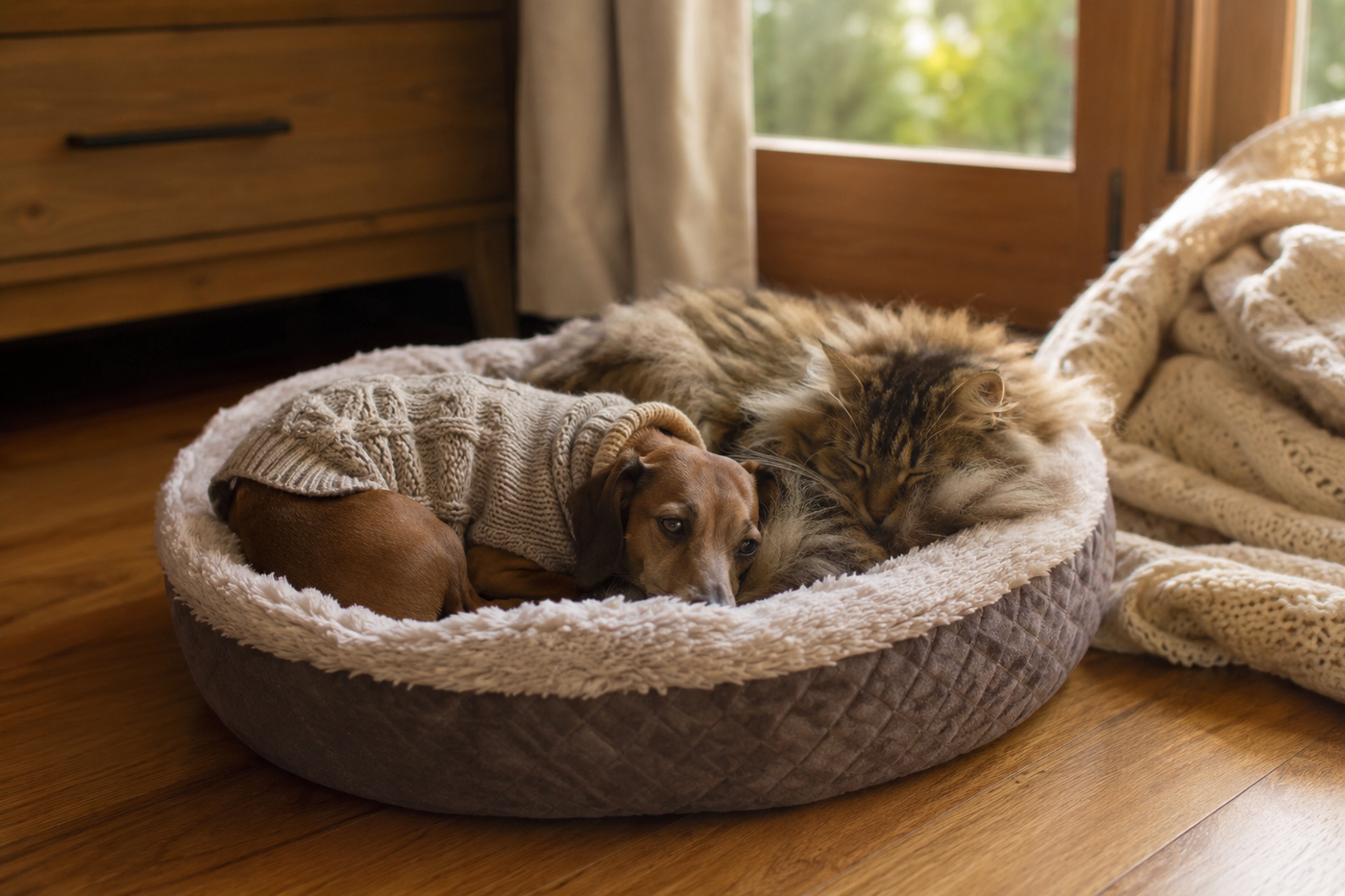
Does your dog or cat actually feel the cold?
Yes, and more than most owners realise. While dogs and cats have fur coats, that does not make them immune to cold temperatures. Short-coated breeds, small dogs, senior pets, puppies, and cats that normally spend time outdoors all feel the cold acutely. The signs are easy to miss. Shivering, reluctance to go outside, seeking out warm spots, curling up tightly, stiff movement after rest, and changes in mood or energy are all signs your pet is colder than comfortable. In Australia's southern states and highland regions, overnight temperatures in winter drop to levels that genuinely require intervention for many breeds. Even in Queensland and coastal NSW, early mornings and nights from June through August are cold enough to affect thin-coated and small dogs. Winter in Australia is not a mild inconvenience for every dog. For some breeds it is a real welfare consideration.
Dog coats and jackets: which breeds need them
Not every dog needs a coat in Australian winter. A Husky, Malamute, or Bernese Mountain Dog is perfectly comfortable in southern winters and may actually overheat if rugged up. The breeds that genuinely benefit from a coat are short-coated, small, elderly, very young, or have health conditions that affect temperature regulation. Breeds that almost always need a coat in Australian winter: Dachshunds, Whippets, Greyhounds, Chihuahuas, French Bulldogs, Pugs, Maltese, and most toy breeds. Medium breeds with short coats including Staffordshire Bull Terriers, Boxers, and Dalmatians also benefit in cold or wet conditions. The right coat covers from the neck to the base of the tail and ideally the belly. It should not restrict movement or bunch under the legs. And importantly, take it off when your dog comes inside to a heated environment to prevent overheating.
Gear we would pack
Some links below are affiliate links. Pawtrips may earn a commission at no extra cost to you.

Adjustable Dog Grooming Arm for Pet Owners
Keeps your pet secure during grooming.

Gentle Chew Toy for Teething Puppies
A calming chew toy is great for easing travel stress in puppies.

Portable Dog Ramp for Safe Car Access
This ramp helps pets safely access vehicles during travel.

Internal Knotted Dog Toy for Less Mess
Durable design means less mess when travelling with your pet.
Warm beds and sleeping arrangements
A warm, elevated bed off cold tile floors makes a significant difference to how your pet feels overnight in winter. Cold floors conduct heat away from your pet's body throughout the night, contributing to stiff joints, disrupted sleep, and general discomfort. Self-warming beds use your pet's own body heat reflected back through insulating materials. No electricity, no heat pads, no fire risk. They are particularly effective for cats and small dogs who tend to curl up tightly in the cold. For senior dogs with arthritis, an orthopedic memory foam bed that is also warm is the ideal combination. Cold significantly worsens joint inflammation, and a good bed is one of the most impactful things you can do for an older dog through winter.
Joint care for senior dogs in winter
Cold weather and joint pain have a well-documented relationship in dogs. Arthritis and hip dysplasia both worsen when temperatures drop, and many owners notice their senior dogs moving more stiffly, being slower to rise, or showing reluctance to climb stairs or jump during winter months. Glucosamine and chondroitin supplements support joint health from the inside. They are most effective when given consistently over time rather than as a reactive measure when symptoms worsen. Starting or continuing a joint supplement through winter is one of the most evidence-supported things you can do for a senior dog. Alongside supplements, keep senior dogs warm, maintain gentle regular movement rather than complete rest, and consider a heated or self-warming bed specifically for them. Cold and inactivity together are the worst combination for arthritic joints.
Paw care in winter
Cold and wet surfaces cause paw pads to dry out, crack, and become sore. This is often overlooked by owners who associate paw problems with hot summer pavement. Winter is equally hard on paws, particularly for dogs that walk on wet grass, cold concrete, or muddy surfaces regularly. A paw balm or wax applied before walks creates a protective barrier against cold and moisture. It also prevents the cracking and soreness that comes from repeated wetting and drying. Apply to clean, dry paws before heading out and wipe them down when you return. Check paws regularly through winter for redness, cracking between the toes, or signs of soreness. Dogs that lick their paws excessively in winter are often responding to dryness or irritation.
Winter walks: how to keep them safe and enjoyable
Dogs still need daily exercise in winter, but the approach changes. Shorter, brisker walks in the warmer parts of the day are better than long walks in the early morning cold for small or short-coated breeds. Mid-morning when the sun is up and temperatures have risen is ideal. A reflective collar, vest, or lead attachment is genuinely important in winter because daylight hours are shorter. If you walk before 7am or after 5pm in June and July, visibility is low. Drivers cannot see dark-coated dogs in low light. A simple LED collar or reflective vest solves this instantly. Dry your dog thoroughly after wet walks. Cold and wet together drops body temperature quickly, and many dogs will shiver for extended periods if left damp after a rainy walk.
Keeping cats warm in winter
Cats are better at finding warm spots than dogs, but they still need help in genuinely cold conditions. A self-warming cat bed gives them a dedicated warm retreat that reflects their own body heat back to them. Keep indoor cats inside overnight in winter. Even cats that normally have outdoor access should be brought in when overnight temperatures are very cold. Hypothermia is a genuine risk for cats left outside in cold and wet conditions overnight. Check outdoor hiding spots like garden sheds, under decks, and inside cars before closing them in winter. Cats seek out warm enclosed spaces and can easily become trapped. This is especially important on very cold nights.
This post contains affiliate links to Amazon Australia. If you purchase through our links we earn a small commission at no extra cost to you. We only recommend products we genuinely believe are worth buying. Questions about winter pet care? Write to us at hello@pawtrips.com.au.
hello@pawtrips.com.auPlus early access to new guides and partner deals.
No spam. Ever. Just the good stuff for you and your pet.