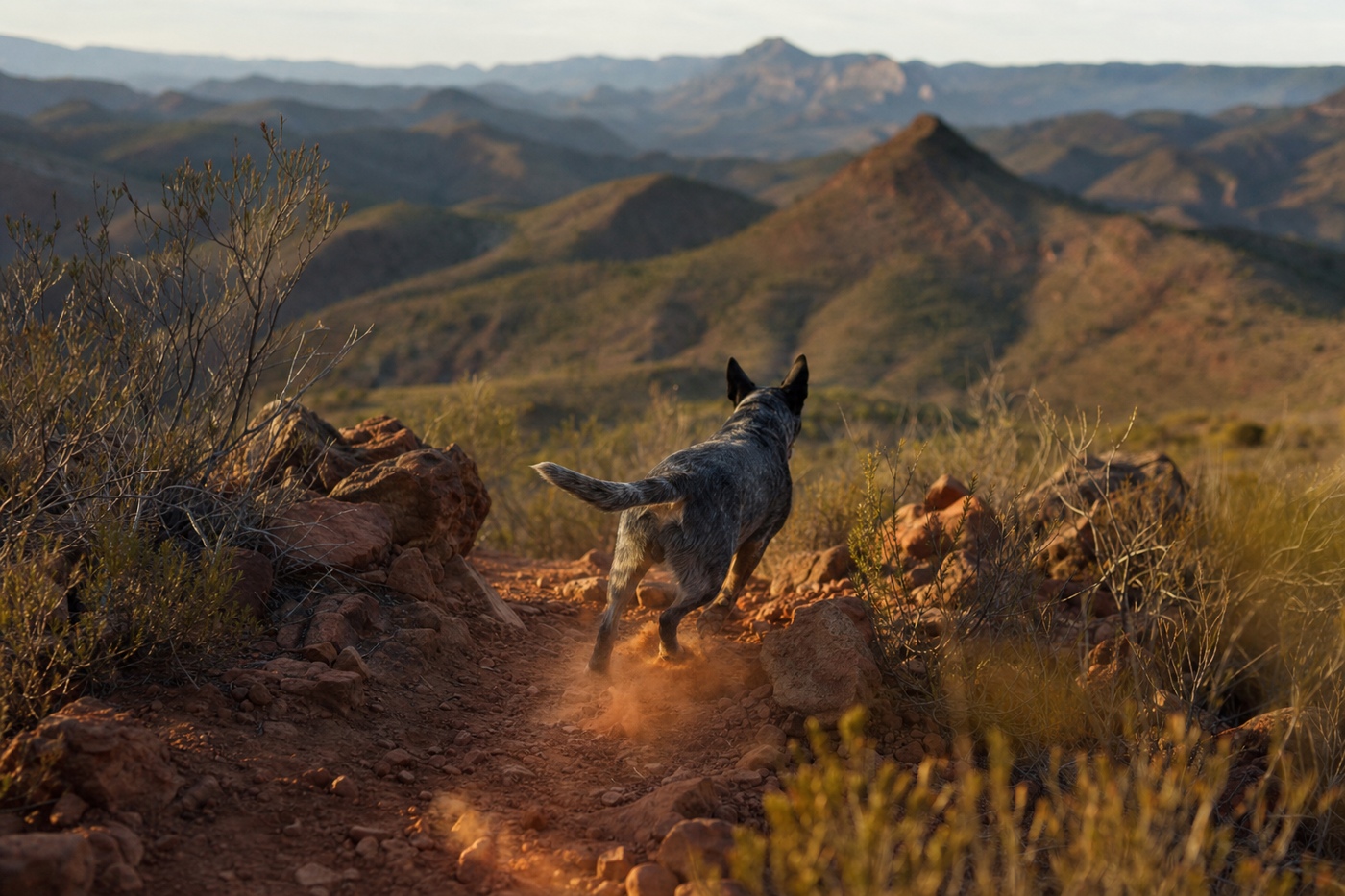
Australian Cattle Dogs are prone to heat stress due to their thick double coat. Never leave them in parked cars and avoid travelling during the hottest hours of the day (11 am to 3 pm) in summer.
ACDs have a strong herding instinct and may chase or nip at other animals and children. Keep them on a lead in public areas and be transparent about their behaviour when booking accommodation to avoid confrontations with other guests.
Why Australian Cattle Dogs Make Challenging Travel Companions
Australian Cattle Dogs are bred to work all day herding livestock across vast Australian properties. This means your ACD has energy levels that match a long cattle drive, not a holiday. They were designed to think independently, react quickly to movement, and stay focused for hours. When you take them travelling, you are not just moving a dog from one place to another: you are relocating an athlete with a working dog's mind.
Most travel problems with ACDs stem from boredom and pent-up energy rather than bad behaviour. A tired ACD is a good travelling companion. An under-exercised one will nip at heels, chase wildlife, and escape from campsites. I learned this the hard way when my ACD, Pepper, bolted from a pet-friendly caravan park near Coffs Harbour because she spotted sheep in a paddock across the road. She was not being difficult: she was doing exactly what her genetics told her to do.
Pre-Travel Training and Conditioning
Before you book your first trip, spend at least four weeks conditioning your ACD to car travel and new environments. Start with short drives of 30 minutes to places like local beaches or hiking trails where they can burn energy. Gradually increase journey length to two hours, then four hours. This teaches your dog that car time equals adventure time, not stress.
Train a solid recall command before travelling. Your ACD needs to come back when called, especially near roads or wildlife. Use high-value treats like chicken or cheese during training sessions. Practice in different locations: your backyard, a local park, a friend's property. When you are 800 kilometres from home near Dubbo and your dog spots a rabbit, that recall command becomes the difference between a successful trip and a lost dog.
Teach your ACD to settle calmly in a car crate or with a travel harness. Many ACDs hate being confined, so introduce the crate gradually over several weeks. Leave treats inside, feed meals there, and take short trips. Your dog needs to see the crate as safe, not as punishment.
What we recommend
Some links below are affiliate links. Pawtrips may earn a commission at no extra cost to you.
Pet First Aid Kit with Otoscope and Feeder
A complete first aid kit is essential when travelling to regional areas where vet clinics may be hours away. This kit includes tools for minor injuries, wound care, and basic health checks, giving you confidence to handle small emergencies during your ACD's trip.
Choosing Pet-Friendly Accommodation Across Australia
Pet-friendly accommodation in Australia ranges from caravan parks to beachside cottages, but you need to book early and understand each place's rules. Many popular parks along the New South Wales and Victoria coasts fill up 8 to 12 weeks ahead during school holidays. Your ACD also needs secure fencing or enclosed areas because they will chase anything that moves.
When booking, ask specific questions. Does the property have a fully fenced yard, or just an open veranda. What is their policy on barking and how long can your dog stay alone. Some parks allow dogs during winter only, or restrict them to certain cabins. The Grampians region near Hamilton in Victoria and many South Australian parks welcome ACDs, but you need to read their pet policies carefully.
Consider hiring a dog-sitter or booking dog-friendly activities when you want to explore without your ACD. Many regional towns have dog walkers or pet care services. Your alternative is staying in a completely self-contained cabin where your dog can come everywhere, which works well if you plan short outings to nearby hiking trails.
Pet-Friendly Stays
Finding the right accommodation is half the battle when travelling with an ACD. This service connects you with verified pet-friendly properties across Australia, showing reviews from other dog owners and filtering by specific amenities like fenced yards and dog-friendly beaches nearby.
Managing Heat and Hydration on Australian Roads
Australian Cattle Dogs have a double coat designed for herding in bush conditions, not for sitting in hot cars. I watched Pepper pant heavily after just 45 minutes on a 28-degree day, even with the airconditioning running. This is not laziness: ACDs are prone to heat stress because their thick coat traps heat. Never leave your dog in a parked car, even for ten minutes.
Plan your driving around cooler parts of the day. Leave early morning, between 5:30 and 7:30 am, and stop during the hottest hours between 11 am and 3 pm. Rest in shaded areas near water. Carry a portable water bowl and offer drinks every 60 to 90 minutes, even if your dog does not seem thirsty. Dehydration creeps up on dogs travelling in cars because they are stressed and not moving around.
Bring ice packs or a battery-powered cooling mat for rest stops. Wet your dog's paws and chest if she gets overheated. Know the location of veterinary clinics along your route in case of heat-related illness. The inland routes to places like Alice Springs get significantly hotter than coastal drives: plan extra stops and consider driving these routes only in cooler months from April to September.
Collapsible Water Bowl
A lightweight collapsible bowl takes up almost no space in your car but becomes invaluable at rest stops. Keep several in your vehicle so your ACD always has access to fresh water during those crucial 60 to 90 minute driving intervals, especially in Australian heat.
Exercise and Mental Stimulation During Your Trip
An ACD needs at least two hours of physical exercise daily, even while travelling. This is non-negotiable if you want a calm, happy dog. Build your itinerary around destinations with good walking and hiking opportunities. The Blue Mountains near Sydney, the Dandenong Ranges near Melbourne, and the Grampians in Victoria all have excellent dog-friendly trails.
Mix walking with problem-solving activities. Carry puzzle toys, hide treats around your campsite, or let your ACD search for hidden objects on the beach. These mental tasks tire an ACD more effectively than running alone. I take a chuck-it ball and a long training lead to beaches and open areas so Pepper can burn energy safely without chasing wildlife.
Visit dog parks when your route passes through larger towns. Most councils maintain free dog parks in places like Canberra, Adelaide, and Brisbane. Your ACD will interact with other dogs and get intense exercise in 30 to 45 minutes. Check local council websites for park locations and off-lead times, which are usually early morning or late afternoon.
Managing Behaviour and Social Interactions While Travelling
Australian Cattle Dogs were bred to bite and chase moving objects. This herding instinct does not disappear just because you are on holiday. Your dog might nip at other dogs, chase cats, or try to herd children playing on a beach. This is not aggression: it is instinct. However, other travellers do not always understand this, and you need to manage it actively.
Keep your ACD on a lead in busy areas and around other dogs until you know her socialisation level. Many ACDs are fine with dogs they have met before but reactive to strangers. Visit quieter beaches early morning before crowds arrive. Avoid caravan parks with lots of foot traffic unless your dog has rock-solid impulse control.
Be honest about your dog's temperament when booking accommodation. If your ACD barks at neighbours or reacts to other dogs, mention this upfront. Some properties have specific pet cabins isolated from other guests. Never assume your dog will suddenly become socialised just because you are travelling: you are just relocating her existing personality to new locations.
Dog Collar and ID Tag
A sturdy collar with an ID tag showing your mobile number and microchip details is your first line of defence if your ACD escapes in unfamiliar territory. Update the tag with your current phone number before every trip, especially when travelling to different states.
Health, Safety, and Emergency Planning
Before travelling, schedule a vet check to confirm vaccinations, microchip registration, and general fitness. Ensure your dog is microchipped and the registry details are current with your contact number. Carry vaccination records in case you need emergency vet care in a different state. ACDs can be prone to hip dysplasia and degenerative myelopathy, so avoid excessive jumping in and out of cars on hard surfaces.
Pack a basic first aid kit including tweezers, gauze, antiseptic, and any medications your dog takes. Research vet locations along your route and save phone numbers. Regional vets can have long wait times, so knowing where to go before you need them matters. Take photos of your ACD before travelling so you have a current image if she ever goes missing.
Watch for signs of stress and fatigue. Some ACDs develop anxiety in new environments or refuse to eat. If your dog is not settling after two to three days, the location might not be right for her. You can always adjust your plans and move on rather than pushing through a stressed dog's unhappiness. Travelling should be enjoyable, not a source of ongoing stress for either of you.
Ear Wipes for Dogs and Cats
Travel exposes ACDs to new allergens, dust, and ear infections from unfamiliar water and environments. Regular ear wipes keep your dog's ears clean and help prevent infections that could turn a holiday into a vet emergency far from home.
Best Regions and Seasons for ACD Travel
Coastal New South Wales and Victoria offer the most dog-friendly infrastructure, with numerous pet-friendly parks and beaches. The South Coast near Batemans Bay and the Mornington Peninsula near Melbourne have excellent facilities. Tasmania is also highly dog-friendly and has milder temperatures year-round.
Travel during autumn and spring when temperatures sit between 15 and 25 degrees Celsius. Avoid summer in inland areas: temperatures above 30 degrees make driving uncomfortable and risky for ACDs. Winter is fine for coastal travel but can be challenging in Tasmania or the mountains. Many caravan parks close or reduce pet services during off-season, so check availability.
The dry season in northern Australia from May to September is better than summer, but distances between towns are vast and services are sparse. I would recommend sticking to southern and eastern coasts until you have several trips under your belt and understand your individual dog's needs. Each ACD has different tolerances and preferences, so start with familiar territory before exploring remote regions.
Plus early access to new guides and partner deals.
No spam. Ever. Just the good stuff for you and your pet.