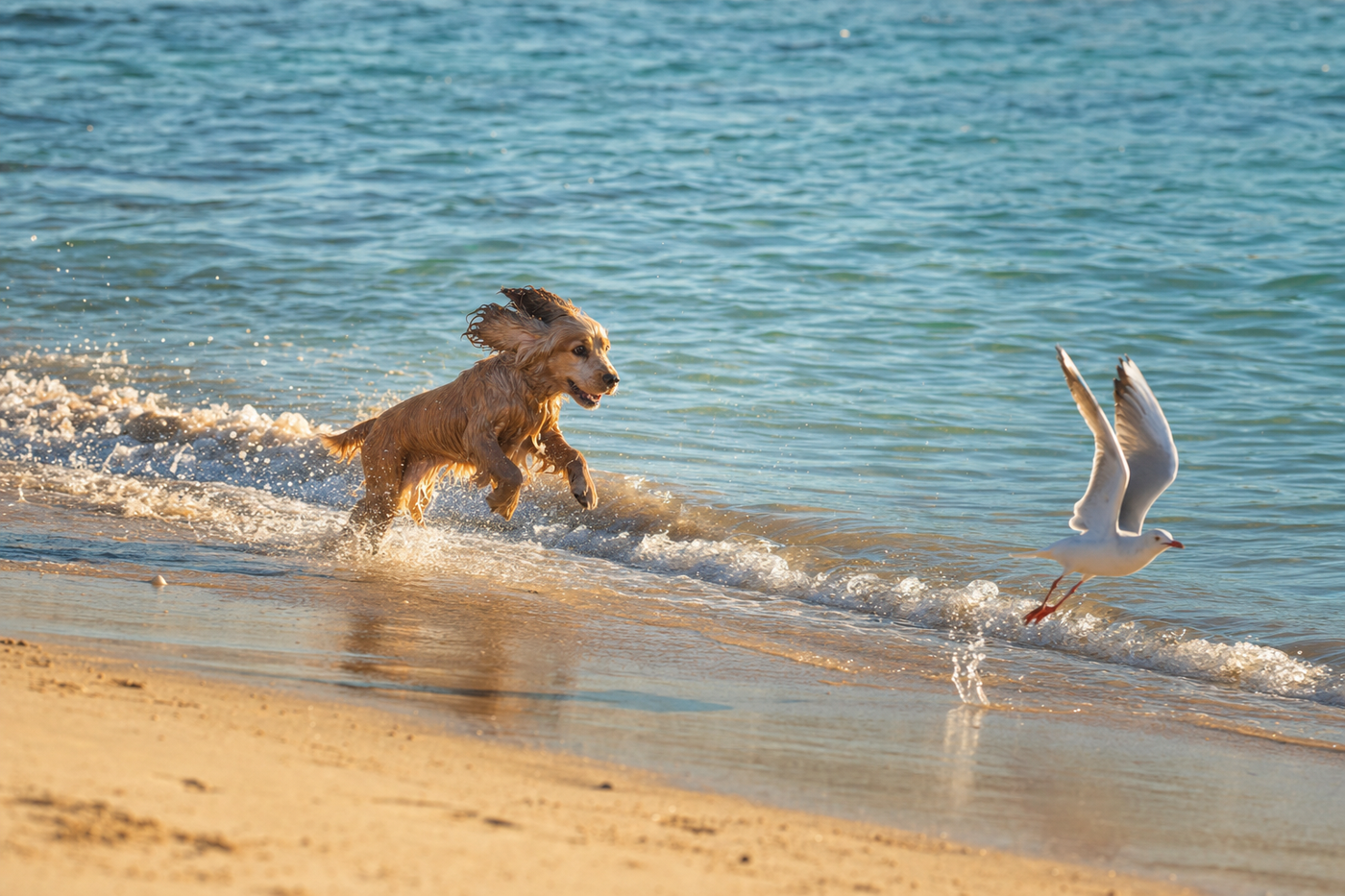
Cocker Spaniels are prone to ear infections, particularly after swimming or in humid conditions. Dry ears thoroughly after water activities and monitor for odour or head shaking.
Never allow your spaniel to chase or chase at wildlife like kangaroos, emus, or snakes. These encounters can result in serious injury or fatality. Always use a lead in unfamiliar natural areas.
Why Cocker Spaniels Make Great Travel Companions
Cocker Spaniels are natural adventurers with energy and enthusiasm that match road trip itineraries perfectly. These medium-sized dogs weigh between 12 and 14 kilograms, making them easy to manage in cars and most accommodation types. Their friendly temperament means they adapt well to new environments and people you meet along the way.
I travelled from Melbourne to Adelaide with my spaniel last year and discovered they genuinely thrive on varied experiences. They're not fussy about where they sleep, they're food-motivated which helps with training in new places, and their love of water makes them perfect for Australian coastal and inland destinations. A spaniel's enthusiasm for car rides comes from their hunting heritage, which means they naturally settle once they understand the routine of a trip.
Preparing Your Spaniel for Long Car Journeys
Start with short drives of 15 to 20 minutes before attempting anything longer than three hours. Your spaniel needs to understand that car rides are normal and not something to fear or panic about. Many spaniels with proper introduction travel calmly for six to eight hours with regular breaks.
Before your first major trip, consult your vet about motion sickness medication if your dog shows signs of nausea during drives. Pack a comfortable bed that fits your car, some familiar toys, and a lead for stops. I learned the hard way that a anxious spaniel in a confined space can create stress for everyone, so investing time in training your dog to accept the car pays dividends on every trip thereafter.
What we recommend
Some links below are affiliate links. Pawtrips may earn a commission at no extra cost to you.
Dog Separation Anxiety Collar, Four Pack
Cocker Spaniels sometimes develop anxiety during the transition into car travel or new environments. These collars provide calming support during those vulnerable first few trips, making the adjustment period smoother and less stressful for both you and your spaniel.
Managing Exercise and Energy Levels on the Road
Cocker Spaniels need a minimum of 1.5 hours of exercise daily, which becomes tricky during multi-day road trips. Plan your driving days around access to parks, beaches, or open spaces where your spaniel can run safely off-lead. Most Australian towns have reserves or oval spaces suitable for dogs within 10 to 15 minutes from main highways.
I've discovered that breaking up driving with proper exercise stops actually makes dogs settle better in the car during longer stretches. A tired spaniel at 3pm is less likely to become restless at 5pm. Schedule longer breaks at halfway points in your journey where you can spend 45 minutes to an hour letting your spaniel play, swim, or explore. This approach turns exercise management from a burden into part of your travel experience rather than something that fights against your itinerary.
Finding Pet-Friendly Accommodation Across Australia
Most Australian coastal towns and regional destinations now offer at least one or two pet-friendly options, though you need to book ahead during school holidays and peak seasons. Byron Bay, Margaret River, Adelaide Hills, and the Grampians all have numerous dog-friendly cottages and holiday homes. Always confirm with the accommodation that spaniels specifically are welcome, as some places restrict certain breeds or sizes.
When you arrive at any new accommodation, immediately take your spaniel for a toilet break and a sniff around the property so they understand the boundaries. Pack a crate or portable pen if your spaniel shows anxiety in unfamiliar spaces. I've stayed at places where the owners left fresh water bowls and dog treats, which made the arrival so much smoother. Before booking, read reviews mentioning other travellers' dog experiences, as this gives you honest insight into how welcoming a place truly is.
Pet-friendly stays
Browsing and booking dog-friendly accommodation can take hours of research. A dedicated pet-friendly platform helps you find verified places that genuinely welcome spaniels, read reviews from other dog owners, and book with confidence across any Australian destination.
Dealing With Heat and Cold on Australian Roads
Cocker Spaniels have medium-length coats that make them vulnerable to overheating in Australian summers, particularly during car journeys where ventilation is limited. Never leave your spaniel unattended in a parked car, even with windows cracked open. During summer months from December to February, travel early in the morning or later in the afternoon, and ensure your car has adequate air conditioning.
In winter or when travelling through cooler regions like Tasmania or the Victorian highlands, your spaniel may appreciate a dog coat during walks. I've learned that spaniels genuinely enjoy water, so during hot stops, find locations where they can swim safely to cool down. Always carry at least two litres of fresh water and a collapsible bowl for drinking breaks every 20 to 30 minutes during warm weather driving.
Seresto Flea & Tick Collar for Large Dogs Over 8kgs
Australian environments harbour fleas and ticks year-round, and travelling through remote areas increases exposure risk. This long-acting collar protects your cocker spaniel for months, giving you peace of mind throughout your road trip without needing to remember weekly treatments.
Health and Parasite Protection Before You Leave
Book a vet appointment two weeks before your trip to ensure vaccinations are current and your spaniel is fit for travel. Discuss flea and tick prevention with your vet, as Australian environments harbour parasites year-round. Starting a long-acting flea and tick collar or treatment before you travel gives you peace of mind for weeks or months depending on the product.
Arrange pet insurance that covers travel, as unexpected vet costs in unfamiliar towns can be expensive. Pack a basic first aid kit including bandages, antiseptic, and any medications your spaniel regularly takes. Request a letter from your vet with your spaniel's medical history and microchip details in case you need emergency care while travelling. I've found that having these documents organised before leaving home removes anxiety if health issues arise.
Safety Tips for Travelling Through Remote Areas
Ensure your spaniel wears a collar with an ID tag and is microchipped before travelling beyond city areas. When exploring remote locations, keep your spaniel on a lead near wildlife including kangaroos, emus, or snakes, even if they have strong prey drive instincts. Many regional vets have longer wait times than city practices, so plan your route to stay within reasonable distances of veterinary services.
Carry recent photos of your spaniel on your phone in case they go missing in unfamiliar territory. Download offline maps of areas you're visiting so you can locate vets, parks, or water sources without relying on mobile reception. I learned that remote beach areas can have hidden hazards like sharp shells or strong currents, so always scout new swimming spots before letting your spaniel off-lead. Tell someone where you're heading each day and when you expect to arrive at your next stop.
Packing the Right Gear for Spaniel Travel
Create a dedicated packing list for your spaniel that travels with your regular suitcase. Include food and treats, water bowls, a travel crate or portable pen, bedding, lead, collar, ID tags, grooming supplies, and first aid items. A portable grooming kit becomes essential if your spaniel's coat becomes matted or muddy during outdoor adventures.
I pack an extra towel because spaniels love water and will find puddles or creeks at unexpected moments. Bring enough food for the full trip plus extra, as sourcing your spaniel's regular brand in regional areas can be difficult. A travel food carrier bag keeps kibble fresh and organised throughout your journey. Ensure your spaniel's favourite toy or comfort item comes along, as familiar objects reduce anxiety in new environments.
Kurgo Dog Food Travel Bag: Kibble Carrier, 5 Pound
Keeping your spaniel's food fresh during multi-day road trips requires proper storage that prevents spillage and maintains freshness in warm conditions. This travel bag keeps kibble organised and protected while taking up minimal space in your car or accommodation.
PitPat Dog GPS Tracker - No Subscription Needed
Travelling through unfamiliar areas with your spaniel is less stressful when you can track their location in real-time. This GPS device requires no ongoing subscription fees and provides immediate location information if your spaniel wanders off during a remote stop.
Plus early access to new guides and partner deals.
No spam. Ever. Just the good stuff for you and your pet.