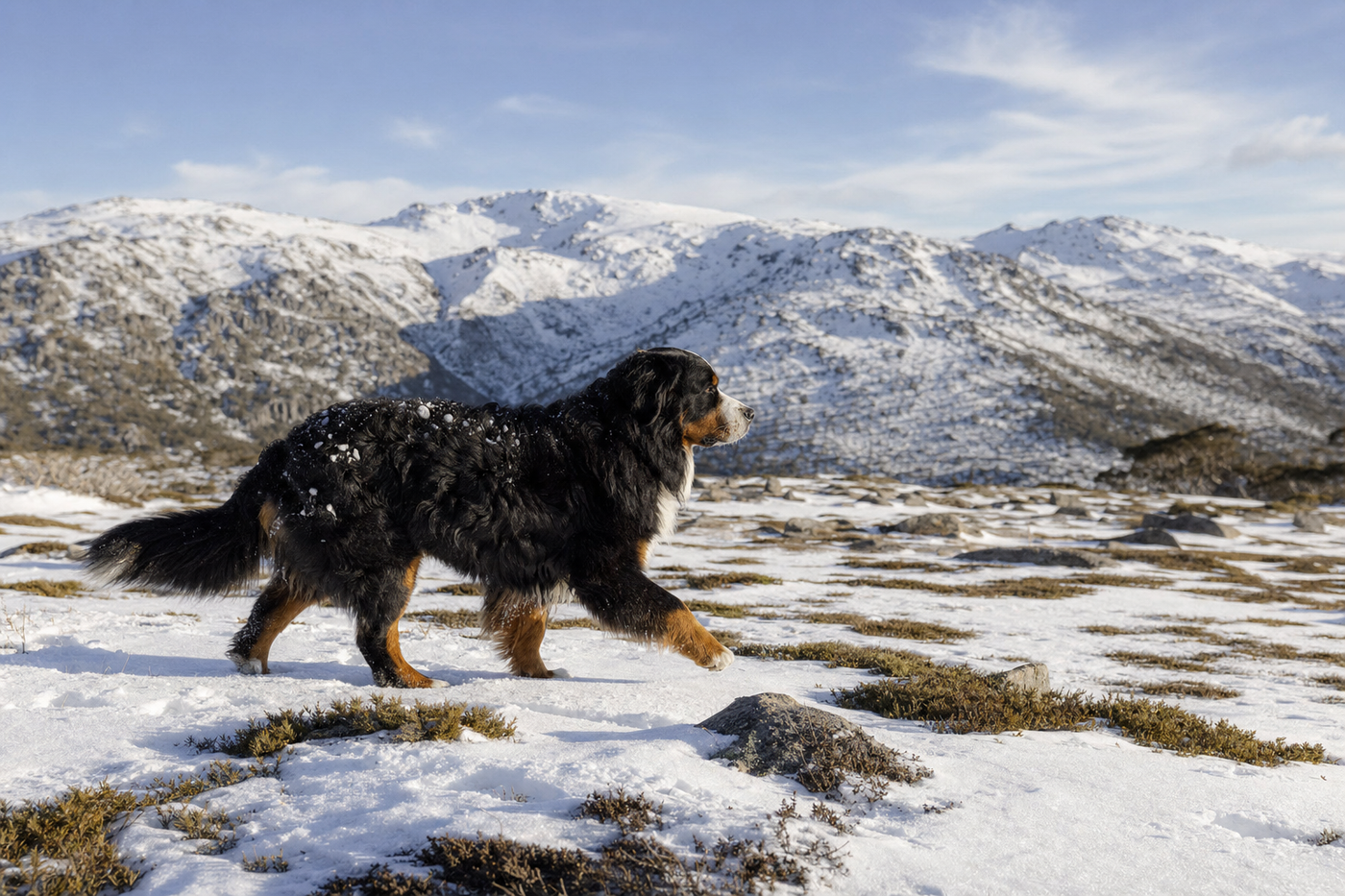
Heat stroke in Bernese Mountain Dogs can develop rapidly and become life threatening. Never leave them in cars, monitor them constantly during warm days, and have a vet's emergency number available.
Hip dysplasia and joint issues are common in this breed. Excessive travel stress, long car journeys, and strenuous activity can cause lasting damage. Rest days and joint care are not optional.
Why Bernese Mountain Dogs struggle with Australian travel
Bernese Mountain Dogs were bred in Swiss mountains where it stays cool year round. Their thick double coat works brilliantly in places like Tasmania or Victoria's highlands, but it becomes a real problem in inland Australia where summer temperatures hit 40 degrees Celsius. I learned this the hard way driving from Adelaide to Broken Hill with my Berner, Max. He panted constantly and refused to eat properly once the heat kicked in.
These dogs also weigh between 35 and 50 kilograms, which means they need serious space in vehicles and accommodation. Their size isn't just about comfort either. A distressed large dog in a small car space creates safety problems for everyone. Their temperament is generally calm and friendly, which is wonderful, but it also means they don't give you obvious warning signs until they're already overheated.
Berners are prone to hip dysplasia and other joint issues, so constant travel can aggravate existing problems. The repetitive motion of long car journeys affects their joints differently than a small dog's. Understanding these breed-specific challenges upfront means you can plan routes and stops that actually work for your dog rather than forcing them through unsuitable conditions.
Managing heat: the biggest travel challenge
Heat management isn't a minor consideration for Bernese Mountain Dogs in Australia. It's the central planning element for any trip longer than a few hours. Never leave your Berner in a car while you grab coffee or do shopping, even if you've cracked the windows. A parked car reaches dangerous temperatures within minutes, regardless of outside conditions.
Instead, plan your travel around cooler parts of the day. Leave very early in the morning, ideally before 7 AM, and stop during the heat of the day between 11 AM and 4 PM. When I drove Max to the Blue Mountains from Sydney, we left at 5:30 AM and arrived by lunchtime. We then spent the afternoon at our accommodation where he could rest indoors with air conditioning.
Invest in a quality dog cooling mat for the car and your accommodation. Some owners use cooling vests, though Berners often find these uncomfortable given their existing thick coat. Keep an ice pack wrapped in a towel under the seat for emergency situations. Always travel with at least two large water bowls and fill them frequently. Your dog might not drink much while driving, but once you stop they'll often gulp water if it's available and cool.
Choosing pet-friendly accommodation that actually fits
Standard pet-friendly rooms rarely accommodate large dogs comfortably. A 45-kilogram Berner in a tiny motel room designed for a Chihuahua creates stress for both you and your dog. When booking, contact the accommodation directly and specifically mention your dog's size and breed. Ask whether they have ground-floor rooms so your Berner doesn't need to climb stairs repeatedly.
Cabins with fenced yards are ideal because they give your dog space to move without you needing to take them for constant walks in unfamiliar areas. Places around the Hunter Valley, Yarra Valley, and Margaret River wine regions often have good cabin options that welcome large dogs. Caravan parks with large van sites work well too because your dog has more outdoor space, though you'll need to ensure the park allows large breeds.
Budget for the premium. Pet-friendly rooms that actually suit large dogs cost more than standard rooms, sometimes significantly more. We paid an extra 40 dollars per night for a cabin near Canberra that had both air conditioning and a fenced outdoor area. That extra cost was worth every cent because Max could cool off properly and wasn't stressed about being confined all day. Skip the cheapest options and choose accommodation designed for your dog's actual needs.
What we recommend
Some links below are affiliate links. Pawtrips may earn a commission at no extra cost to you.
Pet-friendly stays booking
Finding pet-friendly accommodation that actually suits large dogs takes time and planning. This curated platform shows you options specifically selected for pets, with real details about space and facilities. You can filter by breed size and read reviews from other dog owners who've stayed there.
Vehicle setup for comfortable long journeys
Your car setup determines whether the journey is tolerable or miserable for a large dog. A standard backseat isn't designed for a 40+ kilogram dog who needs to shift position frequently. I installed a large crate in the back of my wagon before attempting any serious travel with Max. The crate took up most of the rear space but gave him a secure area where he couldn't slide around during turns or sudden stops.
If you prefer not to use a crate, an XL seat cover designed for large dogs protects your upholstery and gives your Berner more defined space. Whichever option you choose, ensure your dog can stand, turn around, and lie down comfortably. A dog forced to sit in an awkward position for six hours will have significant joint soreness afterward.
Climate control matters more than you might think. Your car's air conditioning should cool the back area properly, not just the front. Test your setup during a short drive on a warm day before attempting a long journey. Keep water bowls secured so they don't spill, and never feed your dog a full meal right before travelling. A light meal two hours before departure works better than feeding them after a long drive when their stomach is unsettled.
Large dog car crate
A properly sized crate keeps your Bernese Mountain Dog secure during long drives and prevents them sliding around on corners or sudden stops. Large crates designed for dogs over 40 kilograms give your Berner adequate space to stand and turn around comfortably.
Planning routes with adequate rest stops
A Bernese Mountain Dog shouldn't sit in a car for more than three to four hours without a proper break. This isn't about being fussy, it's about joint health and mental wellbeing. Plan your route with multiple rest stops, not just the big motorway service stations. Look for parks, walking trails, or even empty fields where your dog can stretch and move properly.
When you stop, walk your Berner for at least 15 to 20 minutes, even if they seem reluctant. Let them have water and a light snack. Some dogs won't want to move after sitting, but gentle walking helps their joints and prevents stiffness. I always carried a collapsible water bowl because most rest areas don't have dog-friendly water fountains.
Breaking a 12-hour journey into two days with an overnight stop makes a massive difference. Driving from Melbourne to Adelaide in two days with an overnight stop near Bordertown meant Max arrived calm and unstressed. Attempting it in one long day would have exhausted him and potentially aggravated his joints for weeks afterward. Your time matters less than your dog's physical condition.
PitPat Dog GPS Tracker - No Subscription Needed
Travelling to new areas with a large dog means they might bolt or wander. This GPS tracker works without ongoing subscriptions and helps you locate your Berner quickly if they escape from a campsite or unfamiliar accommodation. The battery lasts several days between charges.
Activities and exercise that won't exhaust them
Bernese Mountain Dogs have moderate exercise needs, not extreme ones. They enjoy walking and light hiking, but they're not sprint dogs or endurance athletes. In Australia's heat, their exercise capacity drops significantly. A Berner that happily walks 10 kilometres in cool weather might manage only 5 kilometres when it's warm.
Choose destinations with shaded walking options. The Blue Mountains, Dandenong Ranges, and Grampians National Park offer tree cover that keeps things cooler. Coastal walks are fine too if you time them for early morning or evening. Avoid midday walks on exposed beaches or open bushland during summer months. Max loved our early morning beach walks at Port Macquarie where the sand stayed relatively cool and fewer people were around.
Remember that your dog's joints need consideration during travel. Days with lots of walking or hiking should be balanced with low-activity recovery days. If you've done a challenging walk one day, spend the next day mostly resting at your accommodation. A dog's enthusiasm can mask joint pain, so you need to manage their activity level actively rather than letting them dictate it.
Essential items and packing strategy
Pack your Berner travel bag as if you're preparing for several weeks away even if you're only going for a few days. Include their regular food in sufficient quantities because changing food suddenly while travelling causes digestive upset. A portable food bag keeps kibble fresh and organised. Pack more water than you think you'll need. Dehydration happens quickly in Australian heat, especially with large dogs.
Bring their regular medications, any joint supplements they take, and a basic first aid kit. Include items specific to your dog: their favourite bed or blanket for comfort, some toys to reduce anxiety in new spaces, and their collar with an up-to-date ID tag. A GPS tracker gives you peace of mind if they bolt from a campsite or accommodation.
Don't forget grooming supplies. Your Berner's coat will shed consistently, and brushing regularly prevents matting and helps with temperature regulation. A portable grooming kit takes minimal space and keeps your dog more comfortable. Pack sunscreen specifically for dogs if you'll be spending significant time outdoors. Bring tick and flea prevention appropriate for your Berner's size, as these parasites are common in many Australian regions during warmer months.
Kurgo Dog Food Travel Bag: Kibble Carrier, 5 Pound
Keeping your Bernese Mountain Dog's regular food fresh during travel prevents digestive upset and keeps your car clean. This travel bag holds kibble properly sealed and organised, so you always have the correct portions without bringing multiple bags.
Seresto Flea & Tick Collar for Large Dogs Over 8kgs
Travelling through different regions exposes your Berner to ticks and fleas more frequently. This collar provides continuous protection for eight months without needing applications, making it ideal for extended travel periods without the hassle of monthly treatments.
Health considerations before and after travelling
Before any major trip, have your Berner checked by your vet. Discuss the planned travel duration, climate conditions, and any concerns about their joints or existing health issues. Make sure their vaccinations are current and they're up to date on tick and flea prevention. Your vet might recommend specific joint supplements if your dog has any dysplasia or arthritis.
Ask your vet for recommendations on calming supplements or anxiety management if your dog struggles with car travel or new environments. Some Berners get carsick or anxious, and your vet can advise on options that help without making your dog drowsy or unsafe. Bring a copy of your dog's medical records and your vet's contact information in case you need urgent care while travelling.
After your trip, rest is essential. Don't jump immediately back into full exercise routines. Spend a few days allowing your dog to recover, with shorter walks and more rest time. Watch for signs of joint stiffness or soreness in the days following a long journey. If you notice limping or reluctance to move, contact your vet. Travel affects dogs physically just as it affects humans, and proper recovery time prevents long-term damage.
Plus early access to new guides and partner deals.
No spam. Ever. Just the good stuff for you and your pet.