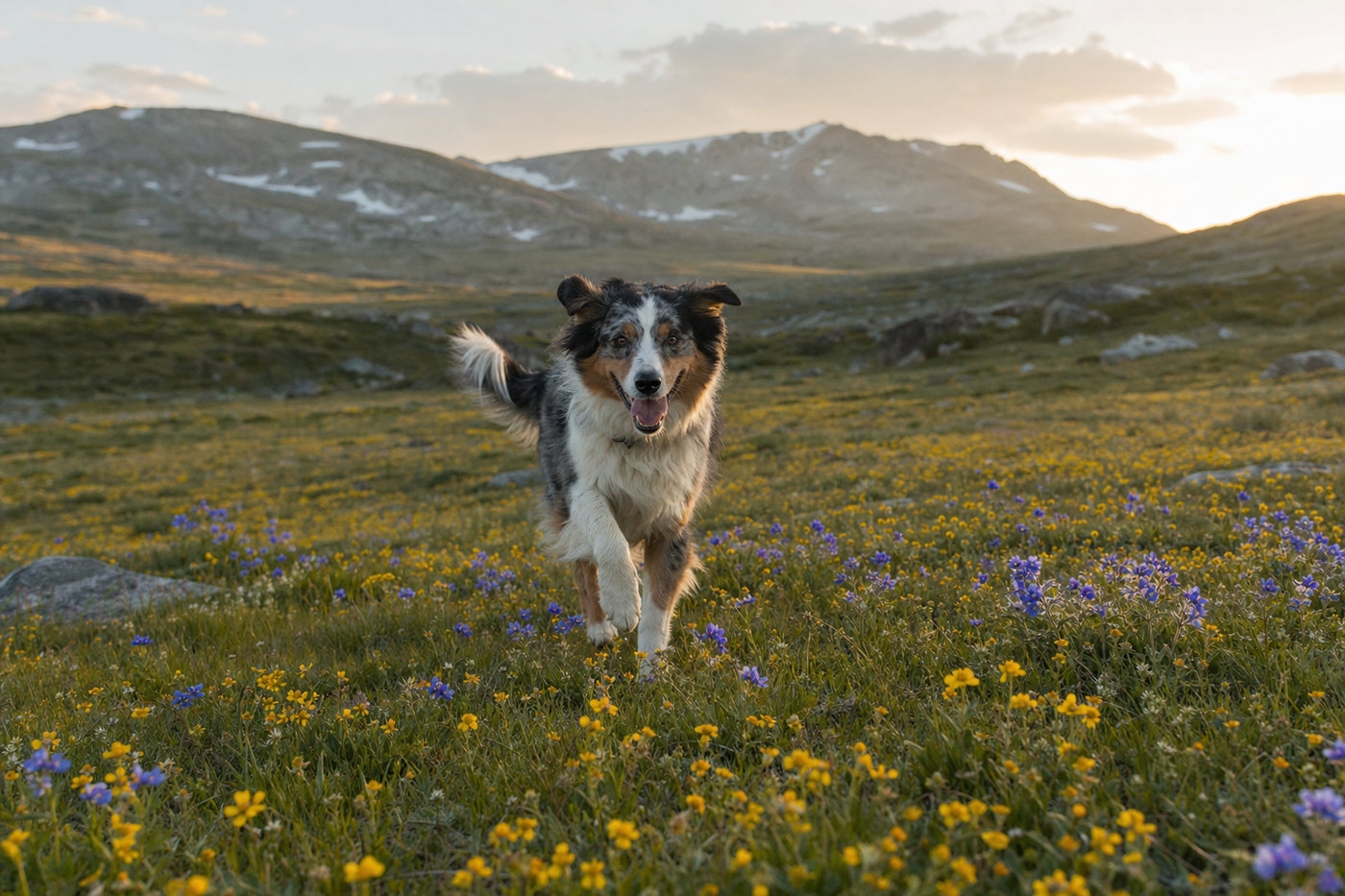
Australian Shepherds can develop heat stroke quickly in warm weather. Never ignore signs of excessive panting, drooling, lethargy, or uncoordinated movement. Seek immediate veterinary care if you suspect heat stroke.
Grass seeds, common throughout rural Australia during warmer months, can lodge between your dog's toe pads and cause serious infections. Check your dog's feet daily and remove any seeds immediately.
Why Australian Shepherds Need Different Travel Planning
Australian Shepherds are working dogs bred to herd livestock across long distances. Your Shepherd has energy levels that would tire out most other breeds, and this doesn't switch off just because you're on holiday. I learned this the hard way when I took my Shepherd, Bess, to a cabin in the Blue Mountains for a quiet weekend and she spent the entire first day pacing and whining because she had nowhere to work that energy out.
These dogs also struggle more than others with heat. Their thick double coat was designed for cooler climates, not Australian summers. Travelling with a Shepherd means planning around their exercise requirements and managing temperature constantly. You can't just pack them in the car at midday and expect them to be content in an air-conditioned vehicle for hours while you explore. Your travel itinerary needs to work for your dog first, and everything else second.
Managing Exercise While Travelling
Your Australian Shepherd needs at least two hours of purposeful exercise every single day, even when travelling. I'm not talking about a casual stroll through a shopping centre car park. I mean proper exercise: running, swimming, playing fetch, or working through training commands. When Bess and I travelled to Wilson's Promontory, I built our entire schedule around two dedicated exercise sessions each day, one in early morning and one in late evening.
Find destinations that naturally support this need. The Great Ocean Road offers countless beaches and walking tracks suitable for dogs. National parks often have dog-friendly walking trails, though you'll need to check each park's specific rules beforehand. Consider booking accommodation near running trails or open spaces. A property with a large fenced yard matters more than fancy amenities when you're travelling with a Shepherd. Look for farmstays or rural cottages where your dog can safely burn energy while you're nearby.
Heat and Climate Considerations
Australian Shepherds overheat faster than you might expect. Their thick coat doesn't regulate temperature well in hot weather, and they can't tell you they're struggling until it's serious. Never travel with your Shepherd between November and February unless you're heading to cooler mountain regions or Tasmania. Even then, manage timing carefully.
When you're out during the day, travel early. Leave accommodation by 7am and aim to finish outdoor activities by 11am. This gives you the whole afternoon to stay indoors with air conditioning or find shaded rest spots. Carry water constantly, and I mean a lot more than you think necessary. Bess goes through at least 3 litres on a moderate travel day. Freeze water bottles to use as cooling aids if your dog shows signs of heat stress: excessive panting, drooling, or lethargy. Never leave your Shepherd in a car, even with windows down. A car reaches dangerous temperatures within minutes in Australia.
Choosing Pet-Friendly Accommodation
Not all pet-friendly accommodation is actually suitable for a high-energy Shepherd. A small apartment that accepts dogs is different from a property where your dog can safely exercise and won't disturb neighbours. When I was planning a trip to the Adelaide Hills, I initially booked a townhouse that technically allowed dogs, but it had no yard and was in a complex with shared walls.
Instead, look specifically for rural properties, farmstays, or cabins where your dog has access to outdoor space. Check reviews from other dog owners, not just general reviews. Call the owners directly and ask about yard size, fencing height, and whether they've hosted similar working breed dogs before. Ask about nearby walking trails and open spaces. Confirm the cancellation policy in case your dog's behaviour or needs don't suit the property. Some owners advertise as pet-friendly but clearly aren't prepared for a dog that needs constant activity and space.
What we recommend
Some links below are affiliate links. Pawtrips may earn a commission at no extra cost to you.
Pet-friendly stays
Finding suitable accommodation is the foundation of successful travel with a Shepherd. This platform connects you with genuinely pet-friendly properties across Australia that have the space and resources your dog actually needs.
Training and Behaviour Before You Leave
An untrained Shepherd travelling across Australia is a disaster waiting to happen. Spend at least four weeks before your trip strengthening basic commands: sit, stay, drop it, and come. Your dog needs to respond reliably in new environments with distractions. The beach at Jervis Bay looks completely different from your local park, and your Shepherd's recall might fail when they see unfamiliar dogs or wildlife.
Work on car behaviour too. If your dog isn't used to car travel, start with short 15-minute trips and gradually build up. Your Shepherd should either travel in a harness or secured in a crate, never loose where they can distract you. Practise entering and exiting the car calmly. If your dog has any separation anxiety, work on this before travelling. A stressed Shepherd in unfamiliar accommodation with new neighbours will bark and destroy things. Even just practising staying calm in your car for 20 minutes while you're outside can help tremendously.
PitPat Dog GPS Tracker
When exploring new environments, a GPS tracker gives you real-time location data if your Shepherd escapes. No subscription required, making it practical for frequent travellers.
Safety, Documentation, and Health
Carry your dog's vaccination records, microchip registration documents, and a current photo. Many carparks, attractions, and accommodation require proof of vaccinations. Your Shepherd should be microchipped registered to your correct contact details. I've met travellers whose dogs escaped at rest stops in regional Queensland, and the only way they recovered their pets was through the microchip registry.
Visit your vet two weeks before travel. Get a health check, discuss any dietary changes you're planning, and ask about local veterinary clinics at your destination. Research where the nearest 24-hour emergency vet is located. Carry medications and supplements your dog normally takes, plus a few days extra. If your Shepherd has any health issues, travel with written instructions about their care. Pack a basic first aid kit including paw balm, antiseptic, bandages, and tweezers for removing grass seeds. Grass seeds can lodge between toe pads and cause infections, which is common during Australian summer travel.
Seresto Flea & Tick Collar for Large Dogs
Travelling through different Australian regions exposes your Shepherd to various flea and tick species. This collar provides eight months of continuous protection without monthly applications.
Road Trip Routes Perfect for Shepherds
Some Australian routes work better than others for travelling with an active Shepherd. The Great Ocean Road is excellent because you can stop every 30 to 40 kilometres at beaches and coastal walks. Port Campbell National Park has dog-friendly walking tracks, and the landscape provides natural variety that keeps dogs mentally stimulated. Tasmania is ideal if you're willing to fly: cooler temperatures, stunning walks, and fewer crowds than mainland destinations.
The Blue Mountains offer similar advantages for Sydney-based travellers. You get elevation that naturally keeps temperatures lower, plus dozens of walking tracks. Regional South Australia around the Barossa Valley and Adelaide Hills has farmstays with space and nearby trails. The problem routes are long stretches through inland Australia without good exercise opportunities. Don't plan road trips that involve more than six hours driving with only rest stops at servo car parks. Your Shepherd needs real exercise, not just bathroom breaks.
Kurgo Dog Food Travel Bag
Keeping your Shepherd's kibble fresh and protected while travelling is essential. This carrier keeps five pounds of food sealed and prevents contamination from moisture and insects in rural accommodation.
What to Pack for Your Travelling Shepherd
Pack more than you think you'll need. I bring duplicate bowls, leads, and toys in case something breaks or gets lost. Food is essential: bring your dog's regular kibble rather than switching to something new while travelling. A food storage container protects kibble from moisture and insects in rural accommodation. Bring collapsible bowls that don't take much space, but also a sturdy regular bowl for water indoors.
Include a dog bed or mat they're familiar with. Shepherds are smart and appreciate having something that smells like home, especially in new accommodation. Pack a grooming kit because their thick coat attracts burrs and grass seeds constantly. Toys should include puzzle toys and chew items for when your dog needs quiet time. A long training lead helps safely exercise your dog in open spaces where you're not certain about fencing. Don't forget flea and tick prevention appropriate to the regions you're visiting, and check with your vet about what's needed for different parts of Australia.
Plus early access to new guides and partner deals.
No spam. Ever. Just the good stuff for you and your pet.