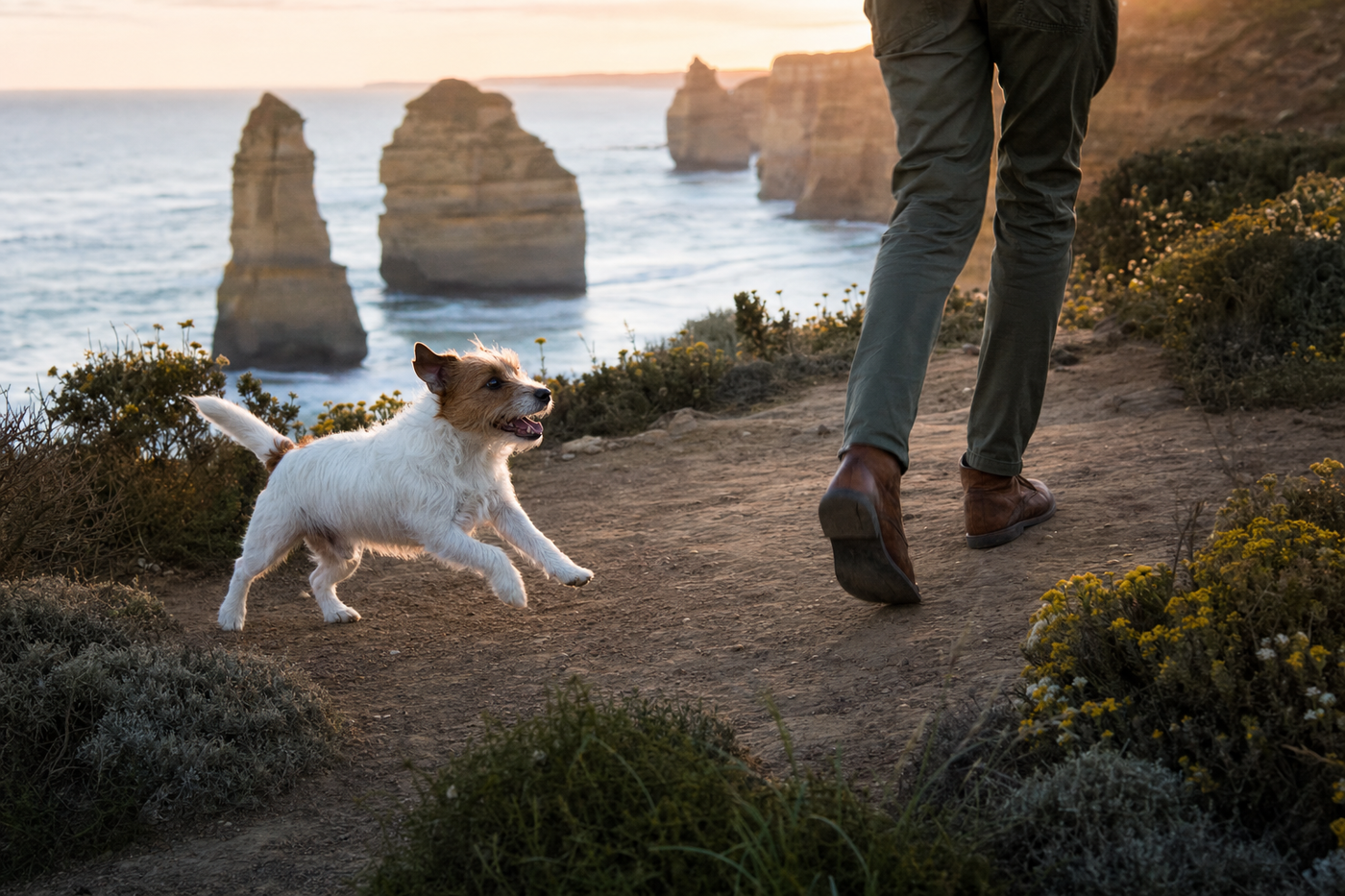
Heat stroke can be fatal to Jack Russells within minutes. Never leave your dog in a parked car, and monitor for excessive panting, drooling, or collapse during hot weather.
Jack Russells have high prey drive and will chase rabbits, possums, or native wildlife into danger. Keep your dog on-lead in all unfenced areas, including accommodation grounds and rest stops.
Why Jack Russells Make Brilliant Travel Companions
Jack Russells are compact, energetic, and endlessly entertaining on the road. Their small size means they fit into car seats and accommodation spaces that larger breeds cannot. I travelled from Brisbane to Byron Bay with my Jack Russell and discovered that locals often asked about her rather than avoiding her, which opened conversations and helped us meet other travellers.
These dogs thrive on activity and mental stimulation, so long drives actually suit them better than you might think. A bored Jack Russell at home will tear your furniture apart, but one on a road trip gets new smells, landscapes, and experiences every day. Your dog will sleep better at night after exploring new towns and hiking trails.
Their alert nature makes them excellent early-warning systems if someone approaches your van or caravan. Many campground owners told me they preferred Jack Russells to larger dogs because they take up less space and cause fewer disturbances when properly exercised.
Preparing Your Jack Russell for the Road
Start small before committing to long journeys. Take your Jack Russell on 30-minute drives around your local area first, then gradually extend to one-hour trips. This teaches your dog that car travel leads to fun destinations, not just vet visits. I made the mistake of only driving my dog to the vet for her first year, so she associated the car with anxiety.
Visit your vet two weeks before departure to check that your dog is healthy enough for travel. Jack Russells can have patellar luxation and heart issues, so your vet needs to confirm your dog can handle the stress of changing climates and routine. Ask for a health certificate if you plan to cross state borders or stay in accommodation that requires documentation.
Arrange microchipping and update your contact details on the National Pet Register. Ensure your dog's collar has an ID tag with your mobile number. Many dogs bolt at rest stops or unfamiliar accommodation, and a microchip has saved countless travelling dogs from becoming permanently lost.
What we recommend
Some links below are affiliate links. Pawtrips may earn a commission at no extra cost to you.
PitPat Dog GPS Tracker - No Subscription Needed
A GPS tracker lets you locate your Jack Russell instantly if they escape at a rest stop or unfamiliar accommodation. This device works without monthly subscriptions, making it perfect for travelling dogs in remote areas with unreliable mobile coverage.
Packing Essentials That Actually Matter
Bring double the food and water supplies you think you will need. Remote areas between towns like the Hume Highway have limited options, and your dog cannot eat unfamiliar brands without stomach upset. I learned this the hard way when my local pet store in Goulburn did not stock the grain-free kibble my dog ate, leaving me to ration supplies until we reached Melbourne.
Pack a portable first aid kit with tweezers for grass seeds, antiseptic cream, and bandages. Jack Russells love digging in sandy campsites and easily get grass seeds lodged between their toes. Include any regular medications, flea and tick treatments, and copies of vaccination records in a waterproof folder.
Bring toys that occupy your dog without excessive noise. Chew toys work better than squeaky toys when staying in shared accommodation. A portable dog bed gives your Jack Russell familiar comfort in unfamiliar rooms, which reduces anxiety and helps them settle faster at night.
Kurgo Dog Food Travel Bag: Kibble Carrier, 5 Pound
This carrier keeps your dog's kibble fresh and portable across long journeys without spillage. It prevents contamination from campsite dirt and insects while fitting easily into car boots alongside other travel gear.
Driving Long Distances Without Losing Your Mind
Never leave your Jack Russell unsecured in a moving vehicle. They can jump into the front seat, distract you, or suffer serious injury if you brake suddenly. A car harness that attaches to the seat belt keeps your dog safe and prevents escape attempts at rest stops.
Stop every two hours during hot weather and every three hours during cooler months. Jack Russells overheat quickly because of their compact size and high metabolism. Always have water available at rest stops, not just food. I stopped at a truck stop near Dubbo on a 35-degree day where my dog drank nearly a full litre of water she had not consumed that morning.
Exercise your dog at each stop if you have 15 minutes or more. A 200-metre walk around a rest area burns energy and helps your dog toilet before getting back in the car. Tired dogs sleep during driving, which means fewer distractions and a calmer journey overall.
Small dog booster car seat
A booster seat secures your Jack Russell safely during drives while providing visibility out the window. This reduces anxiety and keeps your dog from moving around the cabin during sudden stops or emergency braking.
Finding Pet-Friendly Accommodation in Australia
Not all pet-friendly places are actually friendly to energetic small dogs. Contact accommodation providers directly by phone rather than relying on online descriptions. When I booked a pet-friendly cabin near Canberra, the owner mentioned during our call that he preferred quiet dogs, which told me my vocal Jack Russell might not be welcome despite the pet policy.
Expect to pay between 15 and 35 dollars extra per night for dogs at most Australian motels and holiday parks. Some places charge a one-time pet fee rather than nightly fees, which saves money on longer stays. Book during shoulder seasons like April to May rather than school holidays when availability is tightest and prices peak.
Bring a portable water bowl and collapsible food bowl to keep accommodation clean. Use puppy pads inside the room as a backup toilet area during extreme heat or storms. Some accommodation owners mentioned they remembered well-behaved guests, so managing your dog's behaviour directly impacts whether they welcome pets in the future.
Pet-friendly stays
Book verified pet-friendly accommodation across Australia with confidence. This platform connects you with motels, cabins, and holiday parks that genuinely welcome Jack Russells and small dogs.
Managing Energy and Behaviour in Unfamiliar Spaces
Jack Russells have prey drive bred into their DNA over centuries of hunting rabbits and foxes. Never let your dog off-lead in unfenced areas, even briefly at petrol stations or accommodation grounds. I watched a Jack Russell chase a rabbit across the Hume Highway near Yea because the owner believed a quick toilet break could happen without a lead. The dog did not get hit, but the owner aged a decade in ten seconds.
Exercise your dog heavily each morning before exploring new towns. A tired Jack Russell settles in accommodation and does not bark excessively at new sounds. I started doing two-kilometre walks before breakfast on my travels, which transformed my dog from anxious and vocal to calm and content by afternoon.
Use positive reinforcement when your dog behaves well in new environments. Reward quiet moments in the car and calm behaviour in accommodation with treats or play. Jack Russells respond to enthusiasm and praise far better than corrections, so celebrate every instance of good behaviour during travel.
Health and Safety on the Road
Heat is the biggest danger Jack Russells face while travelling. Never leave your dog unattended in a car, even with windows cracked open. The temperature inside a car parked in sunshine reaches dangerous levels within minutes. On a 25-degree day, the interior temperature can exceed 40 degrees in under 10 minutes. I learned this sitting in the car myself for three minutes while my dog waited, and I was uncomfortable after that short time.
Watch for signs of dehydration like dry gums, lethargy, or excessive panting. Offer water frequently and seek shade during hot parts of the day. Many regional vets across Australia are excellent and understanding about travelling dogs, so research vet clinics near your accommodation in case your dog needs urgent care.
Ticks are common in coastal and forested areas across eastern Australia. Check your dog's coat daily, particularly around the ears, neck, and between toes. Flea and tick prevention is non-negotiable when travelling, especially in warmer months from October to April.
Seresto Flea & Tick Collar for Large Dogs Over 8kgs
This long-lasting flea and tick collar protects your Jack Russell throughout extended road trips without monthly applications. It works for eight months, covering entire travelling seasons across Australia's tick and flea regions.
Day Trips and Exploring From Your Base
Use regional towns as bases for day trips rather than moving accommodation every night. Staying in one spot for two to three nights lets your dog adjust to their surroundings and reduces stress from constant change. We based ourselves in Coffs Harbour for four nights and explored the hinterland, beaches, and national parks from that location, which exhausted the dog and made her sleep through the nights.
Many Australian walking trails are dog-friendly, but check restrictions beforehand. National parks often have leash requirements and specific trail closures during nesting seasons. The website for Parks Australia clearly outlines dog policies for each park, which saved me wasted trips to locations where dogs were not permitted.
Beach holidays work brilliantly for Jack Russells because swimming provides excellent low-impact exercise. Even 30 minutes of swimming in the ocean burns as much energy as two hours of land-based running. Many regional beaches have seasonal dog bans, so visit during shoulder seasons or check local council websites for dog-friendly beach times and locations.
Plus early access to new guides and partner deals.
No spam. Ever. Just the good stuff for you and your pet.