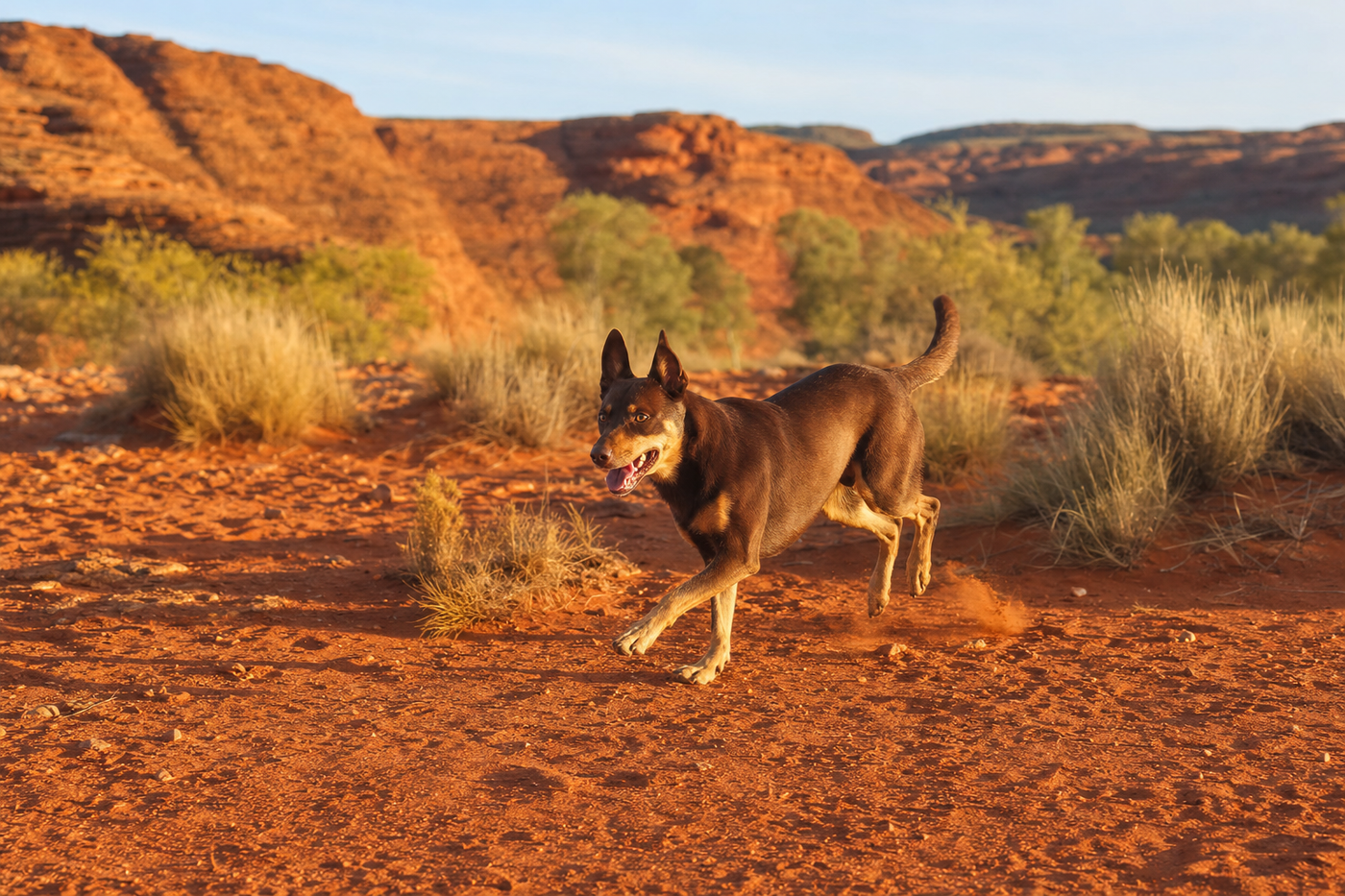
Kelpies can develop heatstroke within minutes in hot cars. Never leave them unattended in vehicles, even with windows down or air conditioning on.
Kelpies have a strong herding drive and may nip at children or chase other animals. Always use a long lead in shared spaces and inform accommodation hosts about this breed behaviour.
Why Kelpies Are Different From Other Travel Companions
Australian Kelpies were bred to work stock across harsh Australian terrain for eight to ten hours a day. They don't have an off switch like some other breeds do. Taking a Kelpie on holiday means you're committing to their exercise needs every single day, no matter how tired you are from driving.
I learned this the hard way on my first trip with my Kelpie, Max, from Brisbane to the Sunshine Coast. I thought a two-hour car ride would tire him out. Instead, Max bounced around the rental accommodation all evening because he hadn't done any real work. Kelpies need mental and physical stimulation combined. A walk alone won't cut it. They need to solve problems, chase things, and feel like they've accomplished something.
This breed also has a strong herding instinct, which means they'll try to herd other dogs, children, and even cars if they get the chance. Before you book accommodation, understand that your Kelpie will treat other pets as something to manage. They're intensely loyal to their people but suspicious of strangers. This affects how they'll behave in shared spaces or around other guests at pet-friendly stays.
Managing Exercise on Long Road Trips Across Australia
If you're driving from Sydney to Melbourne, that's roughly 900 kilometres and nine hours in the car. Your Kelpie can't sit in a crate that whole time and then be fine with a quick toilet break. I've done this drive with my dog, and I learned to break it into manageable chunks.
Plan stops every two to three hours, not just for toilet breaks but for proper exercise. Find a dog park or open space where your Kelpie can actually run and play fetch for thirty minutes. The Canberra area has excellent dog parks like Molonglo Reach and Tuggeranong. These breaks cost you time but save you from arriving at your destination with a destructive, anxious dog.
Bring a portable tennis ball launcher or a flirt pole if you're driving through regional areas where enclosed spaces are hard to find. A flirt pole lets your Kelpie chase and work in a confined space, which satisfies their herding drive without needing acres of land. I keep one in my car boot along with three tennis balls and a collapsible water bowl. Early mornings and late afternoons are your friends on long drives. Leave at 5 AM and drive until 11 AM, rest during the hottest part of the day, then drive again from 4 PM until sunset.
Heat, Hydration, and Why Cars Kill Kelpies in Summer
Australia gets genuinely hot. I'm talking 35 to 40 degrees Celsius in places like central Queensland or the Northern Territory. A car parked in the sun reaches 60 degrees Celsius within minutes. Kelpies have a double coat that doesn't regulate temperature well in extreme heat. They can't tell you they're overheating until it's too late.
Never, under any circumstances, leave your Kelpie in a car while you grab coffee or do shopping. Not for five minutes. Not with the windows down. I watched a dog collapse outside a cafe in Townsville because its owner thought it would be fine for ten minutes. It wasn't fine. The dog spent the night at an emergency vet clinic.
If you're travelling in summer, adjust your entire schedule around heat. Drive at night between 7 PM and 6 AM if possible. Stay in air-conditioned accommodation. Pack enough water to fill a 20-litre container. Kelpies working in the field drink two to three litres daily, but in a car and hotter climate, they need more. Bring a portable water cooler, not just bottles. Set up shaded rest areas at your stops. Your Kelpie should never be panting heavily. If they are, cool them down immediately and reassess your travel plan.
What we recommend
Some links below are affiliate links. Pawtrips may earn a commission at no extra cost to you.
Seresto Flea & Tick Collar for Large Dogs Over 8kgs
Eight months of continuous flea and tick protection means you won't need monthly applications while travelling across different Australian regions. Ticks carry serious diseases in Australia, and Seresto provides consistent coverage without the hassle of remembering doses on the road.
Finding Pet-Friendly Accommodation That Won't Be Trashed
Most pet-friendly stays will accept a Kelpie, but many owners assume their dog will be happy on a bed indoors watching the world go by. Kelpies need to work. If your accommodation doesn't have a fenced yard where your dog can move around freely, you're setting yourself up for trouble.
When I book accommodation for Max, I specifically request places with secure fencing and outdoor space. Airbnb listings often have this information, but always contact the host first. Ask if the fence is Kelpie-proof, meaning it's at least 1.5 metres high and well-maintained. Ask if there are other dogs living nearby that your Kelpie might obsess over.
Cottages in areas like the Blue Mountains, Coffs Harbour, and Margaret River in Western Australia often have proper gardens. These are better than hotels for a working breed. Bring toys that require problem-solving. A Kong filled with frozen peanut butter keeps a Kelpie occupied for an hour. Puzzle feeders slow down their eating and give them mental work. The Australian Dog Lover's Guide lists farms and rural stays designed for active dogs. These places understand what a Kelpie needs and won't charge extra for normal dog wear and tear.
PitPat Dog GPS Tracker - No Subscription Needed
Kelpies are escape artists with a strong prey drive. This GPS tracker works across Australia without monthly subscriptions, giving you real-time location if your dog bolts in an unfamiliar area. It's lighter than a collar and lasts five days between charges.
Managing Their Herding Drive Around Other Guests and Animals
Kelpies see movement and feel compelled to control it. A child running past your accommodation isn't just a child; it's livestock to be managed. Your Kelpie will nip at heels, jump at the kid's hands, or chase them across a garden. This isn't aggression. It's instinct. But it terrifies other guests and sometimes results in your dog being asked to leave.
I travel with Max to pet-friendly caravan parks often. Once, he started herding a family's children away from their dog. The kids weren't scared, but the parents were furious. I had to spend thirty minutes explaining breed behaviour while keeping Max separated. Now I book accommodation where Max has his own space and isn't near families with young children or multiple other pets.
Set clear boundaries with your Kelpie before you arrive anywhere new. Teach a solid recall command before you travel. Practice it constantly. Your Kelpie should come back to you instantly when called, even if something interesting is happening. Use a long lead (5 to 10 metres) at caravan parks and shared spaces. This gives your dog space to move around without them being able to chase or herd other people's children or pets. Tell accommodation hosts upfront that your dog has herding instincts and will need clear space away from other guests during downtime.
Essential Gear and What You'll Actually Need on the Road
I've travelled with Max across five Australian states, and I've learned what fits in a car and what actually gets used. A regular dog bed won't do. Get a washable, durable mat because it will get dirty, wet, and stinky. Pack a grooming kit because Kelpies shed constantly, and your rental car doesn't deserve weeks of hair in the upholstery.
Bring a first aid kit specifically for dogs. Include antiseptic, gauze, paw balm, and pain relief. Kelpies working through rough terrain can cut their paws. The nearest vet might be two hours away in regional areas. I learned this when Max stepped on a sharp rock near Uluru. The cut got infected because I didn't have proper supplies to clean it immediately.
Pack their regular food in airtight containers. Switching food while travelling causes digestive upset. Bring enough for the entire trip plus a few extra days. Get a collapsible water bowl because it takes up almost no space. A portable GPS collar like the PitPat gives you peace of mind if your Kelpie escapes. In rural areas, a dog can disappear into scrubland within seconds. The PitPat works without monthly subscriptions and covers most of Australia's populated areas. Get ID tags made before you leave home with both your regular number and a mobile number for the state you're visiting.
Kurgo Dog Food Travel Bag: Kibble Carrier, 5 Pound
Keeps your Kelpie's food sealed and fresh without taking up boot space. The measuring cup built in makes feeding consistent at different accommodation stops, which helps avoid digestive issues during long trips.
Choosing Routes and Destinations Suited to Active Kelpies
Not all Australian destinations suit Kelpies equally. Beach towns like Byron Bay, Noosa, and Port Macquarie are wonderful because many beaches allow dogs before 9 AM and after 5 PM. These give your Kelpie space to run, swim, and genuinely exercise without worrying about other people.
National parks can be tricky. Many don't allow dogs on walking tracks, which defeats the purpose of visiting with a working breed. The Blue Mountains has some dog-friendly trails, but you need to research which specific trails allow dogs. Lamington National Park near Brisbane has dog-friendly walking areas. Before you drive six hours to a location, ring ahead and confirm what activities your Kelpie can actually do there.
Cottage rentals on farms in places like the Barossa Valley, Hunter Valley, or the Limestone Coast give Kelpies proper work. Some farm stays let your dog help muster sheep or cattle, which is what they were born to do. These experiences tire them out in ways a beach walk never will. Regional towns often have quieter spaces and friendlier locals who understand working dogs. The pace is slower, which suits a Kelpie's need for routine and structure better than a fast-paced city holiday.
Pet-friendly stays
Browse accommodation across Australia that's specifically suited to active dogs like Kelpies. Filter by fenced yards, rural properties, and farm stays where your Kelpie can work and exercise properly.
Health Checks, Vaccinations, and Tick Prevention Before You Leave
Before you travel anywhere in Australia, get your Kelpie checked by a vet. Long car trips in heat stress a dog's body. If your Kelpie has any underlying health issues, a vet needs to know before you head interstate. I took Max for a check-up before a trip to Tasmania and found out he had a minor heart murmur that could be affected by stress and heat. That information changed my entire travel plan.
Make sure vaccinations are current and you have proof in writing. Different states have different requirements, especially if you're crossing borders. Your vet should also provide tick prevention suitable for the areas you're visiting. Australian ticks carry serious diseases. Seresto collars provide flea and tick protection for eight months, which covers most extended road trips without needing monthly applications.
Get a health certificate from your vet dated within ten days of travel if you're crossing state borders. Keep records of your dog's microchip number. If your Kelpie escapes in an unfamiliar area, that microchip is the only way they'll be returned to you. Microchip registries differ by state. Make sure your Kelpie is registered in every state you'll be visiting. This takes fifteen minutes online and costs nothing.
Plus early access to new guides and partner deals.
No spam. Ever. Just the good stuff for you and your pet.