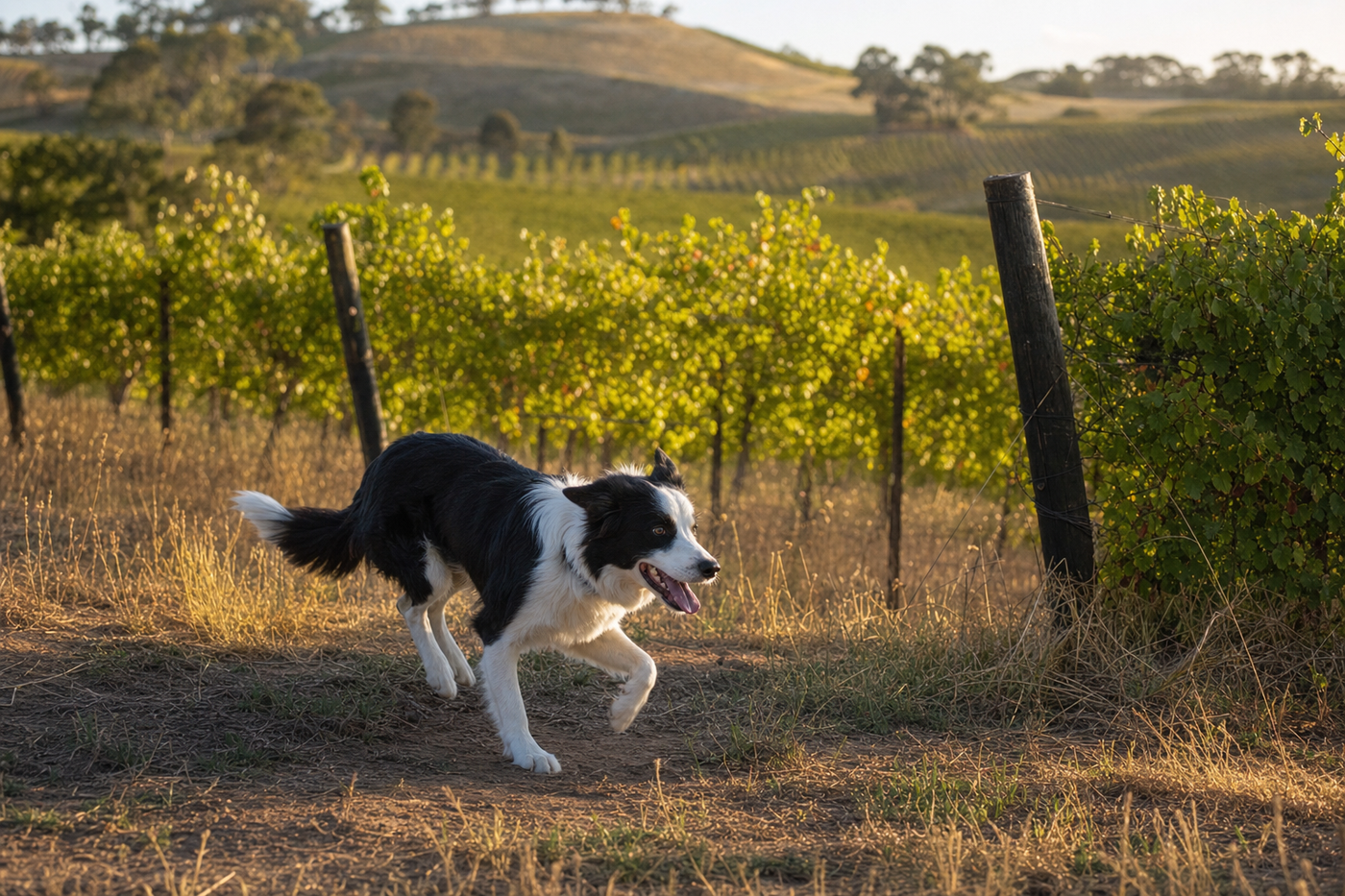
Heat stroke kills dogs rapidly in Australian conditions. Never leave dogs in parked vehicles and avoid peak heat hours (11am to 3pm) when travelling in summer.
Border Collies can escape from seemingly secure areas due to their intelligence and athleticism. Always use leads in unfamiliar properties and verify fencing before allowing any off-lead time.
Why Border Collies Need Different Travel Planning
Border Collies aren't like other dogs when it comes to travel. These working dogs were bred to herd sheep across Scottish hills for 12 to 14 hours a day, so their brains expect constant mental and physical stimulation. A bored Border Collie on a long car journey becomes destructive, anxious, and difficult to manage. They'll chew seats, bark excessively, and find ways to escape if given the chance.
When I travelled from Melbourne to the Great Ocean Road with my Border Collie, I learned this lesson the hard way. I thought a few pats and treats would keep her calm. Instead, she whined constantly, tried to jump out the window, and needed a toilet break every 30 minutes because of anxiety. The moment I started planning proper exercise, mental enrichment, and structured rest periods, the entire trip transformed. What should have been a five-hour drive became manageable because I understood her needs.
Exercise Requirements Before and During Travel
You must exercise your Border Collie before any long journey. A tired dog is a calm dog. I aim for 45 minutes to an hour of intense exercise before a drive. This means fetch, running, or herding games, not just a casual walk around the block. Take them to a dog park for 30 to 45 minutes before leaving home and let them run until they're genuinely tired, not just panting.
During travel itself, schedule 15 to 20 minute breaks every 1.5 to 2 hours. Stop at dog-friendly rest areas or parks, not just service stations. At the Lancefield Rest Area between Melbourne and Ballarat, they have a designated dog area where your Border Collie can stretch and sniff properly. Keep a long lead with you so they can move around safely. Mental enrichment during breaks matters too: let them sniff different grass, explore new smells, and engage with the environment. This stimulation helps them settle during the next driving segment.
Managing Heat Stress in Australian Climates
Australia's heat kills dogs. Border Collies have thick double coats that trap heat, making them particularly vulnerable in summer travel. Never leave your dog in a parked car, even for five minutes with windows down. The temperature inside a car can reach 60 degrees Celsius on a 25-degree day. I've seen dogs collapse from heat stroke in under ten minutes.
Travelling during cooler months (April to September) makes sense if possible. If you must travel in summer, drive early morning or late evening when temperatures are lower. Use air conditioning in your vehicle and keep a portable fan running to maintain airflow around your dog. Invest in a cooling mat for your car or accommodation, especially in hot regions like inland Queensland or northern New South Wales. Offer water constantly. Collapsible water bowls are invaluable because you can offer drinks at every stop without needing to find facilities.
What we recommend
Some links below are affiliate links. Pawtrips may earn a commission at no extra cost to you.
PitPat Dog GPS Tracker - No Subscription Needed
Border Collies are intelligent escape artists who can disappear into bushland or unfamiliar territory quickly. This GPS tracker provides real-time location data without ongoing subscription fees, making it invaluable for tracking your dog if they bolt from accommodation or during off-lead time in new environments.
Accommodation Selection for High-Energy Dogs
Not all pet-friendly accommodation suits Border Collies. You need properties with secure fencing and space for exercise, not just somewhere that allows dogs. A small motel room with no yard will drive your Border Collie mad after an hour. When booking, ask specific questions: Is there a fenced yard? What's the size? Are there dog parks nearby? Does the property allow extended time outdoors?
I've learned to check accommodation websites carefully before booking. Coffs Harbour has several pet-friendly properties with large gardens and nearby beaches where Border Collies can run safely. The same applies to regional Victoria around Daylesford and Macedon Ranges. Some holiday homes on Airbnb specifically mention large properties with dog amenities, and these tend to work better than traditional hotels. Always confirm the property can accommodate your dog before paying. I once arrived at a "pet-friendly" place in Ballarat to find it was only suitable for small dogs. Having a backup second option saved that trip.
Pet-Friendly Accommodation Australia
Choosing the right accommodation makes or breaks a Border Collie trip. Finding properties with secure fenced yards and nearby exercise areas prevents behavioural issues and anxiety. Book before you leave to ensure the space suits your high-energy dog's needs.
Managing Anxiety and Separation Issues During Trips
Border Collies bond intensely with their owners and develop separation anxiety if left alone unfamiliar environments. They'll bark, destroy things, and stress significantly. If you're staying somewhere for more than a day, your dog still needs companionship during the day or proper crate training to feel secure.
Create a familiar space in your accommodation. Bring their own blanket or bed from home so the smell provides comfort. Set up a crate if your dog is crate-trained, as this creates a den-like safe space. Leave the crate door open so they choose to rest inside. Puzzle toys and long-lasting chews keep their mind occupied if you need to step out briefly. In my experience, Border Collies settle better when they have a predictable routine in new places. Morning exercise, midday rest in their familiar bed, afternoon activity, evening walk, and early bedtime help them adjust. Anxiety collars designed for dogs can provide calming support during stressful travel situations, and many owners report improvements in behaviours like excessive barking and destructive tendencies during trips.
Dog Separation Anxiety Collar, Four Pack
Border Collies are prone to separation anxiety when travelling to new places. This collar provides calming support through pheromone technology, helping reduce stress-related behaviours like excessive barking and destructive chewing during trips. Having four collars means you can replace them throughout extended travels.
Health and Preventative Care While Travelling
Border Collies travelling across Australia face exposure to fleas, ticks, and parasites they might not encounter at home. Starting preventative treatment before travel is essential, not optional. Seresto collars protect against fleas and ticks for up to eight months and are worth the investment for extended trips or holidays in rural areas.
Carry copies of your dog's vaccination records and microchip details. Know where emergency vet clinics are in regions you're visiting. Keep a basic first aid kit with bandages, antiseptic, and pain relief. Border Collies are prone to hip dysplasia and joint issues, so avoid excessive jumping in and out of vehicles. Use ramps or steps to reduce impact on their joints. Monitor their paws regularly, as travelling on different terrain like sandy beaches or rocky trails can cause cuts or wear. Dehydration causes serious problems during travel, so ensure constant access to clean water. If your dog shows signs of illness like vomiting, excessive panting, or lethargy, stop travelling and seek veterinary care immediately.
Seresto Flea & Tick Collar for Large Dogs Over 8kgs
Border Collies travelling across different Australian regions face exposure to fleas and ticks they might not encounter at home. This collar provides eight months of continuous protection, making it ideal for extended travel covering multiple climate zones without needing monthly applications.
Training and Recall Skills for Unfamiliar Environments
A Border Collie without reliable recall is a danger to itself and others when travelling. Your dog will encounter new distractions: different dogs, wildlife, interesting smells, and unfamiliar terrain. If they bolt, they might disappear into bushland or get hit by traffic. Before any trip, spend two weeks reinforcing basic commands like "come", "sit", and "stay" in your home environment. Then practice these commands in increasingly distracting settings like local parks with other dogs present.
When travelling, maintain a long lead even in dog parks. Some properties claim to have secure areas that aren't fully reliable. I've seen gaps in fencing that look small to humans but are perfect escape routes for determined dogs. Never assume unfamiliar property is secure. Use the lead until you've thoroughly checked boundaries. Keep your dog's microchip and ID tag current before leaving, and take a clear recent photo of your Border Collie in case they go missing. GPS trackers designed for dogs provide real-time location data, which is invaluable if your dog escapes in unfamiliar territory like Grampians National Park or coastal regions where bushland is dense.
Grooming and Coat Maintenance Across Different Regions
Border Collie coats require regular maintenance, and travelling through different Australian climates adds complexity. Moving from Melbourne's cooler weather to tropical humidity in far north Queensland changes how their coat behaves. More shedding occurs in warmer climates, and mats develop faster in humid regions. Brush your Border Collie every two to three days while travelling, not just weekly at home. Bring a quality grooming kit with you.
Regular grooming prevents matting, allows you to check for skin issues, ticks, or injuries, and keeps your dog more comfortable in heat. A mobile grooming kit makes this easier in accommodation without running water access. Beach travel introduces salt and sand, which irritate skin and cause matting. Always rinse your Border Collie thoroughly after beach visits and brush the coat before it dries. If you're travelling for three weeks or longer, budget for a professional grooming session halfway through. This is especially important in hot regions where regular grooming prevents heat stress and skin infections. A good grooming routine also helps your dog feel fresh and calm after long travel days.
oneisall 4 in 1 Dog Grooming Kit
Border Collie coats mat quickly when travelling through humid climates and require regular maintenance between professional grooming. This portable grooming kit lets you brush, trim, and maintain your dog's coat in accommodation without access to professional services, essential for three-week or longer trips.
Plus early access to new guides and partner deals.
No spam. Ever. Just the good stuff for you and your pet.