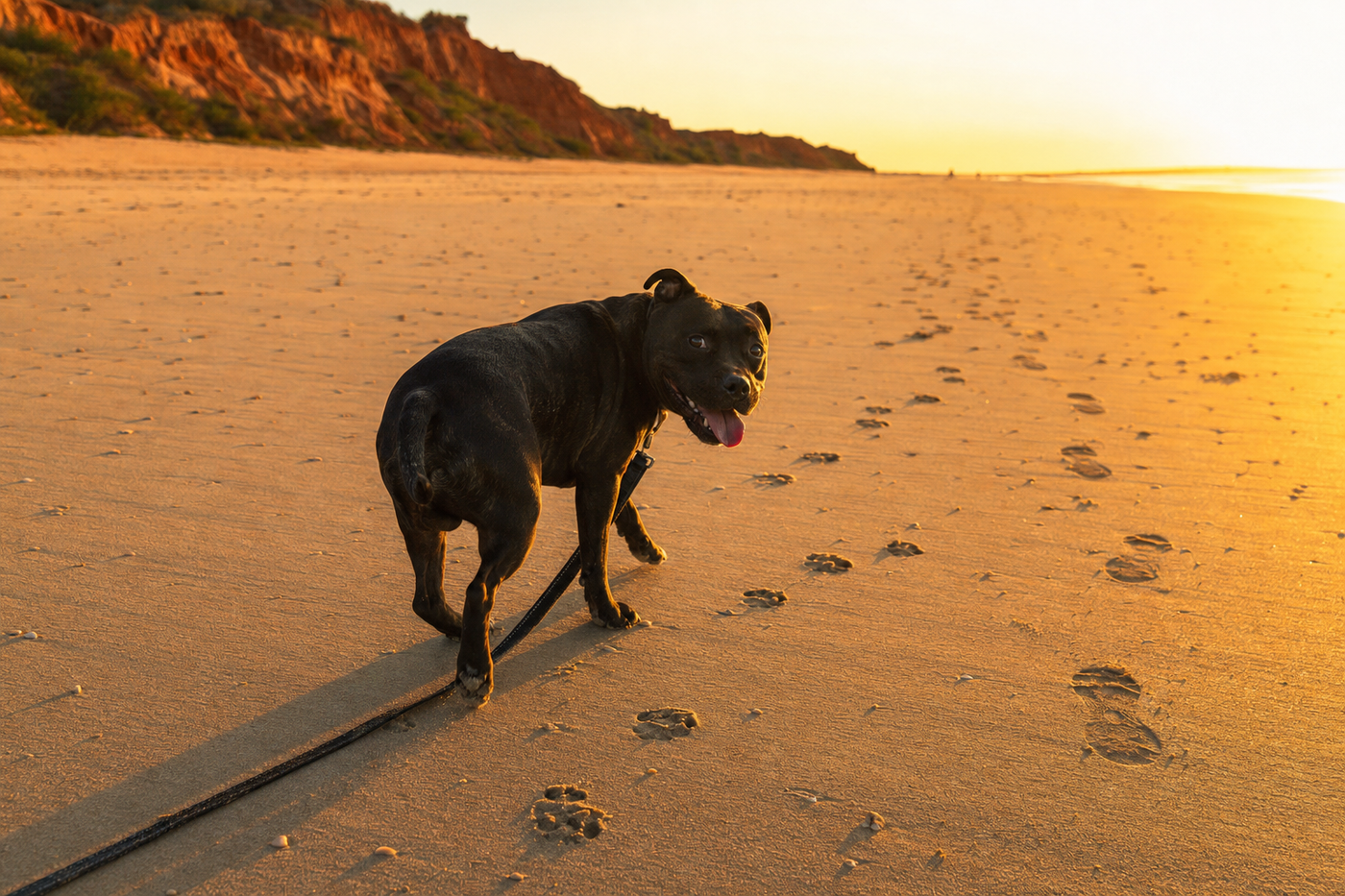
Non-compliance with breed-specific legislation can result in your dog being confiscated and euthanised in extreme cases. Fines range from 500 to 5000 dollars depending on the state.
Border checkpoints in NSW and Queensland actively check dog documentation. Border rangers have authority to confiscate dogs and issue fines on the spot if paperwork is not in order.
Why Breed-Specific Laws Matter for Travelling Pet Owners
I learnt this lesson the hard way when I tried to cross the Queensland border with my American Staffordshire Terrier mix named Rusty. A ranger at the checkpoint asked for his paperwork and suddenly my weekend trip to the Gold Coast became a stressful afternoon of phone calls. Breed-specific legislation, or BSL, exists across Australian states and territories with different rules applying in each location.
Your dog might be perfectly legal in Sydney but restricted or banned in Brisbane. These laws determine whether your dog can travel into certain areas, whether muzzles are required, and what paperwork you need to carry. Understanding BSL before you pack the car saves you from fines, confiscation, or being turned away from pet-friendly accommodation.
The rules are not straightforward because local councils often apply stricter rules than their state government. A council in outer Melbourne might ban a breed that the Victorian state government allows. This means you need to check three levels of regulation: state law, council local laws, and sometimes individual business policies for accommodation.
New South Wales: Strict Rules and Mandatory Muzzles
New South Wales has one of Australia's toughest breed-specific regimes. The state bans Pit Bull Terriers outright, meaning you cannot legally own, breed, or transport one across NSW borders. If you own a dog listed as dangerous or restricted, you must register it with your local council, and registration costs between 150 and 200 dollars per year.
Dangerous dogs in NSW must wear a muzzle in public at all times. This applies to breeds like Rottweilers, Japanese Tosas, Dogo Argentinos, and Fila Brasileiros. The muzzle must be properly fitted and allow the dog to drink water, so you cannot just use any old muzzle you find online.
When I travelled to the Central Coast with a friend whose Rottweiler had dangerous dog status, we had to carry council paperwork proving the dog was registered and desexed. Even pet-friendly holiday parks on the coast checked this documentation. The local council in Gosford actually has a more restrictive list than the NSW government, so always call ahead before booking accommodation.
What we recommend
Some links below are affiliate links. Pawtrips may earn a commission at no extra cost to you.
Dog Microchip and ID Tag
Microchipping is legally required in most Australian states and councils, especially for restricted breeds. Having your contact details registered with your dog's microchip and on an ID tag means you can be contacted immediately if your dog is confiscated or found during travels.
Victoria: Restricted Breeds and Registration Costs
Victoria bans Pit Bull Terriers and also restricts several other breeds including Rottweilers, Japanese Tosas, Dogo Argentinos, and Brazilian Filas. Unlike NSW, Victoria does not automatically require muzzles for restricted breeds, though individual councils might enforce this rule. The Department of Fairness, Jobs and Local Government maintains the official prohibited list.
If you own a restricted breed in Victoria, you must obtain a permit from your council, desex your dog, arrange appropriate housing, and maintain third-party liability insurance of at least 10 million dollars. The permit process takes four to six weeks, so you cannot just decide to travel spontaneously with a restricted breed.
Melbourne councils like Moonee Valley have their own additional breed restrictions beyond the state list. I know a dog owner in Docklands who had to rehome her French Bulldog cross because the council deemed it a restricted breed based on appearance rather than actual lineage. Before booking a trip to Victoria, ring the local council in the area where you plan to stay. They can tell you exactly what applies to your dog.
Queensland: Dangerous Dogs Scheme and Transport Rules
Queensland's dangerous dog legislation focuses on individual dog behaviour rather than breed alone, which sounds more flexible than it actually is. The state does restrict certain breeds including Pit Bull Terriers, but a council can declare any dog dangerous based on appearance, size, or history. Once declared dangerous, your dog needs registration, muzzling in public, and secure housing.
Transporting a restricted breed into Queensland is complicated. You need an import permit from the Department of Agriculture and Fisheries before bringing a restricted breed across the border, and permits take several weeks to process. The dog must be microchipped, vaccinated against rabies if imported from overseas, and travel in an approved container.
I attempted to drive from NSW to the Sunshine Coast with a Staffordshire Bull Terrier once and got stopped at the border near Tweed Heads. The ranger explained that even if my dog was legal in NSW, Queensland considered it potentially dangerous and required paperwork I did not have. The experience cost me a cancelled booking and an extra night in Coffs Harbour. Call the Queensland Department of Agriculture and Fisheries at least four weeks before travelling if your dog might be affected.
Dog Muzzle for Breed-Specific Legislation Areas
If you travel to NSW or Victoria with a restricted breed, a properly fitted muzzle is mandatory in public. Quality muzzles allow drinking and panting while meeting legal standards across all states that require them.
South Australia, Western Australia, and Tasmania: Regional Variations
South Australia bans Pit Bull Terriers and restricts Rottweilers and Japanese Tosas. Restricted dogs need council registration, mandatory desexing, and third-party liability insurance. Adelaide councils enforce these rules strictly, and accommodation providers often ask for council registration papers before accepting restricted breeds.
Western Australia also prohibits Pit Bull Terriers and restricts other breeds. The Dangerous Dogs Act applies across the state, though individual local governments can impose stricter rules. Perth and surrounding councils have varying policies, so a breed that is legal in Fremantle might be restricted in Armadale.
Tasmania is the most relaxed of the three, with no breed-specific bans statewide. However, Hobart and Launceston councils can still declare individual dogs dangerous based on behaviour or appearance. Tasmania's isolation means you cannot simply drive across a border with a restricted breed like you might between NSW and Victoria. If you are flying to Tasmania with a dog, check airline restrictions alongside breed laws.
These states rarely check at borders like NSW and Queensland do, but that does not mean the rules do not apply. Accommodation providers and council rangers can still enforce restrictions if they discover your dog is restricted. Always check with the destination council before booking.
Personalised Dog Collar with Contact Number
A collar engraved with your phone number provides immediate identification if your dog is questioned by rangers or found by strangers. This backup to microchipping has saved dogs during border checks when microchip readers were unavailable.
ACT and Northern Territory: Different Systems Entirely
The Australian Capital Territory has its own legislation separate from NSW, even though Canberra is surrounded by New South Wales. The ACT restricts certain breeds and requires registration, but the process is different from NSW. Canberra councils like Belconnen and Tuggeranong have their own variations on breed restrictions.
The Northern Territory has minimal breed-specific legislation compared to southern states. Darwin and Alice Springs do not maintain restrictive breed lists like Victoria or NSW. However, the NT does have dangerous dog declarations based on individual dog behaviour, and councils can restrict any dog deemed dangerous.
If you are travelling to Canberra with a restricted breed, contact the ACT Gambling and Racing Commission which oversees dog registration. For NT travel, ring the local council in Darwin or Alice Springs depending on where you plan to stay. Neither territory is as strict as NSW or Victoria, which makes them slightly easier for travelling with certain breeds. That said, always confirm with your specific destination council rather than assuming relaxed rules mean no rules at all.
Pet Travel Kit
A complete travel kit keeps your dog comfortable during long interstate drives and helps you stay organised with documentation, water bowls, and emergency supplies needed for stress-free travels across state borders.
Essential Documents and Paperwork to Carry
When I started travelling across states with my dog, I created a folder containing council registration papers, vaccination certificates, microchip details, and proof of desexing. This simple step saved me hours of stress at border checks and accommodation inquiries.
Carry your dog's council registration certificate because councils in different states recognize registration from other councils as proof the dog is legitimate. Vaccination records should be current, including rabies vaccination if your dog has received it. A microchip printout with your contact details helps if your dog is seized for any reason.
For restricted or dangerous dogs, carry written proof of desexing from your veterinarian. Some councils require an actual desexing certificate rather than just the vet's word. If your dog wears a muzzle due to legislation, have a letter from your council explaining why it is required. Keep these documents in a plastic folder in your car or bag, separate from other paperwork so you can produce them quickly if asked.
Take photos of your dog from multiple angles showing distinctive markings. If a ranger disputes whether your dog is actually a restricted breed, photos can help prove your dog is a different type. One traveller I met had a Staffordshire Bull Terrier declared a Pit Bull by a ranger; photos showing the dog's actual characteristics helped sort out the confusion.
Pet-Friendly Stays Compliant with Local Laws
Pawtrips vets accommodation providers to ensure they understand breed-specific legislation in their area and accept your dog legally. Booking through verified pet-friendly providers eliminates the risk of last-minute cancellations due to breed restrictions.
Planning Pet-Friendly Trips Across State Lines
Before booking any interstate trip with your dog, I now follow a three-step process. First, I identify which councils I will travel through or stay in. Second, I check each council's breed restrictions and registration requirements online. Third, I call the council directly to confirm my specific dog is allowed and ask about local variations.
Many pet-friendly accommodation providers do not fully understand breed-specific legislation in their own state. I called a dog-friendly hotel in Brisbane only to be told my dog was welcome, but when I arrived they realized he was restricted and turned us away. Now I ask specifically about breed restrictions when booking, not just whether dogs are allowed.
Consider travelling during off-peak times when accommodation providers are more flexible and less likely to enforce rules strictly. Mid-week trips in shoulder seasons face less scrutiny than school holidays when staff are busy. Plan routes that avoid border check areas if you have a restricted breed. Driving through South Australia instead of NSW to reach Melbourne takes longer but avoids the Tweed Heads checkpoint where rangers actively check dog paperwork.
Use Pawtrips to find genuinely pet-friendly accommodation because they verify breed policies before listing properties. Reading reviews from other dog owners about their experience with breed-specific enforcement helps you avoid properties known for strict checks.
Plus early access to new guides and partner deals.
No spam. Ever. Just the good stuff for you and your pet.