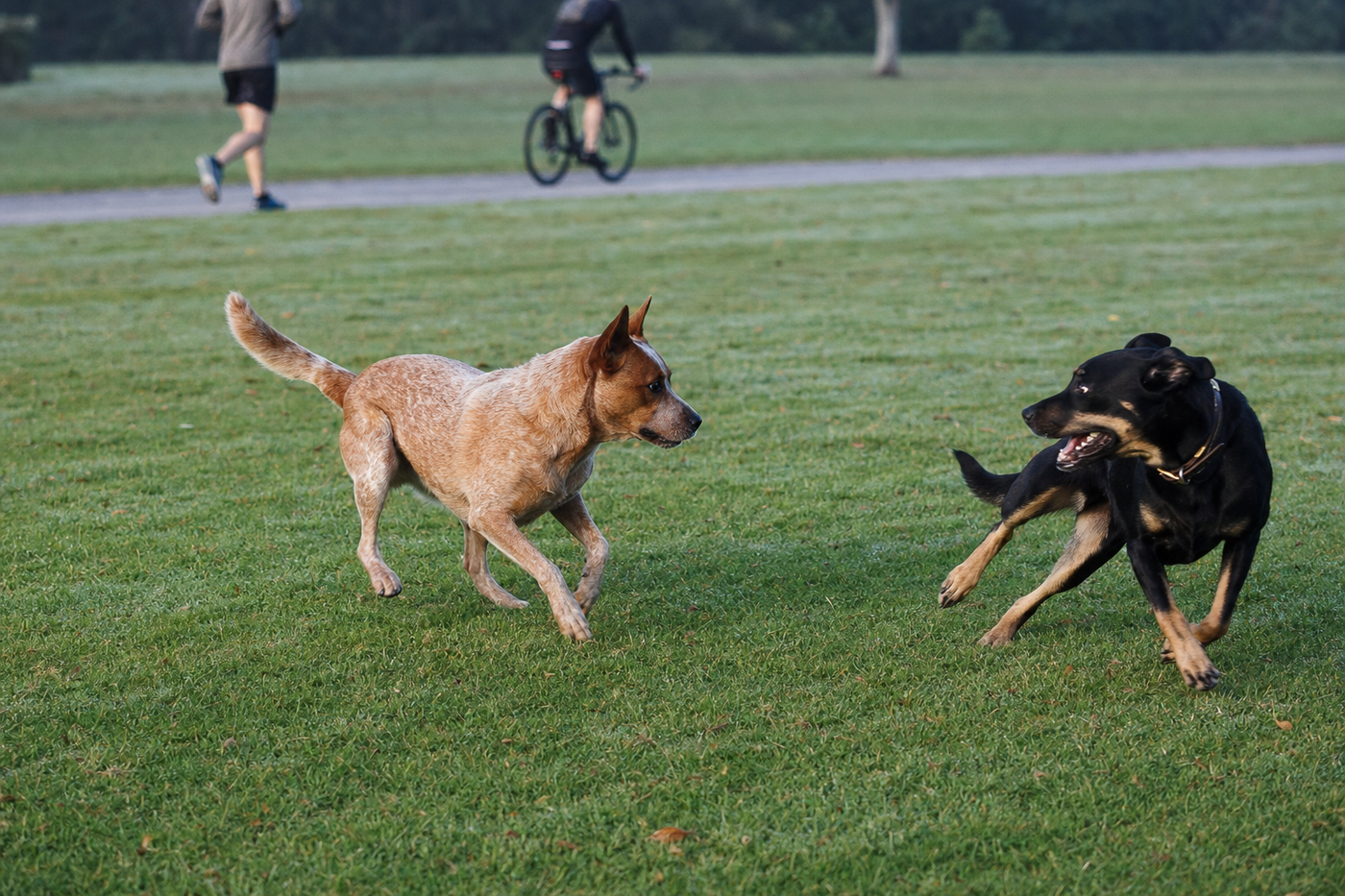
Serious dog attacks can result in criminal charges against you, not just civil liability, especially if the victim requires hospitalisation. Your dog could be seized and potentially euthanised depending on state legislation and the severity of the injury.
If you do not have pet liability insurance and are sued, the courts can order you to pay the full amount from your personal assets, including your home and future earnings through wage garnishment. This financial consequence lasts for years.
What Happens Legally When Your Dog Attacks
A dog attack while you're travelling creates immediate legal complications across state lines. The victim can sue you for medical expenses, lost wages, psychological trauma, and even disfigurement. You become personally liable for all costs, which means your own savings and assets are at risk if the injury is serious.
Each Australian state has its own dangerous dogs legislation. In New South Wales, the Companion Animals Act 1998 makes owners responsible for any damage or injury their dog causes. Victoria's Domestic Animals Act 1994 imposes strict liability, meaning you're responsible even if your dog has never shown aggression before. Queensland, Western Australia, South Australia, and Tasmania all have similar frameworks, but the penalties and definitions differ significantly.
The injured person doesn't need to prove negligence on your part. They simply need to show your dog caused the injury. You're automatically liable unless you can prove the victim was trespassing or provoked the dog in a major way. This is why being careful matters so much when you're away from home in unfamiliar places.
Your Immediate Actions After an Incident
The first minutes after a dog attack determine how the rest unfolds. Keep your dog away from the victim immediately and restrain them firmly. Do not leave the scene, even if you're panicked or embarrassed. Staying calm and cooperative protects you legally and shows good faith.
Get the victim's full details: name, address, phone number, email, and photograph their injuries if they allow it. Ask for witness contact information from anyone who saw what happened. Note the exact location, date, and time. Take photos of the scene, your dog's condition, and any marks on the victim. This documentation helps your insurance company and lawyer later.
Call triple zero if the injury is severe. Never say your dog was provoked or that you think the victim overreacted. Stick to facts. Say something like: 'I'm the dog owner. Are you alright. I want to make sure you get medical help.' Get the victim's permission to share their injury details with your insurer within 24 hours.
What we recommend
Some links below are affiliate links. Pawtrips may earn a commission at no extra cost to you.
PitPat Dog GPS Tracker
A GPS tracker helps you locate your dog immediately if they escape after an incident, reducing the risk of further injuries and helping authorities find your pet quickly. No subscription needed, which means lower ongoing costs while travelling.
Reporting Requirements by State
Different states require you to report dog attacks to different authorities. In New South Wales, you must notify the local council within 24 hours if your dog injures someone. In Victoria, you report to the local council and potentially to the police if the injury is serious. Queensland requires notification to the local council, and Western Australia mandates reporting to the local government authority.
Failing to report can result in additional penalties on top of liability for the attack itself. Some councils fine owners between 500 and 2,000 dollars for failing to report. In serious cases, your dog could be declared dangerous or menacing, which affects your ability to travel with them anywhere in the future.
Keep records of every report you file. Get a reference number, the name of the person you spoke to, and the date. Email a follow-up summary to the council to create a paper trail. This protects you if the council later claims you never reported it.
Personalised Dog Collar With Contact Number
An engraved collar with your contact number ensures anyone who encounters your dog knows how to reach you immediately. This is essential while travelling in unfamiliar areas where a lost or escaped dog could cause more incidents.
Insurance and Financial Protection
Pet liability insurance is not mandatory in Australia, but it should be. A single severe attack can cost 100,000 dollars or more in medical bills, legal fees, and compensation. Without insurance, you pay all of this from your own pocket. Many insurance companies offer pet liability coverage as an add-on to home or contents insurance for under 200 dollars per year.
When you purchase travel accommodation, check if the pet-friendly property requires you to have liability insurance. Many reputable pet-friendly hotels and holiday rentals across Australia now include this as a condition. Some properties in areas like Byron Bay, the Gold Coast, and Melbourne's inner suburbs specifically ask for proof of coverage.
Your pet liability insurance typically covers: legal fees if you're sued, medical expenses for the injured person, property damage caused by your dog, and court costs. It does not cover injuries to your own dog or damage to rental property. Always read the fine print before you travel. Some policies exclude certain breeds or have upper coverage limits.
Breed-Specific Laws and Travel Restrictions
Certain dog breeds face restrictions or mandatory requirements in specific Australian areas. Restricted breed dogs, including American Staffordshire Terriers, Staffordshire Bull Terriers, and Pit Bull Terriers, must wear a muzzle in public in some local government areas. This applies whether you're at home or travelling through that area.
Before you travel, research the destination council's breed restrictions. A dog that's legal in Perth might be considered dangerous in a particular Brisbane suburb. Many councils maintain updated lists on their websites. If your dog is a restricted breed, you may need to purchase a muzzle before entering certain areas. Some travel routes through regional New South Wales and Victoria have breed restrictions at specific towns.
Keep your dog's breed documentation and registration papers with you while travelling. If stopped by local council officers and your dog matches a restricted breed description, you'll need proof that your dog is desexed and registered. Some councils require a dangerous dogs permit if you own a restricted breed, and this can take weeks to obtain.
Proving You Exercised Reasonable Care
The concept of reasonable care is central to dog attack liability. Courts ask: did the owner do what a reasonable person would do to prevent this attack. Using a short lead in busy areas, keeping your dog away from unfamiliar children, and avoiding situations where your dog feels threatened all demonstrate reasonable care.
When you're travelling and staying in accommodation, keep your dog secured. A dog tied up in a hotel room while you're at the beach is safer than a dog wandering public areas unsupervised. If your dog stays in the car during stops, the windows must be open enough for ventilation but not wide enough for the dog to escape or bite someone reaching in.
Travel through quieter times in busy areas. If you're visiting the Hawkesbury River region north of Sydney or the Dandenong Ranges near Melbourne, take your dog on walks during off-peak hours rather than during peak tourist seasons when crowds and stress levels are higher. The more controlled and predictable the environment, the stronger your case becomes if something does go wrong.
Dog Muzzle for Breed-Specific Legislation Areas
If your dog is a restricted breed or has shown any aggression, a properly fitted muzzle is legally required in many Australian areas and significantly reduces the risk of serious attacks. Conditioning your dog to wear one before travel prevents stress and accidents.
PAW by Blackmores Complete Calm Multivitamins
Travel stress and unfamiliar environments can trigger aggression in dogs. These multivitamins contain calming ingredients that help reduce anxiety, making your dog more relaxed and less likely to react aggressively in social situations.
Working With Legal and Insurance Professionals
As soon as you realise a serious injury occurred, contact your pet liability insurance company within 48 hours. Delay can void your coverage. Provide them with all documentation: the victim's details, witness information, photographs, and the council report number. Your insurer assigns a case manager who handles communication with the victim and their legal representatives.
Hire a lawyer who specialises in animal liability law before the victim's lawyer contacts you. This proactive step protects you. A good animal law lawyer in Brisbane, Sydney, Melbourne, or Perth costs around 250 to 400 dollars per hour, but they can reduce your final costs significantly by negotiating settlements early.
Never discuss the incident on social media or with anyone except your insurance company, lawyer, and the authorities. Posts about the incident, your dog's character, or the victim's reaction can be used against you in court. Your lawyer will advise you on what information you can share and with whom. Follow that advice completely.
Pet-Friendly Stays Compliant With Local Laws
Choosing accommodation that meets local pet liability requirements protects you legally and ensures your dog is in a safe environment. Many pet-friendly properties now verify owner compliance with breed laws and liability insurance before booking.
Preventing Attacks While Travelling
Prevention is always cheaper than litigation. Keep your dog on a 1.8-metre lead in all public spaces while travelling. This is the legal requirement in most Australian councils and gives you maximum control. Retractable leads create a false sense of control because your dog can dart up to 10 metres away before you can react.
Avoid peak times at popular destinations. If you're planning to visit Bondi Beach or the Great Ocean Road, go early in the morning before crowds arrive. Your dog will be calmer, other people will be fewer, and the risk of conflict drops dramatically. Check the weather too. Hot days make dogs more irritable and aggressive.
Muzzle training should happen before you travel, not during your trip. If your dog is a restricted breed or has shown any resource guarding or snapping behaviour, invest time in positive muzzle conditioning. A comfortable muzzle allows your dog to pant and drink but prevents biting. Wear the muzzle yourself for short periods so your dog sees it as normal and nothing to fear. This single precaution could save you thousands of dollars and prevent a tragedy.
Plus early access to new guides and partner deals.
No spam. Ever. Just the good stuff for you and your pet.