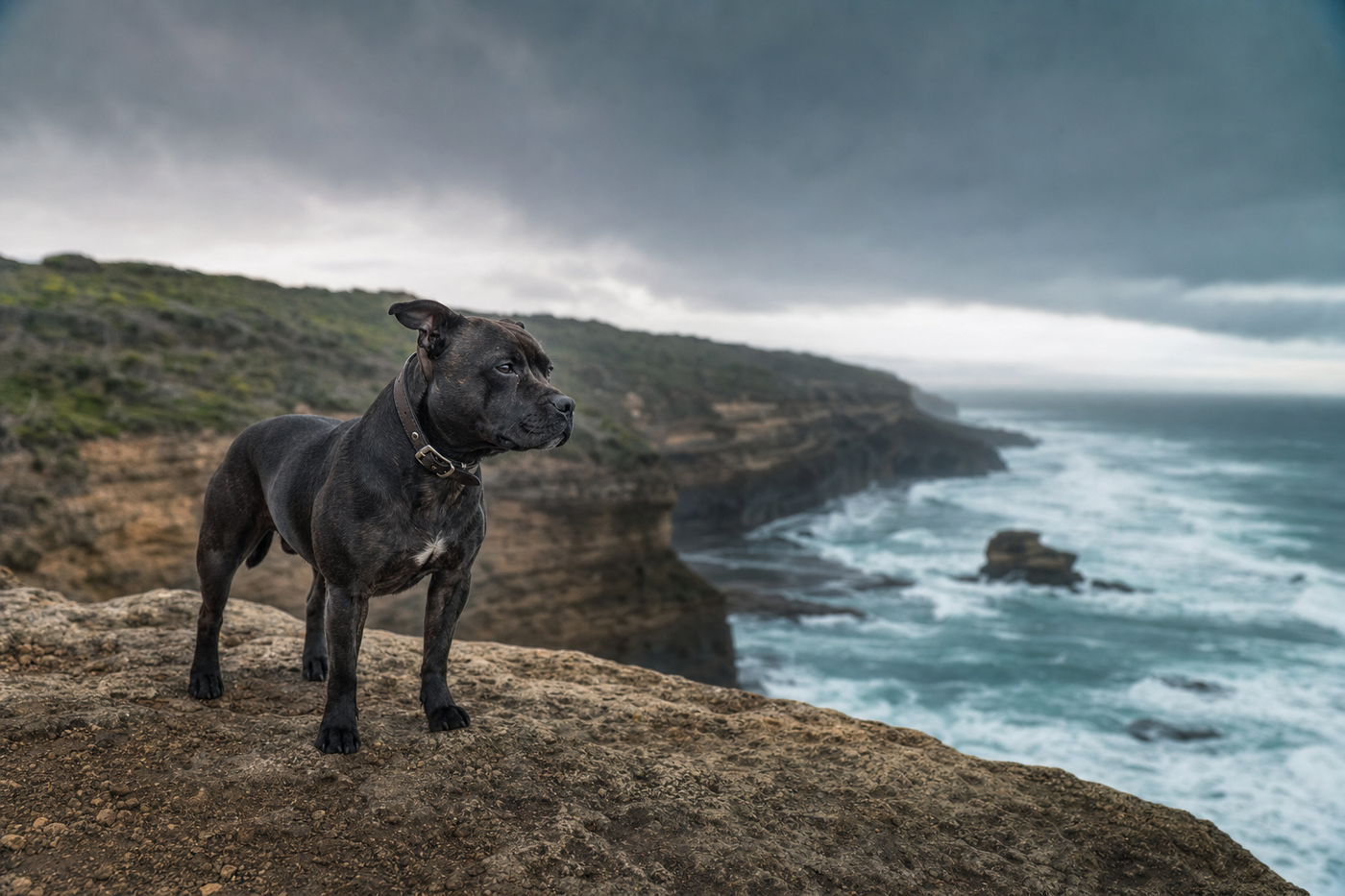
Seizing your dog is a real possibility if you breach dangerous dog laws. Councils can hold seized dogs for up to 28 days while you pay daily boarding fees, and in extreme cases may order euthanasia.
Fines for breaching dangerous dog laws exceed 3,000 dollars in most states, and repeat offences can double or triple this amount. These costs can derail your entire trip.
What Australia Considers a Dangerous Dog
Australia's dangerous dog laws vary across states, but most classify dogs by their breed or by their behaviour. A dog becomes legally dangerous if it has attacked someone, killed livestock, or shown aggression towards people. Some councils and states also declare specific breeds as dangerous based purely on their type, regardless of temperament.
The most commonly restricted breeds include American Pit Bull Terriers, Staffordshire Bull Terriers, and Japanese Tosas. New South Wales, Victoria, and Queensland each have their own lists of restricted breeds. When you travel from one state to another, your dog might be legal in Sydney but restricted in Brisbane. I learned this the hard way when I drove my Staffordshire Bull Terrier from Melbourne to Adelaide and discovered she needed a muzzle in certain South Australian councils.
Behaviour-based classifications can change if your dog has a single incident. A dog that has never caused problems might be declared dangerous after one altercation. This means your travel plans could be affected even if your dog was previously unrestricted. Always check your local council's current list before booking accommodation or planning your route.
State-by-State Restrictions You Need to Know
New South Wales restricts American Pit Bull Terriers, Japanese Tosas, Dogo Argentinos, and Fila Brasileiros. If you own one of these breeds, you need council approval before bringing them into NSW. The council will assess your dog's temperament and may require a muzzle and lead when in public.
Victoria has a similar list but adds Perro de Presa Canarios to its restricted breeds. Many Victorian councils require these dogs to be microchipped, desexed, and kept behind secure fencing. If you're travelling from Victoria to Queensland, realise that Queensland also restricts the same breeds but adds its own regional variations.
Western Australia and South Australia have slightly more relaxed approaches, focusing more on dangerous behaviour than breed type. However, both states can declare any dog dangerous if it has bitten someone or shown aggression. Tasmania has minimal breed restrictions but expects all dogs to be registered and under control at all times.
I travelled with my dog from Perth to Melbourne in 2022 and had to arrange different accommodation because some pet-friendly hotels in Melbourne required breed declarations. Always contact your accommodation provider weeks in advance with your dog's breed and ask about their specific requirements.
Muzzling Laws and Public Spaces
Muzzling requirements differ significantly across Australia. In New South Wales, restricted breeds must wear a secure muzzle and be on a lead no longer than 2 metres when in public. The muzzle must be fitted properly so the dog cannot bite but can still pant and drink. Many owners don't realise that an incorrectly fitted muzzle is illegal and can result in fines up to 3,000 dollars.
Victoria requires muzzles for restricted breeds in public, but councils in Melbourne enforce this differently than councils in regional areas. Some Victorian councils are stricter than others. When I visited Ballarat with my dog, the local council was very lenient, but the City of Melbourne had posted signs requiring muzzles for her breed at all times outdoors.
Queensland requires muzzles for restricted breeds in public areas, but the rules change if you're in a rural area versus a city. In Brisbane, muzzling is strictly enforced. When travelling to smaller Queensland towns, enforcement is often lighter, but you should still carry a muzzle just in case.
Western Australia doesn't require muzzles for breed-restricted dogs but does require them if a dog has been declared dangerous due to behaviour. South Australia has similar rules. Always carry a muzzle when travelling, even if your destination doesn't officially require one, because situations can change quickly.
What we recommend
Some links below are affiliate links. Pawtrips may earn a commission at no extra cost to you.
Dog muzzle for breed-specific legislation areas
If you're travelling with a restricted breed across Australia, a properly fitted muzzle is non-negotiable in many areas. Having a comfortable, compliant muzzle ready before you travel prevents legal issues and fines that exceed 3,000 dollars.
Fines and Penalties That Will Shock You
Breaching dangerous dog laws in Australia comes with serious financial consequences. In New South Wales, failing to muzzle a restricted breed in public can cost you up to 3,300 dollars for a first offence and 6,600 dollars for a subsequent offence. That's more than many people spend on a week-long holiday.
Victoria's penalties are similarly steep. Failing to comply with breed restrictions or muzzling requirements can result in fines between 2,000 and 6,000 dollars. Queensland fines start at around 2,500 dollars and can reach 5,000 dollars. These aren't small amounts most pet owners can absorb easily.
Beyond fines, councils can seize your dog if you're found in breach of dangerous dog laws. Once seized, your dog can be held for up to 28 days while the council investigates. During this time, you pay daily boarding fees, which add up quickly. In extreme cases, councils can order your dog to be euthanised, though this is rare if the dog hasn't actually attacked anyone.
I met a traveller in Canberra who was fined 2,800 dollars for walking his restricted breed without a muzzle in a public park. He hadn't realised the law applied to the park even though it was quiet and his dog was friendly. The fine was a painful lesson that cost him the rest of his travel budget.
Dog microchip and ID tag
Microchipping is the fastest way to reunite you with your dog if they're lost during travel across state lines. Combined with an ID tag displaying your contact number, a microchip protects your dog and proves legal compliance to authorities.
Documentation and Registration Requirements
Before you travel with a restricted or potentially dangerous dog, you need proper documentation organised. Your dog must be microchipped with a current registration number linked to your details. If your dog gets lost during travel, the microchip is the fastest way to reunite you. Most councils now scan for microchips before any other identification method.
Your dog must also have current vaccinations, particularly rabies if you're crossing state borders. Keep vaccination records with you in physical form and digital copies on your phone. Some councils ask to see vaccination certificates before issuing temporary travel permits. Victoria and New South Wales sometimes require proof of vaccination before allowing restricted breeds to enter.
If your dog is registered as a dangerous dog in your home council, you'll need a certified copy of that registration to carry across state lines. Some states won't accept dogs registered as dangerous unless you have official documentation from your home council confirming the breed or behaviour classification. I travelled from Sydney to Melbourne with my dog and had to carry a letter from my local council confirming she was desexed, microchipped, and registered properly.
Many councils now issue temporary permits for restricted breeds travelling through their area. Contact your destination council at least four weeks before arrival to apply for any required permits. Some councils charge between 50 and 200 dollars for temporary permits, and processing takes two to three weeks.
Personalised dog collar with contact number
A personalised collar with your current contact number ensures that if your dog gets lost while travelling, locals can reach you immediately. This is especially important when crossing state lines where your home phone area code might confuse someone trying to help.
Accommodation That Actually Accepts Restricted Breeds
Finding pet-friendly accommodation when you own a restricted breed requires planning. Many holiday rentals and hotels across Australia have blanket bans on certain breeds, even though the law might permit them. The host's insurance often drives these decisions, not the law itself. When I was travelling with my Staffordshire Bull Terrier, I found that about 60 percent of pet-friendly places in Sydney refused her breed despite no legal requirement to do so.
Use Airbnb's pet policy filters, but always message the host directly before booking. Tell them your dog's breed, age, temperament, and provide photos. Transparent communication often convinces hosts to accept your dog when they otherwise wouldn't. I've had several hosts agree to accept my dog after I messaged them with her microchip number and vaccination records.
Pet-specific holiday rental websites sometimes have better luck for restricted breeds. Websites like Stayz and Booking.com allow you to filter by pet-friendly properties. Always read reviews from other travellers with dogs to see if the property actually welcomed their pets. Some places advertise as pet-friendly but owners report poor experiences.
Consider staying in caravan parks and campgrounds, which tend to be more flexible about breed restrictions. Many caravan parks across Australia accept all dog breeds as long as the dog is under control and registered. During a three-week road trip from Brisbane to Sydney, I found caravan parks were my most reliable accommodation option.
Pet-friendly stays compliant with local laws
Finding accommodation that accepts restricted breeds requires knowing which properties actually welcome them. This platform helps you book pet-friendly stays that comply with local dangerous dog laws across Australia.
Planning Your Route to Avoid Legal Trouble
If you own a restricted breed, plan your route through Australia with council boundaries in mind. Some councils are strict enforcers of dangerous dog laws, while others are more relaxed. Researching which councils you'll be travelling through helps you avoid areas where your dog might face issues. The NSW Mid-Coast council is generally strict about breed restrictions, but councils in rural NSW tend to be more lenient.
When driving from one city to another, identify where the council boundaries change. Download maps or use council websites to see exact boundaries. Some councils have dangerous dog information centres where staff can tell you exactly what's required. I once drove through seven different Victorian councils in a single week and each one had slightly different requirements for my restricted breed dog.
Consider stopping at smaller towns rather than major cities. Regional areas often have fewer enforcement patrols and more relaxed attitudes toward breed restrictions, though you should still follow all legal requirements. During a trip through South Australia, I discovered that smaller towns like Hahndorf were far more welcoming to restricted breeds than Adelaide itself.
Talk to other dog owners who have travelled the same route. Online dog travel groups on Facebook have members who have driven from Perth to Melbourne or travelled the length of Queensland. They can tell you which areas were strict, where they found good pet-friendly accommodation, and which parks to avoid.
Dog lead 1.8m compliant
Most Australian dangerous dog laws require restricted breeds to be on a lead no longer than 1.8 metres in public areas. Having a compliant lead prevents fines and keeps your dog safe when travelling through different council areas.
What To Do If Authorities Stop You
If police or council officers stop you while travelling with your dog, stay calm and respectful. Have your dog's microchip registration, vaccination records, council registration papers, and any breed certification documentation ready in your car. Present these documents immediately when asked. Officers are usually checking that you're compliant with local laws, not trying to ruin your holiday.
If your dog is a restricted breed and you're in public without a muzzle, be honest about your circumstances. Explain that you're travelling and ask whether you're currently in an area where a muzzle is legally required. Some officers will give you a warning and tell you where to get a muzzle if needed. I was stopped in Wollongong and the officer gave me 24 hours to obtain a muzzle rather than issue a fine on the spot.
Never argue with officers about whether the law is fair or unfair. That's not their decision to make. If you disagree with a law, you can contest a fine in court later, but at the moment of being stopped, comply with the officer's requests. Many fines can be challenged if you gather evidence, so photograph any signage that wasn't clear and note the officer's name and badge number.
If your dog is seized, contact a local solicitor experienced in dangerous dog laws immediately. Some councils will release your dog if you prove compliance within a certain timeframe. Having legal support early can prevent your dog from being held longer than necessary.
Plus early access to new guides and partner deals.
No spam. Ever. Just the good stuff for you and your pet.