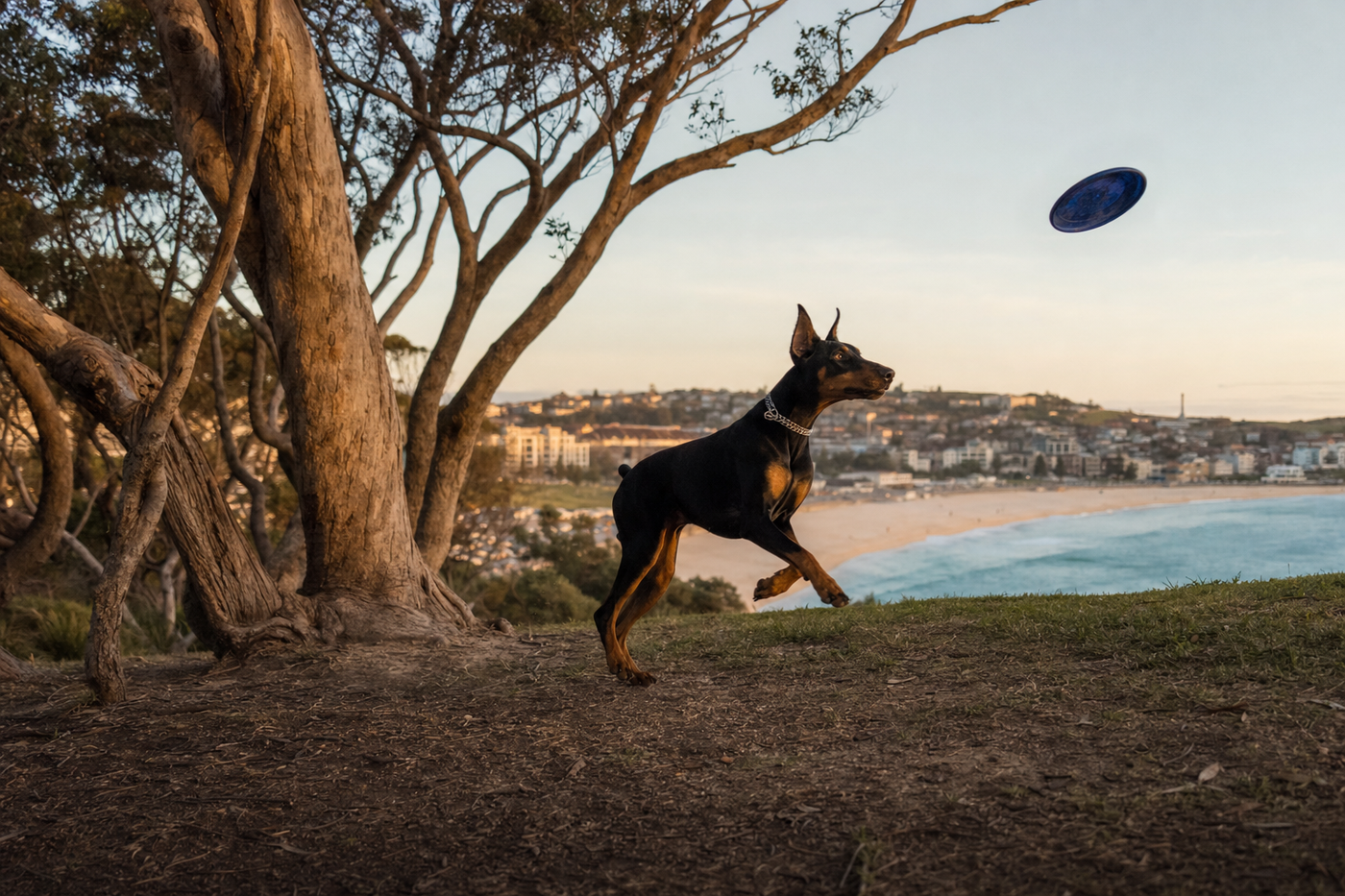
Dobermanns can suffer heatstroke within 20 minutes in a parked car. Never leave your dog unattended in a vehicle in warm weather, regardless of windows being open.
The breed is prone to dilated cardiomyopathy, a serious heart condition. Have your Dobermann examined by a vet before undertaking strenuous travel and activities.
Why Dobermanns Need Different Travel Planning
Dobermanns are large, powerful dogs with strong protective instincts and high energy levels. They weigh between 30 to 40 kilograms and stand around 68 centimetres tall, which means they need proper accommodation and careful handling in unfamiliar environments. Unlike smaller breeds, you can't just pop your Dobermann into a cafe or carry them through crowded areas.
They also bond intensely with their owners and can develop separation anxiety if not properly prepared for travel. I learned this the hard way when my Dobermann panicked during our first trip to the Blue Mountains because I hadn't introduced him to the car properly. The breed's intelligence means they pick up on your own nervousness, so you need to stay calm and confident.
Dobermanns also require consistent exercise and mental stimulation, which changes how you plan your itinerary. A day of sightseeing means your dog still needs two to three hours of proper exercise, not just a quick walk around the carpark.
Exercise Needs Before and During Trips
Dobermanns need a minimum of two hours of exercise daily, and this doesn't change when you're travelling. Before your trip, build their fitness level gradually so they're conditioned for longer walks and unfamiliar terrain. I found that a tired Dobermann is a well-behaved Dobermann, so tiring them out before getting in the car for a long drive makes a real difference.
When you arrive at your destination, prioritise exercise before exploring. If you're staying at a pet-friendly accommodation in Byron Bay or the Gold Coast, take your Dobermann for a long walk or run on the beach first thing. Many accommodation providers have secure yards where you can let them play, but always check the fencing is solid because Dobermanns are strong enough to break through weak gates.
During summer months in Australia, exercise early in the morning or late afternoon to avoid heat exhaustion. Dobermanns have short coats that don't protect them well from the sun, and the breed can overheat quickly. I always carry a collapsible water bowl and check paw pads for heat damage after walks on hot pavement.
Car Training and Road Trip Preparation
Most Dobermanns aren't naturally good car travellers because they're territorial and struggle with confinement. You need to train your dog to be comfortable in the car at least four weeks before a long trip. Start with five-minute drives to familiar places, then gradually increase the duration and distance.
Invest in proper car restraint before you hit the road. A car crate or harness keeps your Dobermann safe during sudden braking and prevents them from jumping into the front seat or distracting you while driving. Loose dogs cause accidents, and you're liable if your unrestrained dog injures a passenger.
Pack a travel kit with your dog's regular food, water, bowls, medications, and comfort items like a worn blanket that smells like home. I take collapsible bowls because they take up minimal space and can be folded away when not in use. Stop every two to three hours to let your Dobermann exercise, drink water, and toilet, even if they seem content. Long periods of stillness cause stiffness and anxiety, and you'll both appreciate the break.
What we recommend
Some links below are affiliate links. Pawtrips may earn a commission at no extra cost to you.
PitPat Dog GPS Tracker - No Subscription Needed
A GPS tracker gives you peace of mind when travelling in unfamiliar areas with your Dobermann. If your dog escapes or gets lost during a trip to a new destination, you can locate them immediately without monthly subscription fees. This is especially valuable in regional areas where finding a lost dog becomes extremely difficult.
Large Dog Car Crate
A properly fitted car crate keeps your large Dobermann safe and secure during long drives across Australia. It prevents your dog from becoming a distraction, protects them during sudden braking, and gives them a secure space to rest during travel. A crate also makes stopping at unfamiliar accommodation less stressful because your dog has a familiar confined space.
Finding Pet-Friendly Accommodation That Fits
Not all pet-friendly accommodation is suitable for a 40-kilogram Dobermann. Some places allow small pets but draw the line at large breeds, and others charge excessive pet fees. Always contact the accommodation directly to confirm they accept dogs of your Dobermann's size and temperament, not just checking an online filter.
When booking, ask specific questions about the yard security, nearby walking areas, and whether other guests have complained about dog noise. Some accommodations are genuinely set up for dogs with secure fences and dedicated pet areas, while others just tolerate them reluctantly. I once booked a place that claimed to be dog-friendly but had a gate a Dobermann could push open, which meant constant stress managing him in the yard.
Look for accommodations with shade, space to move around, and proximity to open spaces like parks or beaches. A cabin near Thredbo or Perisher in the Southern Tablelands with access to mountain trails is perfect for a Dobermann. Book well ahead during school holidays and summer months because pet-friendly places fill up quickly.
Pet-Friendly Stays Australia
Finding truly pet-friendly accommodation that welcomes large breeds like Dobermanns requires research. This platform specialises in connecting travellers with accommodation specifically set up for dogs, complete with secure fencing, nearby parks, and owners who understand the needs of large breeds.
Managing Heat and Australian Climate Challenges
Australian summers are brutal for Dobermanns. The breed struggles with heat because they have short coats, dark colouring, and limited sweat glands. Temperatures above 25 degrees Celsius become dangerous, and above 30 degrees you should avoid strenuous activity entirely, even if your dog seems willing.
Never, ever leave your Dobermann in a parked car, even for ten minutes with the windows down. The internal temperature of a car reaches 60 degrees Celsius in 20 minutes on a 30-degree day. I've seen dogs suffer brain damage and die from heatstroke in parked cars across Australia. If you stop for food or shopping, take your dog with you or leave them at pet-friendly accommodation with water and shade.
When travelling in summer, plan activities around cooler parts of the day. Drive during early morning or evening, schedule beach visits before 10am, and book accommodation with air conditioning or strong fans. Always carry fresh water in the car, provide electrolyte drinks if your dog has exercised hard, and watch for signs of heat stress like excessive panting, drooling, or lethargy.
Seresto Flea & Tick Collar for Large Dogs Over 8kgs
Travelling across different Australian regions exposes your Dobermann to varying parasite risks. The Seresto collar provides eight months of continuous protection against fleas and ticks, meaning you don't need to remember monthly treatments while moving between destinations. This is particularly valuable when travelling to warmer regions where ticks are more prevalent.
Socialisation and Behaviour on the Road
Dobermanns have a protective nature and can be wary of strangers, which makes socialisation before travelling essential. If your dog hasn't been exposed to different people, environments, and other dogs regularly, a trip will overwhelm them. I introduced my Dobermann to busy areas, different flooring types, stairs, and crowds before we travelled the East Coast.
When you're staying somewhere new, your dog might be anxious or reactive. Take time on your first day to let them adjust before exploring with them. A anxious Dobermann might bark at neighbours or other guests, damaging your relationship with accommodation providers and potentially getting you asked to leave. Keep your dog on lead in public spaces and don't assume they're friendly just because they're responding to someone's greeting.
If your Dobermann shows any signs of aggression or severe anxiety during travel, consult a veterinary behaviourist before your trip. Some dogs genuinely aren't suited to travel, and that's okay. Hiring a pet sitter to look after them at home might be better than forcing them into stressful situations.
Health, Medications, and Emergency Preparedness
Before any trip, take your Dobermann to the vet for a health check and ensure vaccinations are current. Dobermanns are prone to dilated cardiomyopathy, a serious heart condition, so don't push them into strenuous activity without knowing their cardiac status. Get a copy of their vaccination records, microchip information, and any medications from your vet in case you need emergency treatment away from home.
Research veterinary clinics along your planned route and save their numbers in your phone. If you're travelling to regional areas, phone ahead to confirm they're open and can handle large breeds. Some regional clinics have limited facilities or experience with Dobermanns specifically. I once needed emergency treatment for a wound in rural New South Wales and had to drive 45 minutes to the nearest clinic that could handle my dog properly.
Pack a basic first aid kit with bandages, antiseptic, pain relief, and any prescription medications your dog needs. If your Dobermann is on medications for anxiety or health conditions, bring extra doses in case your trip extends or you get delayed. Keep emergency contact details for your regular vet and travel insurance information easily accessible.
Kurgo Dog Food Travel Bag: Kibble Carrier, 5 Pound
Keeping your Dobermann on their regular diet while travelling prevents digestive upset and maintains routine during stressful new environments. This travel bag stores up to five pounds of kibble and keeps food fresh and contained, eliminating the need to carry full bags and worry about spills in your car or accommodation.
Flea, Tick, and Parasite Protection While Travelling
Australian travel exposes your Dobermann to different parasites depending on the region. Ticks are a major concern in warmer areas, and you'll find different species in different climates. Before travelling, discuss parasite prevention with your vet and ensure your dog is protected against the specific risks in your destination.
Check your Dobermann daily for ticks, particularly around the ears, neck, and between the toes. If you find a tick, remove it carefully with a tick hook or tweezers and dispose of it safely. Fleas can cause severe reactions in some dogs, and scratching from flea bites can lead to skin infections that are harder to treat while travelling.
Use preventative treatments recommended by your vet rather than relying on natural alternatives. Collars, spot-on treatments, and tablets all have different advantages depending on your travel style and climate. If you're spending time in long grass or bushland, check your dog more frequently and consider showering them after outdoor activities to wash off any parasites before they attach.
Plus early access to new guides and partner deals.
No spam. Ever. Just the good stuff for you and your pet.