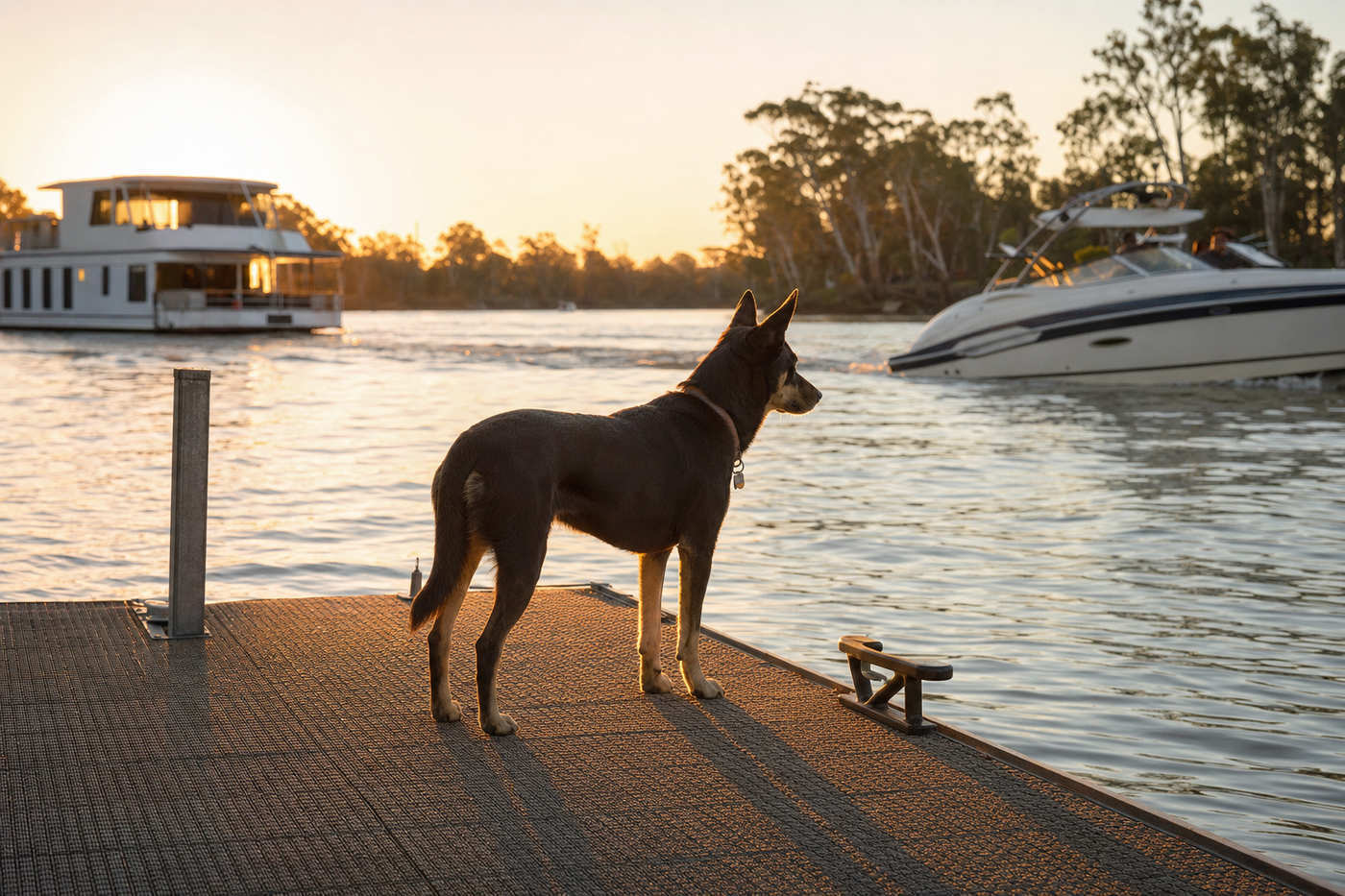
Fines for unregistered dogs can exceed five hundred dollars in some states and councils may confiscate your dog if it's not registered and you cannot prove ownership immediately
Some states can refuse you entry if your dog isn't properly vaccinated or registered, potentially trapping you at a border for days while you sort documentation
Why Interstate Registration Matters More Than You Think
When I first drove from Melbourne to Brisbane with my Kelpie, I assumed her Victorian registration would cover her everywhere. Three hours into New South Wales, I learned that wasn't how it worked. Each state maintains its own dog registration system, and crossing borders with an unregistered or improperly documented dog can land you with fines up to several hundred dollars.
Registration isn't just bureaucracy either. It's how councils track which dogs are vaccinated against diseases like rabies, which ones have had behaviour complaints, and which ones might be restricted breeds. When you travel interstate, you're moving into a new jurisdiction with different rules, different councils, and different enforcement officers. They have no record of your dog unless you've properly registered in their state.
I've met travellers who thought they could just keep their dog under the radar. One bloke from Perth got pulled over at a checkpoint near Dubbo with his unregistered Bull Terrier. He ended up paying a fine and had to wait weeks to get his dog re-registered before he could continue his trip. The whole situation could have been avoided with ten minutes of planning and one phone call.
How Registration Works in Each Australian State
New South Wales requires registration through your local council, and the process takes around two weeks if you submit everything correctly. You'll need proof of microchipping, vaccinations, and if you're moving from another state, evidence that your dog was registered there. Queensland has a similar system but some councils process applications faster than others. The Brisbane City Council can turn around registrations in about a week, while regional areas might take longer.
Victoria's system is straightforward once you know what you're doing. You register through your local council and can do much of it online now. South Australia requires registration within fourteen days of moving to the state, and they're quite strict about this timeline. Western Australia has its own rules again, with some councils requiring you to register before you physically move in.
Tasmania's registration process is perhaps the most relaxed, but don't take that as permission to skip it. Tasmania still requires registration and can fine you if your dog isn't registered. My advice is to contact the council in your destination city at least three weeks before you travel. Ask specifically about their registration process, required documents, and how long it takes. This gives you a buffer in case they ask for anything unexpected.
Documents You'll Need to Carry
Pack a folder with your dog's microchip certificate, vaccination records (especially rabies if the state requires it), and a recent photo of your dog. Include the original registration certificate from your home state and any documentation about breed, health conditions, or behaviour history. This might sound excessive, but I've been pulled over twice during interstate trips, and having everything ready made the conversations quick and friendly.
Get a letter from your vet stating your dog's current health status, vaccinations, and any medical conditions. This matters more than people realise. Some regions have rules about bringing dogs with certain health issues across borders, and a vet's letter protects you if anyone questions it. Make copies of everything and keep one set in your car and another in your accommodation.
Your dog's microchip details are crucial. Ensure the microchip registry has your current mobile number and email address. When I travelled to Adelaide, my Kelpie was scanned by a ranger, and the microchip pulled up my details instantly. He was satisfied we were legitimate owners and let us go without any fuss. That microchip took two minutes to register online and cost almost nothing, but it saved us hours of potential drama.
What we recommend
Some links below are affiliate links. Pawtrips may earn a commission at no extra cost to you.
Dog Microchip and ID Tag
A proper microchip and ID tag with your contact number are essential when travelling interstate. They ensure your dog can be traced back to you instantly if lost, and councils can verify registration immediately during checks. This combination is your dog's best protection on the road.
Microchipping Requirements Across States
Every state requires dogs to be microchipped, but they use different registries and have different rules about when you need to update those registries. New South Wales uses the Central Animal Records (CAR) registry. Victoria uses the Domestic Animal Management system. South Australia has its own registry, as do Queensland and Western Australia. This fragmentation is annoying, but it's manageable if you plan ahead.
When you travel interstate, your microchip doesn't automatically transfer to the new state's system. You need to update the registry in the state you're visiting and ensure your contact details are current everywhere. Some registries won't even let you do this online if you're from out of state. You might need to phone them or visit in person. I learned this the hard way in Perth when I couldn't update the microchip registry online and had to spend twenty minutes on hold.
The best approach is to contact the destination state's animal registry three weeks before you travel. Ask them specifically how to register your dog's microchip there and what documentation they need. Some states let you do it over the phone with your vet's letter. Others insist you do it in person at the council office. Knowing which applies to you removes all the stress and uncertainty.
Breed Restrictions and When You Need a Muzzle
Several Australian states and territories have restricted breed lists, and the lists aren't always the same. Victoria has banned certain breeds like Pit Bull Terriers and Japanese Tosas. New South Wales restricts them too, with rules varying slightly between councils. Queensland has its own list. If you own a dog on any of these lists, you need to know the rules in every state you pass through.
Some breeds need to wear muzzles in certain states even if they're not technically banned. This happens especially in regional areas where councils enforce stricter rules. I travelled through a regional council in Western Australia with a Staffordshire Bull Terrier, and the council there required her to be muzzled in public even though she was the friendliest dog alive. It was inconvenient, but having a proper muzzle with me meant we could still go for walks.
Check the restrictions before you book your trip. If your dog is on a restricted breed list anywhere you're going, contact those councils directly and ask about their specific rules. Some councils require special permits. Others require muzzles in certain settings but not others. Getting clear answers upfront saves you from being told to leave parks or facing fines when you arrive.
Dog Muzzle for Breed-Specific Legislation Areas
If you're travelling through states with breed-specific restrictions, a comfortable, properly-fitted muzzle means your dog can still enjoy public spaces and walks. Some councils require them for restricted breeds even when not enforcing an outright ban. Having one eliminates uncertainty and keeps your trip stress-free.
Vaccination and Health Certificate Expectations
Rabies vaccination is required in some states and not in others, which creates confusion when travelling. Queensland requires evidence of rabies vaccination. New South Wales doesn't, technically, but many councils there recommend it. Victoria doesn't require it, but some pet-friendly accommodations ask for it anyway. Get your dog fully vaccinated before you travel, including rabies, even if your destination state doesn't strictly require it. A rabies vaccine costs around fifty dollars and takes five minutes. The peace of mind and flexibility it gives you is worth it.
Get a health certificate from your vet dated within two weeks of your trip. This certificate should state that your dog is in good health, up to date on vaccinations, and has no contagious diseases. Some states technically don't require this, but having one means you can provide it immediately if asked and makes any checkpoint interaction smoother. I've never been asked for it, but I've had it with me on every interstate trip, and it's given me confidence.
For dogs with existing health conditions, get a letter from your vet explaining the condition and any medication. This is especially important if your dog takes regular medication or has dietary requirements. When I travelled with an older dog who had arthritis, the vet's letter about her pain medication meant veterinary clinics we visited had her full background without needing to repeat tests. It also protected me in case anything happened and someone questioned whether she was being properly cared for.
PAW by Blackmores Complete Calm Multivitamins for Dogs
Interstate travel can stress dogs out. These multivitamins with calming ingredients support your dog's wellbeing during the journey and help them settle into new environments. Having your dog calm and healthy makes the whole trip easier for both of you.
Getting Your Dog Actually Registered Before You Travel
Start the registration process six weeks before your trip if possible. Contact the destination council and ask for a registration application form. Many councils now have online systems, but some still require physical forms sent by mail. Submit everything as early as you can. If something's missing, you'll have time to chase it up.
You'll need to provide proof of identity and proof of your address at the destination. This is where it gets tricky if you're travelling to a friend's place or staying at an Airbnb. The council needs an address where they can contact you. If you're renting a place, contact the landlord and get confirmation that you can register a dog at that address. If you're staying with friends, use their address with their permission.
Once your dog is registered, you'll receive a registration certificate and sometimes a tag to put on your dog's collar. Carry the certificate with you during travel. Some councils are stricter than others about checking for this tag. I've been stopped and asked to prove my dog was registered, and the tag answered the question immediately. Having both the physical tag and the certificate in your paperwork means you're covered either way.
The registration fee varies by state and council. Expect to pay anywhere from thirty to one hundred dollars depending on your location. Some councils offer discounts if your dog is microchipped or de-sexed. Ask about this when you register. It's a small saving but worth asking about.
PitPat Dog GPS Tracker
A GPS tracker gives you real-time location of your dog during interstate travels. If your dog gets loose in an unfamiliar place, you can track them immediately rather than waiting for council help. This device works without requiring a subscription, making it an affordable safety backup.
What to Do at Checkpoints and During Police Stops
You might encounter checkpoint stops or random checks during interstate travel. Rangers and council officers sometimes stop vehicles to check if dogs are properly restrained and registered. The first time this happened to me, I panicked, but the officer was just doing their job. Stay calm and provide your documents.
If you're stopped, have your dog's registration certificate accessible. Show your microchip certificate and vaccination records if asked. Be honest about where you're coming from and where you're going. Officers appreciate transparency. If an officer asks to scan your dog's microchip, let them do it. This takes thirty seconds and confirms everything is legitimate.
If an officer issues a fine, ask for the details in writing and don't argue on the spot. Get their name, the council they represent, and the specific regulation you've allegedly breached. You can contest fines later if you believe they're unfair. Most interactions I've had have been friendly because I had my paperwork organised and my dog was clearly well cared for. Having everything prepared means these stops are just minor inconveniences rather than stressful confrontations.
Never attempt to avoid a checkpoint or refuse to show your dog's documentation. This escalates the situation and can result in much larger fines. The whole process takes minutes if you're registered. It's not worth trying to shortcut it.
Pet-Friendly Stays Compliant with Local Laws
When booking accommodation during interstate travel, you need places that are registered and compliant with local pet laws in each state. These pet-friendly stays understand registration requirements and won't have surprise issues about your dog being there.
Plus early access to new guides and partner deals.
No spam. Ever. Just the good stuff for you and your pet.