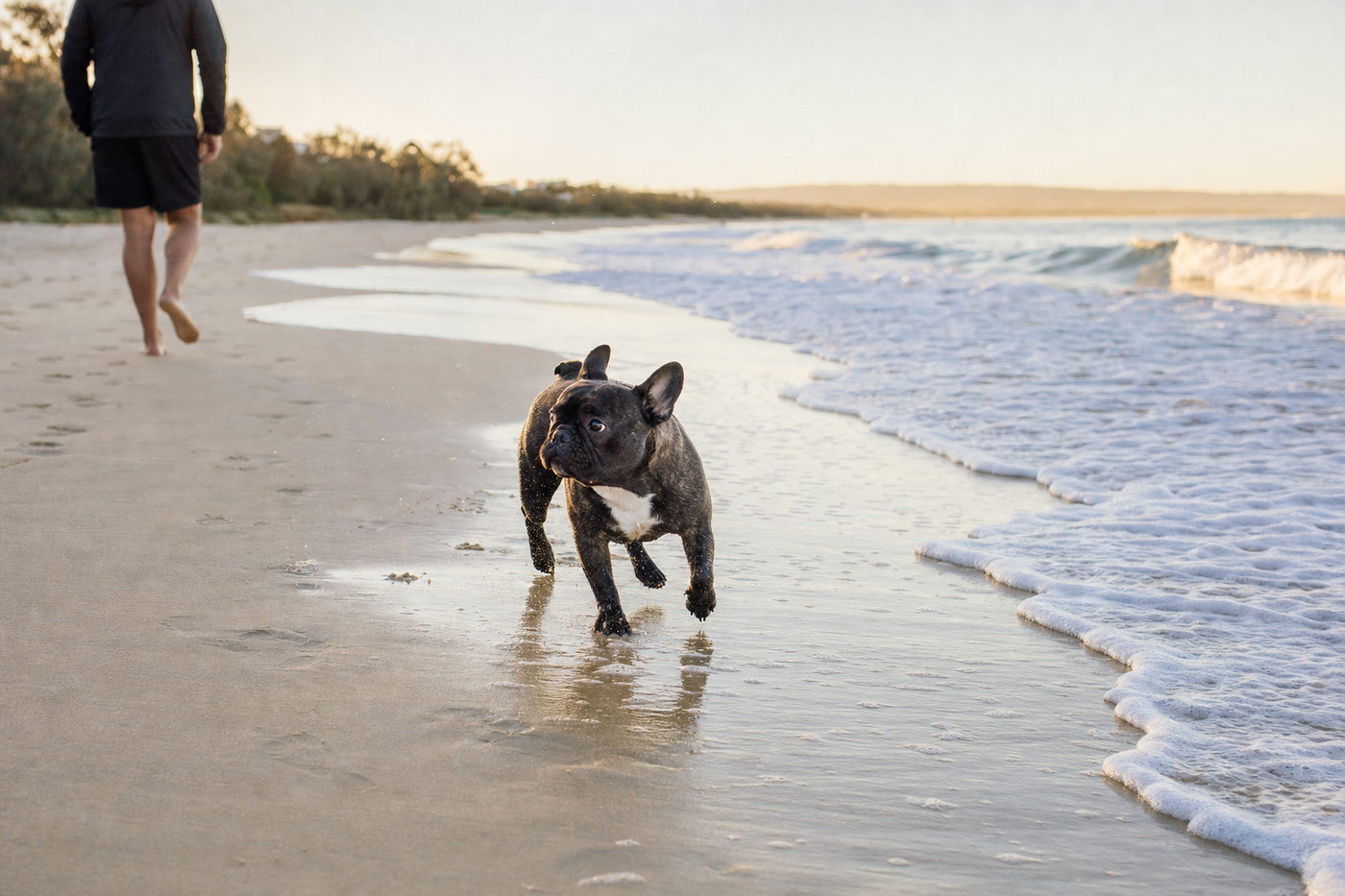
French Bulldogs can suffer fatal heatstroke in minutes during Australian summer. Never leave them in warm cars, never exercise them during peak heat hours, and always provide access to shade and cool water.
Brachycephalic breeds like French Bulldogs have compromised airways and struggle with the stress of travel. Flying, long car journeys, and hot weather compound breathing difficulties. Consult your vet before any major trip.
Why French Bulldogs Need Special Travel Consideration
French Bulldogs are brachycephalic, meaning they have flat faces that make breathing harder than other breeds. This matters a lot when you travel around Australia, especially during summer months when temperatures regularly climb above 35 degrees Celsius. Your Frenchie cannot cool themselves effectively through panting like other dogs because their airways are already compromised.
I learned this the hard way on a drive from Sydney to Melbourne in January. My Frenchie, Oscar, started wheezing heavily just two hours into the journey, and I had to pull over multiple times. The stress of travel combined with heat creates a dangerous situation for these dogs. Before you book any trip, understand that your Frenchie needs more attention than a Labrador would. They tire quickly, overheat easily, and struggle with exercise in warm weather.
Health Checks Before Travelling with Your Frenchie
Visit your vet at least four weeks before any major trip. Your vet needs to confirm your Frenchie is fit to travel and can handle the stress of new environments. Bring a written health summary from your vet that includes any medications, allergies, and dietary requirements. This document saved me when I stayed at a pet-friendly lodge near Canberra and the staff needed to understand Oscar's breathing difficulties.
Ask your vet specifically about flying if you plan to travel from Sydney to Perth or similar long-distance routes. Many vets recommend against flying with brachycephalic breeds unless absolutely necessary. Get copies of vaccination records and a microchip certificate in case your Frenchie gets lost. Request the contact details of emergency vets in any region you plan to visit, whether that's Adelaide, Brisbane, or regional areas.
Managing Heat on Australian Travels
Australian summers are brutal for French Bulldogs. The temperature can hit 38 degrees Celsius in inland areas like Dubbo or Alice Springs, and your Frenchie simply cannot cope. Plan all activities for early morning or late evening when temperatures drop below 25 degrees. Midday walks are not an option for flat-faced dogs in Australia.
Invest in a cooling mat before your trip. These are not luxury items for Frenchies, they are essential safety equipment. Keep your car at a comfortable temperature and never leave your dog inside, even for five minutes. When you stop at rest areas on long drives, set up a portable fan and give your Frenchie regular water breaks. I freeze water bowls before we leave home so Oscar has cold water throughout the day. Avoid peak heat hours entirely, even if it means changing your holiday schedule.
What we recommend
Some links below are affiliate links. Pawtrips may earn a commission at no extra cost to you.
Cooling mat for brachycephalic dogs
Australian summers demand a reliable cooling mat for your Frenchie. This product actively helps regulate your dog's body temperature during travel and at accommodation, reducing the risk of heatstroke on hot days.
Finding Pet-Friendly Accommodation Across Australia
Not every motel, hotel, or Airbnb accepts dogs, so book accommodation that explicitly welcomes pets weeks in advance. Call ahead even if the website says pet-friendly, because policies vary wildly. Some places charge fifty dollars extra per night, others charge nothing. Some require your dog to be crated when you leave the room, while others allow them on furniture.
I've stayed at pet-friendly lodges near the Blue Mountains that were absolutely brilliant, with enclosed yards and bowls ready for our arrival. I've also shown up at rural motels outside Bathurst only to discover they changed their pet policy last month. Regional Australia tends to be more dog-friendly than city centres. Use platforms designed for pet travel when booking, as they filter specifically for places that actually welcome dogs with open arms rather than reluctant acceptance.
Pet-friendly stays
Booking verified pet-friendly accommodation takes stress out of travel planning. This platform connects you with properties across Australia that genuinely welcome French Bulldogs, with transparent policies and owner reviews.
Packing the Right Gear for Your Frenchie
Pack twice as much as you think you'll need. Bring your own food rather than relying on finding their brand at small towns along the way. A portable food carrier keeps kibble fresh and easy to transport. Pack medications in a clear container with labels, not in the original bottles where labels might fade or tear.
Include a collapsible water bowl, because your Frenchie needs water at every stop. Bring a favourite toy or blanket that smells like home to reduce stress in unfamiliar rooms. Pack a grooming kit because your Frenchie's skin needs attention, especially if they get wet during travel. Include a first aid kit with bandages, antiseptic, and any supplies your vet recommended. Don't forget poo bags and wet wipes. I learned this after stopping at a beautiful park near Wollongong with no bags in sight.
Kurgo Dog Food Travel Bag: Kibble Carrier, 5 Pound
Keeping your Frenchie's food fresh during trips across Australia is non-negotiable. This carrier protects kibble from humidity, pests, and spoilage, and fits neatly in any vehicle or accommodation.
Driving Long Distances with Your French Bulldog
Break up long drives into manageable chunks. Don't attempt to drive from Sydney to Brisbane without stopping multiple times. Your Frenchie needs bathroom breaks every two to three hours, plus cooling breaks. Plan stops at rest areas or parks where your dog can stretch and relieve themselves safely.
Use a crash harness or travel crate so your Frenchie doesn't become a projectile if you brake suddenly. Never let them roam free in the car. Keep the air conditioning running, and never, ever leave your dog alone in the vehicle while you grab coffee or use the toilet. I've seen dogs suffer heatstroke in parked cars within fifteen minutes on warm days. Stop at least every 150 kilometres and let your Frenchie walk around in the shade. Offer water frequently, even if they don't seem thirsty.
Exercise and Activity Limits for Travelling Frenchies
Your Frenchie's exercise needs change when travelling. They cannot do long beach walks in the middle of summer like other dogs. Instead, plan short walks in shaded areas during cooler parts of the day. A twenty-minute walk at six in the morning is realistic. A two-hour beach adventure at midday is dangerous and potentially fatal.
Watch for signs of overheating: excessive panting, drooling, lethargy, or vomiting. If your Frenchie shows any of these signs, stop immediately and cool them down with water. Some pet-friendly accommodations have pools or water bowls, which are wonderful for helping your dog regulate their temperature. Remember that Frenchies are companion dogs, not adventure dogs. They travel best when you prioritise rest and relaxation over activity. A successful holiday with your Frenchie means arriving home with a healthy, happy dog, not one exhausted from trying to keep up.
PitPat Dog GPS Tracker - No Subscription Needed
Travelling in unfamiliar regions means your Frenchie could wander off despite precautions. This GPS tracker provides peace of mind without ongoing subscription costs, letting you locate your dog instantly if they escape.
Safety, ID, and Getting Lost Prevention
Microchip your Frenchie before travelling and ensure the details are registered with your current contact information. Fit a collar with an ID tag that includes your mobile number. In new environments, dogs get confused and bolt, even well-trained ones. I've seen Frenchies escape through open gates at pet-friendly resorts, and the ones with proper ID got home safely.
When you arrive at any new accommodation, walk the perimeter to identify escape routes. Check that gates close properly and that fences have no gaps. Keep your Frenchie on a lead when outside the secure area, even if they usually walk off-lead at home. Register with local councils or contact emergency vets in each region you visit so they know your dog is in the area. Some councils maintain lost dog registries that can help reunite you with your pet quickly if something goes wrong.
Dog collar and ID tag
A properly fitted collar with clear ID tags is your Frenchie's lifeline in new places. Ensure contact details are current and legible, making it easy for strangers to reunite you with your dog if they get lost.
Plus early access to new guides and partner deals.
No spam. Ever. Just the good stuff for you and your pet.