Heatstroke kills dogs rapidly in Australian conditions. Watch for excessive panting, lethargy, drooling, or glazed eyes and seek immediate veterinary care if these signs appear.
German Shepherds can escape from inadequately secured accommodation or camping areas. Always use proper fencing, tethers, or crates to prevent your dog from running onto roads or into dangerous situations.
Why German Shepherds Make Great Travelling Companions
German Shepherds are loyal, intelligent dogs who bond strongly with their owners. They adapt well to new environments as long as you establish a routine early on. Most German Shepherds I have travelled with actually settle better in a car once they understand what travelling means.
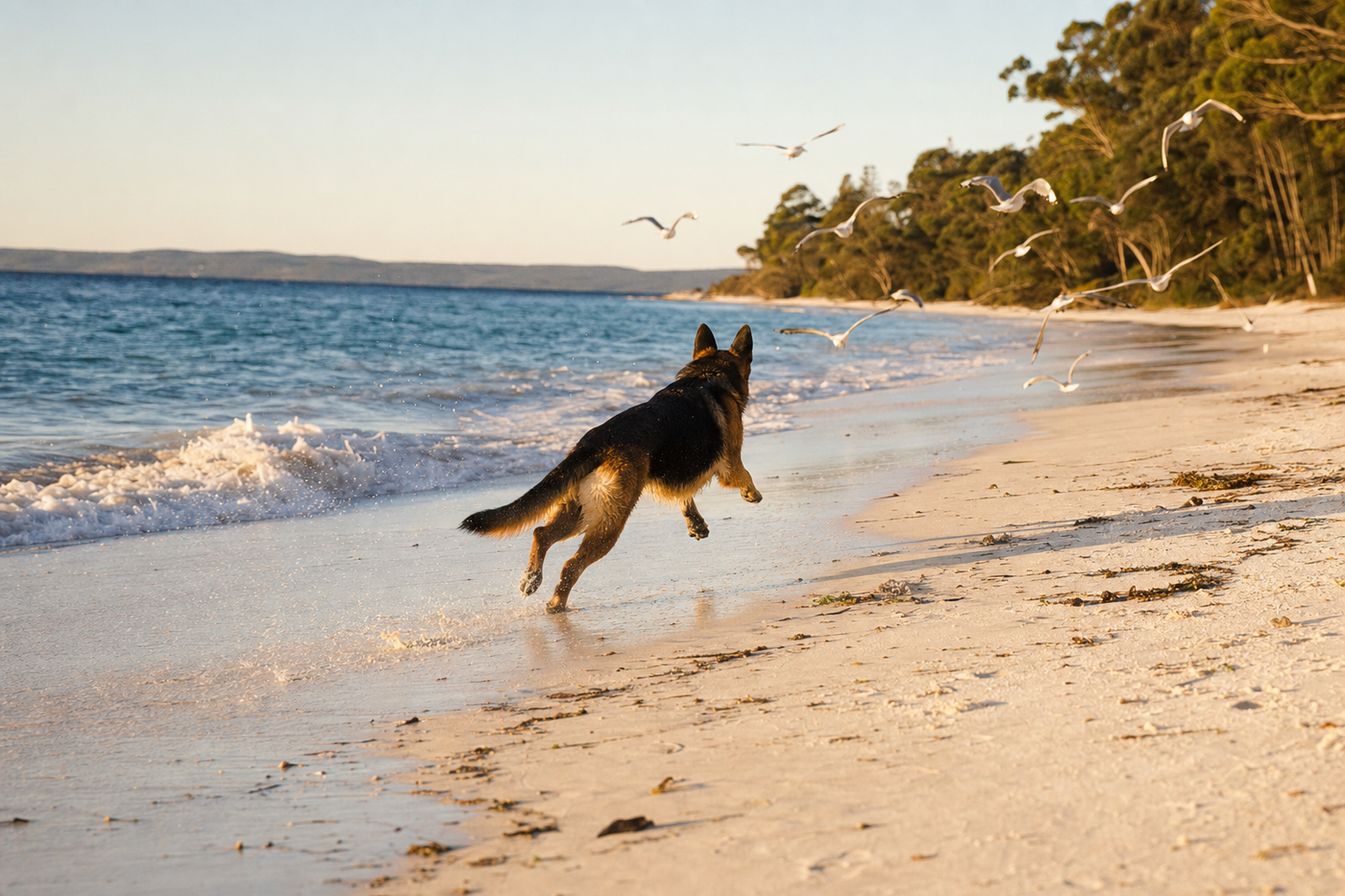
These dogs thrive on being included in family activities rather than left behind. Your German Shepherd will enjoy exploring beaches near Byron Bay, hiking trails around the Grampians, or camping spots in regional Victoria. Their alert nature means they stay aware of their surroundings, which can be helpful when you are in unfamiliar areas.
The main challenge is their size and energy levels. A 30 to 40 kilogram dog needs proper space in your vehicle and regular exercise stops. Plan your trips around their needs, not the other way around, and travelling becomes much easier.
Preparing Your German Shepherd for Car Travel
Start with short drives around your neighbourhood before attempting longer journeys. My German Shepherd used to panic in the car until I spent three weeks doing ten minute trips to the local park. By the time we drove from Melbourne to Adelaide, she was calm and confident.
Invest in a proper crate or barrier for your dog. A loose 40 kilogram dog in a car accident becomes a projectile. Front seat airbags can seriously injure or kill your dog, so keep them in the back section always. A crate gives them a safe space and prevents them from distracting you while driving.
Let your dog ride with windows down for short periods so they experience different sounds and smells. Feed them two hours before travelling, not right before, as motion sickness is common. Pack their favourite toy or blanket to create familiarity in an unfamiliar space.
What we recommend
Some links below are affiliate links. Pawtrips may earn a commission at no extra cost to you.
Large Dog Car Crate
A properly sized crate keeps your German Shepherd secure during drives and prevents them becoming a projectile during sudden stops or accidents. Your dog also has a familiar safe space at each new accommodation, reducing travel stress.
Managing Heat and Hydration on Australian Roads
Australian summers are brutal for German Shepherds. Their thick double coat traps heat, and they can overheat in minutes. Never leave your dog in a parked car, even with windows cracked. The interior temperature reaches 60 degrees Celsius on a 35 degree day within fifteen minutes.
On long drives, stop every two hours in hot weather to let your dog stretch and drink. Carry a collapsible water bowl and refill it at rest stops. Many service stations along the Princes Highway now have water stations specifically for travelling dogs. If your dog seems lethargic, panting excessively, or has a glazed expression, these are heat stress signs. Find shade immediately and call a vet.
Drive during cooler parts of the day. Leave early morning and stop by noon in summer. Travel overnight between major cities if temperatures exceed 30 degrees. Your journey takes longer, but your German Shepherd arrives safe and comfortable.
Collapsible Water Bowl
Lightweight and portable, a collapsible bowl lets you provide fresh water at every rest stop without taking up vehicle space. German Shepherds dehydrate quickly in Australian heat, and regular water access prevents heat stress during long drives.
Finding Pet-Friendly Accommodation and Camping
Book pet-friendly accommodation weeks ahead, especially during school holidays and long weekends. Popular spots on the Gold Coast, around Coffs Harbour, and near the Great Ocean Road fill up fast. Many hotels now advertise pet policies clearly online, but always call ahead to confirm your German Shepherd is welcome.
Cabins with secure fencing are ideal because your dog can have some freedom without you worrying they will run onto a road. Beachside towns like Merimbula and Batemans Bay have excellent pet-friendly caravan parks with grassed areas. Some parks charge a pet fee of 10 to 20 dollars per night, which is reasonable.
Camping with a German Shepherd requires secure setup. Pitch your tent away from other campers to minimise stress for everyone. A long tether line attached to a tent peg gives your dog movement without letting them wander into neighbouring sites. Many national parks have dog-friendly campgrounds, but check regulations before you arrive as rules vary by region.
Exercise and Mental Stimulation While Travelling
German Shepherds need at least two hours of exercise daily, even while travelling. A tired dog is a well-behaved dog. Plan your travel days to include time for proper exercise, not just short toilet breaks. Early morning walks on dog-friendly beaches in Queensland or Tasmania will burn energy and keep your dog content.
Bring a ball or frisbee to throw at rest areas. Many petrol stations have grassed areas where you can safely exercise your dog for ten minutes. Mental stimulation matters as much as physical exercise. New environments naturally stimulate your dog's brain, but bring puzzle toys or long-lasting chews for quiet time at accommodation.
Some travelling German Shepherds develop behaviour problems from boredom. If your dog whines excessively in the car or becomes destructive at your accommodation, increase exercise time. I learnt this the hard way when my dog chewed through a hired caravan's storage compartment. A two hour beach walk before driving prevented that disaster.
PitPat Dog GPS Tracker
Travelling through remote areas means losing mobile signal is possible. A GPS tracker without subscription costs lets you locate your German Shepherd instantly if they escape at camping grounds or unfamiliar accommodation without ongoing monthly fees.
Health, Vaccinations, and Emergency Planning
Carry your German Shepherd's vaccination certificate and microchip details when travelling. If your dog gets injured or ill in a new town, vets need proof of current vaccinations before treating them. Take a photo of vaccination papers on your phone as backup. Register your dog's microchip with the National Pet Register so any vet in Australia can identify your dog if lost.
Find vet clinics in towns you are visiting before you arrive. Download the location and emergency number on your phone. After hours emergency clinics exist in larger cities like Brisbane, Sydney, and Melbourne. Rural areas have fewer services, so plan your travel route to pass through towns with veterinary care.
Prepare a basic pet first aid kit: bandages, antiseptic, tweezers for ticks, and antihistamine tablets. German Shepherds are prone to ear infections, especially in humid coastal areas. Pack ear cleaning solution and check your dog's ears daily. Flea and tick prevention is essential during travelling, particularly in warmer months when parasites thrive.
Seresto Flea and Tick Collar
Travelling through warmer regions exposes your German Shepherd to fleas and ticks year-round. The Seresto collar provides eight months of continuous protection without messy applications, keeping your dog comfortable while exploring Australian bush and beaches.
Managing Behavioural Challenges While Away
Separation anxiety affects many German Shepherds during travel. They struggle when left alone in unfamiliar accommodation while you explore restaurants or shops. Gradual desensitisation helps. Start by leaving your dog alone for five minutes while you are still in sight, then gradually increase duration. Familiar items like their bed or a worn shirt with your scent help them feel secure.
Some German Shepherds develop excessive barking at new accommodation, especially if they hear unfamiliar sounds. This disturbs other guests and can get you asked to leave. Exercise your dog thoroughly before settling them at your accommodation. Create a calm environment with soft music or white noise to mask outside sounds.
Resource guarding can emerge when your dog is stressed. If your German Shepherd becomes possessive with food or toys in new environments, feed them separately from other pets and avoid situations that trigger this behaviour. Anxiety during car rides sometimes improves with calming aids, though consult your vet before using any supplements.
Essential Gear and Packing Checklist for German Shepherds
Pack enough food and treats for your entire trip. Don't rely on finding your dog's usual brand in small towns. Bring collapsible food and water bowls to save space. A portable car seat cover protects your vehicle upholstery from dirt and shedding. German Shepherds shed heavily year-round, so this investment pays off quickly.
Include a GPS tracker if you are travelling through remote areas where mobile service is spotty. A collar with an ID tag listing your phone number is essential. Bring a recent photo of your dog on your phone in case they go missing. Pack a leash, waste bags, and a grooming brush. Long car journeys and camping trips make their coat matted if you don't brush regularly.
A travel bed gives your German Shepherd a familiar sleeping spot at different accommodation. Lightweight options fold down compactly. Bring their favourite toys and a blanket that smells like home. Sunscreen is important for dogs with pink noses, particularly during extended beach trips. Australian sun is intense, and dogs can develop sunburn around their ears and nose.
Pet-Friendly Stays
Browse accommodation across Australia that welcomes German Shepherds. Filter by location, amenities, and pet policies to find places with secure fencing, water bowls, and host experience with large dogs.
Plus early access to new guides and partner deals.
No spam. Ever. Just the good stuff for you and your pet.